• KGS/USD = 0.01144 0%
  • KZT/USD = 0.00215 0%
  • TJS/USD = 0.10680 0.19%
  • UZS/USD = 0.00008 0%
  • TMT/USD = 0.28530 0%
  • KGS/USD = 0.01144 0%
  • KZT/USD = 0.00215 0%
  • TJS/USD = 0.10680 0.19%
  • UZS/USD = 0.00008 0%
  • TMT/USD = 0.28530 0%
  • KGS/USD = 0.01144 0%
  • KZT/USD = 0.00215 0%
  • TJS/USD = 0.10680 0.19%
  • UZS/USD = 0.00008 0%
  • TMT/USD = 0.28530 0%
  • KGS/USD = 0.01144 0%
  • KZT/USD = 0.00215 0%
  • TJS/USD = 0.10680 0.19%
  • UZS/USD = 0.00008 0%
  • TMT/USD = 0.28530 0%
  • KGS/USD = 0.01144 0%
  • KZT/USD = 0.00215 0%
  • TJS/USD = 0.10680 0.19%
  • UZS/USD = 0.00008 0%
  • TMT/USD = 0.28530 0%
  • KGS/USD = 0.01144 0%
  • KZT/USD = 0.00215 0%
  • TJS/USD = 0.10680 0.19%
  • UZS/USD = 0.00008 0%
  • TMT/USD = 0.28530 0%
  • KGS/USD = 0.01144 0%
  • KZT/USD = 0.00215 0%
  • TJS/USD = 0.10680 0.19%
  • UZS/USD = 0.00008 0%
  • TMT/USD = 0.28530 0%
  • KGS/USD = 0.01144 0%
  • KZT/USD = 0.00215 0%
  • TJS/USD = 0.10680 0.19%
  • UZS/USD = 0.00008 0%
  • TMT/USD = 0.28530 0%

Uzbekistan’s ‘When Apricots Blossom’ Shortlisted for Fuorisalone Award at Milan Design Week

Uzbekistan’s first national exhibition at Milan Design Week 2026 has closed with strong international recognition, drawing large crowds and earning praise from critics for its focus on culture, craft, and environmental change.

Titled When Apricots Blossom, the exhibition ran from April 20 to 26 at Palazzo Citterio, welcoming around 25,000 visitors over seven days. Organized by the Uzbekistan Art and Culture Development Foundation (ACDF), the project was commissioned by its chairperson Gayane Umerova and curated by architect Kulapat Yantrasast, founder of WHY Architecture.

The exhibition was shortlisted for the main Fuorisalone Award, which recognizes leading installations among the thousands of events held across Milan during the week. It also received a Special Mention from a panel of media partners and critics. The jury praised the project for creating “a dialogue between the space and the content” and for encouraging deeper engagement with its themes.

Uzbekistan’s debut comes at a time when design is increasingly addressing global challenges, including climate change and sustainability. In this context, When Apricots Blossom stood out for its focus on the Aral Sea region, one of the world’s most widely recognized environmental disasters.
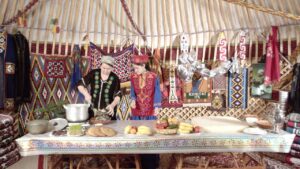
Cooking demonstration led by Bayrangul. Still from the film Where the Water Ends by Manuel Correa and Marina Otero 2026. Courtesy of ACDF

Over the past six decades, the Aral Sea has largely disappeared, reshaping life in Karakalpakstan, an autonomous region in northwestern Uzbekistan. The exhibition explored how communities in the area have adapted to these changes, not only through new solutions but also through long-standing traditions.

Rather than presenting craft as something of the past, the project framed it as a form of living knowledge.

“Our intention was for the Aral Sea to be recognized not only as a site of loss, but as a lens through which design considers broader questions of climate, culture, and responsibility,” Umerova said.

She emphasized that collaboration played a key role in the exhibition. Designers from different countries worked alongside Uzbek and Karakalpak artisans, creating a space for exchange between tradition and contemporary practice.

“The knowledge exchange between our craftspeople and international designers has helped reconnect past, present, and future,” she said.

Inside Palazzo Citterio, visitors moved through installations centered on three fundamental aspects of life: food, shelter, and clothing. These were represented through bread-making, yurt-building, and textile weaving, practices that have helped communities adapt to changing environments.

Twelve designers created new works inspired by these traditions, including bread trays and stamps used in the preparation of non, a staple of Uzbek cuisine. Made from materials such as wood, ceramics, felt, and reeds, the objects reflected both local resources and evolving design approaches.

The exhibition also included artifacts selected by participants of the Aral School, an international educational program focused on the region through design and research. A film, Where the Water Ends, offered visitors a closer look at the lives and landscapes shaped by the disappearance of the sea.

For Yantrasast, the project marks the beginning of a longer process.

“This is not about preserving craft as something from the past,” he said. “It is about understanding where it can go in the future, as something essential, resilient, and alive.”

Artefacts selected by participants of the Aral school – When Apricots Blossom. Courtesy of ACDF.

One of the most discussed elements of the exhibition was the Garden Pavilion, a structure inspired by traditional yurts. Designed by WHY Architecture, the installation reinterpreted portable homes used by nomadic communities, transforming them into a space for discussions, workshops, and reflection.

Yantrasast described the pavilion as both an architectural concept and a symbol.

“It shows how design can hold absence while creating new meaning,” he said, referring to environmental changes in the Aral Sea region.

Following its success in Milan, parts of the exhibition will return to Uzbekistan. The Garden Pavilion, a large textile installation, and the collection of bread-related objects are expected to be displayed again, extending the project beyond the design week.

According to the Uzbekistan Art and Culture Development Foundation, the exhibition is part of a broader effort to support long-term development in the Aral Sea region. This includes cultural, educational, and research initiatives aimed at strengthening local communities and encouraging new ideas.

Upcoming projects linked to this work include Uzbekistan’s national pavilion at the Venice Biennale, the first Tashkent Design Week, and the second Aral Culture Summit, scheduled to take place in Nukus in September.


Crackdown on Private Taxis Complicates Life for Residents of Ashgabat’s Outskirts

In Turkmenistan’s capital, Ashgabat, traffic police have intensified inspections of private taxi drivers in outlying districts such as Choganly, Garadamak, and Shor. While the measures are formally aimed at curbing informal transport services, they have had significant consequences for local residents.

Public transport technically operates in these areas, but routes largely run along main roads. Those living farther away often have to walk several kilometers to reach their homes. According to residents, private drivers previously helped bridge this gap by offering rides from bus stops. That option has now largely disappeared.

Drivers are being stopped, fined, or, according to eyewitness accounts, asked to pay bribes. As a result, not only the drivers, many of whom rely on informal taxi services as one of the few sources of income amid unemployment, are affected, but also passengers. People with children or heavy bags are increasingly forced to walk.

The situation is further aggravated by earlier restrictions. Around two years ago, at the request of city authorities, small shops were closed across the capital, including in these districts. As a result, residents must now travel to supermarkets or markets to buy groceries. This has led many to purchase goods in bulk, making the journey home even more difficult.

Conditions are particularly challenging on more remote streets. For example, Ashgabat Street deep within Choganly is poorly developed, lacking sidewalks and turning into muddy streams during rainy weather. Residents say that walking in such conditions is difficult and nearly impossible with strollers or heavy bags. The street branches into smaller roads, many of which are unpaved. As a result, even routine trips outside the home can become a serious challenge.

More broadly, residents note that restrictions are being introduced faster than basic infrastructure problems are being addressed. In such conditions, any tightening of regulations has an immediate and tangible impact on daily life.

A View from Afghanistan: Silk Seven Plus a New Framework for Regional Integration

In recent years, regional integration has increasingly become a key instrument in countries’ economic and foreign policy strategies. This is particularly relevant for Central Asia, a landlocked region facing structural constraints in accessing global markets.

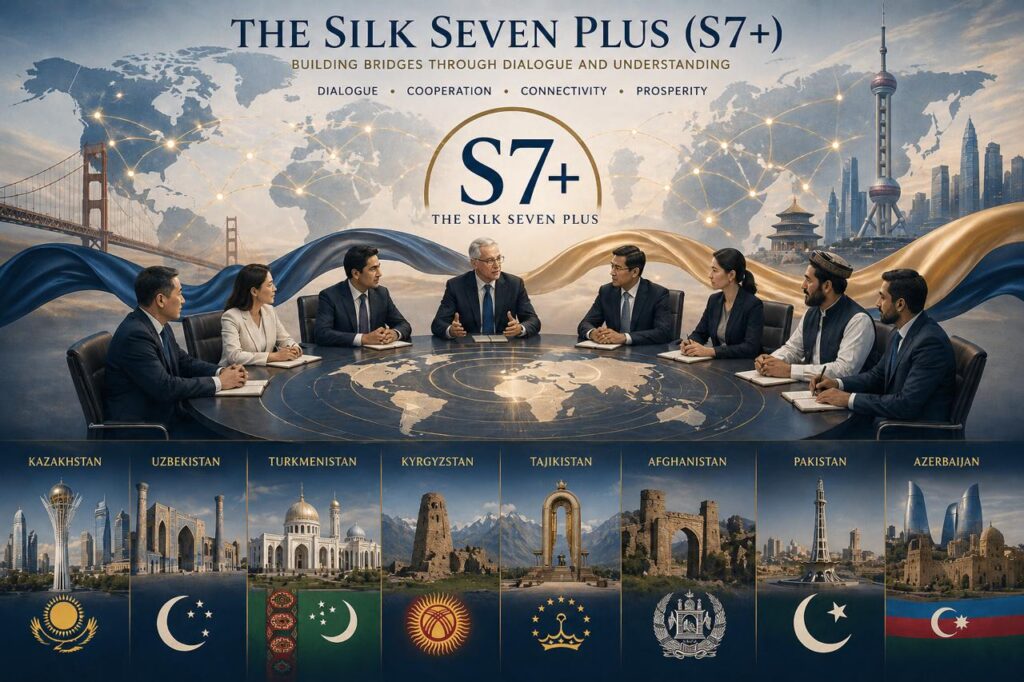
In this context, the Silk Seven Plus (S7+) initiative, recently introduced by the New Lines Institute for Strategy and Policy, has drawn attention. The concept is currently being promoted in Washington. According to its authors, the initiative has received “overwhelming bipartisan support from leading members of the House of Representatives and the Senate.”

S7+ is positioned as a multi-stage framework for regional coordination centered on the countries of Central Asia, with plans for gradual expansion, first to Afghanistan and Azerbaijan, and potentially later to Pakistan.

The initiative appears to propose a new model of cooperation focused on developing transport connectivity, facilitating trade, and coordinating economic policy among countries in Central and South Asia, as well as neighboring regions.

Unlike traditional integration formats, S7+ is designed as a flexible, network-based framework rather than a rigid institutional structure. It functions more as a platform for practical cooperation, including the development of transit routes, the digitization of customs procedures, the reduction of logistics costs, and the expansion of trade and investment flows. This approach allows countries to participate voluntarily and at varying levels of engagement.

Within this model, Central Asia is viewed as a key region for the formation of new economic linkages. Strengthening transport connectivity, diversifying trade routes, and reducing dependence on a limited number of corridors could enhance the resilience of regional economies and support deeper integration into global supply chains.

Afghanistan holds particular significance within the S7+ framework. Geographically, it lies at the crossroads of Central Asia, South Asia, and the Middle East, positioning it as a potential transit bridge. The development of routes through Afghanistan could shorten transport distances and improve regional logistics efficiency.

In practice, however, this potential faces significant constraints. Key challenges include underdeveloped infrastructure, institutional limitations, and a lack of international recognition. These factors restrict Afghanistan’s ability to fully participate in multilateral initiatives and limit its access to investment and financial resources.

At the same time, the flexibility of the S7+ format may create opportunities for Afghanistan’s gradual involvement. Unlike formal organizations, the initiative allows participation on a project-by-project basis without requiring full institutional integration. This aligns with the country’s current model of external engagement, where practical cooperation continues despite the absence of formal recognition.

A comparison between S7+ and traditional regional formats highlights key differences. Existing frameworks, such as regional cooperation programs, typically rely on formal agreements and institutional mechanisms. In contrast, S7+ emphasizes flexibility, pragmatism, and the implementation of specific projects, potentially reducing political sensitivities and prioritizing economic interests.

In a broader geopolitical context, interpretations of the initiative vary. For some external actors, it may signal the emergence of alternative transport routes and reduced dependence on established corridors. For others, it represents a complementary element within existing economic strategies. In any case, S7+ reflects intensifying competition over the development of Eurasia’s transport and logistics architecture.

For Central Asian countries, such initiatives offer additional opportunities, not only to expand trade ties but also to pursue more flexible and diversified foreign economic policies.

Overall, Silk Seven Plus remains largely conceptual. Nevertheless, its emergence reflects a broader trend: a shift from rigid models of cooperation toward more flexible, network-based, and project-oriented approaches to regional integration.

The future of the initiative will depend on participating countries’ ability to translate it into practice, as well as on the broader political and economic environment in the region.

Adapted translation Open World Policy Lab, Astana

Bishkek Warns of Risks to Ties Over EU Sanctions Decision

Kyrgyzstan’s Ministry of Foreign Affairs has expressed concern over the inclusion of Kyrgyz legal entities in the European Union’s 20th sanctions package against Russia, including the application of the so-called anti-circumvention mechanism.

In a statement, the ministry said Bishkek adheres to an “open, responsible, and constructive approach” in its dialogue with the European Union on mitigating sanctions-related risks and advocates for mutual consideration of interests, as well as transparency and trust.

The Foreign Ministry noted that despite ongoing negotiations, regular contacts with European partners, and the provision of requested information, including details of measures taken by state authorities, the Kyrgyz position, in its view, “is not being taken into account.”

“It is a matter of concern that the position of the Kyrgyz side is effectively being ignored,” the statement said.

The ministry also emphasized that such decisions could undermine trust in bilateral relations and contradict the EU’s stated intention to develop cooperation with Kyrgyzstan and other Central Asian countries.

Bishkek further expressed concern over the use of unilateral restrictive measures affecting third countries.

The Foreign Ministry called on the EU to engage in a “transparent, professional, and depoliticized dialogue,” as well as to adopt a more consistent and balanced approach that takes into account Kyrgyzstan’s position and previously reached agreements.

The Times of Central Asia previously reported that the EU had stepped up sanctions pressure on Kyrgyzstan by restricting supplies of sensitive technologies and imposing measures on the country’s financial institutions. Brussels is concerned that the Central Asian republic may be used as a transit hub to circumvent sanctions.

According to European Commission data, imports of sensitive goods from the EU to Kyrgyzstan surged by nearly 800% in 2025 compared to pre-war levels, while exports of similar goods from Kyrgyzstan to Russia increased by approximately 1,200%.

Iran Proposes Defense Cooperation to SCO Partners at Bishkek Meeting

Iran used a Shanghai Cooperation Organization defense meeting in Bishkek to signal that it is ready to share military experience and defense capabilities with other SCO members, giving a sharper geopolitical edge to the gathering hosted by Kyrgyzstan under its current chairmanship of the bloc.

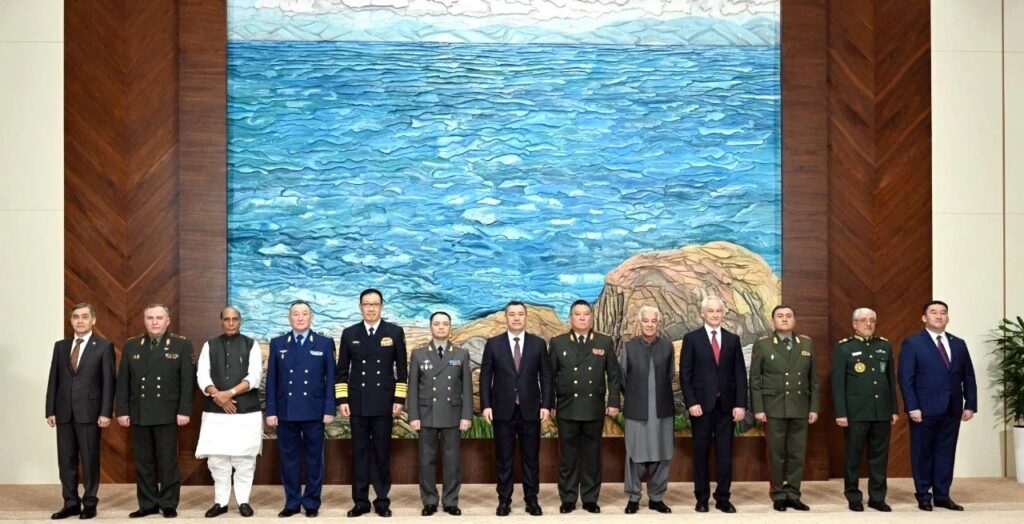
The meeting of SCO defense ministers opened on April 28 at the Ala-Archa state residence in Bishkek. Defense officials from the organization’s member states attended, along with SCO Secretary General Nurlan Yermekbayev. Kyrgyzstan’s Defense Minister Ruslan Mukambetov chaired the session.

Iran was represented by Deputy Defense Minister Reza Talaei-Nik. In a statement carried by Mehr News Agency, Talaei-Nik said Iran was ready to share its defense weapons capabilities and experience with “independent countries,” especially SCO member states. He also described the SCO as part of a wider shift away from what Tehran called a “unipolar” international order.

The remarks came after weeks of fighting between Iran, the United States, and Israel, including Iranian drone and missile strikes on U.S. bases in the region and Israeli sites. A ceasefire announced earlier this month reduced hostilities, but efforts to reach a wider settlement have stalled.

Talaei-Nik also used the meeting to frame the recent conflict as a lesson for other states, declaring, “We are ready to share our experiences in defeating America with other members of the organization.”

The SCO meeting gave Tehran a platform inside a bloc that now includes China, Russia, India, Pakistan, Iran, Belarus, Kazakhstan, Kyrgyzstan, Tajikistan, and Uzbekistan. Iran became a full member in 2023. The SCO also has a wider circle of observer states and dialogue partners, including 15 dialogue partners listed by the organization’s secretariat.

Kyrgyz President Sadyr Japarov received the SCO defense delegations before the ministerial session. He said Kyrgyzstan, as the SCO chair, attaches special importance to practical defense cooperation, including joint exercises, experience-sharing, and stronger coordination. He said agreements reached in Bishkek should strengthen defense cooperation and security across the SCO region.

Kyrgyzstan’s SCO chairmanship is being held under the slogan “25 Years of the SCO: Together Towards Sustainable Peace, Development, and Prosperity.” Kyrgyzstan’s Defense Minister Mukambetov said the organization needed solidarity, mutual trust, and collective responsibility to respond to current security challenges. Kyrgyz state agency Kabar said the participants discussed military cooperation, regional security, and joint responses to current threats.

The SCO began as a border-security framework. Its roots go back to agreements signed in 1996 and 1997 by Kazakhstan, China, Kyrgyzstan, Russia, and Tajikistan on military trust and troop reductions along border areas. Uzbekistan later joined, and the Shanghai Cooperation Organization was formally founded in 2001. Since then, the bloc has grown into a wider Eurasian platform covering security, defense contacts, counterterrorism, transport, energy, and economic cooperation.

Talaei-Nik also held talks with Russian and Belarusian defense officials on the fringes of the Bishkek meeting, with both sides discussing continued cooperation with Tehran.

For Central Asian governments, including non-SCO member Turkmenistan, the Bishkek meeting highlighted the pressures facing multi-vector diplomacy. All five have spent years balancing security ties with Russia, deepening economic ties with China, engagement with the United States and Europe, and links to the wider Islamic world. That approach gives them room to maneuver, but it also means that conflicts involving Iran, Russia, China, or the West can quickly enter regional platforms such as the SCO, especially when security cooperation is already on the agenda.

Opinion: As Water Runs Short, Uzbekistan Faces New Migration Pressure

In the 21st century, Uzbekistan is no longer just confronting an ecological crisis – it is on the verge of socio-political transformations driven by water. As agricultural lands are being degraded and river flows are decreasing, the country is now facing what experts describe as a “slow-onset disaster”: internal climate migration.

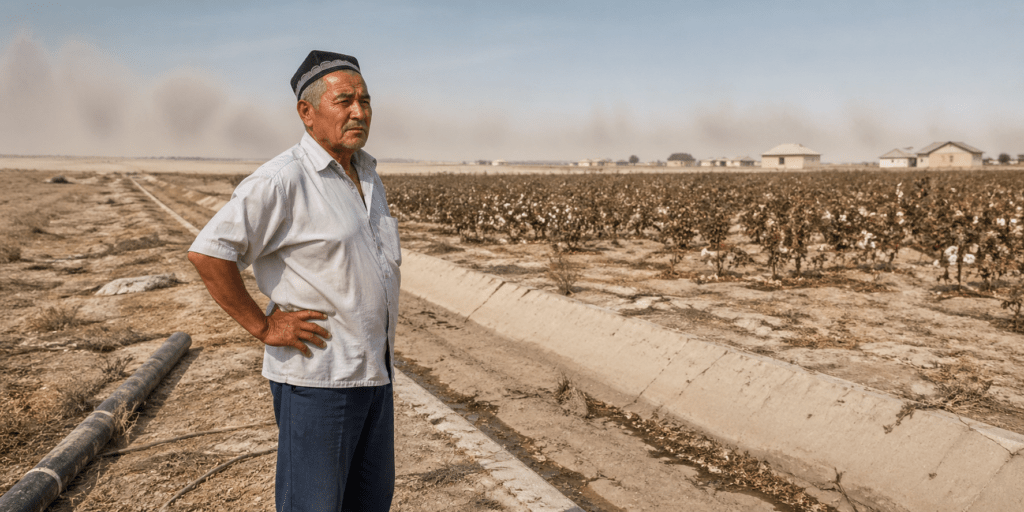
The roots of this crisis go back to the tragedy of the Aral Sea, once the world’s fourth-largest lake, which has shrunk to roughly 10% of its original area since the 1960s largely due to Soviet-era irrigation projects. The human toll has been enormous: not only is agriculture in decline, but the lives of the people living in the Aral Sea region have been profoundly altered. Each year, storms lift an estimated 15 million to 75 million tons of sand, dust, and salt from the dried Aral seabed, spreading it across Uzbekistan and the wider region. Now, another challenge is looming – the water supply. In 2018, 79,942 internally displaced people were reported in Uzbekistan. The dwindling water supply and the threat to agro-ecosystems are creating a new generation of climate migrants. The number of climate-related displacements is expected to reach 200,000 in the coming years.

The Amu Darya and Syr Darya rivers, Uzbekistan’s hydrological lifelines, are under growing strain from climate change, inefficient irrigation, and transboundary water-distribution pressures. Experts warn that the country’s water deficit could reach 7 billion cubic meters by 2030, and 15 billion cubic meters by 2050. The World Bank predicts that Uzbekistan’s economy could shrink by 10% by 2050 if no meaningful action is taken to adapt to climate change.

Now, another new factor threatens to accelerate this trend. The Taliban government in Afghanistan is building the Qosh Tepa Canal, a 285-kilometer irrigation project that will divert water from the Amu Darya River. According to Rieks Bosch, an international expert on natural resources and economics, the canal will divert 20% of the Amu Darya’s water, which will exacerbate water shortages in some parts of Uzbekistan and negatively affect agriculture. “In any case, Uzbekistan will definitely suffer,” he said.  Analyses show that up to 250,000 people could lose their jobs in agriculture as a result of water shortages.

The most vulnerable regions – Bukhara, Khorezm, Karakalpakstan, Surkhandarya, and Kashkadarya – are located mainly in rural areas and depend on agriculture and livestock. With almost half of Uzbekistan’s population living outside urban centers, the loss of agricultural viability is not just an economic problem; it is the disruption of a way of life.

“Water scarcity, air pollution, biodiversity loss, and a sharp decline in agricultural productivity are constantly increasing,” President Shavkat Mirziyoyev said at COP 28, acknowledging that these problems are “reaching their “critical peak.” Yet policy responses are still lagging behind the pace of environmental change.

Uzbekistan’s climate migration problem cannot be solved by managing water resources alone. This requires a new strategic framework – a “Water-Migration-Security” strategy that combines regional cooperation, innovative water-saving technologies in agriculture, and proactive adaptation measures for the communities most at risk. The window for action is narrowing. Today’s farmers are potentially tomorrow’s environmental refugees.


The views expressed in this article are those of the author and do not necessarily reflect the official policy or position of the publication, its affiliates, or any other organizations mentioned.