• KGS/USD = 0.01144 0%
  • KZT/USD = 0.00196 -0%
  • TJS/USD = 0.10899 -0%
  • UZS/USD = 0.00008 -0%
  • TMT/USD = 0.28490 0%
  • KGS/USD = 0.01144 0%
  • KZT/USD = 0.00196 -0%
  • TJS/USD = 0.10899 -0%
  • UZS/USD = 0.00008 -0%
  • TMT/USD = 0.28490 0%
  • KGS/USD = 0.01144 0%
  • KZT/USD = 0.00196 -0%
  • TJS/USD = 0.10899 -0%
  • UZS/USD = 0.00008 -0%
  • TMT/USD = 0.28490 0%
  • KGS/USD = 0.01144 0%
  • KZT/USD = 0.00196 -0%
  • TJS/USD = 0.10899 -0%
  • UZS/USD = 0.00008 -0%
  • TMT/USD = 0.28490 0%
  • KGS/USD = 0.01144 0%
  • KZT/USD = 0.00196 -0%
  • TJS/USD = 0.10899 -0%
  • UZS/USD = 0.00008 -0%
  • TMT/USD = 0.28490 0%
  • KGS/USD = 0.01144 0%
  • KZT/USD = 0.00196 -0%
  • TJS/USD = 0.10899 -0%
  • UZS/USD = 0.00008 -0%
  • TMT/USD = 0.28490 0%
  • KGS/USD = 0.01144 0%
  • KZT/USD = 0.00196 -0%
  • TJS/USD = 0.10899 -0%
  • UZS/USD = 0.00008 -0%
  • TMT/USD = 0.28490 0%
  • KGS/USD = 0.01144 0%
  • KZT/USD = 0.00196 -0%
  • TJS/USD = 0.10899 -0%
  • UZS/USD = 0.00008 -0%
  • TMT/USD = 0.28490 0%
08 December 2025

Hostage-Taker in Almaty Airport Drama Sentenced to 11 Years in Prison

A knife-wielding man who took a hostage at Almaty International Airport before being disarmed by a former boxer who grabbed the weapon has been sentenced to 11 years in prison, media in Kazakhstan reported on Wednesday.

Mashrapbek Baratov, 67, was sentenced in an Almaty court for the March 7 incident in which he held an airport employee by her hair and made threats as security officials gathered nearby. He let go of the woman after Musa Abdraim offered himself as a hostage, then disarmed the hostage-taker shortly afterward. Several witnesses filmed the scene with their phone cameras, and the images circulated widely on the internet.

Baratov admitted guilt, and his trial was conducted in a relatively short time. He had been charged with hostage-taking, hooliganism, and intentionally making a false report of a terrorist act, according to Tengri News, a media outlet based in Kazakhstan.

Abdraim won praise for his bold action from Kazakh President Kassym-Jomart Tokayev and the World Boxing Council.

Steel Diplomacy: Central Asia’s Southern Push via Afghanistan

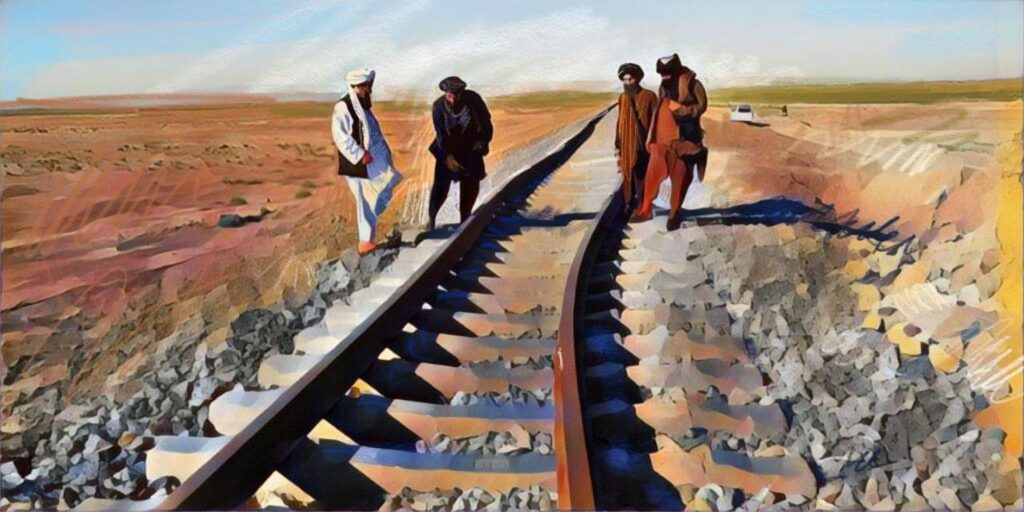
The United States and its allies may be uneasy about the Taliban’s return to power, given their extremist history, continued repression, and the collapse of decades-long Western efforts in Afghanistan. Nevertheless, the Taliban is strengthening ties with the Global South—particularly Central Asia—in search of investment for railway infrastructure. For landlocked Central Asian nations, Afghanistan is a key transit point on the shortest route to the Arabian Sea, offering an alternative to routes through Russia, China, or westward via the Caspian.

The war-torn country – located at the crossroads of Central and South Asia – serves as a land bridge between the former Soviet republics and the major markets of the region, including India and Pakistan. This strategic position is why regional actors are eager to invest in the construction of the railway network in Afghanistan, fully aware that the new route would help them achieve at least some of their geopolitical and geoeconomics interest.

Kazakhstani Foreign Minister Murat Nurtleu’s recent visit to Kabul was, according to reports, primarily focused on Afghan railway infrastructure. The largest Central Asian nation economy is reportedly ready to invest $500 million in the construction of the 115km (71 miles) railway from Towrgondi on Afghanistan’s border with Turkmenistan to the city of Herat.

As Taliban railway officials told The Times of Central Asia, the Afghan and Kazakh delegations, who signed a memorandum of understanding on the project, are expected to finalize new agreements and contracts in the coming months. A detailed construction study is expected to be completed by winter, and Afghan authorities anticipate that construction will begin by the end of the year. 

Meanwhile, Kabul hopes to reach similar deals with neighboring Uzbekistan and Turkmenistan, as well as with Russia and Pakistan. According to Taliban railway experts, these four nations – along with Kazakhstan – are expected to play a major role in the development of the 700-kilometer (approximately 435-mile) railway network in Afghanistan.

The Taliban political officials, on the other hand, see the project as an opportunity for Afghanistan to increase its geopolitical importance.

“It will help us reduce economic dependence and isolation, allowing Afghanistan to integrate more actively into the regional economy,” Muhammad Rehman, the Taliban-appointed Chargé d’Affaires of the Islamic Emirate of Afghanistan to Kazakhstan, told The Times of Central Asia,

From his perspective, nations investing in Afghan railway infrastructure will become advocates for Afghanistan’s stability. Projects like the construction of the railway, in his view, can transform Afghanistan into a transit hub for regional countries through railway corridors.

“Through the railway, Afghanistan can also import goods at a significantly lower cost, making essential commodities more affordable for its people,” Rahman stressed.

More importantly, the railway opens a route for Central Asian natural resources to reach global markets via the ocean and further enhances the viability of the westward-flowing Middle Corridor. In short, the Afghan rail projects are important for connecting Eurasia. It is, therefore, no coincidence that Kazakhstan – being the richest country in terms of mineral wealth in Central Asia – was the first regional actor to publicly negotiate infrastructure deals with the Taliban.

Fully aware of the importance of Afghanistan as a transit country, Kazakhstan kept its Kabul embassy open under Taliban rule and later accredited Taliban-appointed diplomats to work in Astana. In an attempt to strengthen relations with the new Afghan authorities, in April 2023 Kazakhstan’s Trade Minister Serik Zhumangarin led a delegation to Kabul to discuss trade and deliver humanitarian aid. The following year, Astana removed the Taliban from its national list of banned terrorist organizations, while in June 2025, Kazakhstan’s President Kassym-Jomart Tokayev appointed a Special Representative for Afghanistan, veteran diplomat Yerkin Tukumov. He even described Afghanistan’s integration into regional transport and trade as a “strategic priority.”

As a result of Astana’s diplomatic initiative, Kazakhstan is now one of the ten main trading partners of Afghanistan. Last year, the trade turnover between the two nations amounted to $545.2 million, of which the export of Kazakh products reached $527.7 million. 

In the coming months and years, other regional countries are expected to follow Kazakhstan’s path and normalize relations with the Taliban-led Islamic Emirate of Afghanistan. After Kyrgyzstan, in September 2024, removed Taliban from its list of terrorist organizations, Bishkek began developing closer economic ties with Afghanistan. Uzbekistan – de facto recognizing the Afghan group as the legitimate government in Kabul – has recently applied to join the North-South corridor through Afghanistan, while Turkmenistan remains engaged in talks with the Taliban on the Trans-Afghanistan pipeline, also known as the Turkmenistan–Afghanistan–Pakistan–India (TAPI) natural gas pipeline.

The only Central Asian state that openly refuses to do any business with the Taliban, and repeatedly warns of terrorist threats emanating from Afghanistan, is Tajikistan. The former Soviet republic’s approach is no surprise, given that militant groups hostile to the government in Dushanbe (like the Islamic Movement of Tajikistan) have found refuge in Taliban-controlled areas. 

The United States and other Western countries also remain skeptical of the Taliban’s regional ambitions. They have not recognized the Taliban government due to its poor human rights record, especially regarding women and minorities. Moreover, on July 8, the UN General Assembly adopted a resolution strongly condemning the Taliban’s policies in Afghanistan regarding women and girls. The document was supported by 116 countries, including all Central Asian states. But in spite of critical approach, American envoys have in 2023 met Taliban representatives in Doha and elsewhere to discuss issues like humanitarian aid and security commitments.

Mars Sariyev, a Kyrgyz political scientist and regional security expert, believes that the US plans eventually to return to Afghanistan – not through a military campaign, but through diplomacy and economy. 

“It is a matter of time. The United States will use Afghanistan and the Taliban movement to shift the balance of geopolitical forces in Central Asia. For instance, to divide Russia and China, and to strengthen its own influence in the region,” Sariyev stressed.

Alternatively, the U.S. may see long-term value in Afghanistan as a stable transit hub linking Central Asia to global markets—a goal it pursued during its rebuilding efforts in the country. Secular, modernizing states like Kazakhstan and Uzbekistan could support this vision by promoting economic ties and regional integration, helping reduce Afghanistan’s isolation and enhance stability.

Meanwhile, Afghanistan’s rulers are expected to focus on developing stronger economic ties with Central Asian states, particularly in the field of railway construction.

“In the near future, we are likely to witness more agreements similar to the Kazakhstan–Afghanistan railway project from Towrgondi to Herat, which will further integrate Afghanistan into regional trade networks,” Rahman concluded. 

But since talks are reportedly underway to initiate direct flights between Afghanistan and Kazakhstan, for the foreseeable future Kabul will almost certainly prioritize its relations with Astana – the Taliban’s major partner in the region.

Central Asia Faces Growing Energy Deficit

Central Asia is heading toward a serious energy crunch. According to the Logistan.info portal, regional demand for imported natural gas is expected to reach 25 billion cubic meters annually by 2030. This looming shortfall is driven by rapid population growth, around one million people per year, industrial expansion, declining domestic production, and the deteriorating state of aging infrastructure. Recent accidents in Bishkek, Tashkent, Dushanbe, and Ekibastuz illustrate the scale and urgency of the problem.

Kazakhstan: Rising Output, Falling Exports

Kazakhstan produced 59.2 billion cubic meters of gas in 2024, representing a 6.4% increase from the previous year. However, nearly half of this was reinjected into oil reservoirs to sustain production. Only 29 billion cubic meters were available for domestic consumption. Soaring internal demand has already led to a sharp decline in exports to China, which fell 40% to 8.7 billion cubic meters.

Uzbekistan: From Exporter to Importer

Uzbekistan’s situation is even more precarious. In 2024, the country produced 44.6 billion cubic meters of gas and 713,400 tons of oil, figures that are in decline, dropping 4.5% and 8.5% respectively. To cover the shortfall, Tashkent has turned to Russia and Turkmenistan, purchasing $1.7 billion worth of gas. Uzbekneftegaz expects to produce just 26.5 billion cubic meters of commercial gas in 2025, far short of projected domestic needs.

Kyrgyzstan, Tajikistan, and Turkmenistan

Kyrgyzstan and Tajikistan produce virtually no hydrocarbons and rely entirely on imports of these resources. Meanwhile, demand continues to grow in tandem with their populations, and domestic energy generation falls short of even basic consumption needs.

Turkmenistan remains the region’s top gas exporter, sending 41.3 billion cubic meters abroad in 2024. However, Ashgabat’s ability to increase exports is limited by its own growing domestic consumption, binding long-term contracts with China, and a lack of large-scale infrastructure development.

Investment, Delays, and Structural Challenges

While Central Asian governments have announced plans for new hydroelectric plants, combined heat and power stations, and nuclear power facilities, tangible progress remains slow. Kazakhstan, Kyrgyzstan, and Uzbekistan have yet to break ground on any of their proposed nuclear power projects. Key obstacles include a shortage of qualified personnel, water scarcity, environmental concerns, and, above all, insufficient funding. Without substantial foreign investment, modernization efforts are likely to stall.

To ease financial pressures, countries in the region have begun raising gas and electricity tariffs. These price hikes aim to offset upgrade costs but have provoked public backlash and fueled inflation. In Uzbekistan, for instance, inflation accelerated to 15% in May 2025, with energy prices cited as the primary driver.

The Russian Option

Forecasts for regional gas imports remain imprecise, but analysts estimate the need could rise to 20-25 billion cubic meters annually by 2030. Russia appears poised to become the main supplier, though details of supply agreements, including pricing, volumes, and terms, have not been disclosed. Central Asian governments are attempting to keep cooperation with Moscow strictly within the economic sphere, wary of entangling political dependencies.

As a result, the region faces a dual challenge: securing energy stability through technological upgrades and infrastructure investment, while carefully navigating the geopolitical implications of increasing reliance on Russian gas.

Trump’s 100% Tariffs May Target Kazakhstan and Kyrgyzstan

U.S. President Donald Trump has signaled a new wave of sanctions against Russia, including the potential imposition of 100% tariffs on its trading partners, which could affect Kazakhstan, Kyrgyzstan, and other former Soviet states.

Who Could Be Affected?

On July 15, President Trump announced an escalation in U.S. arms deliveries to Ukraine and warned of intensified sanctions against Russia. If no progress is made in resolving the conflict within 50 days, the U.S. will implement additional measures, including secondary tariffs of up to 100% on countries trading with Russia.

Experts warn that Kazakhstan, Kyrgyzstan, and Azerbaijan may be particularly vulnerable. Although not among Russia’s largest trading partners, these countries maintain extensive commercial ties with Moscow. According to the Centre for Research on Energy and Clean Air (CREA), China, India, and Turkey accounted for 74 percent of Russia’s fossil fuel revenue in 2024. Oil exports totaled €104 billion, petroleum products €75 billion, gas €40 billion, and coal €23 billion.

Despite multiple sanctions packages, the European Union continues to import Russian energy. In 2024, the EU spent €21.9 billion on Russian oil and gas, just 1% less than in 2023. Over the same period, EU financial assistance to Ukraine amounted to €18.7 billion, according to the Kiel Institute for the World Economy.

Yet Trump may spare Russia’s largest trading partners. In recent months, he has taken steps to impose severe tariffs on the European Union and China, only to reverse course under pressure from business groups and concerns about global trade disruptions.

Nevertheless, Kazakhstan received formal notification from the U.S. on July 7 that a 25% tariff on its goods will take effect from August 1, 2025. This raises the possibility that smaller economies in Russia’s orbit may become targets of U.S. economic retaliation.

Already in the Crosshairs

Kazakh analyst Olzhas Baidildinov noted that trade between Kazakhstan and Russia totaled $27.8 billion in 2024, with $18.2 billion in exports from Russia and $9.5 billion from Kazakhstan. “Such figures certainly cannot escape the attention of OFAC,” Baidildinov wrote, referring to the U.S. Treasury’s Office of Foreign Assets Control.

“European sanctions apply only within Europe. However, Kazakhstan continues to import Russian oil, gas, and petroleum products. Secondary sanctions, as I’ve previously warned, are merely a matter of minor adjustments to existing measures,” he added.

Trump’s administration may also be overlooking Kazakhstan’s unique geographic and economic ties to Russia. The two countries share the world’s longest continuous land border, over 7,500 kilometers, and are closely connected through pipelines, energy infrastructure, and raw materials trade.

Azerbaijan and Kyrgyzstan Also Vulnerable

Azerbaijan’s trade with Russia reached approximately $4.8 billion in 2024, an increase of 10.1 percent. Russia ranks as Azerbaijan’s third-largest trading partner, after Italy and Turkey. Exports to Russia totaled $1.178 billion, accounting for 4.4 percent of Azerbaijan’s total exports. Notably, Russia is the largest buyer of Azerbaijan’s non-oil products, with a 34.6 percent share. Imports from Russia include foodstuffs, machinery, and metals, while Azerbaijan supplies gas, textiles, and agricultural goods.

Kyrgyzstan is also at risk. About 32 percent of its foreign trade is with fellow Eurasian Economic Union (EAEU) members, primarily Russia (67.3 percent) and Kazakhstan (30.5 percent). Trade between Kyrgyzstan and Russia grew by more than 11 percent in 2024 and by over 17 percent in the first half of 2025.

SCO Responds to the Signal

Analysts interpret Trump’s tariff threats as a warning to members of the Shanghai Cooperation Organization (SCO), which includes Russia, Kazakhstan, China, Kyrgyzstan, Tajikistan, Uzbekistan, Pakistan, India, Iran, and Belarus. All maintain substantial economic links with Moscow.

Following Trump’s remarks, foreign ministers from SCO member states convened in Tianjin, China. Chinese Foreign Ministry spokesperson Lin Jian criticized the proposed sanctions, stating, “China firmly opposes any illegal unilateral sanctions,” and added that coercive measures would not help resolve the crisis.

South Korean Firm to Invest Up to $3.1 Billion in Green Hydrogen Project in Kazakhstan

South Korea’s YPP Corporation is set to invest up to $3.1 billion in a large-scale green hydrogen and ammonia production facility in Kazakhstan, following the signing of a framework agreement with the national investment promotion agency, Kazakh Invest.

The agreement was signed on July 15 by Azamat Kozhanov, Deputy Chairman of Kazakh Invest, and John M. Bek, Chairman of the Board at YPP Corporation (Your Permanent Partner), an engineering and energy firm based in South Korea.

According to Kazakh Invest, the “Green Energy Complex” aims to establish a full-cycle production chain for green hydrogen and ammonia powered by renewable energy. The project includes the construction of solar and wind power plants with a combined capacity of up to 2 gigawatts, along with electrolysis systems and ammonia synthesis units. Annual output is projected at up to 75,000 tons of green hydrogen and 310,000 tons of green ammonia.

While most of the output will be exported, a portion will be used domestically. The facility will also include supporting infrastructure such as energy storage systems, logistics and water supply networks, and potential integration into Kazakhstan’s heat and power systems, particularly in the Almaty region.

“This project fully aligns with Kazakhstan’s long-term energy strategy and our ambition to become a key player in green hydrogen,” said Kozhanov. “Kazakhstan’s renewable energy potential is estimated at 1,820 billion kWh from wind and 2.5 billion kWh from solar annually. Global interest in developing green energy here is growing steadily.”

YPP founder John M. Bek cited Kazakhstan’s favorable geography and investment climate. “We see Kazakhstan as a strategic partner and are committed to implementing a project that brings together Korea’s advanced technology and global best practices in sustainable energy,” he said.

The agreement paves the way for the next phase of development, including a detailed investment model, regulatory approvals, and potential partnerships with major offtakers such as Samsung C&T.

Central Asian Nations Rank Low in Global Mental Health Index

Mental health remains a significant challenge across Central Asia, with populations reporting high levels of distress and rising rates of self-harm. According to the Mental State of the World survey, Uzbekistan ranked 74th out of 82 countries on the Mental Health and Wellbeing Index, scoring 54.5 points. Kazakhstan followed at 76th (52.3), Kyrgyzstan at 79th (51.2), and Tajikistan at 80th (51.2). The global average stands at 63 points, suggesting that, on average, people around the world feel mentally stable and active for about 21 days each month.

Experts point to a range of factors driving poor mental health in the region, including anxiety, depression, fatigue, loneliness, and unresolved personal issues. A joint survey by the UN Population Fund (UNFPA) and YouGov, which included more than 14,000 respondents across 14 countries, found that 32 percent had experienced unplanned pregnancies and 23 percent were unable to start families when they wished. Financial hardship was the most frequently cited barrier to wellbeing (39 percent), followed by job insecurity (21 percent), inadequate housing (19 percent), and fear of war or pandemics (19 percent).

A study published in BMC Public Health reported age-standardized suicide rates per 100,000 people in 2019 as follows: Kazakhstan at 18.05; Uzbekistan and Kyrgyzstan both at 8.28; Turkmenistan at 6.07; and Tajikistan at 5.32. By comparison, the global suicide rate that year was approximately 9 per 100,000.

Despite its relative economic strength, Kazakhstan ranked 17th globally for suicide rate in 2020, with 18 deaths per 100,000 people, according to World Health Organization (WHO) data. UNICEF has also recorded a disturbing trend among the country’s youth: between January and August 2024, over 2,300 self-harm incidents were reported, including 128 involving children aged 5 to 18. Among adolescents aged 15 to 19, self-harm has become the leading cause of death.

Uzbekistan, which received the highest score in the region, is expanding access to counseling services and training school psychologists. Meanwhile, Kyrgyzstan and Tajikistan are piloting community-based mental health centers. However, specialists warn that without broader social reforms, such as stable employment, affordable housing, and gender equality, both reproductive and mental health will continue to fall short of international standards.

“True progress means giving people freedom to choose and live without fear,” the UNFPA report concludes. For Central Asia, this requires greater investment in rights, services, and long-term wellbeing.