
• KGS/USD = 0.01144 0%
  • KZT/USD = 0.00193 -0%
  • TJS/USD = 0.10811 -0.28%
  • UZS/USD = 0.00008 0%
  • TMT/USD = 0.28490 0%
  • KGS/USD = 0.01144 0%
  • KZT/USD = 0.00193 -0%
  • TJS/USD = 0.10811 -0.28%
  • UZS/USD = 0.00008 0%
  • TMT/USD = 0.28490 0%
  • KGS/USD = 0.01144 0%
  • KZT/USD = 0.00193 -0%
  • TJS/USD = 0.10811 -0.28%
  • UZS/USD = 0.00008 0%
  • TMT/USD = 0.28490 0%
  • KGS/USD = 0.01144 0%
  • KZT/USD = 0.00193 -0%
  • TJS/USD = 0.10811 -0.28%
  • UZS/USD = 0.00008 0%
  • TMT/USD = 0.28490 0%
  • KGS/USD = 0.01144 0%
  • KZT/USD = 0.00193 -0%
  • TJS/USD = 0.10811 -0.28%
  • UZS/USD = 0.00008 0%
  • TMT/USD = 0.28490 0%
  • KGS/USD = 0.01144 0%
  • KZT/USD = 0.00193 -0%
  • TJS/USD = 0.10811 -0.28%
  • UZS/USD = 0.00008 0%
  • TMT/USD = 0.28490 0%
  • KGS/USD = 0.01144 0%
  • KZT/USD = 0.00193 -0%
  • TJS/USD = 0.10811 -0.28%
  • UZS/USD = 0.00008 0%
  • TMT/USD = 0.28490 0%
  • KGS/USD = 0.01144 0%
  • KZT/USD = 0.00193 -0%
  • TJS/USD = 0.10811 -0.28%
  • UZS/USD = 0.00008 0%
  • TMT/USD = 0.28490 0%
10 December 2025

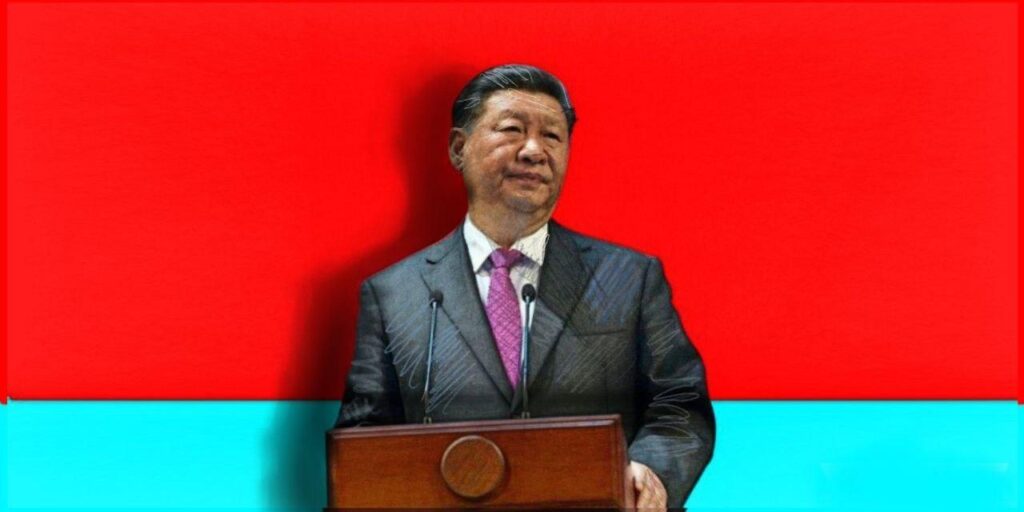
Opinion: Xi Jinping Heads to Astana – What’s at Stake in the Central Asia-China Summit?

On June 16-17, President Xi Jinping of the People’s Republic of China will visit Kazakhstan. The second Central Asia-China summit is scheduled for June 17 in Astana. Leading up to the event, a series of forums, meetings, and conferences have been unfolding across Central Asia and China, drawing experts, journalists, diplomats, and energy-sector representatives. These activities suggest that the upcoming summit is poised to overshadow its predecessor.

While U.S. analysts continue debating the viability of their own C5+1 framework for engaging with Central Asia, and the European Union advanced its outreach with the inaugural EU-Central Asia summit, China has relied on a well-worn path. The thousand-year legacy of the Middle Kingdom is filled with moments when it had to engage with the complex mosaic of Central Asia, once a turbulent region of khanates, emirates, and nomadic tribes. Despite the chaos, China succeeded in carving out a secure overland corridor, the Great Silk Road, which threaded through what are now the independent Central Asian republics, linking them like beads in a continental necklace. Then, as now, China is seeking stability in the region, not just for political influence but to safeguard its global supply chains.

Beijing’s modern initiatives, including the Belt and Road Initiative and its broader “community of shared future” concept, aim to establish global “islands of comfort” conducive to Chinese interests.  At the heart of this strategy lies a deeply embedded worldview: that China represents civilization itself. The Chinese learned long ago to deal with their neighbors not with violence, but through economic incentives, a method which is proving just as effective today.

This layer of understanding is notably absent in many Western and post-Soviet analyses of China’s actions in Central Asia, the Middle East, Africa, and beyond. The reasons for this are twofold. First, Chinese officials are careful never to state views about cultural hierarchies explicitly; doing so would risk alienating partners. This reticence is a feature of traditional Eastern diplomacy. Second, Beijing has cultivated its own expert ecosystem within the post-Soviet sphere. In response to a wave of Sinophobia that swept through Central Asia a decade ago, China now primarily engages with favorable media outlets and Sinologists, many of whom are nurtured through carefully managed media tours. One such tour, organized by People’s Daily, is currently underway ahead of the Astana summit.

As a result, the discourse surrounding the summit is shaped less by hard policy proposals than by diplomatic pageantry, with everything presented in the best possible light. At the recent 5th Forum of Think Tanks, “Central Asia-China: New Horizons for Regional Partnership,” Kazakhstan’s State Councilor Yerlan Karin likened China and Central Asia to “the two lungs of Asia,” emphasizing the symbolic depth of their growing relationship.

The 6th Central Asia-China Foreign Ministers’ Meeting, chaired by Chinese Foreign Minister Wang Yi and held in Almaty in April, likewise offered little in terms of concrete summit outcomes. According to a general statement from Kazakhstan’s Foreign Ministry, topics included political dialogue, trade, connectivity, sustainable development, and security cooperation, subjects which were broached in broad, diplomatic language.

Adil Kaukenov, chief expert at the Institute for Strategic Studies under the President of Kazakhstan, has suggested that the summit’s agenda likely extends far beyond regional issues. He hinted that U.S. tariffs and China’s response may be among the more pressing topics discussed.

In essence, the lead-up to the second Central Asia-China summit has resembled a well-coordinated media campaign, one emphasizing deepening ties and mutual benefit. But what concrete agreements or strategic shifts lie behind this ornate façade? That, we will shortly discover.


The views expressed in this article are those of the author and do not necessarily reflect the official policy or position of the publication, its affiliates, or any other organizations mentioned.


Experts Warn of Escalating Climate Risks for Central Asia

As global temperatures rise, Central Asia is emerging as one of the world’s most vulnerable regions to the impacts of climate change. This warning comes from three recent reports by the World Meteorological Organization (WMO), which predict intensified warming, more frequent droughts, and rapid glacier retreat in the region. Without urgent adaptation and coordinated policy responses, the region faces growing risks to its water resources, agriculture, and energy systems.

Beyond the Climate Norm

According to the WMO’s Climate Outlook for 2025-2029, Central Asia is projected to experience sustained warming and greater variability in precipitation. Every year in the 2025-2029 period is expected to be hotter than the 1991-2020 average. Particularly troubling is the growing likelihood that global temperatures may temporarily exceed +1.5°C above pre-industrial levels in the near term.

One contributing factor is the heightened intensity of the South Asian monsoon, which is 82% more likely to be stronger than normal. While this could increase rainfall, the unpredictability raises concerns, periods of heavy rain could be followed by prolonged droughts, severely impacting regional agriculture.

Another alarming development is the rapid retreat of glaciers in the Pamirs, which feed the region’s primary waterways, including the Amu Darya and its major tributary, the Vakhsh.  The loss of these glaciers threatens long-term water availability and necessitates a rethinking of regional water management strategies.

The WMO forecasts that the 2025-2029 period could be the warmest on record, with global temperatures projected to rise by 1.2-1.9°C. Although the chance of exceeding +2°C during this period is currently low, about 1%, the probability is rising.

Spring Floods, Summer Droughts

A second WMO report, though focused on the Pacific region, reinforces global climate trends relevant to Central Asia. It confirms that 2024 was the hottest year on record, with global average temperatures 1.55°C above pre-industrial levels.

For high-altitude countries like Tajikistan, the implications are already evident. Snow is melting earlier, shortening the runoff season. Water that once lasted through summer now disappears within weeks in the spring, heightening the risks of spring flooding followed by summer droughts. The region lacks sufficient reservoir infrastructure to capture and store water during periods of excess.

The report also highlights the looming disappearance of Indonesia’s glaciers by 2026, a fate that may soon await Central Asia’s glaciers. The consequences are serious, particularly for countries like Tajikistan, where over 90% of electricity is generated by hydropower.

Climate anomalies across the region are increasing, including dust storms, intense rainfall, extreme heat, and landslides. The WMO stresses the urgent need for adaptation measures such as modernized infrastructure and improved climate monitoring and water management systems.

The Need for a Regional Strategy

The third WMO report emphasizes Central Asia’s unique vulnerability to droughts, which often cross national borders. This underscores the need for a coordinated regional approach, especially in the Amu Darya and Syr Darya river basins.

The report advocates for transboundary mechanisms for monitoring, data sharing, and joint response strategies. While Central Asia is part of the Global Network of Climate-Resilient River Basins, progress on actual programs remains limited.

The outlook is sobering: without a unified strategy, escalating drought and climate instability could fuel socio-economic tensions, mass migration, and even conflict over water resources.

Though the reports lack specific data on Tajikistan, experts agree it is among the most vulnerable in the region. Glacier retreat, erratic precipitation, and prolonged droughts pose immediate threats to the country’s food security, energy supply, and ecosystems.

All three WMO reports paint a stark picture: without urgent and coordinated action, Central Asia and Tajikistan in particular, faces a dramatically altered climate future. The time for comprehensive decisions and international cooperation is now. Whether the region can adapt or suffer irreversible losses, will depend on the steps taken today.

Chinese Firm Begins Construction of Waste-to-Energy Plant in Osh

On June 10, construction officially began on a new solid waste incineration facility in Osh, Kyrgyzstan’s second-largest city. The plant, part of a larger initiative to convert municipal waste into electricity and heat, marks a major step toward improving urban waste management and expanding sustainable energy generation.

According to the Osh city administration, the plant’s initial phase will include a waste-processing facility capable of handling up to 850 tons of waste per day. It will generate 30 megawatts of electricity per hour, contributing significantly to the local energy grid.

Future phases of the project include the production of thermal energy to supply heat to residential and commercial buildings in Osh during the winter months. In addition, a 300-megawatt solar power plant is planned as part of the overall initiative.

Osh generates approximately 200,000 tons of waste annually, much of which is currently deposited in open landfills. These sites contribute to environmental pollution and pose health risks. The new facility will use environmentally friendly technologies to process and neutralize waste, offering a more sustainable solution.

The project’s total investment is estimated at $95 million.

As previously reported by The Times of Central Asia, Hunan Junxin Huanbao is also developing a similar waste-to-energy project in Bishkek. The company is constructing a solid waste recycling facility at the capital’s sanitary landfill. Initially, the Bishkek plant will process 1,000 tons of waste per day, with plans to increase capacity to 3,000 tons. Completion is scheduled for December 2025.

Solid waste management remains a critical issue in Kyrgyzstan, particularly in urban centers like Bishkek and Osh. The development of modern waste-processing plants represents a key advancement in addressing these challenges while also contributing to the country’s renewable energy goals.

Kyrgyz Health Minister Proposes Raising Tobacco Taxes to Curb Smoking

Kyrgyzstan’s Minister of Health, Erkin Checheybayev, has proposed raising excise taxes on tobacco products as part of a broader effort to improve public health, particularly among the country’s youth.

The proposal was announced at a meeting held on June 10 in Bishkek, organized by the Ministry of Health in partnership with the World Health Organization (WHO) country office and the WHO Framework Convention on Tobacco Control (FCTC) Knowledge Hub on Tobacco Taxation. The discussion focused on strategies to reduce tobacco affordability and consumption through effective taxation measures.

According to the Ministry of Health, tobacco use is a leading risk factor for non-communicable diseases (NCDs) such as heart disease, stroke, chronic respiratory illnesses, and cancer. These diseases account for more than 80% of premature deaths in Kyrgyzstan.

WHO estimates indicate that more than 6,000 Kyrgyz citizens aged 30 and older die annually from tobacco-related illnesses, around 5,000 men and 1,000 women. Cardiovascular diseases make up over half of these deaths. The economic toll from tobacco-related cardiovascular conditions exceeds 17 billion Kyrgyzstani som (approximately $194 million).

Roughly 22% of adults in Kyrgyzstan smoke, including one in two men. Among individuals aged 35-69, up to 30% of men and 5% of women die from tobacco-related causes. For these age groups, smoking reduces life expectancy by an average of 21 years.

Despite the public health burden, Kyrgyzstan’s current tobacco excise tax remains below 50% of the retail price of cigarettes, significantly lower than the WHO-recommended threshold of 75% or more.

According to WHO research, taxation is among the most effective tools for reducing tobacco use. A 10% increase in cigarette prices can lower smoking rates among children and adolescents by approximately 8% in developing countries.

On June 9, a delegation from the WHO FCTC Knowledge Hub met with Checheybayev in Bishkek to present the TETSiM simulation model, an analytical tool demonstrating how raising excise taxes can both reduce tobacco consumption and increase government revenue.

The mission will remain in Kyrgyzstan until June 12, providing technical support for developing an effective tobacco taxation policy, increasing public awareness, and building support for stronger tobacco control measures.

“Raising excise taxes on tobacco products is one of the most effective and scientifically validated strategies for protecting public health,” Checheybayev stated. “Tobacco remains far too affordable in Kyrgyzstan, contributing directly to the rise of non-communicable diseases. We are committed to systemic reform and look forward to the continued support of international partners.”

Meeting participants agreed that a higher tobacco tax would not only yield billions in savings for the national healthcare system but also represent a critical investment in the health and future of Kyrgyzstan’s population. Reforming tobacco taxation policy could position Kyrgyzstan as a regional leader in the fight against smoking, setting an example for other Central Asian nations.

Fifteen Killed in Industrial Accidents in Kazakhstan Since Start of 2025

Kazakh authorities are tightening oversight of hazardous industrial facilities and will require operators to promptly modernize aging equipment, which is frequently cited as a leading cause of workplace accidents.

“From January to May, 11 accidents occurred in Kazakhstan across the petrochemical and mining industries, as well as at boiler and gas facilities and during the processing of vegetable raw materials. These incidents resulted in over 60 emergency situations, injuring 22 workers and claiming the lives of 15,” Emergency Situations Minister Chingiz Arinov reported during a government meeting.

Officials from the Ministry of Labor and Social Protection added that in 2024, more than 1,400 people were injured in industrial accidents, and 202 Kazakh citizens lost their lives. Additionally, nearly 16,000 individuals lost their ability to work, with approximately half of the cases linked to occupational illnesses and the other half to workplace injuries.

Currently, over 445,000 jobs in Kazakhstan are classified as harmful or dangerous. Since the beginning of the year, inspections of around 16,000 facilities for industrial and fire safety revealed more than 100,000 violations. Authorities suspended operations at more than 7,500 production sites for severe infractions. Arinov emphasized that outdated and poorly maintained equipment is a key contributor to these accidents.

“To address this, the ministry plans to legislate mandatory renovation and technical upgrade plans for owners of hazardous facilities,” he said. “These plans will require official approval by our department.”

The Ministry of Labor has also proposed the implementation of continuous digital monitoring in high-risk sectors. This would involve installing sensors linked to a unified automated information system to track working conditions in real time.

As previously reported by The Times of Central Asia, President Kassym-Jomart Tokayev ordered comprehensive inspections of industrial facilities following the deaths of seven Kazakhmys Corporation workers at the Zhomart mine in the Zhanaarka district of Ulytau region in February.

Joint Military Exercises to Strengthen Ties Between Azerbaijan, Kazakhstan, Pakistan, Turkey, and Uzbekistan

News sources in Azerbaijan citing the Ministry of Defense of the Republic report that five nations, Azerbaijan, Turkey, Uzbekistan, Kazakhstan, and Pakistan, are set to participate in a significant joint military exercise, signaling a coordinated effort to enhance military cooperation, strengthen regional security, and bolster strategic partnerships among the participating countries. Scheduled to take place in September, the Eternal Brotherhood-IV multinational exercise highlights the growing collaboration in defense and security among these countries, which share common geopolitical and strategic interests.

Purpose and Objectives

The forthcoming exercises aim to improve interoperability among the armed forces of Azerbaijan, Turkey, Uzbekistan, Kazakhstan, and Pakistan. The participating nations – each with their unique military capabilities – are seeking to tackle evolving security challenges such as terrorism, regional instability, and transnational threats. Joint maneuvers will include combat training, search-and-rescue operations, sharing tactical expertise, and honing operational coordination in various combat scenarios.

Geopolitical Significance

The joint exercises underscore a shared commitment to regional peace and stability at a time of shifting dynamics in global geopolitics. With Central and South Asia witnessing challenges such as the ongoing threats from militant groups, border conflicts, and the need for safeguarding vital trade and energy routes, these drills offer participating nations the opportunity to showcase unity and resilience.

As a NATO member, Turkey brings extensive military experience and technological support to the table, while Pakistan has counterterrorism expertise. Kazakhstan and Uzbekistan, with their strategic positions in Central Asia, bring a regional focus to the exercises, ensuring operational relevancy in the heart of Asia. Azerbaijan, meanwhile, is eager to strengthen ties with regional and global partners after its recent military successes.

These exercises also send a clear message of the countries’ commitment to multilateral defense strategies to any external adversaries seeking to exploit regional vulnerabilities.

A Broader Vision for Partnership

The exercises will serve as a platform to test state-of-the-art defense technologies, develop combined operational strategies, and examine responses to scenarios involving asymmetric warfare and hybrid threats. For participating nations, it is an opportunity to refine their respective military tactics and elevate their personnel’s proficiency by working alongside allies.

Furthermore, the drills are expected to solidify political and military relationships among the nations, extending cooperation beyond defense into economic and strategic realms. By aligning priorities and enhancing mutual trust, the exercises could pave the way for future joint programs and initiatives aimed at fostering long-term collaboration. Such initiatives are especially relevant in the context of securing critical infrastructure projects like transnational pipelines and trade corridors.

The joint military exercises are part of ongoing efforts to deepen relationships across Eurasia and South Asia through defense diplomacy. They reflect a broader vision of building an integrated regional security framework while respecting the sovereignty and unique needs of each nation involved. For the participating countries, the exercises are a strategic step toward achieving a stable and cooperative future in an increasingly uncertain global landscape.



