• KGS/USD = 0.01144 0%
  • KZT/USD = 0.00194 0%
  • TJS/USD = 0.10879 -0.18%
  • UZS/USD = 0.00008 0%
  • TMT/USD = 0.28490 0%
  • KGS/USD = 0.01144 0%
  • KZT/USD = 0.00194 0%
  • TJS/USD = 0.10879 -0.18%
  • UZS/USD = 0.00008 0%
  • TMT/USD = 0.28490 0%
  • KGS/USD = 0.01144 0%
  • KZT/USD = 0.00194 0%
  • TJS/USD = 0.10879 -0.18%
  • UZS/USD = 0.00008 0%
  • TMT/USD = 0.28490 0%
  • KGS/USD = 0.01144 0%
  • KZT/USD = 0.00194 0%
  • TJS/USD = 0.10879 -0.18%
  • UZS/USD = 0.00008 0%
  • TMT/USD = 0.28490 0%
  • KGS/USD = 0.01144 0%
  • KZT/USD = 0.00194 0%
  • TJS/USD = 0.10879 -0.18%
  • UZS/USD = 0.00008 0%
  • TMT/USD = 0.28490 0%
  • KGS/USD = 0.01144 0%
  • KZT/USD = 0.00194 0%
  • TJS/USD = 0.10879 -0.18%
  • UZS/USD = 0.00008 0%
  • TMT/USD = 0.28490 0%
  • KGS/USD = 0.01144 0%
  • KZT/USD = 0.00194 0%
  • TJS/USD = 0.10879 -0.18%
  • UZS/USD = 0.00008 0%
  • TMT/USD = 0.28490 0%
  • KGS/USD = 0.01144 0%
  • KZT/USD = 0.00194 0%
  • TJS/USD = 0.10879 -0.18%
  • UZS/USD = 0.00008 0%
  • TMT/USD = 0.28490 0%
15 December 2025

How the Shallowing of the Caspian Sea Will Affect Kazakhstan’s Ecology and Economy

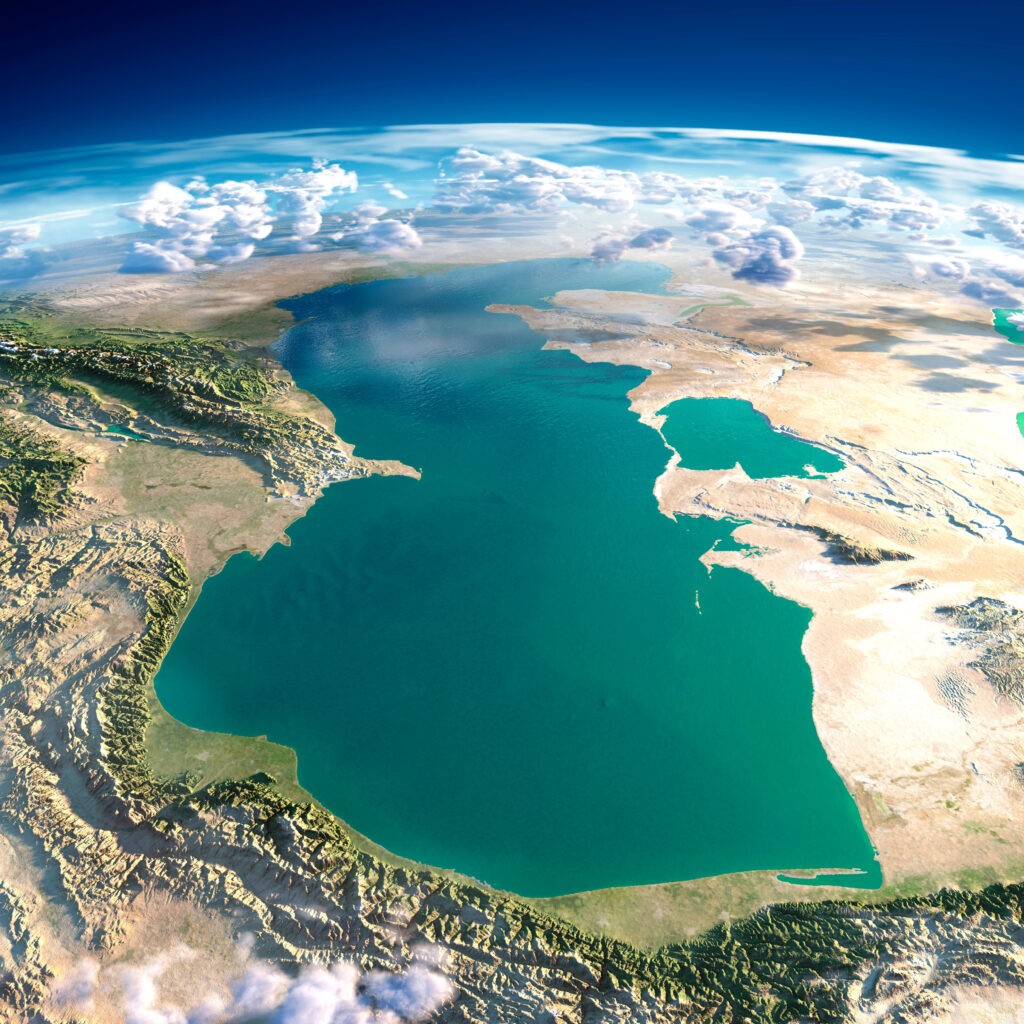
Environmentalists are raising the alarm as the level of the Caspian Sea approaches a historic low. A recent review by Energyprom.kz highlights the growing environmental and economic risks facing Kazakhstan.

Sea Level Dynamics and Causes of Decline

At the 28th session of the Caspian Hydrometeorological Coordination Committee, it was reported that in November 2024, the average sea level stood at -29.03 meters relative to the Baltic elevation system. This marks the lowest level since 1977 when the sea dropped to -29.18 meters.

Historical records indicate that between 1930 and 1977, the Caspian Sea experienced a significant decline due to the large-scale hydro-technical regulation of the Volga and Ural rivers. A temporary recovery followed between 1978 and 1995, with levels rising to -26.4 meters. However, since 2006, the sea has been steadily receding once more.

According to Kazakhstan’s Ministry of Water Resources and Irrigation, the surface area of the Caspian has shrunk from 390,000 to 360,000 square kilometers in the past 18 years, with the northeastern shoreline most severely affected.

“Since 2001, it has receded by over 50 kilometers, transforming thousands of square kilometers of water into land,” Deputy Edil Zhanbyrshin said during an inspection of the Ural River’s delta in the Atyrau Region. The depth at its mouth is now just 30-40 centimeters and is no longer navigable by ship.

Climate Change and Meteorological Shifts

One of the primary drivers of the sea’s decline is a drop in precipitation in the Volga basin. Atlantic cyclones that once brought regular rainfall have shifted their paths due to climate change. Simultaneously, rising temperatures are accelerating surface evaporation.

Though the Caspian Sea borders five nations – Kazakhstan, Russia, Iran, Azerbaijan, and Turkmenistan – Kazakhstan bears the greatest risk. The sea’s northern section, vital for maritime transport and oil production, is the most vulnerable.

Pollution, Wildlife Decline, and Regulatory Failures

In addition to hydrological challenges, pollution remains a persistent threat. Members of the Mazhilis have cited ongoing toxic discharges by oil companies as a major factor in ecological degradation. The Caspian seal population has also plunged from one million to 100,000 over four decades, and sturgeon numbers have fallen by 90%.

A parliamentary inquiry highlights the detrimental impact of oil spills, industrial fishing, drilling platforms, and tanker traffic, which obstruct sturgeon spawning routes.

Compounding the problem, environmental fines levied on oil firms have reportedly been written off, either against future investments or royalties.

Vadim Ni, director of the Social and Environmental Fund, told the Mazhilis he has been denied access to the environmental clauses in contracts with major field operators at Kashagan, Tengiz, and Karachaganak. The Ministry of Ecology has declined to release the data, citing confidentiality, and court appeals for transparency have so far failed.

A Looming Migration Crisis?

Without a reversal like the sea-level rise of 1978, Kazakhstan could face severe consequences. These include the cessation of shipping, collapse of marine ecosystems, and potential mass displacements.

“By 2040, the issue of resettling up to five million Kazakhs living near the sea may become unavoidable,” warned Mazhilis Deputy Sergei Ponomarev.

Kazakhstan’s Ministry of Water Resources has presented two projections. Under a moderate climate scenario with a 0.9-2°C temperature rise by 2050, sea levels could drop to -31.8 meters. A more severe warming of 1.4-2.6°C could see levels fall to -33.7 meters, posing critical risks to the country’s environment and economy.

To address these threats, Kazakhstan established the Scientific Research Institute of the Caspian Sea six months ago. However, the institute remains non-operational due to a lack of funding. Repairs, equipment, and staffing require 1.8 billion tenge ($3.5 million), but the Ministry of Finance has rejected the allocation. A new request has been submitted to the government’s reserve fund.

Kazakhstan: The Key Link Connecting China and Europe

China is one of Kazakhstan’s key partners, particularly in the development of its transit potential, with Kazakhstan serving as a strategic gateway for goods moving from China to the Eurasian Economic Union, Central Asia, and the European Union. Today, more than 80% of freight transported by rail between China and Europe transits through Kazakhstan.

Railway Connections

This year marks the 35th anniversary of the connection between the railways of Kazakhstan and China when the Dostyk-Alashankou crossing became the first international transportation route established in the era of Kazakh independence. For many years, it remained the sole railway connection, until in 2012, a second international border crossing, Altynkol-Khorgos, was opened.

Today, freight traffic through these two crossings continues to show consistent and significant growth. Last year, rail freight between the two countries exceeded 32 million tons, which is a historic high. In the first four months of 2025 alone, rail freight volume reached 11.4 million tons, a 13.3% increase compared to the same period in the previous year. According to Kazakhstan’s national railway company, Kazakhstan Temir Zholy (KTZ), the projected volume between the two countries for 2025 has been preliminarily agreed on at more than 33 million tons.

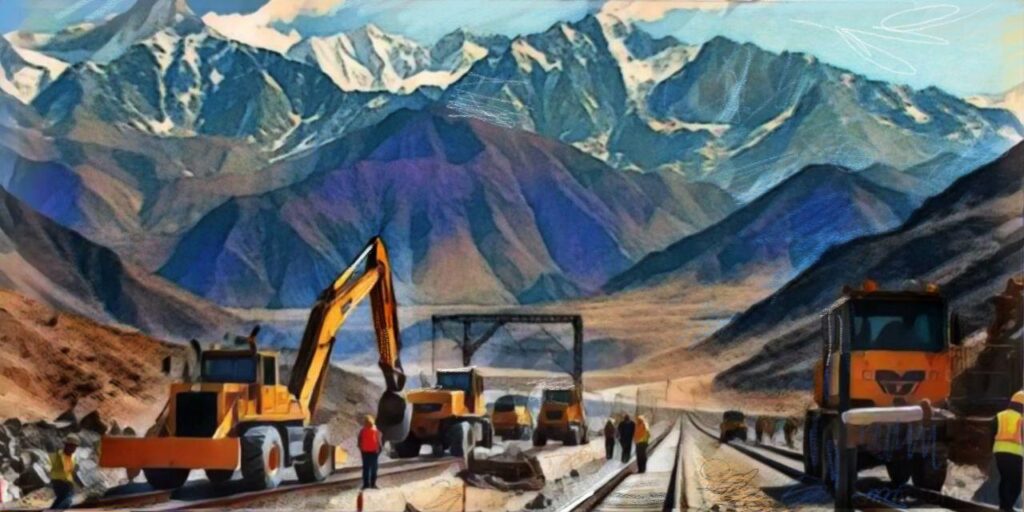
To further increase capacity, Kazakhstan is building a second track on the Dostyk-Moyynty railway segment and constructing a bypass line around Almaty station. Both projects are scheduled for completion this year, which will boost throughput and significantly reduce delivery times for goods moving between Asia and Europe. Additionally, Kazakhstan is currently building the Bakhty-Ayagoz line, which will include the opening of a third border crossing, Bakhty-Chuguchak, which is expected to expand rail capacity with China by an additional 25 million tons.

Maritime Development

Kazakhstan’s maritime infrastructure on the Caspian Sea is a major focus of development and foreign investment. A key initiative currently underway is the creation of a container hub at the port of Aktau, being developed as a joint venture with the Chinese port of Lianyungang.

Construction and installation work is actively in progress. According to the project plan, by the end of this year, the hub will feature a specialized cargo loading complex, a container terminal, and new cargo handling equipment. Once completed, the project is expected to increase container processing capacity from 140,000 TEU to 240,000 TEU, significantly enhancing Kazakhstan’s maritime logistics capabilities.

Road Transport

In addition to rail and sea, road transport is also a key pillar of Kazakhstan-China transportation cooperation. According to Kazakhstan’s Ministry of Transport, 2.8 million tons of cargo were moved by road for export/import purposes in 2024, a 41% increase from the previous year, whilst transit cargo volumes reached 3.6 million tons, marking a 68% year-on-year rise. In the first quarter of 2025 alone, road cargo volumes jumped by 83%, reaching 822,000 tons.

A major driver of this growth is the continued development and operation of the Western Europe–Western China highway corridor. Kazakhstan is also considering the opening of two new border checkpoints to strengthen connectivity between the regions of East Kazakhstan and Almaty with neighboring Chinese provinces: Terekty (East Kazakhstan) – Aketubieke (China), and Narynkol (Almaty region) – Muzha’erte (China). These proposed checkpoints are expected to significantly increase both freight and passenger traffic and enhance cross-border tourism. This proposal is currently under consideration by the Chinese authorities.

Air Transport

Thanks to a series of bilateral negotiations between Kazakhstan and China, the legal framework for operating regular flights between the two countries has been significantly expanded. Kazakhstan and China currently operate flights under the Open Skies regime, which allows for a broader range of routes.

At present, there are 56 passenger flights a week operating between the two countries across 10 routes. By the end of the year, that number is expected to jump to 124 weekly flights. Additionally, airlines have been granted permission to operate up to 42 flights a week under the “fifth freedom of the air” provision of the open skies agreement, which allows planes to carry passengers or cargo between two foreign countries on a flight originating or ending in its home country.

According to Kazakhstan’s Ministry of Transport, there are currently two air corridors between Kazakhstan and China used for international flights from Europe to China, South Korea, and other Southeast Asian nations. These corridors handle up to 215 flights a day, placing a significant burden on air traffic management systems. In this regard, Kazakhstan is actively exploring the possibility of opening a third international air corridor. This move, according to industry officials, would help distribute air traffic more evenly, improve the quality of navigation services, reduce flight times, and lower carbon dioxide emissions. It would also enhance the overall attractiveness and strategic value of airspace over both Kazakhstan and China.

Trans-Caspian International Transport Route

The Trans-Caspian International Transport Route holds huge strategic importance for the region. In 2024, cargo volume along this corridor reached 4.5 million tons, an increase of 62% compared to the previous year. From January to March 2025, the route handled 1.1 million tons of cargo, marking a 6.3% increase over the same period in 2024. By 2030, Kazakhstan aims to increase the annual volume to 10 million tons as China becomes more actively involved in the development of this corridor.

To further enhance regional connectivity and diversify its export channels, Kazakhstan is also pursuing the development of a transport corridor along the Kazakhstan-China-Mongolia route, which would open new export opportunities to the Mongolian market. The Ministry of Transport of Kazakhstan has already proposed a joint exploration of this route to the Chinese side, including improvements to infrastructure, simplification of administrative procedures, and the creation of favorable tariff conditions.

Strategic Logistics Hubs

Global demand for Chinese goods, from clothing to high-tech equipment and automobiles, is on the rise. This surge creates tremendous potential for developing logistics infrastructure aimed at efficiently distributing goods to markets in Central Asia, Russia, the Caucasus, and onward to Europe. Kazakhstan is therefore actively engaging Chinese partners in establishing joint logistics hubs and bonded warehouses both within the country and abroad.

The first such Kazakhstan-China joint project was launched in 2014 with the construction of a terminal at the Port of Lianyungang. In 2017, the largest dry port in Central Asia, Khorgos-Eastern Gate, was launched. In partnership with Xian Free Trade Port, Kazakhstan’s national railway company, KTZ, built a terminal in Xi’an in February 2024. The company also plans to construct similar joint terminals in the Port of Alat in Azerbaijan, at Selyatino station in the Moscow region, Svietloch in the Grodno region of Belarus, and Budapest. In Kazakhstan, meanwhile, work has already begun on a joint logistics center in Almaty.

Unlocking River Logistics Potential

River transportation between Kazakhstan and China also holds significant promise for expanding regional logistics. One such initiative involves developing a shipping route along the transboundary Ili River, stretching from the city of Konaev in Kazakhstan to Yining in China. According to Kazakhstan’s Ministry of Transport, current navigation in the Ili River basin is limited to the 90-kilometer Kapshagay Reservoir. There is no existing river traffic on the Ili from the Chinese border to the reservoir.

Opening a route near Konaev would involve establishing a logistics hub capable of aggregating and distributing cargo flows throughout the region, including to other Central Asian nations. To support this, 100 hectares of land have been allocated for the construction of a river port and transport hub. The project is envisioned as a joint effort between Kazakh and Chinese businesses. On the Kazakh side, the project investor is Ili River Port LLP. The first Chinese partner has also been identified as the Horgos Xinjiu International Trade Co., Ltd.

Another promising project is the creation of a multimodal transit corridor connecting Russia, Kazakhstan, and China via the transboundary Irtysh River. The proposed route, championed by Kazakhstan’s transport authorities, would use river transport from Omsk, Russia, to the village of Tügel in the East Kazakhstan Region. From there, the cargo would continue either via the planned Tugyl-Maikapshagai railway or by road.

Implementing this corridor would provide a direct link to the Northern Sea Route through the Ob-Irtysh basin and serve as a vital connector to the revival of the ancient Silk Road. By integrating these routes into the global transport system, Kazakhstan is seeking to boost its strategic importance in Eurasian logistics. This topic is scheduled to be discussed at the upcoming Shanghai Cooperation Organization (SCO) Transport Ministers’ Meeting in China this July.

President Tokayev Dismisses Ministers of Defense and Transport

Kazakhstan’s political landscape has undergone a significant shift as President Kassym-Jomart Tokayev announced the dismissal of two key cabinet members, Ruslan Zhaksylykov, Minister of Defense, and Marat Karabayev, Minister of Transport. The decision marks a reshuffling within the country’s leadership as the administration seeks to address critical challenges in defense and infrastructure.

Defense Minister Zhaksylykov Removed, Kosanov Appointed

Ruslan Zhaksylykov’s removal as Minister of Defense comes during a time of heightened scrutiny over Kazakhstan’s military readiness and regional security. While the government has not disclosed specific reasons for the dismissal, defense analysts suggest it is tied to concerns about military efficiency, resource management, and preparedness in a challenging geopolitical environment.

Criticism has mounted regarding the state of the country’s defense capabilities, with insiders pointing to inefficiencies in handling resources and gaps in modernization efforts. Zhaksylykov’s departure aligns with President Tokayev’s broader drive to reform and modernize the armed forces, aiming for greater accountability and effectiveness.

During Zhaksylykov’s time in office, the ministry faced frequent criticism over tragic incidents within the army, including fatal injuries and servicemen suicides, which sparked widespread public outrage.

The administration has moved swiftly in appointing Dauren Kosanov as Zhaksylykov’s successor, with the President instructing him to enhance the army’s combat readiness, expand special operations forces, and modernize military infrastructure. A seasoned military leader, Kosanov has previously held key positions including commander of the Air Force and director of the Military Institute of Air Defense Forces.

Transport Minister Marat Karabayev Dismissed After Short Tenure

Simultaneously, Marat Karabayev has been relieved of his duties as Minister of Transport, a position he had held since September 2023 when the ministry was established. His term was marked by escalating challenges in the transport and logistics sector, culminating in mounting criticism from the President himself.

Earlier this year, President Tokayev issued Karabayev an official reprimand for his unsatisfactory performance. The dismissal comes following a Security Council meeting chaired by the President during which Karabayev and other officials faced criticism for the state of the transport sector.

Tokayev highlighted systemic issues, including delays in transit projects, bottlenecks at border crossings, and inadequate infrastructure at checkpoints. The President also condemned the lack of progress in fulfilling key plans designed to boost the country’s capabilities as a transit hub.

Karabayev’s dismissal underscores the urgent need for reforms in the transport sector. President Tokayev stressed the importance of modernizing infrastructure to position Kazakhstan as a competitive player in international trade. He pointed to strategic initiatives such as establishing “green corridors” for streamlined border trade, improving transit volumes, and ensuring reliable aviation fuel supplies.

Implications and Broader Context

The twin dismissals demonstrate President Tokayev’s resolve to address inefficiencies and push forward with ambitious reforms. Both defense and transport are critical sectors for Kazakhstan’s future, given the country’s strategic geographical position. The defense ministry is facing growing pressure to modernize in response to regional security tensions, while the transport sector is vital for integrating Kazakhstan into global supply chains.

Turkmenistan Contains ‘Gate to Hell’ Fire After Decades of Inferno

The fiery spectacle of the Darvaza Gas Crater, feared and revered as the ‘Gate to Hell,’ has dimmed significantly after over fifty years of continuous burning. Turkmenistan’s government announced that the massive blaze, located in the heart of the Karakum Desert, is now largely under control, marking a historic milestone in environmental and resource management efforts for the country.

A Fiery Origin

The story of the Darvaza Gas Crater began in 1971 when Soviet scientists attempted to study and manage methane leaks in the desert. Digging into what they believed was a minor pocket of natural gas, they inadvertently pierced a massive underground gas field. When the drilling rig and associated equipment suddenly collapsed into the cavern below, toxic gases began escaping uncontrollably. To prevent the spread of noxious fumes, the team decided to ignite the methane, hoping it would burn out in a matter of days.

They were wrong. Instead of a quick resolution, the crater transformed into the longest-burning man-made fire, its eerie yellow flames licking at the edges of the 200-meter-wide pit. Visible from miles away, the burning crater became a bizarre and otherworldly landmark, attracting adventurers, scientists, and tourists alike.

From ‘Gate to Hell’ to ‘Shining of Karakum’

Image: TCA, Stephen M. Bland

Now officially named the ‘Shining of Karakum,’ the Darvaza Gas Crater has been both a source of national pride and a symbol of environmental mismanagement. The flames and the heat haze rising from the crater have drawn global attention, but they have also brought concerns. Methane seepage from the pit has been a major environmental issue, contributing to greenhouse gas emissions. Furthermore, some locals living in the harsh desert environment have long argued that the crater should be extinguished, citing health risks and economic losses due to the wastage of valuable natural gas.

A Turning Point in Fire Containment

The efforts to extinguish the ‘Gate to Hell’ reached a decisive turning point in January 2022, when then-President Gurbanguly Berdimuhamedov ordered action to put out the flames, emphasizing the detrimental effects of the blaze on the environment and the squandered financial potential of the escaping gas. However, earlier attempts over the decades failed to curtail the inferno.

This time, Turkmengaz, the state energy company, launched a sustained effort involving drilling additional wells around the crater to capture and divert the methane. According to Irina Luryeva, a director at Turkmengaz, these operations have significantly reduced the volume and intensity of the fire. “Whereas before, a massive glow from the blaze was visible for miles, today only faint combustion remains,” Luryeva stated. Independent satellite data confirmed the success, showing a threefold reduction in methane emissions from the site.

Global Collaboration and Environmental Initiatives

The containment of the Darvaza blaze is a result not just of national initiative but also of international collaboration. In March 2024, Turkmenistan partnered with the United Nations Environment Programme (UNEP) to address methane emissions comprehensively. The project included advanced monitoring technologies and strategies to manage methane leaks across the country’s energy sector.

A Complex History of Displacement and Mystery

Residents in Darvaza; image: TCA, Stephen M. Bland

The Darvaza site has its own shadowy history. The nearby settlement of Darvaza, meaning ‘gate’ in Turkmen, was once a thriving community close to the Soviet drilling site before disaster struck. While some believe the fire was intentionally ignited by the Soviets, a legend tells how a local herder, frustrated by the fumes poisoning his sheep, set a tire alight and rolled it into the hole.

The region’s history took another turn in 2004 when then-President Saparmurat Niyazov ordered the forced relocation of the Darvaza villagers, declaring the settlement an eyesore. Residents were reportedly given just an hour to pack their belongings before being expelled. Today, a handful of displaced villagers still live in makeshift homes on the fringes of the desert, many reliant on tourism linked to the crater for their livelihoods.

A Future Without Flames?

The containment of the Darvaza Gas Crater signals a shift in Turkmenistan’s approach to balancing heritage, environmental responsibility, and resource preservation. While the flames have not been extinguished completely, their dramatic reduction marks a new chapter for the once-endless fire that put this remote part of the Karakum Desert on the global map. For now, the pit continues to smolder faintly, a ghost of its former self, as Turkmenistan looks ahead to a future with fewer flames and fewer emissions.

Opinion: Strengthening the Silk Bonds — India’s Renewed Push Towards Central Asia

The velvet-draped tables of New Delhi’s 4th India-Central Asia Dialogue convened under the stewardship of External Affairs Minister Dr. S. Jaishankar on June 6, 2025, radiated congeniality, with history and strategy converging. This high-level engagement, attended by foreign ministers from Kazakhstan, Kyrgyzstan, Tajikistan, Turkmenistan, and Uzbekistan, marked more than a diplomatic ritual — it signaled India’s deepening resolve to recalibrate its strategic posture in a region too long shaped by other powers. Yet beneath pledges of shared civilizational futures and energy corridors, an uncomfortable truth lingered as India remains a guest, not a player, in Central Asia’s great power theatre.

Further, India’s internal socio-political landscape presents notable challenges that inadvertently shape its foreign policy credibility, particularly in the eyes of Central Asian nations. Persistent communal tensions — most visibly manifested in the Hindu-Muslim divide, the controversial demolition of the Babri Masjid in 1992, and the politically charged construction of the Ram Mandir — have deepened perceptions of religious polarization. Such domestic developments, while largely internal, resonate beyond India’s borders, especially in the Muslim-majority Central Asian republics, raising concerns about inclusivity and pluralism in India’s governance model. Simultaneously, India’s strained relations with key neighbors — Pakistan, and China, and increasingly volatile dynamics with Nepal, Bangladesh, and Sri Lanka — have reinforced a regional image of discord and inconsistency. These internal and regional complexities contribute to a trust deficit, making Central Asian countries cautious in placing long-term strategic confidence in India. For New Delhi to emerge as a dependable partner in the region, addressing internal fissures and presenting a coherent, inclusive national vision is as vital as economic or diplomatic outreach.

Central Asia sits at the center of ancient trade routes and modern geopolitical competition. For India, its importance is twofold: the region is a bridge to Eurasia and a repository of energy resources critical to India’s growing economy. But India’s historical connectivity to Central Asia — through the Silk Road, shared cultural legacies, and spiritual exchanges — has, for decades, been overshadowed by geographic and political barriers, notably the lack of direct overland access due to Pakistan. Recognizing these constraints, the dialogue showcased a strategic pivot. India reaffirmed its commitment to enhancing regional connectivity through the International North-South Transport Corridor (INSTC) and the Chabahar Port in Iran.

While geopolitical instability in Iran and Afghanistan poses challenges, India’s emphasis on multimodal routes demonstrates pragmatic flexibility. In an era defined by supply chain resilience and multipolar geopolitics, connectivity is no longer just an infrastructure question — it is a currency of influence. The dialogue also addressed the evolving regional security architecture. India’s proposal for counter-terrorism cooperation, capacity building, and intelligence sharing was timely and necessary. However, the dialogue echoed with familiar refrains, viz. civilizational bonds, shared destiny, and multipolar cooperation. Yet beneath the diplomatic choreography lies a haunting question. Can India transcend its historical role as Central Asia’s cultural cousin to become its strategic confidant? History whispers caution.

The Burden of History: From Silk Roads to Shadow Roads

For centuries, the Silk Road pulsed with Indian spices, ideas, and pilgrims. The Mongols, Tsars, and Soviets used it as a cordon sanitaire or resource reservoir. India’s medieval links — Buddhist monasteries in Balkh, Sufi khanaqahs in Bukhara — were cultural exports, not political anchors. Sufi saints traversed the Pamirs. But as historian S.F. Dale notes in Indian Merchants and Eurasian Trade, “this influence was transactional, not transformational,” while historian Frederick Starr notes in Lost Enlightenment, “Central Asia’s intellectuals once shaped global science and philosophy, but its modern destiny has been dictated by outsiders”.

Post-1991, as the new republics emerged, India’s outreach prioritized cultural reconnection — Sanskrit chairs in Bishkek, Bollywood screenings in Dushanbe — while China deployed $60 billion in BRI infrastructure and Russia consolidated military dominance via the CSTO. India’s cultural capital, while significant, lacks material leverage. Central Asia respects Indian philosophy but invests in Chinese rails. India offered yoga and Bollywood — soft power assets, but no match for pipelines or energy.

The SWOT Mirage: India’s Self-Delusions

Despite India’s democratic credentials and cultural affinity, geography remains an unforgiving obstacle. Kazakhstan’s oil still detours over 8,000 kilometers via Russia to reach Gujarat, while the much-touted Chabahar Port manages only 6 million tons annually — compared to China’s Gwadar handling nearly 50 million. The infrastructural bottlenecks are not merely physical but psychological. Pakistan’s blockade functions as more than a logistics issue — it entrenches a mindset among Central Asian elites that views India through a prism of civilizational fatigue, as a country struggling with internal contradictions and unable to assert coherent regional leadership.

Further compounding the challenge is the continued underperformance of the International North-South Transport Corridor (INSTC), envisioned to span 7,200 kilometers but currently only 30% functional. Meanwhile, China’s overland routes via Kazakhstan now move over 1.5 million containers annually to Europe, rendering India’s connectivity projects sluggish and aspirational rather than operational.

Moreover, even where India shows promise, such as digital governance tools like UPI and Aadhaar, practical barriers persist. India’s diplomatic rhythm also raises questions. While India celebrates its principle of transparent, rules-based engagement, Central Asian perceptions — shaped by post-Soviet memory and grounded in realist expectations — see inconsistency. Literature and strategic commentary from the region express doubts about India’s reliability. The External Affairs Minister S. Jaishankar stated himself that “Some friends may also be more complicated than others. They may not always share the same culture of mutual respect or ethos of diplomatic etiquette.” He underlined that “friends are not always black and white, nor will friendship be linear in development. Friendships are also not exclusive, particularly so in a multi-polar world”.

However much India speaks of eternal friendship, its ambassadors change every three years, and projects stall. China’s envoys stay for a decade — and deliver. The Belt and Road Initiative may lack clarity, but its material presence — through railroads, power plants, and jobs — is undeniable. In contrast, India’s hallmark projects like the 2009 Turkmenistan-Afghanistan-Pakistan-India (TAPI) gas pipeline have become textbook cases of bureaucratic inertia.

In essence, India’s strengths — its democracy, digital prowess, and cultural diplomacy — are being blunted by systemic weaknesses, geographical isolation, inconsistent follow-through, and a precarious neighborhood. These dynamics, when left unaddressed, not only diminish India’s credibility in Central Asia but also risk squandering a historic window of strategic opportunity.


The views expressed in this article are those of the authors and do not necessarily reflect the official policy or position of the publication, its affiliates, or any other organizations mentioned.

Cholpon-Ata Launches First-Ever Centralized Sewage System Project

In a significant move toward sustainable tourism and environmental protection, Kyrgyz Minister of Construction Nurdan Oruntaev signed an agreement with firms from China, Turkey, and Uzbekistan to build treatment facilities, pump stations, and sewer collectors in Cholpon-Ata, a city on the northern shore of Lake Issyk-Kul.

The project is being financed by the Asian Development Bank as part of the national “Environmental Management of Issyk-Kul” program. It aims to improve ecological conditions and support sustainable tourism development by establishing a unified sewage system for Cholpon-Ata and nearby settlements, including Bosteri, Kara-Oi, and Baktuu-Dolonotu.

“The project aims to ensure balanced economic development with a focus on innovation and environmentally friendly technologies. Its key objective is to preserve the unique ecosystem of the lake,” the Ministry of Construction stated.

Environmental Measures Ahead of Tourist Season

Ahead of the 2025 tourist season, the Environmental and Technical Supervision Service has announced that resorts without sewage treatment facilities will be barred from operating during the summer months.

“With the start of the season, the load on the lake’s ecosystem increases dramatically, all sanatoriums and holiday homes begin operating, and the number of tourists surges. Issyk-Kul is a closed ecosystem and designated biosphere reserve that requires special protection. According to a presidential decree, facilities in the recreational zone without treatment infrastructure are prohibited from operating,” explained Kych Tentimishov, head of the regional department for environmental and technical supervision at the Ministry of Natural Resources.

Current Sanitation Status

According to ministry data, there are currently 1,127 accommodation facilities operating around Lake Issyk-Kul, including resorts, sanatoriums, and holiday homes. Of these, only 185 have their own sewage treatment systems, and another 208 are connected to a centralized system. The remaining facilities rely on septic tanks.

Authorities are currently conducting inspections to ensure all facilities meet environmental standards, as part of a broader initiative to safeguard one of Kyrgyzstan’s most treasured natural landmarks.