• KGS/USD = 0.01144 0%
  • KZT/USD = 0.00211 0%
  • TJS/USD = 0.10460 0%
  • UZS/USD = 0.00008 0%
  • TMT/USD = 0.28571 0.28%
  • KGS/USD = 0.01144 0%
  • KZT/USD = 0.00211 0%
  • TJS/USD = 0.10460 0%
  • UZS/USD = 0.00008 0%
  • TMT/USD = 0.28571 0.28%
  • KGS/USD = 0.01144 0%
  • KZT/USD = 0.00211 0%
  • TJS/USD = 0.10460 0%
  • UZS/USD = 0.00008 0%
  • TMT/USD = 0.28571 0.28%
  • KGS/USD = 0.01144 0%
  • KZT/USD = 0.00211 0%
  • TJS/USD = 0.10460 0%
  • UZS/USD = 0.00008 0%
  • TMT/USD = 0.28571 0.28%
  • KGS/USD = 0.01144 0%
  • KZT/USD = 0.00211 0%
  • TJS/USD = 0.10460 0%
  • UZS/USD = 0.00008 0%
  • TMT/USD = 0.28571 0.28%
  • KGS/USD = 0.01144 0%
  • KZT/USD = 0.00211 0%
  • TJS/USD = 0.10460 0%
  • UZS/USD = 0.00008 0%
  • TMT/USD = 0.28571 0.28%
  • KGS/USD = 0.01144 0%
  • KZT/USD = 0.00211 0%
  • TJS/USD = 0.10460 0%
  • UZS/USD = 0.00008 0%
  • TMT/USD = 0.28571 0.28%
  • KGS/USD = 0.01144 0%
  • KZT/USD = 0.00211 0%
  • TJS/USD = 0.10460 0%
  • UZS/USD = 0.00008 0%
  • TMT/USD = 0.28571 0.28%

Uzbekistan Allocates $49 Million to Prevent Water Shortages and Upgrade Canals

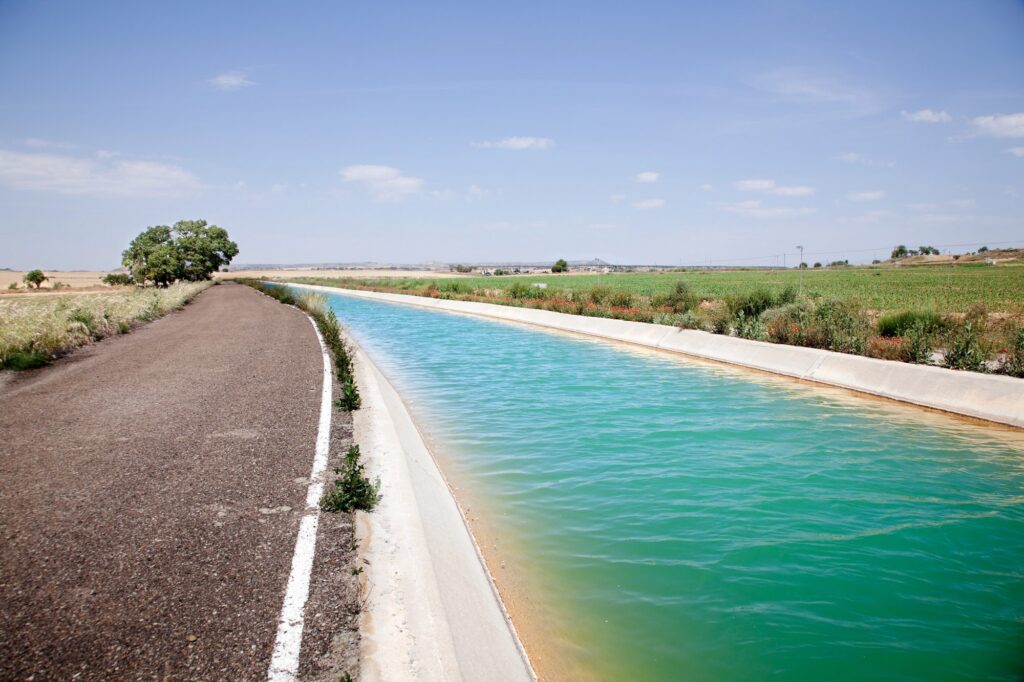
Uzbekistan will allocate 600 billion UZS (about $49 million) this year to improve water management and reduce the risk of shortages, according to a presidential decision issued on March 5.

The funding will support additional measures aimed at using water resources more efficiently and preparing for potential water scarcity during the irrigation season.

Under the plan, most of the funds will be directed toward modernizing irrigation infrastructure. The government intends to reconstruct and concrete 389 kilometers of irrigation canals that currently experience high levels of water loss. Officials say these improvements could help save an average of 206 million cubic meters of water and 26 million kilowatt-hours of electricity each year.

The work is also expected to improve water supply for about 158,400 hectares of irrigated farmland across the country.

According to the decision, 480 billion UZS (about $39.5 million) will be allocated specifically for concreting canals and irrigation networks, while the remaining 120 billion UZS (about $9.8 million) will fund other measures aimed at preventing water shortages and improving water management.

The initiative will be implemented by the Ministry of Water Resources in cooperation with regional authorities, including the government of the Republic of Karakalpakstan and provincial administrations. The ministry, together with the Ministry of Economy and Finance, has been instructed to prepare a detailed list of priority canal reconstruction projects within one week and submit it to the Cabinet of Ministers for approval.

Officials said the irrigation repairs will follow a “one canal – one system” principle, meaning priority will be given to irrigation networks connected to canals that have already been partially modernized or are currently undergoing reconstruction.

The funds will be allocated from additional state budget revenues generated during the first quarter of 2026.

Water management has become an increasing priority for Uzbekistan as the country seeks to modernize aging infrastructure and address growing pressure on water resources in agriculture.

The Times of Central Asia previously reported that the government is also working on a long-term strategy to expand access to clean drinking water nationwide, with a goal of providing 85% of the population with reliable drinking water services by 2030, according to proposals developed by the Agency for Strategic Reforms.

Kazakh Scientists Develop Technology to Generate Electricity from Noise

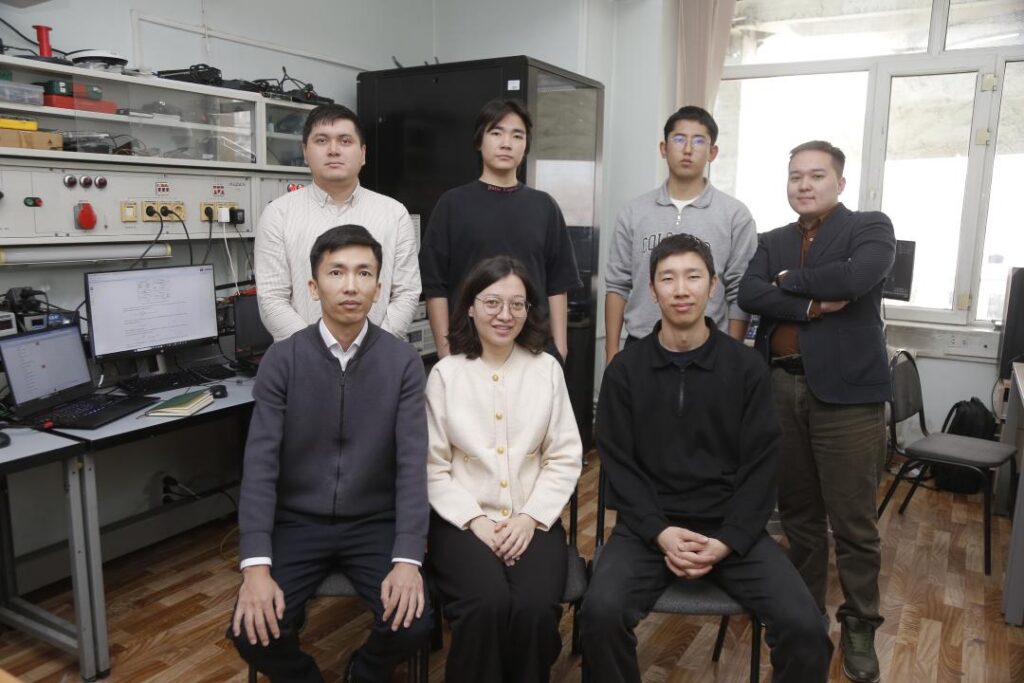
Researchers at Satbayev University in Almaty are developing a compact device capable of converting environmental mechanical vibrations into electrical energy.

Mechanical vibrations are repetitive movements that occur around a system’s equilibrium position and include phenomena such as sound waves and physical oscillations. Scientists at Satbayev University aim to harness these vibrations as a stable energy source for autonomous sensors operating in remote and hard-to-access areas.

The project focuses on creating an electromagnetic converter capable of operating within a frequency range from several tens to a few hundred hertz, the range most commonly found in natural vibration environments.

“We are developing a device that will efficiently convert mechanical vibrations into electrical energy and serve as an autonomous power source. This will help ensure the continuous and reliable operation of Internet of Things (IoT) sensors in remote regions,” said project leader Albanbay Nurtay.

The scientific basis of the technology is the law of electromagnetic induction: when a coil and magnets move relative to each other inside the device, an electrical signal is generated.

Researchers are focusing on engineering solutions that maintain high efficiency across a wide range of vibration frequencies. Engineers are also working to ensure stable operation under different vibration conditions and to minimize energy losses during transmission.

The project is being implemented in several stages. The first phase involves developing the conceptual design of the device, along with its 3D and mathematical models.

In the next stage, Satbayev University researchers plan to build experimental prototypes and develop a dedicated testing platform to measure the device’s performance.

Based on the results of these experiments, scientists will select a final prototype with optimal technical characteristics. The final stage will include the publication of research findings and the filing of a patent for the intellectual property.

The device could have practical applications across several sectors, including industrial monitoring, environmental observation, and agriculture.

The project represents an important step in the development of green technologies.

“Efficient use of natural vibration sources opens new opportunities for energy conservation and supports the implementation of sustainable development principles and goals,” Kazakhstan’s Ministry of Education noted.

As previously reported by The Times of Central Asia, researchers at Nazarbayev University recently developed a medical exoskeleton designed to assist in stroke rehabilitation.

Moody’s Upgrades Tajikistan’s Credit Rating to B2, Citing Economic Improvements

International rating agency Moody’s has upgraded Tajikistan’s long-term sovereign credit rating to B2 with a stable outlook, according to the National Bank of Tajikistan.

According to the financial regulator, Tajikistan has been cooperating with Moody’s since 2014, and the latest decision marks the first time the country’s sovereign rating has been raised to the B2 level.

The National Bank said the upgrade reflects the government’s ongoing economic reforms and policy measures aimed at strengthening the country’s financial system and macroeconomic stability.

Moody’s cited several factors behind the upgrade from B3 to B2, including sustained economic growth in recent years, improvements in fiscal management, and continued positive macroeconomic trends.

The agency also highlighted progress in structural reforms, reduced risks related to public debt, and improvements in public financial management.

The stable outlook indicates Moody’s expectation that Tajikistan will maintain prudent fiscal and monetary policies in the coming years.

A B2 sovereign rating signals moderate creditworthiness. This means that while the country is capable of meeting its financial obligations, certain economic and external risks remain.

Compared with the previous B3 rating, the upgrade reflects a stronger financial position and increased confidence from international financial markets.

The stable outlook also suggests that no major macroeconomic shocks are expected in the medium term and that economic risks are considered manageable.

Assessments by international rating agencies play an important role for countries seeking access to global financial markets.

First, sovereign credit ratings help investors and lenders evaluate a government’s ability to meet its financial obligations, which directly affects borrowing costs and loan conditions.

Second, a higher rating increases a country’s attractiveness to international investors. Global financial institutions often rely on such ratings when assessing investment risks, meaning improvements can help attract foreign capital.

Credit ratings are also viewed as indicators of economic stability and fiscal discipline, strengthening confidence in government policies among international partners and domestic market participants.

In addition, sovereign ratings influence external debt management and help governments raise financing for infrastructure and social development projects.

The Moody’s upgrade is not the only positive signal for Tajikistan’s economy.

Just a month earlier, another major international rating agency, Standard & Poor’s, improved the outlook on Tajikistan’s long-term sovereign credit rating from stable to positive while maintaining the rating at B.

Taken together, the assessments from two leading global rating agencies highlight improvements in Tajikistan’s macroeconomic conditions and point to stronger prospects for financial stability in the coming years.

Kazakhstan Extends Ban on Chicken Egg Imports to Support Domestic Producers

Kazakhstan has decided to extend a ban on chicken egg imports in an effort to support domestic poultry producers. The restriction will also apply to imports from member states of the Eurasian Economic Union (EAEU), despite the absence of customs borders within the bloc.

The decision was made during a meeting of the Interdepartmental Commission on Foreign Trade and Participation in International Economic Organizations, chaired by Deputy Prime Minister and Minister of National Economy Serik Zhumangarin. The commission reviewed several key issues affecting the country’s food security and economic policy.

“An import ban on chicken eggs will be introduced for six months, including imports from EAEU countries. The relevant order will be adopted by the Ministry of Agriculture,” the government press service said following the meeting.

According to the government, Kazakhstan currently has 70 poultry farms, including 34 specializing in egg production, 29 focused on meat production, and seven engaged in breeding and reproduction.

In 2025, domestic production of chicken eggs increased by 2.4% to reach 4.57 billion eggs. As a result, local production now covers approximately 98% of domestic demand.

Kazakhstan previously introduced temporary restrictions on egg imports in December 2025, when the Ministry of Agriculture imposed a one-month ban on imports of fresh chicken eggs. That measure expired on January 11, 2026.

Earlier, a similar restriction had already been in place from April 2025 for six months. Taken together, these measures effectively closed Kazakhstan’s egg market to imports for more than a year.

The commission also reviewed the possibility of introducing restrictions on potato exports. After assessing domestic market conditions, however, officials decided not to impose export limits.

According to the government, stabilized prices and sufficient domestic supply make it possible to maintain potato exports without additional restrictions.

At the same time, requirements for exporters seeking beef export quotas will be eased. The decision takes into account the government’s Comprehensive Livestock Development Plan, which aims to increase Kazakhstan’s cattle population from 7.9 million to 12 million head.

The program also seeks to expand Kazakhstan’s beef export potential and open new foreign markets. The Ministry of Agriculture will amend the existing quota distribution rules accordingly.

Meanwhile, authorities decided to extend the ban on the export of breeding livestock, including female cattle, as well as young bulls, in order to preserve breeding stock and ensure sufficient supply for domestic meat processors. The restriction also applies to exports to EAEU member states.

As previously reported by The Times of Central Asia, Kazakhstan increased revenue from agricultural exports by more than one-third in 2025 compared to 2024.

Mirziyoyev: Violence Against Women and Children Will Not Be Tolerated in Uzbekistan

President Shavkat Mirziyoyev has announced tougher measures against violence toward women and children, and unveiled new economic and education programs aimed at expanding opportunities for women across Uzbekistan.

Speaking on March 6 at a ceremony in Tashkent marking International Women’s Day, the president referred to a decree he signed on March 3 that strengthens the country’s response to domestic violence. According to remarks reported by Uzbek media and the presidential press service, the decree introduces a stricter system for addressing harassment and violence against women and minors.

Mirziyoyev said Uzbekistan has adopted the creation of an uncompromising environment against violence as a strategic goal.

“Anyone who raises a hand against women or children will either leave Uzbekistan or be forced to live according to the law,” he said during the event held at the Kuksaroy residence.

Mirziyoyev also stated that the decree includes tougher penalties for certain crimes against minors. According to his remarks, in some cases crimes involving pedophilia will now carry life imprisonment. He noted that legal experts had raised objections during discussions but said he insisted on including the punishment in the decree.

In addition to legal measures, Mirziyoyev outlined several initiatives focused on education, employment, and rehabilitation programs for women.

According to statements made during the event, women serving sentences in correctional facilities will be given the opportunity to apply to universities and study remotely. Officials said many female inmates currently have only secondary education and lack professional skills, while some have expressed interest in pursuing higher education.

To address this, the government plans to launch a program called “New Life,” which will provide vocational training for women in prisons. Participants will study for three to six months in professional training programs and receive certificates. Those who wish to enter universities will be able to take entrance exams inside correctional institutions. Women admitted to universities on a contract basis will be eligible for interest-free loans, repayable after completing their sentences and securing employment.

The government also plans to expand economic support for women nationwide. According to Mirziyoyev’s speech, 166,000 women will receive training in modern professions and entrepreneurship this year, while another 100,000 will study information technology skills.

A separate initiative called “Daromadli Ayol” (“Profitable Woman”) will support home-based businesses. With the help of experienced entrepreneurs, the program aims to create employment for 50,000 women in areas such as handicrafts, poultry farming, beekeeping, and household agriculture.

Officials also said that under the “Hamroh” program, around 1 trillion UZS (about $82,440,000) will be allocated to finance 3,000 business projects led by women.

Overall, the government aims to help 1.5 million women generate income this year, including 400,000 who are expected to enter business activities. More than 25 trillion UZS (about $2,060,950,000) in financial resources will be directed toward these initiatives.

OTS Faces Security Test from Turkey to Central Asia

Iran’s widening war has now reached the institutional space linking Turkey, the South Caucasus, and Central Asia. Turkey said on March 4 that NATO air defenses destroyed an Iranian ballistic missile entering Turkish airspace, while Azerbaijan said the next day that four Iranian drones crossed into Nakhchivan, injuring four people, and damaging civilian infrastructure at the exclave’s airport. Iran denied targeting Nakhchivan; in the Turkish case, the missile’s intended target has not been fully clear in public reporting. Even so, the combined effect was unmistakable. By March 7, the Organization of Turkic States (OTS) had become more than a bystander to a Middle Eastern war that had earlier seemed outside its main agenda.

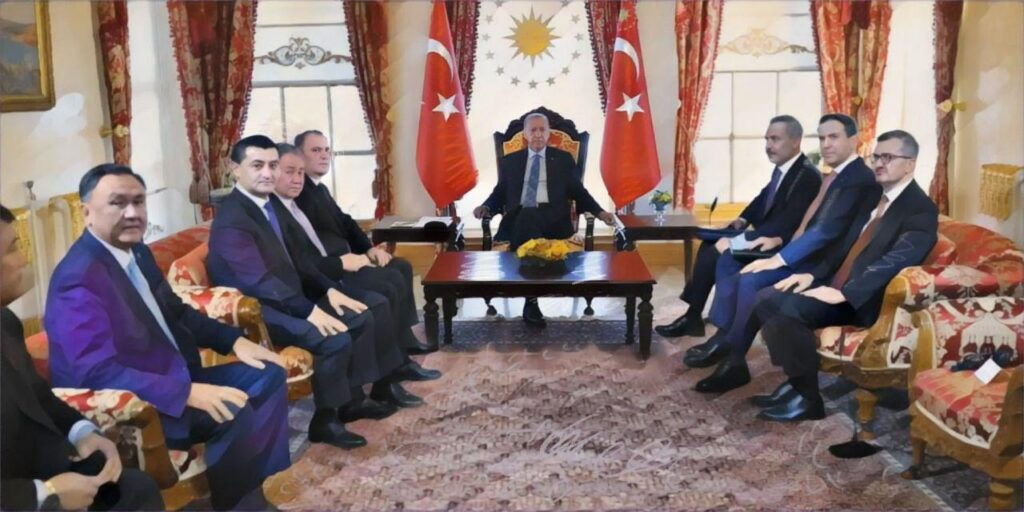
This is what gave the OTS foreign ministers’ meeting in Istanbul its significance. The Turkish Foreign Ministry announced on March 6 that the informal meeting of the OTS Council of Foreign Ministers would be held in Istanbul on March 7, with Foreign Minister Hakan Fidan hosting. After the meeting, the ministers adopted a joint statement declaring that threats to the security of any OTS member are a matter of concern for the whole organization. That language does not make the OTS a military alliance. It does, however, show the organization moving more openly into collective political-security signaling when member states come under attack.

Why Nakhchivan Matters

Nakhchivan is central to the logic of this story. The exclave is an integral part of Azerbaijan, but is separated from the rest of the country. It borders Armenia, Iran, and Turkey, making it significant out of proportion to its size. A military strike there is not a routine border incident. It reaches one of the most sensitive nodes in the wider Turkic political space: it is a meeting point for Azerbaijani sovereignty, Turkish strategic concern, and Iranian proximity.

Until recently, Nakhchivan’s special status and borders were anchored in the 1921 Moscow and Kars treaties, which gave Turkey and Soviet Russia a formal say over the exclave’s autonomy and, it could be argued, its external security. But last year, Baku folded Nakhchivan more tightly into Azerbaijan’s domestic legal order by removing those references (along with other changes) from the constitution of the exclave, which has suddenly become a target in a much wider regional confrontation.

Baku’s response to the Iranian attack showed that it saw the incident in political as well as tactical terms. President Ilham Aliyev said Azerbaijan would prepare retaliatory measures. Reuters later reported that Azerbaijan had ordered the evacuation of its diplomats from Iran, citing safety concerns. This is understandable, particularly in light of the January 27, 2023, incident when an armed attacker entered Azerbaijan’s embassy in Tehran and opened fire, killing the head of the embassy’s security and wounding two other staff. Baku called this a terrorist attack, evacuated most of its diplomatic personnel, and suspended embassy operations. Azerbaijani officials also said the March 5 attack on Nakhchivan violated international law, rejecting any implication that it could have been a technical mishap.

The stakes widened further after that. On March 7, Azerbaijan said that it had foiled several sabotage plots linked to Iran’s Islamic Revolutionary Guard Corps (hardly being the first of their kind), including an alleged plan to attack the Baku-Tbilisi-Ceyhan (BTC) pipeline, which was, according to one Indian report, subsequently attacked by a drone in Georgia. Reuters reported that other targets in Azerbaijan included the Israeli embassy, an Ashkenazi Jewish synagogue, and a leader of Azerbaijan’s Mountain Jews community. Beyond this, once infrastructure such as the BTC enters the picture, questions arise concerning corridor security, energy transit, and regional economic exposure.

What the OTS Response Means

Central Asia enters the story more clearly with that in mind. No Central Asian OTS member was directly struck. But the March 7 joint statement said that threats to any OTS member’s security concern the entire organization. It warned that continued hostilities could disrupt trade routes, energy markets, food security, and migratory flows. Central Asia’s exposure to threat is not directly from military engagement but indirectly through OTS member-state security, regional stability, and the wider consequences of conflict.

The OTS secretariat, for its part, moved quickly. On March 5, the secretary general condemned the UAV attacks on civilian facilities in Nakhchivan, saying they had been carried out from the territory of Iran. He also called for restraint and for avoiding further deterioration in the regional situation. The OTS’s own institutional center thus already elevated the issue beyond bilateral diplomacy before the ministers assembled in Istanbul. It necessarily became an OTS matter, not just a Baku–Tehran confrontation.

The ministers’ joint statement on March 7 gave that instinct a clearer political form. The text declared that any threats to the security of member states concern the entire organization. It condemned attacks targeting Turkey and Nakhchivan, including civilian facilities, and it expressed support for the sovereignty, territorial integrity, and security of Turkey and Azerbaijan. These formulations create a collective political frame for what might otherwise have remained two separate national incidents. They show that the OTS is willing to speak in the language of solidarity when violence reaches one of its members.

At the same time, the ministers emphasized restraint, diplomacy, and a return to negotiations. The OTS did not evoke a military response but answered by widening the political scope of the problem. This is still an institutional development worth noting. The organization is not becoming like NATO, but it is becoming more explicit about the security implications of regional instability for its member states.

The Next Test

That brings Central Asia onto the stage. The March 7 statement does not create any formal security obligations for the Central Asian states, but it does establish a precedent. If threats to one member’s security concern the whole organization, then future crises involving transport corridors, border violence, or attacks on critical infrastructure will be harder to treat as purely local matters. The expectation of organization-wide consultation has now been created.

The immediate question is whether the Iran-related incidents stop here or widen further. Turkey’s missile episode and Nakhchivan’s drone strike may still prove to be limited spillover events rather than the beginning of a sustained pattern. How quickly a new Supreme Leader is selected in Iran will make a difference here. But the institutional threshold has already shifted: The OTS has publicly stated, during ongoing military hostilities, that member-state security concerns are collective concerns. That statement will outlast the news cycle.

For that reason, the most important result of the Istanbul meeting may not be any operational step taken today. It may be that the OTS has defined its own political horizon somewhat more broadly than before. The organization now finds itself speaking about attacks, sovereignty, corridor vulnerability, and regional instability in one connected register. The next test will show whether that language remains episodic solidarity or develops into more regular coordination from Turkey to Central Asia.