• KGS/USD = 0.01144 0%
  • KZT/USD = 0.00196 -0%
  • TJS/USD = 0.10899 -0%
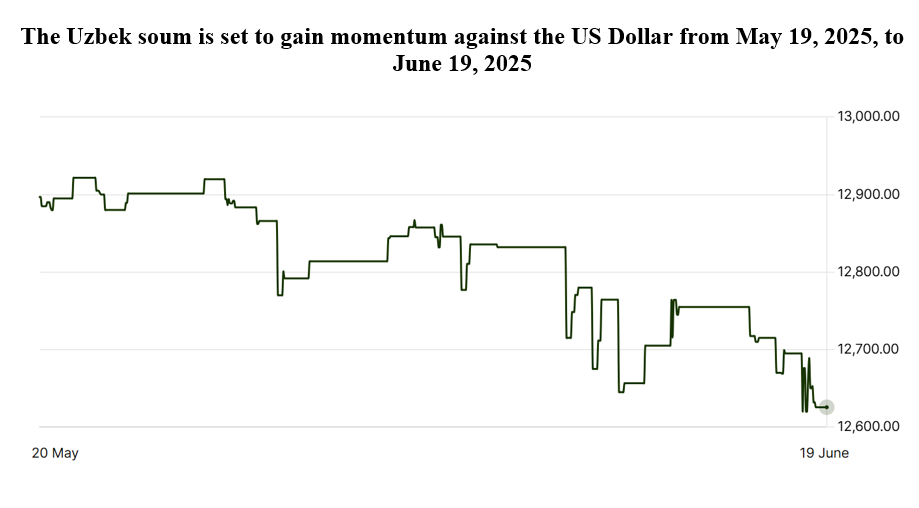
  • UZS/USD = 0.00008 -0%
  • TMT/USD = 0.28490 0%
  • KGS/USD = 0.01144 0%
  • KZT/USD = 0.00196 -0%
  • TJS/USD = 0.10899 -0%
  • UZS/USD = 0.00008 -0%
  • TMT/USD = 0.28490 0%
  • KGS/USD = 0.01144 0%
  • KZT/USD = 0.00196 -0%
  • TJS/USD = 0.10899 -0%
  • UZS/USD = 0.00008 -0%
  • TMT/USD = 0.28490 0%
  • KGS/USD = 0.01144 0%
  • KZT/USD = 0.00196 -0%
  • TJS/USD = 0.10899 -0%
  • UZS/USD = 0.00008 -0%
  • TMT/USD = 0.28490 0%
  • KGS/USD = 0.01144 0%
  • KZT/USD = 0.00196 -0%
  • TJS/USD = 0.10899 -0%
  • UZS/USD = 0.00008 -0%
  • TMT/USD = 0.28490 0%
  • KGS/USD = 0.01144 0%
  • KZT/USD = 0.00196 -0%
  • TJS/USD = 0.10899 -0%
  • UZS/USD = 0.00008 -0%
  • TMT/USD = 0.28490 0%
  • KGS/USD = 0.01144 0%
  • KZT/USD = 0.00196 -0%
  • TJS/USD = 0.10899 -0%
  • UZS/USD = 0.00008 -0%
  • TMT/USD = 0.28490 0%
  • KGS/USD = 0.01144 0%
  • KZT/USD = 0.00196 -0%
  • TJS/USD = 0.10899 -0%
  • UZS/USD = 0.00008 -0%
  • TMT/USD = 0.28490 0%
08 December 2025

Central Asia’s Growing Domestic Drug Problem

It’s in the headlines every few days now in Central Asian countries.

February 1 – Uzbekistan’s law enforcement agencies report raiding a laboratory producing synthetic drugs, and seizing narcotics worth more than $800,000. 

February 3 – Uzbek law enforcement announces that their latest counter-narcotics operation has resulted in the seizure of 111 kilograms of illegal drugs.

February 10 – police in Kyrgyzstan’s northern Chuy region seize 1.5 kilograms of hashish and 1 kilogram of marijuana.

February 11 – Kazakhstan’s Committee for National Security (KNB) announces it had uncovered a laboratory in Almaty region that was producing synthetic drugs. More than 15 kilograms of these synthetic drugs were seized and 200 liters of precursor materials.

In the first decade after the five countries of Central Asia became independent in 1991, many of the reports from foreign media were about Central Asia being a major transit route for narcotics coming out of Afghanistan that were for buyers in Russia and Europe.

Thirty years later, drugs are still coming into Central Asia from Afghanistan, but it is no longer just opium and heroin. And now it seems a good portion of these illicit narcotics are being consumed in Central Asia.

Made in Central Asia

Drug-producing laboratories are multiplying, and while there are no precise figures for the number of addicts, it is clear an increasing number of young people in Central Asia are using drugs.

Ashita Mittal, the regional representative of the UN Office on Drugs and Crime in Central Asia, said in January 2025 that during the “last several years in just Kazakhstan, law enforcement agencies have uncovered and destroyed 87 laboratories producing synthetic drugs, and in Kyrgyzstan about 11-12.”

Law enforcement agencies in Kazakhstan said earlier in January that they had destroyed 63 laboratories producing illegal narcotics just in 2024.

Tajikistan’s Agency for Narcotics Control said at the end of its Kuknor-2024 counter-narcotics campaign in December 2024 that it had confiscated more than 1 ton of synthetic drugs.

The synthetic drugs most often mentioned in these seizures are mephedrone, a type of amphetamine and stimulant that causes euphoria, and a-PvP, another stimulant.

However, there are many types of synthetic drugs now available in Central Asia. 

Batum Estebesova, director of Kyrgyzstan’s Sotsium drug rehabilitation center, said the variety of synthetic drugs is increasing quickly.

“We can’t keep up with all the new drugs to add them to the list of prohibited substances,” Estebesova said.

UN Office on Drugs and Crime representative Mittal said part of the problem comes from Afghanistan.

Mittal noted in 2023, there was a 95 percent reduction in heroin production in Afghanistan, but at the same time there was an “exponential growth” in the production of methamphetamines crossing into the bordering Central Asian countries – Tajikistan, Turkmenistan, and Uzbekistan.

In May 2023, Uzbek border guards noticed some strange marking on several boxes of pomegranate juice coming from Afghanistan. 

Testing showed bottles of juice in those boxes contained methamphetamine. Apparently, the buyers intended to evaporate the liquid and then collect the methamphetamine residue.

In both Kazakhstan and Kyrgyzstan, officials have spoken about the use of the internet to sell synthetic drugs.

Alzhan Nurbekov, an official in Kazakhstan’s prosecutor general’s office, said in June 2023 that “any 12-year-old school kid can buy drugs through a Telegram channel and have them delivered quicker than a pizza.”

Strange seizure figures

Afghanistan continues to be a source of what could be termed “traditional” illegal narcotics; cannabis-based and opiates.

In November 2024, Uzbekistan’s Interior Ministry said raids around the country in October netted more than 255 kilograms of illegal drugs – 99 kilograms of marijuana, 67 kilograms of heroin, 63 kilograms of hashish, 15 kilograms of synthetic drugs, and 11.7 kilograms of opium.

Kyrgyzstan and Kazakhstan report seizures of marijuana and hashish regularly, though the origin of these drugs is not given and some of it might be locally produced.

Interestingly, the countries bordering Afghanistan are reporting lower seizure figures than one would expect.

Uzbekistan has not provided any figures for the total amount of narcotics confiscated in 2024.

In October, Uzbekistan’s State Customs Service said it had seized some 888 kilograms of illegal drugs in the first nine months of 2024.

This does not include drugs confiscated by Uzbekistan State Security Service or Interior Ministry, neither of which, as of mid-February 2025, has posted figures of total narcotics seizures in 2024.

The director of Tajikistan’s Agency for Narcotics Control, Zafar Samad, said at the start of February that 4.381 tons of narcotics were confiscated in 2024, down from the 5.282 tons seized in 2023.

This reported reduction seems at odds with other information.

On November 18, 2024, unknown assailants fired on workers at a gold-mining operation in southern Tajikistan, near the Afghan border.

A Chinese national was killed and five other workers were wounded.

Tajik authorities said it was likely that drug smugglers were responsible.

One report referred to a Tajik Interior Ministry official, speaking under condition of anonymity, saying the gold mine was located in an area that was along the “most profitable route for drugs from Afghanistan-Tajikistan-Kyrgyzstan-Georgia and Europe.”

Officials in neighboring Uzbekistan say drugs are being smuggled into the country from Afghanistan, Kyrgyzstan, and Tajikistan, and Tajik citizens were caught with drugs in Uzbekistan several times in 2024.

Three Tajik citizens were detained in Uzbekistan’s counter-narcotics operations in early 2025 after they brought nearly 11 kilograms of opium into Samarkand region.

It could be that Tajikistan’s counter-narcotics efforts are not very effective.

Stranger still, reported narcotics seizures in Kazakhstan and Kyrgyzstan, the two Central Asian countries that do not directly border Afghanistan, are higher than in Tajikistan, Turkmenistan, and Uzbekistan.

Kyrgyzstan’s Service for Combating Narcotics reported on January 15, 2025, that more than 15 tons of illegal drugs were seized in Kyrgyzstan in 2024.

Kazakhstan’s Interior Ministry said on January 13 that some 22 tons of illegal narcotics were confiscated in 2024.

Turkmenistan does not release figures on drug seizures and only reports on the annual burning of unspecified amounts of illegal narcotics every December.

Tougher punishment

Kazakhstan and Kyrgyzstan are responding to the growing narcotic problem by passing tougher laws.

Kazakh President Kassym-Zhomart Tokayev signed a law on January 2, 2025, that changes the prison sentence for manufacturing illegal narcotics from 10-15 years, to 15-20 years, and includes the possibility of life imprisonment.

Curiously, the same law reduces the sentences for those convicted of drug dealing. 

Previously, convicted dealers faced five to 10 years in prison. The new law makes that five to eight years.

Also in January, in Kyrgyzstan, Member of Parliament Ernis Aydaraliyev proposed canceling possibility of parole or amnesty for those convicted of producing illegal narcotics.

Only getting worse

It is difficult to obtain even rough figures for the number of drug addicts in individual Central Asian states.

In June 2023, the press service for Kazakhstan’s prosecutor general’s office said it recorded some 18,300 citizens with drug dependencies.

In November 2024, Kazakhstan’s Health Ministry said there were “more than 18,000” registered drug addicts in the country, but added the actual figure could be closer to 200,000

The Health Ministry also noted that the average age of drug users in 2017 was 25-30 years old, while now it is increasing among 16-year-olds.

Similarly, in Kyrgyzstan as of May 1, 2024, there were 6,768 people registered as being drug dependent, but officials noted that many people treated for addiction in hospitals were not registered as drug addicts due to hospital confidentiality rules.

Zafar Samad, the head Tajikistan’s Agency for Narcotics Control, said in late July 2024, there were 4,066 registered drug addicts in the country, which he claimed was down from 4,138 registered at the same time in 2023.

There are no figures from officials in Turkmenistan, but a report from March 2020, noted drug use was on the rise after having been largely eliminated after former President Gurbanguly Berdimuhamedov initially came to power in late 2006.

Similarly, Uzbekistan has not provided any recent figures for drug addicts.

The number in Uzbekistan was going down, from some 21,000 in 2008 to around 8,000 in 2017, to some 5,000 in 2021.

However, that was before the large influx of synthetic narcotics seen lately around Central Asia.

One report from November 2024, noted the drug problem among young people in the capital Tashkent has become bad enough that police are raiding schools.

The growing frequency of reports in local media about illegal narcotics shows Central Asia’s drug problem is becoming worse.

What the governments in these countries can do to combat this problem is less clear.


Kazatomprom Signs First Uranium Supply Deal with Switzerland

Kazakhstan’s Kazatomprom has signed its first contract to supply natural uranium to Switzerland. The agreement was made with Axpo Power AG and Kernkraftwerk Leibstadt AG (KKL AG), with the uranium designated for use at the Beznau and Leibstadt nuclear power plants.

The contract was signed during a visit by Kazatomprom’s delegation to Axpo Power AG’s headquarters in Switzerland.

Vladislav Baiguzhin, Chief Commercial Officer of Kazatomprom, described the deal as a significant milestone for the company, expanding its market reach and reinforcing its position as a reliable uranium supplier. He also emphasized that the agreement aligns with Kazatomprom’s strategy to diversify sales channels while supporting global energy security and decarbonization efforts.

Dr. Bruno Zimmermann, Head of Nuclear Fuel at Axpo Power AG, underscored the strategic importance of the partnership. He highlighted that nuclear energy plays a crucial role in Switzerland’s low-carbon energy goals and that securing stable fuel supplies remains a top priority. By adding Kazatomprom as a supplier, Axpo and KKL AG are strengthening their ability to ensure a reliable energy supply.

Meanwhile, The Times of Central Asia previously reported that Russia’s Uranium One Group, a subsidiary of Rosatom, has withdrawn from its uranium projects in Kazakhstan. This development comes as Kazakhstan is selecting partners to help build its first nuclear power plant.

Kazatomprom announced that Uranium One sold its 49.979% share in the Zarechnoye joint venture to SNURDC Astana Mining Company Limited, a firm linked to China’s State Nuclear Uranium Resources Development Co., Ltd. Kazatomprom continues to hold its own 49.979% stake in the project.

Cultural Appropriation: How the YAKA Brand Sparked Outrage in Kyrgyzstan

A scandal has erupted in Kyrgyzstan over the Russian clothing brand YAKA, founded by Anna Obydenova. The company, which produces clothing, accessories, and carpets adorned with stylized Kyrgyz ornaments, has faced backlash after claiming exclusive copyright to its designs. This move has sparked widespread outrage among Kyrgyz citizens, who accuse the brand of appropriating their cultural heritage.

Social Media Backlash

The controversy first gained traction on social media, where users quickly pointed out the alleged appropriation. One of the first to speak out was Uulzhan Bekturova, who posted an Instagram story highlighting that YAKA’s so-called “skirt” from its YAKA Unique collection was, in fact, a traditional Kyrgyz garment known as a beldemchi. She addressed the brand directly:

“No, this is not a ‘skirt’ from your YAKA Unique collection, it is our beldemchi! Stop stealing our culture! Shame on you!”

Her post quickly went viral, triggering a wave of public indignation.

Further fueling the controversy was a statement on YAKA’s official website claiming that the brand was created “in honor of the 100th anniversary of Kyrgyzstan’s independence.” This historical inaccuracy (Kyrgyzstan gained independence only 34 years ago, in 1991) led to further accusations of ignorance and cultural insensitivity.

Another source of outrage was YAKA’s warning that copying its designs was prohibited, which many saw as an attempt to monopolize traditional Kyrgyz patterns.

TikTok Outrage and Calls for Boycott

Public discontent was particularly intense on TikTok, where users criticized YAKA’s actions. One user, @rrrrrramilya, posted a viral video condemning the brand’s claim over Kyrgyz symbols:

“A clothing brand has patented Kyrgyz patterns, registering them as their property. They justify it by saying ‘Made in Kyrgyzstan’ is on each product and that Kyrgyz artisans create them. So, if it’s made in Kyrgyzstan, is that OK? No! Manufacturing in a country does not give you the right to own its culture. Making something in Kyrgyzstan does not mean you get exclusive rights to traditional symbols!”

Another user, @yido.kg, explained why cultural appropriation is such a sensitive issue:

“The problem is that culture bearers are often discriminated against because of their own culture, while others use it as a fashion trend. But this isn’t just fashion – it’s the heritage of an entire people.”

These videos gained widespread support, with many users calling for a boycott of YAKA products and demanding legal protection of Kyrgyz cultural heritage at the international level.

Voices from Kyrgyzstan

TCA spoke with Kyrgyz citizens to gauge their perspectives on the issue.

Aisulu, 20, from Bishkek, expressed her frustration:

“I am proud of our culture and traditions. It’s terrible when someone tries to profit from our heritage without our consent.”

Mairam, 24, from Osh, added:

“Our ornaments are not just patterns; they are part of our soul. No one should have the right to appropriate them.”

Beksultan, 26, from Bishkek, emphasized the need for action:

“We must unite and protect our cultural heritage. Cases like this should not go unnoticed.”

YAKA’s Response and a New Controversy

In response to the backlash, Anna Obydenova closed her personal social media accounts, though YAKA’s official pages remain active. However, instead of diffusing tensions, a post on the brand’s account further inflamed the situation:

“You know, dear ones, I will address you in the language you borrowed from my nation and used to write obscenities to me in private: Go and learn Russian better. It hurts my eyes to read you.”

Many interpreted this statement as both dismissive and nationalistic, further intensifying calls to boycott the brand. Critics urged local artisans to stop collaborating with YAKA to prevent the continued use of Kyrgyz cultural symbols without community consent.

The Broader Debate on Cultural Appropriation

This controversy raises important questions about cultural appropriation and intellectual property rights, particularly concerning traditional knowledge and heritage. For many Kyrgyz people, this issue goes beyond fashion, it is about preserving and protecting their cultural identity.

The outcry over YAKA’s designs highlights a growing demand for legal frameworks that safeguard national symbols and ensure they are respected rather than exploited for commercial gain.

Uzbekistan and Kuwait Strengthen Ties with Landmark Agreements During President Mirziyoyev’s Visit

Uzbekistan’s President Shavkat Mirziyoyev visited Kuwait on February 17 at the invitation of Emir Sheikh Meshal Al-Sabah. The two leaders met at Bayan Palace in Kuwait City to discuss ways to strengthen bilateral ties.

During the meeting, Mirziyoyev expressed gratitude for the Emir’s warm welcome and extended congratulations to the people of Kuwait on their upcoming national holidays. He also praised Kuwait’s progress under its Vision 2035 program, noting that its objectives align with Uzbekistan’s long-term development plans.

Following their discussions, the leaders adopted a joint statement on enhancing Uzbek-Kuwaiti cooperation. Several agreements were signed, including:

  • Agreement on cooperation in industry
  • Protocol to the Agreement on Air Services
  • Agreement on labor cooperation
  • Agreement on the development of “smart” cities
  • Agreement on cooperation in arts and culture
  • Agreement on healthcare collaboration
  • Tourism cooperation program for 2025-2027
  • Cooperation agreement with the Kuwait Fund for Arab Economic Development

These agreements mark a new phase in Uzbekistan-Kuwait relations, fostering closer collaboration in key economic and social sectors.

Kyrgyz Labor Migrants Confront Challenges in Europe

The Center for Employment of Kyrgyz Citizens Abroad has announced the launch of online registration for seasonal agricultural work in the United Kingdom. Alongside migration to Russia, Europe remains one of the most popular destinations for Kyrgyz workers. Tens of thousands of citizens seek employment in Europe, Turkey, and South Korea. However, despite the widely advertised benefits of working abroad, many migrants face significant challenges.

According to the state portal migrant.kg, wages for seasonal agricultural work in the UK are set at £11.50 per hour, with a guaranteed minimum of 32 hours per week. Applicants must meet certain conditions, including being in satisfactory physical and psychological health and having at least a basic knowledge of Russian.

The Kyrgyz government assures job seekers that employment under state-brokered contracts is free of charge and, most importantly, safe. Migrants are only required to cover the costs of their visa, insurance, and airfare. The Kyrgyz Ministry of Labor, Social Development, and Migration has previously signed agreements on labor migration with companies in the UK, Italy, and Slovakia, as well as with employers in South Korea. In addition to government initiatives, private agencies also facilitate job placements for Kyrgyz citizens abroad.

The Times of Central Asia spoke with Rakhim Mirzyaev, a former labor migrant, about his experiences working in the European Union.

“In general, Kyrgyz citizens are readily accepted in most EU countries. I worked in Poland for six months at a car parts factory, then moved to the Netherlands for agricultural work. Many people don’t realize it, but this type of labor can be brutal,” Mirzyaev told TCA.

The cost of obtaining a visa, insurance, and airfare for his job in Poland totaled $750.

“At the factory in Poland, we were paid hourly, only about $5 per hour. An inspector monitored our work every hour. Local regulations required us to meet specific production targets. If you failed to meet the quota, you were first fined, and then, if it continued, you could be fired,” he explained.

According to Kyrgyz migrants, inflation has made it increasingly difficult to live and work in Europe. Rising food and housing costs leave little room for savings. Unlike international students, migrant workers receive no financial benefits or subsidies.

Nutrition was another major challenge. Mirzyaev noted that adjusting to inexpensive European food was difficult for those accustomed to traditional Central Asian cuisine.

“We mostly ate pasta because it was the cheapest option. If we spent money on better food, we wouldn’t be able to save anything to send home. I lost 20 kilograms in six months working at the factory in Poland,” he said.

Many Kyrgyz migrants exchange job opportunities and experiences through online messaging groups. It was in one such group that Mirzyaev and a friend found an unofficial job opening in the Netherlands. However, without an official work permit, they faced even greater difficulties.

“But in the Netherlands, we didn’t pass the probation period and were fired after three days. The job required us to work on a conveyor belt, crawling on our knees across the fields to pick cabbage. Keeping up with the pace was nearly impossible. Even if we had managed to stay, surviving in the Netherlands on a migrant’s wages would have been very tough,” he said.

According to Mirzyaev, daily wages for field laborers in the Netherlands can reach €100, but about half of that goes toward housing costs. After covering food and other necessities, saving money is extremely difficult.

“Such work is not for everyone,” he concluded.

Turkmenistan Ranked Worst in Central Asia in 2024 Corruption Perceptions Index

Turkmenistan has once again ranked among the world’s most corrupt countries, placing last in Central Asia in Transparency International’s Corruption Perceptions Index 2024. 

According to the index, Turkmenistan ranked 165th out of 180 countries, scoring 17 out of 100 points. This marks a decline from the previous year, when the country scored 18 points and was ranked 170th. 

Among other Central Asian nations, Tajikistan ranked 164th with 19 points, while Kyrgyzstan placed 146th with 25 points. Uzbekistan ranked 121st with 32 points, and Kazakhstan was the highest-ranked in the region at 88th place with 40 points. Russia, with 22 points, was ranked 154th. 

The report highlights that authoritarianism and weak judicial systems remain key drivers of corruption in Central Asia.

Denmark, Finland, Singapore, New Zealand, and Luxembourg topped the index as the least corrupt countries. Meanwhile, Yemen, Syria, Venezuela, Somalia, and South Sudan were ranked among the most corrupt, with South Sudan finishing last at 180th place.

Transparency International warns that corruption remains a significant global threat, even in efforts to combat climate change. According to the organization, corrupt practices hinder emissions reductions, slow adaptation to climate change, and severely impact sustainable development.

“While 32 countries have significantly reduced corruption since 2012, in 148 nations the situation has either remained unchanged or worsened. The global average remains at 43 points, and more than two-thirds of countries score below 50. As a result, billions of people continue to live in environments where corruption undermines their rights and quality of life,” Transparency International stated in its report.