• KGS/USD = 0.01144 0%
  • KZT/USD = 0.00196 -0%
  • TJS/USD = 0.10899 -0%
  • UZS/USD = 0.00008 -0%
  • TMT/USD = 0.28490 0%
  • KGS/USD = 0.01144 0%
  • KZT/USD = 0.00196 -0%
  • TJS/USD = 0.10899 -0%
  • UZS/USD = 0.00008 -0%
  • TMT/USD = 0.28490 0%
  • KGS/USD = 0.01144 0%
  • KZT/USD = 0.00196 -0%
  • TJS/USD = 0.10899 -0%
  • UZS/USD = 0.00008 -0%
  • TMT/USD = 0.28490 0%
  • KGS/USD = 0.01144 0%
  • KZT/USD = 0.00196 -0%
  • TJS/USD = 0.10899 -0%
  • UZS/USD = 0.00008 -0%
  • TMT/USD = 0.28490 0%
  • KGS/USD = 0.01144 0%
  • KZT/USD = 0.00196 -0%
  • TJS/USD = 0.10899 -0%
  • UZS/USD = 0.00008 -0%
  • TMT/USD = 0.28490 0%
  • KGS/USD = 0.01144 0%
  • KZT/USD = 0.00196 -0%
  • TJS/USD = 0.10899 -0%
  • UZS/USD = 0.00008 -0%
  • TMT/USD = 0.28490 0%
  • KGS/USD = 0.01144 0%
  • KZT/USD = 0.00196 -0%
  • TJS/USD = 0.10899 -0%
  • UZS/USD = 0.00008 -0%
  • TMT/USD = 0.28490 0%
  • KGS/USD = 0.01144 0%
  • KZT/USD = 0.00196 -0%
  • TJS/USD = 0.10899 -0%
  • UZS/USD = 0.00008 -0%
  • TMT/USD = 0.28490 0%
08 December 2025

How the Ferghana Valley Might Become Central Asia’s Laboratory of Peace

On October 15-16, in the heart of the Ferghana valley, which for decades has been associated with border conflicts, mistrust, and unresolved issues, the heads of Ferghana (Uzbekistan), Batken (Kyrgyzstan), and Sughd (Tajikistan) gathered to discuss the further peaceful development of the region. The forum brought together not just officials but also experts, diplomats, civil society, and international organization representatives from Central Asia, Europe, and other regions. The first Ferghana Peace Forum, entitled “Ferghana Valley: Joining Forces for Peace and Progress”, was not simply another gathering behind closed doors but a table where everyone was offered a seat.

The valley, with territory of roughly 20,000-22,000 km² shared by three countries, was one of the main routes for the ancient Silk Road. It embodies diverse cultures and fertile lands, but also, until recently, the unresolved problems and deep contradictions of Central Asia. Complex issues, including water management, border demarcation, and conflicting national narratives. People’s connections were severed by visa regimes and land mines. It was, until recently, impossible to imagine today’s reality where people are crossing borders without long lines or bureaucratic barriers.

The Khujand Declaration, signed in early 2025 by the presidents of Kyrgyzstan, Tajikistan, and Uzbekistan, paved the way for the forum. The document marked a historic shift, reflecting the countries’ desire for dialogue, open borders, economic cooperation, and cultural exchange. However, it remained only a vision without an implementation mechanism that would turn the declaration into sustainable interaction. The Ferghana Peace Forum promises to fill this gap by becoming the first peacebuilding platform designed specifically for the territory, and managed by the three countries themselves with support from external organisations, rather than by external intermediaries or actors.

The Forum’s founding communiqué defines its goal as creating a permanent platform for building trust, developing a common development strategy, attracting investment, and forming a new political climate in Central Asia. It is a rare occasion when Central Asian countries organize inclusive platforms for open discussions and the participation of civil society, academia, and business. With more than  300 participants, including officials from the UN, EU, and OSCE, as well as leading international NGOs, the forum promises to become a truly historical event. As one of the Forum participants noted, “If peace is possible in Ferghana, it is possible anywhere in Central Asia, and perhaps anywhere in the world.”

Discussions were focused on the practical implementation of regional cooperation. Participants addressed issues that have long fueled tensions in the valley: border procedures, joint water management, trade facilitation, labor migration, and crisis prevention. At the same time, the platform created a space for exploring new areas of cooperation, such as digitalization, education, renewable energy, and tourism. There was a shared understanding that peace cannot be sustainable without economic opportunities and social integration.

The timing of the forum could not have been better. With the flow of current geopolitical events, Central Asian countries have a narrow window of opportunity to strengthen the internal cooperation and to institutionalize it, while Russia is distracted by Ukraine, and China needs a stable neighborhood for the Belt and Road initiative. The latest trend of considering Central Asian countries together in formats such as CA+Europe, C5+1, or CA+China shows that the region is entering a new stage of integrational processes.

However, the road ahead will not be easy. The first Ferghana Peace Forum signals a rare moment of political will and regional activism. The valley that once symbolized division is now being reimagined as a valley of peace. If this initiative is successful, the Ferghana model could lay the foundation for a new era of cooperation in Central Asia, based not on external influence or geopolitical competition, but on the common interests and aspirations of its peoples.


Tajikistan Upgrades Nurek Dam to Boost Power Supply Ahead of Winter Crunch

Tajikistan’s massive Nurek hydroelectric dam – the world’s second-tallest – is undergoing a sweeping modernization to shore up the nation’s electricity supply ahead of the demanding winter season. The 300-meter-high dam, completed in 1980 on the Vakhsh River near the Afghan border, has long been a strategic asset, supplying approximately 70% of Tajikistan’s power.

As winter approaches and energy demand peaks, crews at the 3,015 MW hydropower plant are racing to upgrade aging turbines and infrastructure to ensure reliable electricity across the country. The overhaul, which began several years ago, promises not only to keep the lights on through harsh weather but also to boost Nurek’s capacity and extend the life of a facility that has defined Tajikistan’s energy landscape for five decades.

A Soviet-Era Marvel at the Heart of Tajikistan’s Power Grid

When it was completed in 1980, Nurek was the tallest dam in the world, a record it held for years as a feat of Soviet engineering, with the earth-fill embankment forming a vast reservoir of 98 km² that stores some 10.5 billion cubic meters of water. Between 1972 and 1979, nine giant hydro turbines were installed, giving Nurek an original design capacity of approximately 2,700 MW. Over time, improvements brought its output to just over 3,000 MW. In addition to producing power, the reservoir also supports major irrigation across the Amu Darya basin with one scheme alone – via the Dangara tunnel – irrigating roughly 70,000 hectares, underscoring its dual importance for energy and agriculture.

For Tajikistan, a mountainous country of roughly 10.8 million people, Nurek has been nothing short of an economic lifeline. Hydropower accounts for roughly 98% of Tajikistan’s electricity generation, one of the highest shares of renewable energy in the world. This green energy dominance is largely thanks to Nurek and a network of smaller dams.

However, the infrastructure is aging, and after 50 years of service, Nurek’s machinery had begun to falter. By the mid-2010s, winter electricity shortages had become common. During the cold months from late September to April, the hydrological cycle leaves Tajikistan with reduced river flow, just as heating needs spike. In those winters, rural areas often faced power rationing and outages, while the capital Dushanbe and other major cities narrowly avoided blackouts. Modernizing Nurek became essential to prevent a return to the severe energy crises of the past and to meet the country’s development goals.

Upgrading and Expanding a Giant

A comprehensive rehabilitation of Nurek began in earnest in recent years, backed by international financing, including the World Bank. The overhaul is split into phases: Phase I of the modernization — covering four of Nurek’s nine generating units along with major dam-safety works — is scheduled for completion by the end of 2026. Phase II will then refurbish the remaining six units. The upgrades are substantial – new high-efficiency Francis turbines will raise each unit’s capacity from 335 MW to 375 MW.

In October 2022, the first upgraded unit came online, producing about 10% more power than before. By August 2024, a fourth unit had been modernized and reconnected to the grid. Work is now underway on a seventh unit, with two fully rehabilitated units confirmed in donor documentation and further units under active refurbishment. Engineers are carefully balancing construction schedules so that most of the plant remains operational to meet demand. Once all nine turbines are rehabilitated, Nurek’s total generating capacity will climb to approximately 3,375 MW, up from 3,015 MW today. That boost effectively adds the equivalent of a mid-sized power station to Tajikistan’s grid without building a new dam. It will help cover growing domestic needs and could create surplus electricity for export in the summer months when rivers run high.

According to Anvar Kiromoddinov, Nurek’s deputy chief engineer, these measures “aim to ensure the country’s energy supply during the challenging winter months” and are essential for “guaranteeing high-quality electricity.”

Beyond the turbines, the project is improving Nurek’s safety and reliability. Crews have been reinforcing the dam structure, overhauling spillway gates, and installing new monitoring instruments to watch for seismic activity or seepage. Aging Soviet-era control systems are meanwhile being replaced with modern automation. In September 2025, Nurek’s management reported preparations for the 2025–26 winter period, with the modernized units performing reliably and work on the next turbines advancing. Together, these measures will extend Nurek’s operating life by decades, ensuring it remains the backbone of Tajikistan’s power supply well into the future.

Project oversight and financing remain robust. International partners, including the World Bank and the Asian Infrastructure Investment Bank (AIIB), report that Nurek’s rehabilitation is progressing on schedule, with Phase I expected to finish by the end of 2026. These institutions continue to provide technical and financial support to ensure the dam meets modern safety and efficiency standards.

Powering Prosperity and Regional Cooperation

Stabilizing Tajikistan’s electricity system has immediate human and economic benefits. In winter, a reliable grid means households in remote villages can depend on electric heat and light instead of burning wood or coal. Industries and hospitals can operate without diesel generators. In recent years, Tajikistan’s economy has been hampered by energy shortfalls in colder months; solving this issue is key to sustaining growth. The country already leads Central Asia in renewable energy production, and with extra capacity from Nurek, it could send surplus summer electricity to energy-hungry markets like Afghanistan and Pakistan via the CASA-1000 transmission project or help balance regional grids.

In August 2025, officials from Uzbekistan and Tajikistan met to coordinate the 2025–2026 winter season and discuss reconnection to the Unified Energy System of Central Asia. Rehabilitating Nurek boosts confidence in such partnerships, as a stronger Tajik grid can be integrated with Uzbekistan and other neighbors for mutual benefit.

The Nurek project also carries symbolism beyond its megawatts. It was a crown jewel of Soviet Tajikistan and remains a point of pride for the nation. Now, as the country undertakes this high-tech retrofit, Nurek stands as a testament to progress, keeping a half-century-old colossus relevant in the 21st century.

Tajikistan is also building a new dam upstream at Rogun, aiming to surpass Nurek and become the tallest in the world with an installed capacity of 3,780 megawatts. Rogun’s construction was once a source of friction with downstream Uzbekistan, but changing political leadership has transformed the dispute into a source of cooperation in recent years. This evolution underscores a hopeful trend: Central Asia’s great rivers, long a cause of inter-state tension, can become a catalyst for collaboration when countries recognize their shared interests in water and energy.

As winter looms, the lights in Tajikistan are set to burn a bit brighter. The revamp of the Nurek Dam is far from just an engineering project; it is a cornerstone of energy security for millions of people. By restoring and enhancing a critical asset, Tajikistan is taking a major step toward an empowered, connected, and resilient future. The ripple effects may well be felt across Central Asia, where cooperation over resources is as precious as the electricity flowing from Nurek’s turbines.

Trump–Xi Meeting Reshapes Stakes Ahead of C5+1 Summit

The October 30, 2025, meeting between U.S. President Donald Trump and Chinese President Xi Jinping in Busan, South Korea, marked their first in-person contact since 2019. While framed as a limited reset or tactical pause, the talks carry deeper strategic implications. They occurred just days before the forthcoming C5+1 Leaders’ Summit in Washington on November 6, a gathering with direct consequences for Central Asia’s role in the future of critical mineral supply chains.

South Korea Talks: Reset or Recalibration?

At the meeting in Busan, Trump and Xi discussed supply chains, tariffs, rare earth trade, and broader trade issues. The U.S. announced that China had agreed to pause certain rare-earth export curbs for a year, with Trump describing the talks as “amazing.”

China currently processes roughly 90% of the world’s rare-earth elements and mines around 70%, which are indispensable in the production of electric vehicles, wind turbines, defense technologies, and high-tech manufacturing. Analysts characterized the Busan accord not as a strategic realignment but as a “tactical pause” or a “temporary lull to escalation” between the U.S. and China.

For emerging potential U.S. partners in Central Asia, however, the optics matter, as any perceived U.S.–China trade thaw could diminish the urgency behind diversifying rare earth supply chains.

Central Asia’s Rare Earth Opportunity

As previously reported by The Times of Central Asia, the upcoming C5+1 summit is likely to focus on critical minerals, energy logistics, and investment infrastructure as the U.S. seeks to reduce its reliance on China. Kazakhstan has emerged as a major player in rare earths, with geological surveys in 2024 and 2025 identifying 38 promising solid mineral deposits, including the Kuyrektykol site in the Karaganda region, which contains substantial reserves. Uzbekistan, meanwhile, signed a memorandum of understanding with the U.S. on critical minerals cooperation in September 2024, which represented a major step toward deepening bilateral cooperation on this front.

The U.S. International Development Finance Corporation (DFC) has signaled its interest in co-financing midstream mining and processing infrastructure in Central Asia, though projects remain at formative stages. Logistics routes such as the Middle Corridor via Central Asia and the Caspian remain strategically attractive to Western-aligned supply chains seeking to bypass Russia.

Trump–Xi Reset Could Blur U.S. Commitments, But the Case for Diversification Remains Strong

Should the Trump-Xi meeting diminish the immediate urgency of supply chain diversification, this will be of concern to countries looking to balance their economies with geopolitical neutrality. Kazakhstan has long positioned itself as a multi-vector neutral broker between major powers, meaning fluctuating U.S. policy signals could cause complications.

Despite the reset, however, most analysts contend that little has fundamentally changed, with the Busan meeting seen as a temporary rather than a genuine strategic pivot. While structural competition between Washington and Beijing endures, diversification of critical mineral supply chains remains as essential as ever. For Central Asia, this dynamic reinforces the need to continue developing regional value chains and its mid-stream processing capacity.

What to Expect in Washington

The November 6 C5+1 Leaders’ Summit in Washington will test whether the dialogue can yield tangible outcomes – clear schedules, designated project leads, and measurable progress on trade corridors, regulatory alignment, critical minerals, and energy logistics.

A crucial signal will be whether Washington commits to mid-stream infrastructure – refining and processing – rather than focusing on upstream mining, which for many Central Asian states is essential to avoid being mere raw-material exporters. Leaders will also monitor how the U.S. manages geopolitical risks. Deeper cooperation on rare earths paired with military or security components such as geospatial surveys or dual-use technologies could trigger pushback from Russia and China, potentially deterring some governments from closer alignment.

Observers will also watch how the U.S. manages geopolitical sensitivities. If critical mineral cooperation expands into areas such as geospatial surveys or dual-use technology partnerships, both Russia and China are likely to respond, potentially complicating regional governments’ balancing acts between major powers.

Window of Opportunity or Moment of Drift?

The Trump–Xi meeting in Busan has shifted the diplomatic atmosphere heading into the C5+1 summit, softening expectations of confrontation while raising just as many questions. Now entering its tenth year, the C5+1 platform is facing a turning point. The region’s governments are increasingly pragmatic, welcoming U.S. engagement and transactional diplomacy, but seeking predictable, long-term partnerships that deliver investment, technology transfer, and access to markets.

Whether the summit will produce genuine progress or another symbolic round of declarations will depend on Washington’s ability to translate strategy into capital and implementation. The coming summit could reaffirm Central Asia’s role in a diversified, resilient global supply chain, or reveal the limits of U.S. economic diplomacy in a multipolar world.

More Kazakhs Working in Their Chosen Fields as Job Satisfaction Varies

A growing number of Kazakhstan’s citizens are working in their chosen professions, yet satisfaction with their jobs remains uneven across demographics and regions, according to a recent study by Finprom.kz based on survey data from the National Statistics Bureau (NSB).

In a nationwide NSB survey conducted in March among nearly 12,000 respondents aged 15 and older, 50.7 percent reported being completely satisfied with their jobs, up slightly from 49.9 percent a year earlier. Another 29.9 percent said they were partially satisfied. The share of those dissatisfied with their jobs declined sharply from 3 percent to just 0.9 percent.

However, 18.5 percent of respondents either found the question difficult to answer or considered it inappropriate, a sharp increase from 1.6 percent the previous year.

Rural residents reported higher job satisfaction than their urban counterparts, with 53.9 percent compared to 49.4 percent. Dissatisfaction was also more common in cities (1.2 percent) than in rural areas (0.7 percent).

Gender differences also appeared. Men were more likely to report being satisfied with their work (55 percent) than women (48.1 percent). Women were slightly more likely to say they were only partially satisfied or entirely dissatisfied (1 percent versus 0.6 percent among men).

Satisfaction levels varied significantly by age. Among respondents under 17, only 30.2 percent were fully satisfied with their profession. Satisfaction peaked in the 29–38 age group at 62.5 percent but fell to 29.5 percent among those over 60.

As expected, financial status played a major role. Among high-income individuals, 82.6 percent were content with their professional choice, compared to just 14.8 percent among low-income respondents.

In the second quarter of 2025, Kazakhstan had 9.3 million employed people, an increase of 1.2 percent year over year. Of these, 7.1 million worked in their field of study, 1.7 million in unrelated professions, and 531,700 had not received formal professional training.

Urban residents were more likely to work in their trained field, with 4.9 million people, or 83.3 percent of the urban workforce, compared to 2.2 million rural workers (63.7 percent). In rural areas, 24.8 percent worked outside their area of study and 11.5 percent lacked professional training.

By gender, 3.6 million men and 3.5 million women reported working in their field. A higher percentage of women (77.6 percent) than men (74.8 percent) were employed in jobs matching their qualifications.

The leading employment sector remained trade and auto repair, employing 1.6 million people, a 3.3 percent increase over the past year. It was followed by education (1.2 million, +2.5 percent), agriculture (1 million, –5.2 percent), transport and warehousing (676,900, +1 percent), and construction (638,300, –1 percent).

The least represented sectors were water supply, real estate, and energy supply.

A Cascade of Opportunity: How Hydropower Is Driving Growth in Eastern Kazakhstan

Eastern Kazakhstan is harnessing its hydropower potential to transform water into economic strength. In a region that holds over 40% of the country’s water resources, local authorities are positioning hydropower as a cornerstone of sustainable development and energy independence.

At the recent Altai Invest-2025 international investment forum in Ust-Kamenogorsk, the regional capital of East Kazakhstan, officials signed memorandums for the construction of multiple hydroelectric power plants on the Ubi and Little Ulba rivers. The planned facilities are expected to deliver tens of megawatts of clean energy, generate hundreds of jobs, and reduce dependence on external electricity supplies. 

Regional Potential and Water Strategy

East Kazakhstan has long been regarded as the country’s renewable energy hub. The region already hosts seven operating hydroelectric power plants, including the Bukhtarma, Ust-Kamenogorsk, and Turgusun stations. With its climate less suited to solar and wind energy, hydropower remains the region’s most viable renewable resource.

Local authorities have identified 95 potential sites for small-scale hydropower projects, with a combined capacity of approximately 2 gigawatts. These facilities aim to supply rural areas with electricity, regulate water balances, and support irrigation and flood prevention efforts.

One of the largest agreements signed at the forum involves the construction of two hydropower plants on the Ubi River. According to a memorandum with Global Turbo Compressors, the projects will produce 150 MW and 50 MW, respectively.

Small Stations, Big Returns

CAPITAL DVP plans to construct two mini-hydropower plants with a combined capacity of 45 MW in the Altai region, near the village of Lesnaya Pristan. These projects will utilize modular technologies to accelerate construction timelines and reduce environmental impact. 

Another project, spearheaded by Kazakh firm Zhel Kuat, involves a 15 MW station on the Little Ulba River. Developed in partnership with the regional energy administration, the facility aims to enhance energy supply stability and create local employment.

@TCA

The project also includes provisions for environmental impact assessments, fish protection systems, and technical adaptations suited to local conditions.

For East Kazakhstan, hydropower serves not only as a renewable energy source but also as a catalyst for broader regional development. These facilities help regulate floodwaters, support agricultural irrigation, and sustain ecosystems.

The Ubi River, a major tributary of the Irtysh, runs through the Shemonaikha district and flows into the Shulbinskoye reservoir. Planned hydropower sites along its course will leverage natural elevation differences, avoiding the need to flood large areas.

The Turgusinskaya hydropower plant, launched in 2021, is frequently cited as a successful model. The 24.9 MW station has increased energy output, raised tax revenues, and created jobs, all while maintaining environmental standards.

A Broader Development Vision

At Altai Invest-2025, East Kazakhstan region head Nurymbet Saktaganov outlined a regional development strategy through 2030. Key goals include increasing the population to one million, revitalizing border areas, expanding gas infrastructure, and fostering job creation.

“These are ambitious but realistic goals that combine economic growth and social development in the region,” Saktaganov emphasized.

Kazakhstan to Use Innovative Drone Technology for Aral Seabed Reforestation

On October 29, a new initiative titled “Improving the Ecosystem of the Aral Seabed” was launched by Korkyt Ata Kyzylorda University, the University of California, Berkeley, the Kazakh Directorate of the International Fund for Saving the Aral Sea (IFAS), and the Bulat Utemuratov Foundation. 

The project seeks to rehabilitate the dried Aral Sea bed using innovative E-seed technology developed by scientists at UC Berkeley. The method involves aerial seeding with drones that distribute self-burying seeds encased in biodegradable material, an approach designed to accelerate greening, increase plant survival rates, and reduce labor costs.

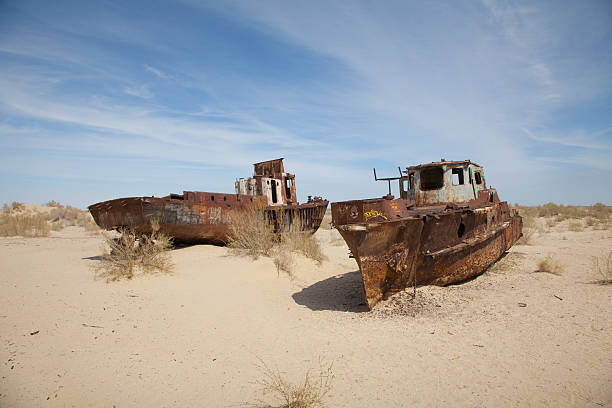
Once the world’s fourth-largest inland sea, the Aral Sea covered 68,000 square kilometers across Kazakhstan and Uzbekistan. Beginning in the 1960s, large-scale irrigation projects diverted water from the Amu Darya and Syr Darya rivers to support cotton farming. By 2007, the sea had shrunk to just 10% of its original size.

Today, the Aral Sea is a symbol of one of the world’s most severe environmental disasters. Salt-laden dust from the exposed seabed, estimated in the tens of billions of tons, is carried by wind as far as the Arctic and the Himalayas. This toxic dust, infused with pesticides and heavy metals, contaminates soil, water, and air, threatening regional public health and food security.

“The Aral Sea is a wound on the planet that cannot be ignored. We are launching a project that will create a barrier against salt and toxic dust, improve human health, and contribute to the future of the entire Earth,” said Ainur Karbozova, Director of the Bulat Utemuratov Foundation. “The uniqueness of this technology is that it can be applied worldwide from restoring burned-out forests to transforming deserts into green oases.”

A test planting on a one-hectare site is planned for March-April 2026. In 2027, the second phase will expand the pilot to 50 hectares.

“The use of the innovative E-seed technology will strengthen the soil structure, reduce dust and salt emissions, and ultimately increase the region’s biodiversity,” said Rakhat Kurmanbayev, Associate Professor at Korkyt Ata Kyzylorda University. “By 2040, we plan to stabilize the ecosystem over at least 50 square kilometers. The project will reduce air temperatures by 1-2°C and improve the microclimate.”

The initiative aligns with broader environmental goals outlined under Kazakhstan’s 2024-2026 chairmanship of IFAS, during which large-scale afforestation efforts aim to green more than 1 million hectares of the Aral seabed.

The Times of Central Asia previously reported the construction of a saxaul nursery in the Kyzylorda region. Located directly on the former seabed, the facility is expected to produce 1.5 million drought-resistant saxaul saplings per year.

According to the Ministry of Ecology and Natural Resources, Kazakhstan plans to afforest 1.1 million hectares of the dried seabed with saxaul. Between 2021 and 2024, 475,000 hectares were afforested, including 127,000 in 2024 alone. An additional 428,000 hectares are scheduled for planting in 2025.

By the end of 2025, Kazakhstan expects saxaul to cover approximately 40% of its portion of the dried Aral seabed.