• KGS/USD = 0.01144 0%
  • KZT/USD = 0.00212 0%
  • TJS/USD = 0.10523 0%
  • UZS/USD = 0.00008 0%
  • TMT/USD = 0.28530 0%
  • KGS/USD = 0.01144 0%
  • KZT/USD = 0.00212 0%
  • TJS/USD = 0.10523 0%
  • UZS/USD = 0.00008 0%
  • TMT/USD = 0.28530 0%
  • KGS/USD = 0.01144 0%
  • KZT/USD = 0.00212 0%
  • TJS/USD = 0.10523 0%
  • UZS/USD = 0.00008 0%
  • TMT/USD = 0.28530 0%
  • KGS/USD = 0.01144 0%
  • KZT/USD = 0.00212 0%
  • TJS/USD = 0.10523 0%
  • UZS/USD = 0.00008 0%
  • TMT/USD = 0.28530 0%
  • KGS/USD = 0.01144 0%
  • KZT/USD = 0.00212 0%
  • TJS/USD = 0.10523 0%
  • UZS/USD = 0.00008 0%
  • TMT/USD = 0.28530 0%
  • KGS/USD = 0.01144 0%
  • KZT/USD = 0.00212 0%
  • TJS/USD = 0.10523 0%
  • UZS/USD = 0.00008 0%
  • TMT/USD = 0.28530 0%
  • KGS/USD = 0.01144 0%
  • KZT/USD = 0.00212 0%
  • TJS/USD = 0.10523 0%
  • UZS/USD = 0.00008 0%
  • TMT/USD = 0.28530 0%
  • KGS/USD = 0.01144 0%
  • KZT/USD = 0.00212 0%
  • TJS/USD = 0.10523 0%
  • UZS/USD = 0.00008 0%
  • TMT/USD = 0.28530 0%

Bridging Continents: The China-Kyrgyzstan-Uzbekistan Railway – A Tale of Opportunities, Challenges, and Controversies

On June 6, 2024, an agreement was signed in Beijing to begin the construction of a railway between China and Uzbekistan which will pass through Kyrgyzstan, a strategic infrastructure project designed to create a new land transport corridor between Central and East Asia.

For 27 years, this project remained a pipe-dream. Now, the presidents of the three countries have confidently declared that this railway, with a length of 523 kilometers, is extremely necessary and will be highly profitable for the entire region. However, such sentiments were not always the case, and doubts have long lived in the heads of multiple Kyrgyz presidents.

Both Askar Akayev, who ruled the country from 1990 until the revolution in 2005, his successor Kurmanbek Bakiyev, also overthrown as a result of revolution in 2010, and Almazbek Atambayev, were not sure of the benefits of this project. Until 2017, that is, shortly before Atambayev’s resignation and the transfer of power to his, as it seemed to him at that time, reliable friend Sooronbay Jeenbekov, Atambayev was more or less consistent in defending the interests of his country, but later his focus shifted towards China. Why was there such a turn from Atambayev towards Beijing? This later became clear.

On January 26, 2018, an accident occurred in the old part of the Bishkek Combined Heat and Power Plant (CHP), which was supposed to have been modernized by that time. This incident served to reveal large-scale corruption and financial violations at the CHP. The contract for implementation of the modernization was signed on July 16, 2013 between the owner of the CHP, Electric Stations OJSC, and the Chinese company, TBEA, in the amount of $386 million dollars. The financing was provided as a loan by a state fund of China, the Export and Import Bank of China (Eximbank), and Kyrgyzstan had to return approximately $500 million including interest.

However, after the accident and the transfer of the case to court, it transpired that the real cost of the subhead modernization was a maximum of $250-260 million. Hence, the cost was hugely inflated; as an example, a pair of pliers was invoiced for $640, and fire extinguishers for $1,600.

A similar situation occurred with the Datka-Kemin power line, the construction of which began in 2012, when Atambayev was president. The project was implemented by the same Chinese company, TBEA, which carried out work on modernization of the CHP, and the amount cited for the project was the same, $386 million. Again, the loan was issued by Eximbank. As a result of corruption scandals which were revealed in 2019, Atambayev was deprived of presidential immunity and paid with his freedom. Kyrgyzstan’s accumulated debt since its independence in 1991 is estimated at $6.2 billion – 45% of GDP – around $1.7 billion of which is owed to Eximbank.

After Sadyr Japarov came to power in November 2020, issues surrounding the Kumtor Gold Mine came to the fore. Discovered by geologists in 1978, the largest open pit gold mine in Central Asia, Kumtor is located 60 kilometers south of Lake Issyk-Kul and 60 km from the border with China. The mining industry is the most important sector in Kyrgyzstan’s economy, and its foundation is gold. Until its nationalization in 2021, Kumtor was owned by the Canadian company, Centerra Gold, through a highly-dubious arrangement which involved an oligarch mentioned in a leaked FBI report and the suspicious death of the first Prime Minister of independent Kyrgyzstan; this led to decades of the Kyrgyz Parliament fighting to annul the contract.

Now, Kumtor is part of the state-owned Kyrgyzaltyn OJSC, which has served to add to the ratings of populist President Japarov. In 2023, at a solemn ceremony dedicated to the 30th anniversary of the development of Kumtor, Japarov called events surrounding the deposit the “scam of the century” and a symbol of corruption which had led to the enrichment of foreigners and a handful of local officials, adding not without pride that Kumtor has now been returned to the people.

However, there is a striking difference between official statistics coming out of Bishkek and those of the countries importing Kyrgyz gold, which in 2023 alone amounted to 1.8 tons. If these reported irregularities prove to be true, violations at the China-Kyrgyzstan-Uzbekistan railway project, the CHP-Bishkek, and the Datka-Kemin power lines may be just the tip of the iceberg.

At the end of 2023, construction of the railway on the territory of Kyrgyzstan was preliminarily estimated at a cost of $4.7billion. However, on June 13, 2024 Chairman of the Cabinet of Ministers, Akylbek Japarov confirmed a statement made by President Japarov in April 2024 that construction of the railway would begin in August, and the budget would be $8 billion.

Questions therefore arise about the difference of $3.3 billion. In an interview with Kabar TV at the time, Japarov offered platitudes, saying that the economy is developing rapidly, so additional loans taken from China and the increase in public debt to $10-15 billion will not affect the country’s budget or the pockets of Kyrgyz citizens. At the same time, Japarov stated this would be his last interview on the subject, and he would not answer any further questions about foreign debt.

In May of this year, specifically referencing the “disease” that was Kumtor, Akylbek Japarov declared that a huge increase in the state budget had been made possible by the “elimination of corruption.”

Kazakhstan: Tokayev Delivers Address to the Nation

A new political season has started in Kazakhstan.

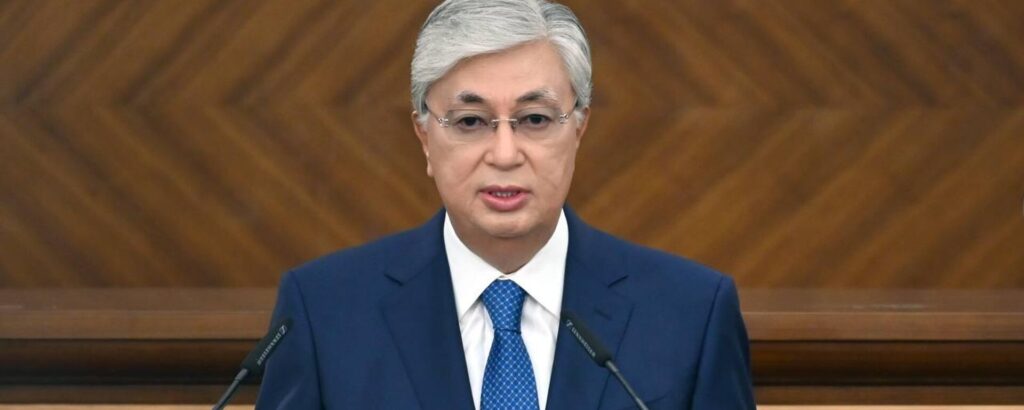
Following tradition, it opened with a joint session of the chambers of Kazakhstan’s parliament, at which the head of state, Kassym-Jomart Tokayev, delivered his regular Address to the Nation, this year entitled: Fair Kazakhstan: Law and Order, Economic Growth, Social Optimism.

As predicted by State Counselor, Yerlan Karin, the president’s new address contained over a hundred initiatives, instructions, and proposals that “develop the line of reforms laid out in his previous messages and election platform.”

Tokayev began his address by mentioning the parliament’s adoption of 102 laws in the previous session, including norms on public control, countering human trafficking, science and technology policy, heat and energy, etc.

Social issues, especially child protection, remain a top priority and whilst many systematic steps have been taken to improve people’s welfare, the president emphasized that much work lay ahead.

“The people of Kazakhstan today live in a completely new political reality,” he stated. “Over the past five years, large-scale reforms have been implemented; the political system has radically transformed. Fundamental changes are taking place in public consciousness; the level of legal culture of citizens is increasing, and new models of behavior and new values are taking root in society. The renewal of political and public life, as well as the mentality and cultural norms of the nation, has begun. The construction of “Fair Kazakhstan” is underway, and what is especially important is that all this fully corresponds to the people’s aspirations. Therefore, we will continue to follow our course steadfastly and not turn off the path.”

Expanding on how the past five years have changed the country, Tokayev explained, “Since 2021, about 2.5 thousand akims of villages have been elected, which is ninety percent of the total number of heads of rural settlements. In the remaining villages, elections will be held after the expiration of the terms of office of their akims. The average age of newly elected akims is 46 years. Sixty percent will have no previous experience of working in public service, and their number includes entrepreneurs and members of various parties. The corps of akims elected by the people has been largely renewed.”

The head of state recalled that in the fall of last year, Kazakhstan began to hold elections for the first time for akims of districts and cities of regional significance. Under the new rules, 45 akims were elected in all oblasts. According to the president, the latest election system will go even further.

“After a comprehensive study of the election results and analysis of the work of elected akims, it was decided to finally switch to the new system from next year. In the future, akims of districts and regional cities will be elected only through direct elections, which will be held as the powers (i.e., rotation terms) of incumbent akims expire,” Tokayev emphasized, calling it another essential step in the transformation of the political system and stressing that if required for the development of the state, reforms will continue.

The logic of granting Kazakhstani people more rights and freedoms dovetails with urgent instructions to akims and the government to improve the welfare of citizens; destabilization similar to Bloody January 2022 is the last thing Kazakhstan needs during the current geopolitical turbulence. Therefore, the task of economic growth in the country is to strengthen and consolidate the middle class and reduce social inequality.

“This is the only way we can strengthen the potential of our state. For this purpose, efficiency should be the key criterion in every endeavor. Every decision and every project should be considered based on its usefulness for the state,” Tokayev announced to representatives of the government and regional authorities.

The president also highlighted the need to reform vocational education, deemed critical for ensuring the growth of the economy and its attractiveness for investment.

To this end, he announced that 2025 will be the “Year of Working Professions.”

The technical and vocational education system will be reformed, and “this initiative will also promote the idea of diligence and professionalism in our society. The values of hard work and professionalism must always come first in our society,” Tokayev stressed. “This aligns perfectly with our Responsible Citizen—Honest Labor—Deserved Success principle. We will continue to take consistent measures to elevate the status of workers.”

U.S. Decision to Give Military Aircraft to Uzbekistan Upsets Taliban

Ownership of 46 U.S. military aircraft that have sat on the tarmac in Uzbekistan’s southern city of Termez for more than three years has finally been established.

Most of those planes and helicopters are going to Uzbekistan, and south of the Uzbek border in Afghanistan, the Taliban are not pleased with this decision.


Escape from Afghanistan

On August 15, 2021, Taliban forces freely entered Kabul and reestablished themselves in power.

The rapid advances of Taliban militants across Afghanistan earlier that month came as the last foreign forces were departing from the country.

Panic broke out throughout the nation. On the day the Taliban entered Kabul, dozens of Afghan Army aircraft carrying government officials and soldiers left their bases and flew north, some to Tajikistan, most to Uzbekistan.

In Uzbekistan, the Afghans were deported to U.S. custody and taken to the United Arab Emirates, where they were eventually given U.S. visas and sent to live in the United States.

However, the 22 planes and 24 helicopters they flew aboard to Uzbekistan have remained at Termez.

The aircraft belonged to the United States. They were loaned for use by the U.S.-backed government forces in Afghanistan.

The Taliban assert that all the weapons used by troops of the ousted Afghan government belong to the Afghan people, meaning to the Taliban.

On January 4, 2022, Taliban Defense Ministry representative, Inomulla Samagani, said a request for the return of the aircraft had been made to Uzbekistan and Tajikistan.

Days later, the Taliban’s acting Defense Minister, Mawlawi Mohammad Yaqoob, son of Taliban founder Mullah Omar, demanded their return.

“Our planes that you have, that are in Tajikistan and Uzbekistan, must be returned to us,” Yaqoob said, warning both countries, “not to test our patience and not to force us to take possible retaliatory steps to [reclaim the aircraft].”

As economic relations have grown between Taliban-ruled Afghanistan and Uzbekistan since late 2021, the Taliban’s language has softened, but their claim to the planes and helicopters has been repeated several times.

On August 24, 2024, Uzbekistan’s kun.uz news agency reported that U.S. Ambassador to Uzbekistan Johnathan Henick had stated that most of the U.S. aircraft in Uzbekistan would be handed over to the Uzbek government.

“Yes, it is already official,” Henick said. “The military equipment will remain in Uzbekistan, this is already settled.”

Unsurprisingly, the Taliban Defense Ministry responded to Henick’s remarks.

“Any agreement regarding the fate of Afghan helicopters and planes in Uzbekistan is unacceptable,” a Taliban Defense Ministry statement stated.

Taliban Defense Ministry spokesman, Emayatullah Khwarazmi, said in an audio statement released on August 27 that the “government of Uzbekistan is expected to refrain from any dealings in this regard, to consider good neighborly relations, and to make a wise decision by cooperating in the return of Afghanistan’s air force aircraft.”

U.S. officials have made it clear since 2021 that under no circumstance would the aircraft be given to Afghanistan.

During a visit to Dushanbe in June 2022, Commander of the U.S. Central Command, General Michael Kurilla, said the aircraft that arrived in Tajikistan in August 2021 do “not belong to the Taliban,” and added that possibly they would be given to Tajikistan.

It remains unclear what will happen to the aircraft that landed in Tajikistan.

Eric Rudenshiold was the U.S. National Security Council Director for Central Asia under Presidents Donald Trump and Joe Biden. Now a Senior Fellow for Central Asian Affairs at the Caspian Policy Center, Rudenshiold has been following the fate of the U.S. aircraft since they left Afghanistan.

He told The Times of Central Asia that for the United States, the question of transferring the planes to Uzbekistan is simple, “Do we need those aircraft in our inventory at this time? No. [T]here aren’t that many aircraft with lethal capabilities that landed in Uzbekistan. We don’t know the exact make-up of the group that they’re going to transfer [to Uzbekistan],” Rudenshiold pointed out, adding most of the planes and helicopters “tend to be more utility aircraft… search and reconnaissance.”

This is important, since the United States has a policy of supplying only non-lethal military equipment to Central Asian states.

From the first days after the planes and helicopters arrived in Tajikistan and Uzbekistan, there was speculation they would eventually be handed over to the authorities in those countries.

It is not an unusual deal, according to Rudenshiold. “It’s not something that happens every day… but it happens on a fairly regular basis,” he told TCA, adding that it is not surprising that the negotiating process took some three years.

“These kinds of things take a tremendous amount of time to put together,” he explained, noting there are cooperation agreements that need to be signed, budgetary matters that need to be resolved, and other issues.

During the time that talks with the United States about the future of the aircraft in Uzbekistan were taking place, the Uzbek authorities seem to have readied themselves for the expected Taliban response.

The Uzbek Prime Minister, Abdullo Aripov, visited Kabul on August 17, one week before the announcement of the aircraft transfer. He was the highest ranking official to visit the Afghan capital since the Taliban returned to power in 2021.

Aripov attended an Afghan-Uzbek business forum and visited the “Made in Uzbekistan” exhibition of Uzbek goods. More than 30 Memoranda of Understanding worth some $2.5 billion were signed, a large sum for the Taliban government, which is still under sanctions from many countries.

On August 29, two days after the Taliban request for the aircraft in Uzbekistan, Prime Minister Aripov was in Termez with acting Taliban Prime Minister Abdul Ghani Baradar to officially open an international trade center that will serve shipping to and from Afghanistan.

The Taliban will likely continue to claim the aircraft belong to them and shake their fist at the United States, but there is little they can do.

Uzbekistan has become hugely important for the Taliban government in the last three years.

The railway connection at Termez is the northern gate for Afghan trade with goods coming from other Central Asian states and China, as well as shipments of humanitarian aid.

Uzbekistan is the largest exporter of electricity to Afghanistan, and the Uzbek authorities have shown great interest in extending a railway line through Kabul to Pakistan, where it would connect to Pakistan’s railway network leading to the Arabian Sea. Such a railway route would greatly benefit both Uzbekistan and Afghanistan.

Also, Afghanistan is still not a stable country.

Despite Taliban assurances that Afghan territory will never be used by anyone to plot or carry out attacks on neighboring countries, the Islamic State of Khorasan Province twice launched rockets toward Uzbekistan in 2022, and once into Tajikistan that same year.

Rudenshiold noted Uzbekistan and the United States have been cooperating on security matters for decades, so it is not unusual these aircraft are “being repurposed in a way that is quite useful, certainly for Uzbekistan, and arguably for regional security.”

The Steppe Blooms in the Hands of a Woman – British Publisher Focuses on Jizzakh

Jizzakh, a region which is historically significant yet little known outside the borders of Uzbekistan, is now stepping into the international spotlight with a special issue of OCA Magazine launched in London. This edition, OCA Magazine: Jizzakh, weaves together a tapestry of narratives from writers spanning continents from Uzbekistan and the United Kingdom and the United States, France, India, Bulgaria, and Finland. These contributors dive deep into the heritage, history, economics, culture, and cuisine of Jizzakh, painting a vibrant picture of a region with a rich strategic importance and cultural legacy.

Renowned as the birthplace of Uzbekistan’s leaders Shavkat Mirziyoyev and Sharaf Rashidov, Jizzakh holds a special place in the nation’s heart. It is also home to an array of notable figures who have made substantial contributions to regional and national development, ranging from the founders of dynasties to contemporary athletes and scientists. This special issue seeks to illuminate these stories, with feature articles such as one on Maria Shevel (Akhmedjanova), a winner of the Heroine of Labor award whose architectural influence has shaped the visage of Jizzakh, and the iconic sanatorium in the Zaamin National Reserve.

As Uzbekistan continues its rapid development under President Mirziyoyev, global curiosity about this vibrant country continues to grow. The magazine not only looks into the region’s history, but looks ahead, exploring Jizzakh’s potential as an economic powerhouse. Articles discuss such projects as nuclear energy development and advancements in education, showcasing Jizzakh as a region poised for growth.

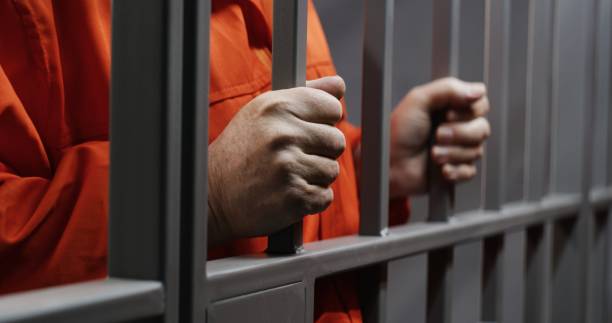
Uzbekistan Adopts Law to Protect Prisoners’ Rights

Uzbekistan has introduced a new law to protect prisoners’ rights. The new piece of legislation is formally called the law “On amendments and supplements to the Criminal-Executive Code of Uzbekistan aimed at ensuring the rights and legal interests of prisoners.”

The Criminal Executive Code defines prisoners’ rights to appeal to the ombudsman through the appeals box.

Appeal boxes to the ombudsman will be installed in each residential sector of the Uzbekistan penal institutions, industrial zones, and buildings intended for holding short- and long-term meetings, where it is convenient for prisoners to leave appeals. In addition, appeal boxes for the children’s ombudsmen will be installed in the educational colonies. It is reported that the boxes are opened only by the ombudsman, the children’s ombudsman, or the staff of their secretariats.

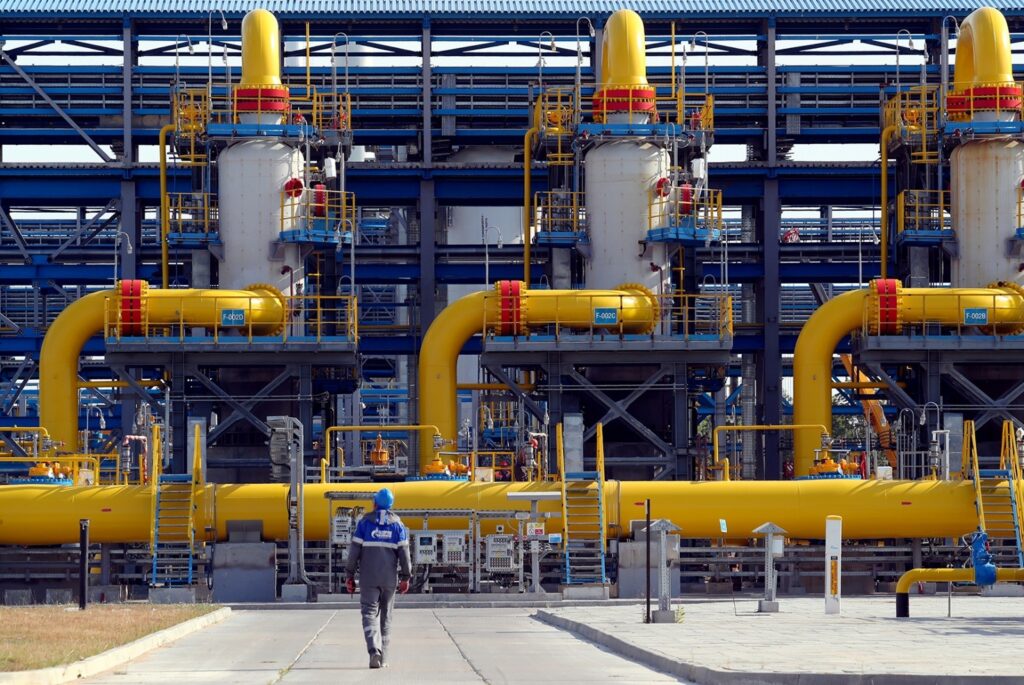
Russia’s Gazprom Doubles Gas Supply to Central Asia

As reported by TASS, the head of Gazprom, Alexey Miller, announced that from January to August 2024, the company doubled its gas supply to Central Asia.

According to Miller, the rapid economic and social development of the republics has opened up significant new opportunities for Gazprom, with gas supplies to Uzbekistan now at the highest possible level.

“For example, the gas supply applications we submit for Uzbekistan are currently being fulfilled through the Central Asia Center gas pipeline at the maximum technical capacity, equivalent to the levels used during the winter season. This is the same level of supply we provided to Uzbekistan last winter when they experienced unusually cold weather,” stated Miller.

Citing the fact that Kyrgyzstan’s gasification rate has doubled and continues to grow, he explained, “A lot of work has been done to reconstruct the gas transportation system of Kyrgyzstan. New gas transportation facilities have been built. But what is also important is Gazprom Kyrgyzstan has implemented socially significant projects in Kyrgyzstan, as is customary at Gazprom.”

The Times of Central Asia previously reported that in June, Gazprom signed agreements for gas supplies to Kyrgyzstan and with Kazakhstan on the transit of Russian gas in the direction of Uzbekistan and Kyrgyzstan for the period 2025-2040.

To ensure transit, a specially designated route based on the Central Asia–Center gas pipeline system will be expanded and implemented.

In June 2023, Uzbekistan signed a two-year gas purchase agreement with Gazprom. Daily supplies amount to 9 million cubic meters, and annual supplies amount to almost 2.8 billion cubic meters. Supplies under this agreement began on October 7, 2023.