• KGS/USD = 0.01144 0%
  • KZT/USD = 0.00212 0%
  • TJS/USD = 0.10432 -0.29%
  • UZS/USD = 0.00008 0%
  • TMT/USD = 0.28490 0%
  • KGS/USD = 0.01144 0%
  • KZT/USD = 0.00212 0%
  • TJS/USD = 0.10432 -0.29%
  • UZS/USD = 0.00008 0%
  • TMT/USD = 0.28490 0%
  • KGS/USD = 0.01144 0%
  • KZT/USD = 0.00212 0%
  • TJS/USD = 0.10432 -0.29%
  • UZS/USD = 0.00008 0%
  • TMT/USD = 0.28490 0%
  • KGS/USD = 0.01144 0%
  • KZT/USD = 0.00212 0%
  • TJS/USD = 0.10432 -0.29%
  • UZS/USD = 0.00008 0%
  • TMT/USD = 0.28490 0%
  • KGS/USD = 0.01144 0%
  • KZT/USD = 0.00212 0%
  • TJS/USD = 0.10432 -0.29%
  • UZS/USD = 0.00008 0%
  • TMT/USD = 0.28490 0%
  • KGS/USD = 0.01144 0%
  • KZT/USD = 0.00212 0%
  • TJS/USD = 0.10432 -0.29%
  • UZS/USD = 0.00008 0%
  • TMT/USD = 0.28490 0%
  • KGS/USD = 0.01144 0%
  • KZT/USD = 0.00212 0%
  • TJS/USD = 0.10432 -0.29%
  • UZS/USD = 0.00008 0%
  • TMT/USD = 0.28490 0%
  • KGS/USD = 0.01144 0%
  • KZT/USD = 0.00212 0%
  • TJS/USD = 0.10432 -0.29%
  • UZS/USD = 0.00008 0%
  • TMT/USD = 0.28490 0%

Astana Accelerates Northern Aral Sea Recovery Plan

The Kazakh government plans to accelerate the second phase of the project to restore the Northern Aral Sea. Prime Minister Olzhas Bektenov has instructed the Ministry of Water Resources and Irrigation to secure financing for the second phase of the project by the end of 2026. The goal is to increase the volume of water in the Northern Aral Sea by around 10–11 billion cubic meters over the next four to five years.

History of Degradation and Early Restoration Results

The Aral Sea, which straddles the border between Kazakhstan and Uzbekistan, began to shrink rapidly in the 1960s due to large-scale irrigation projects that diverted water from the Amu Darya and Syr Darya rivers for cotton cultivation and other agricultural needs.

As a result of the sea’s degradation, the Northern Aral Sea separated in 1987 and has since been sustained largely through the construction of the Kokaral Dam. In 2012, the sea and the Syr Darya delta were added to the Ramsar List of Wetlands of International Importance. Since then, Kazakhstan has undertaken systematic efforts to restore the northern part of the former Aral Sea.

Unlike earlier efforts to save the Aral Sea as a whole, Kazakhstan’s approach since the mid-2000s has been shaped by a narrower and more pragmatic premise: that partial restoration is environmentally and politically achievable, while attempts to revive the entire basin are not. The construction of the Kokaral Dam marked a turning point, demonstrating that targeted hydraulic interventions could stabilise water levels, reduce salinity, and revive fisheries in the northern basin, provided expectations were kept within achievable limits. The recovery has already enabled the return of small-scale fishing, improved local livelihoods, and reduced dust storms from the exposed seabed around Aralsk. This strategy reflected a deliberate acceptance that restoring the Northern Aral would come at the expense of the southern basin, prioritising long-term ecological viability over symbolic ambitions.

Over the past several years, roughly 5 billion cubic meters of water have been redirected into the Northern Aral Sea basin, increasing its total volume to more than 23 billion cubic meters. This exceeds the targets set out in Kazakhstan’s Water Resources Management Concept, which had forecast reaching 20.6 billion cubic meters by 2025, with that volume previously expected only by 2029.
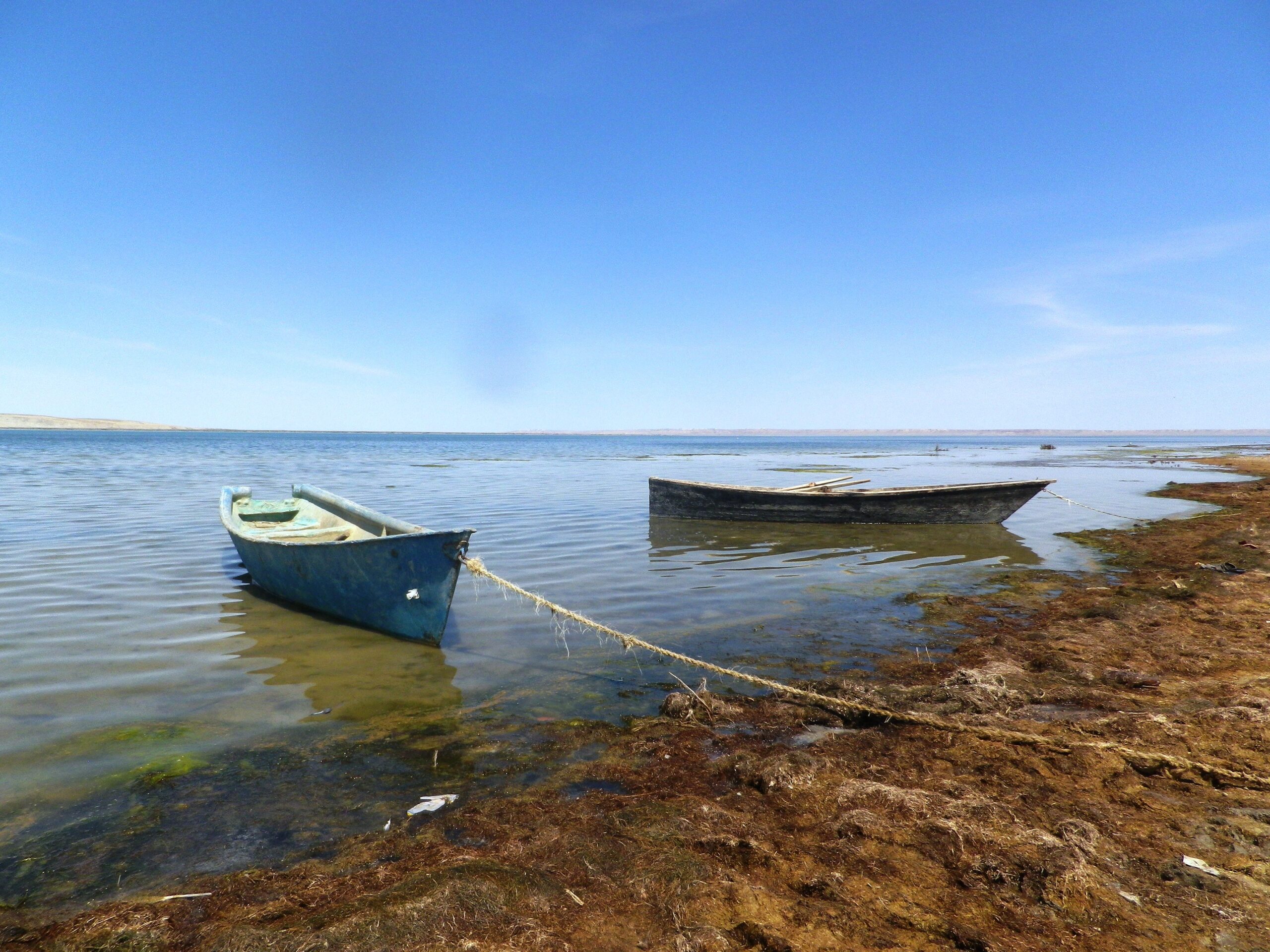
Tastubek Bay, Northern Aral Sea; image: TCA, Stephen M. Bland

Infrastructure Plans and International Support

With the support of the World Bank, Kazakhstan is considering raising the height of the Kokaral Dam by up to two meters and constructing a new hydraulic facility. These upgrades aim to increase both the volume and quality of water in the Northern Aral Sea, rehabilitate the Syr Darya delta, and reduce salt dispersion from the exposed seabed.

The second phase of the initiative targets increasing the sea’s volume to 34 billion cubic meters.

Bektenov has directed the Ministry of Water Resources and Irrigation to finalize technical preparations by mid-2026 and secure financing by the end of the year, including through international partnerships. The second phase of the project has long been discussed by policymakers and researchers but repeatedly delayed by technical and institutional uncertainty, including disagreements over dam height and the scale of the intervention required. Observers note that the original Kokaral design was deliberately conservative, leaving open the possibility of future expansion once ecological recovery and water inflows proved sustainable. The current decision to accelerate Phase II, therefore, represents less a change in direction than a delayed continuation of a strategy that has already reshaped the Northern Aral’s ecosystem.
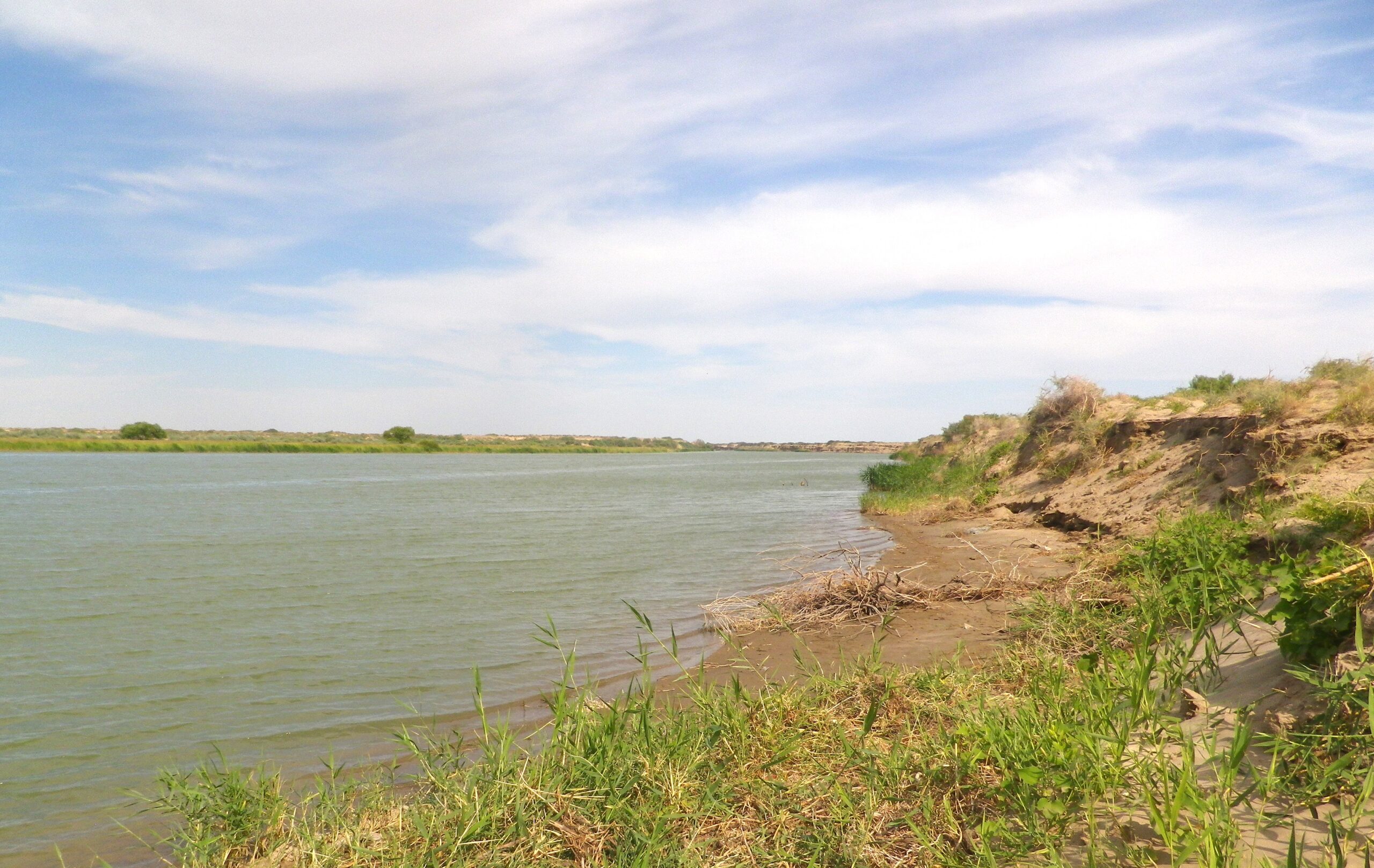
The Syr Darya delta; image: TCA, Stephen M. Bland

Details of Phase Two

Minister of Water Resources and Irrigation Nurzhan Nurzhigitov outlined the second phase, which is set to be completed within four to five years. Nurzhigitov said the second phase aims to increase the Northern Aral Sea’s volume from about 23 billion to 34 billion cubic meters, raise the water level to 44 meters, expand the surface area from roughly 3,065 to 3,913 square kilometers, and restore the Syr Darya delta ecosystem.

Nurzhigitov also said that improved water diplomacy and coordination with Uzbekistan have helped maintain stable inflows to the Aral Sea even during low-water periods.

Water Efficiency and Regional Sustainability

In parallel, the government is implementing large-scale irrigation infrastructure upgrades. In the Turkestan and Kyzylorda regions, according to the ministry, 167 projects are underway to improve water efficiency. The introduction of water-saving technologies across 143,100 hectares has already conserved approximately 500 million cubic meters of water, a portion of which is being used to sustain the Northern Aral Sea ecosystem.

“The preservation and restoration of the Northern Aral Sea remains not only an environmental issue, but also a social and strategic priority. Allocating conserved water to support ecosystems is an investment in regional sustainability and the health of future generations,” Nurzhigitov stated.

As previously reported by The Times of Central Asia, in December 2025, President Kassym-Jomart Tokayev proposed the creation of a dedicated United Nations body to address global water management challenges.

Authorities view the accelerated restoration of the Northern Aral Sea as a cornerstone of Kazakhstan’s long-term water security strategy and a potential model for regional cooperation in Central Asia.
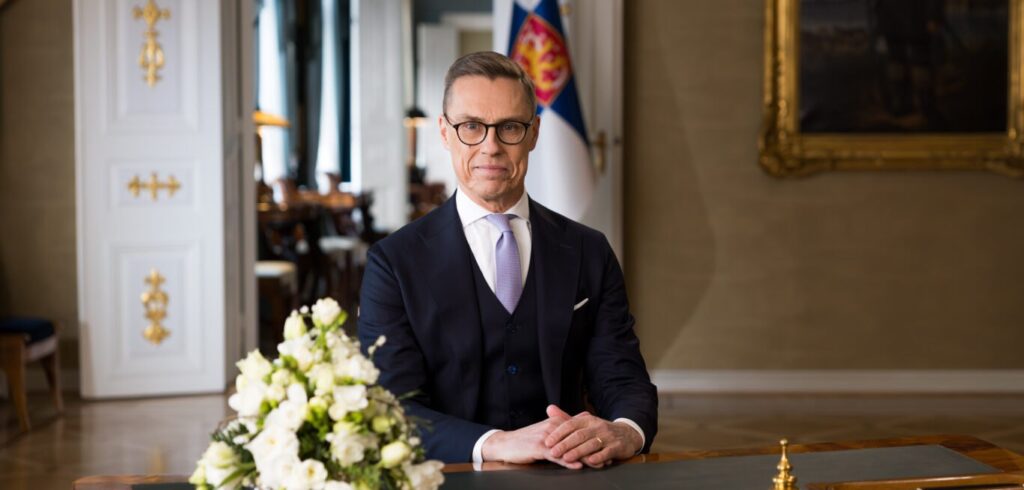

Finland’s President Stubb Warns Russia’s Imperial Thinking Poses Risks for Central Asia

Russia’s imperial worldview may pose a greater long-term risk to Central Asia and the South Caucasus than to NATO member states, Finnish President Alexander Stubb said in an interview with The Washington Post, highlighting concerns that continue to resonate across the post-Soviet space.

Speaking with columnist David Ignatius, Stubb referenced Finland’s long and complex history with its eastern neighbor, noting that expansionist thinking remains deeply rooted in Russian political culture. “I think the DNA of Russia is still expansion and imperialism,” he said, arguing that President Vladimir Putin views the collapse of the Soviet Union as a historical injustice.

While much of the Western debate centers on potential threats to NATO countries such as the Baltic states, Finland, or Poland, Stubb suggested that more vulnerable regions lie elsewhere. “I think the more worrying aspect for others is the Central Asian countries, the Southern Caucasus and others,” he said, pointing to what he described as a top-down political system driven by the ideology of Russkiy mir, or the “Russian world.”

Stubb also spoke about his personal interactions with Russian officials, including Putin and Foreign Minister Sergei Lavrov, stressing that meaningful political dialogue remains unlikely while the war in Ukraine continues.

As previously reported by The Times of Central Asia, Russian television host Vladimir Solovyov sparked backlash after suggesting that Moscow could conduct “special military operations” in Central Asia and Armenia. The remarks were widely condemned by Uzbek scholars, journalists, and analysts as destabilizing and provocative.

More recently, Russian ultranationalist Alexander Dugin, often described as an ideologue of the “Russian world”, publicly questioned the sovereignty of several former Soviet republics, including Uzbekistan, Kazakhstan, Tajikistan, and Kyrgyzstan. A video of his comments circulated widely online, drawing sharp criticism across the region.

Russia’s Foreign Ministry later sought to distance the Kremlin from such statements. Spokesperson Maria Zakharova stated that Solovyov’s remarks did not reflect official policy and reaffirmed that Moscow’s relationships with Central Asian countries are based on partnership and respect for sovereignty.

EBRD to Allocate €10 Million to Tajikistan for Electric Public Transport

The European Bank for Reconstruction and Development (EBRD) is continuing to support the green transformation of Tajikistan’s transport sector. Its latest project focuses on the city of Bokhtar, the administrative center of Khatlon region, and will fund a large-scale upgrade of municipal public transport with electric buses.

The total financing for the Bokhtar project amounts to €10 million, of which €6.4 million is provided as a loan and €3.6 million as an investment grant.

Additionally, technical assistance valued at more than €600,000 will be allocated to support the implementation of the new electric transport system.

The funds will enable the municipality to acquire 50 modern electric buses. These vehicles will be accessible to passengers with disabilities and will be supported by the necessary charging infrastructure to ensure full operational capacity.

Beyond the procurement of buses, the project encompasses the full integration of electric transport into Bokhtar’s urban environment.

According to the EBRD, the introduction of electric buses is expected to significantly reduce carbon dioxide emissions and improve air quality in the city. The project will also create new jobs and includes a training program for personnel responsible for operating and maintaining the new fleet.

Bokhtar and the EBRD have been partners in public transport development since 2018. In an earlier phase of modernization, the city constructed a bus depot and acquired 41 low-floor buses.

To date, the EBRD has invested over €1 billion in Tajikistan through 190 projects.

Kazakhstan Joins OpenAI’s Education for Countries Initiative

Kazakhstan has joined OpenAI’s Education for Countries program, becoming one of the first nations selected for the global initiative aimed at integrating artificial intelligence into national education systems.

The program, launched by U.S.-based AI research and deployment company OpenAI, developer of ChatGPT, is part of the broader OpenAI for Countries framework. Kazakhstan joins the inaugural cohort alongside Estonia, Greece, Italy’s Conference of University Rectors, Jordan, Slovakia, Trinidad & Tobago, and the United Arab Emirates.

Kazakhstan’s participation marks the beginning of a nationwide rollout of ChatGPT Edu, OpenAI’s education-focused AI platform.

According to the Ministry of Science and Higher Education, the initiative is considered strategically important for Kazakhstan’s long-term education policy.

Amid global debates over AI’s role in education, Kazakh officials stress that artificial intelligence is not intended to replace teachers, but to support them by reducing administrative burdens, enhancing teaching capacity, and enabling personalized instruction.

The introduction of ChatGPT Edu is expected to streamline lesson planning, improve assessment processes, and support individualized learning.

The project is being implemented under agreements reached during President Kassym-Jomart Tokayev’s official visit to the United States in November 2025. The key agreement was signed by OpenAI, Inc., Freedom Holding Corp., and Bilim Group.

Crucially, the initiative is fully financed through private funding, with no allocations from the state budget or international grants.

Minister of Artificial Intelligence and Digital Development Zhaslan Madiyev noted that Kazakhstan’s inclusion in the first cohort coincides with the country declaring 2026 the Year of Artificial Intelligence and Digitalization.

“We view ChatGPT Edu as a practical tool to support educators and strengthen the research environment,” Madiyev said, adding that the initiative reflects the government’s systematic approach to AI deployment in priority sectors.

As part of the national rollout, 165,000 free ChatGPT Edu licenses will be distributed, including:

  • 100,000 licenses for teachers in preschool, secondary, technical, and vocational education
  • 62,800 licenses for university faculty and administrative staff
  • 2,200 licenses for participants in the Astana Hub technology ecosystem

ChatGPT Edu will enable educators to prepare materials, tests, and assignments in Kazakh, Russian, and English, with content tailored to students’ academic levels.

Beginning in January 2026, nationwide training programs will be launched in cooperation with OpenAI specialists, focusing on the practical use of AI in teaching, administration, and research.

Minister of Science and Higher Education Sayasat Nurbek called the partnership with OpenAI a foundational step in shaping the future of Kazakhstan’s education system.

“Artificial intelligence is not a replacement for humans. When used critically and responsibly, it enhances thinking,” Nurbek said. “In education and science, AI accelerates material preparation, improves feedback quality, and opens new research opportunities. Kazakhstan is not training users of artificial intelligence we are training its creators.”

Kazakhstan currently leads Central Asia in AI adoption.

According to Microsoft’s AI Economy Institute report Global AI Adoption in 2025 – A Widening Digital Divide, Kazakhstan ranked 72nd out of 147 countries, with 13.7% of its working-age population using AI tools by the end of 2025. By comparison:

  • Kyrgyzstan ranked 117th (8.2%)
  • Uzbekistan 141st (6.3%)
  • Tajikistan 145th (5.6%)
  • Turkmenistan 146th (5.6%)

In a January 5 interview with Turkistan newspaper, Tokayev underscored the strategic importance of artificial intelligence for Kazakhstan’s long-term competitiveness.

“The emergence of artificial intelligence has created a dividing line between countries that will move into the future and those that will be left behind. That is why digital technologies and artificial intelligence have been declared national development priorities,” he stated.

Kazakhstan’s participation in Education for Countries places it among a small group of early adopters embedding generative AI into education not as a pilot, but as core infrastructure.

Uzbek Citizen Sentenced to Life in Russia Over Killing of Russian General Kirillov

A Russian military court has sentenced Uzbek citizen Ahmadjon Qurbonov to life imprisonment for his involvement in a bombing that killed Lieutenant General Igor Kirillov, head of Russia’s Radiation, Chemical and Biological Protection Troops, and his aide, Major Ilya Polikarpov. The verdict was issued by a panel of judges at the 2nd Western District Military Court, according to a report by Russian outlet RBK.

Qurbonov, who admitted guilt and cooperated with investigators, was also fined one million rubles (approximately $13,100). Prosecutors accused him of carrying out an attack on December 17, 2024, near the entrance of Kirillov’s apartment building in Moscow. Investigators allege that Qurbonov planted a remote-controlled bomb on an electric scooter and detonated it as the general and his aide exited the building.

Russia’s Investigative Committee claims Qurbonov acted under orders from Ukraine’s Security Service. The attack was reportedly filmed and streamed live to Ukraine. Qurbonov was allegedly promised $100,000, forged documents, and residency in a country in the European Union. He was arrested within hours of the explosion and, according to investigators, never received the promised compensation.

Several other individuals were implicated in the case. Prosecutors said Vladimir Safaryan delivered the explosive device, which was reportedly brought into Russia from Poland. Batukhan Tochiev and Ramazan Padiev were accused of providing Qurbonov with an apartment where he attempted to hide after the attack. All three denied knowledge of the planned bombing.

Russian authorities further alleged that the operation was financed using USDT stablecoins. Qurbonov reportedly received multiple cryptocurrency transfers, later converted into cash through cryptomats in Moscow. The total cost of preparing the attack was estimated at 842,000 rubles (approximately $10,936), while damage to surrounding apartments and vehicles was valued at 3.3 million rubles (around $42,863).

The trial, which began in November 2025, was held behind closed doors. Prosecutors argued that open proceedings could be exploited by foreign-linked media to justify the attack.

Kazakhstan Considers Criminal Liability for Mass Leaks of Personal Data

Kazakhstan is considering tightening legal responsibility for violations related to personal data protection. The Ministry of Artificial Intelligence and Digital Development has proposed introducing criminal liability for mass leaks of citizens’ personal data, along with a significant increase in administrative fines for failing to comply with information security requirements.

The proposal was announced by Rostislav Konyashkin, First Deputy Minister of Artificial Intelligence and Digital Development, during a government meeting.

According to Konyashkin, Kazakhstan is adopting a “zero tolerance” policy regarding the mishandling of personal digital data.

“In implementing the constitutional rights of citizens to privacy and the protection of personal information, we are moving to a zero-tolerance policy in this area. Digital transformation should not undermine the security of citizens, and any irresponsible handling of personal data should be punished in accordance with the law,” he said.

In addition to criminal penalties for mass data breaches, the ministry is proposing to significantly increase administrative liability for officials violating information security standards.

The current maximum fine is approximately $17,000. The proposed new ceiling would be about $42,500.

The initiative would apply to government agencies, the quasi-public sector, financial institutions, and private companies that handle large volumes of personal data.

The day prior to the government meeting, President Kassym-Jomart Tokayev addressed the issue of digital security at the National Kurultai (Assembly).

He emphasized that the right to personal data protection should be enshrined in the country’s.

“Our Constitution must keep pace with the times. In the 21st century, digitalization is developing at a rapid pace and has a direct impact on human rights and freedoms. Therefore, the Basic Law must clearly stipulate that the personal digital data of citizens is protected by law,” Tokayev said.

The push for stricter regulation follows a series of large-scale data breaches.

In spring 2024, the State Technical Service of the National Security Committee identified a leak affecting over 2 million clients of the microfinance organization zaimer.kz.

In summer 2025, the government confirmed the largest data breach in Kazakhstan’s history, compromising the personal information of over 16 million people, more than three-quarters of the country’s population of just over 20 million.

Experts say the proposed legal reforms mark Kazakhstan’s shift toward a stricter regulatory framework, aligning with standards seen in the European Union and some Asian jurisdictions, where personal data breaches carry both administrative and criminal consequences.