Russia’s war in Ukraine and instability in the Middle East are accelerating the emergence of a new Eurasian energy architecture, with the Caspian region increasingly at its center. In international politics, moments when several global crises simultaneously create opportunities for new centers of influence are rare. Today, a vast area stretching from Central Asia to the South Caucasus is experiencing just such a moment.
Russia’s invasion of Ukraine has fundamentally reshaped Europe’s approach to energy security. Tensions in the Middle East have also raised questions about the reliability of traditional energy supply routes. Meanwhile, the global energy transition is driving demand for both clean-energy sources and alternative transport corridors.
Against this backdrop, the Caspian region is no longer viewed as a peripheral economic space. It is increasingly emerging as a critical hub in Eurasia’s evolving energy system. Baku Energy Week 2026 shows how far this shift has come, highlighting Azerbaijan’s transformation from a traditional oil and gas producer into a strategic connector linking Central Asia, Türkiye, Europe, the United States, and the Middle East.
One of the forum’s most significant political signals came in the form of a message from U.S. President Donald Trump to participants. His remarks went beyond a routine diplomatic greeting and reflected a broader shift toward a more pragmatic view of global energy policy. Trump described the United States as a strong supporter of Azerbaijan’s oil and gas industry and said the U.S.-Azerbaijan energy partnership would become more important in the years ahead.
For much of the past decade, Western energy strategies appeared increasingly focused on rapid decarbonization and climate objectives. However, rising energy prices, Europe’s energy crisis, and growing global electricity demand have prompted policymakers to reassess those priorities.
Trump openly reaffirmed support for the oil and gas sector and emphasized that the United States remains a long-standing energy partner of Azerbaijan. More importantly, Washington appears to recognize Baku’s strategic role in global energy security.
The Trump administration increasingly views energy security as an element of geopolitical competition and is prepared to support projects that diversify supplies of hydrocarbons and critical raw materials.
Speaking at the opening of Baku Energy Week, Azerbaijani President Ilham Aliyev said Trump’s policies had helped return energy policy to “normality.” Aliyev also noted that the oil and gas industry had faced sustained pressure from advocates of a rapid energy transition.
It was therefore no coincidence that Azerbaijan signed a series of agreements during the forum with major American companies, including Chevron, JPMorgan, Oracle, and Comstock Resources.
Particularly noteworthy was a cooperation agreement covering critical minerals and rare earth elements. For Washington, access to these resources is increasingly a matter not only of energy policy but also of technological and national security amid intensifying competition with China.
In effect, Washington is beginning to view Azerbaijan as an important platform in a changing Eurasian energy map.
While Washington is signaling renewed political backing, Turkish President Recep Tayyip Erdoğan remains one of the principal architects of the region’s practical integration. Over the past two decades, Türkiye and Azerbaijan have built one of the world’s most successful energy partnerships.
The Baku-Tbilisi-Ceyhan oil pipeline, the Baku-Tbilisi-Erzurum gas pipeline, TANAP, and the Southern Gas Corridor have collectively reshaped Eurasia’s energy geography.
At Baku Energy Week, Turkish officials highlighted plans for an “electricity version of TANAP,” involving Türkiye, Azerbaijan, Georgia, Bulgaria, and other Southeast European countries. The concept reflects Ankara’s ambition to expand its energy role beyond oil and gas into electricity transmission and green-energy corridors.
For Ankara, this vision extends beyond energy. Türkiye is steadily developing a broader geoeconomic strategy in which Azerbaijan serves as a gateway to Central Asian resources. What is emerging is a new economic axis stretching from Ankara to Baku, Astana, and Tashkent.
For Kazakhstan, Uzbekistan, and Turkmenistan, these developments could prove transformative. Since the collapse of the Soviet Union, much of the region’s export infrastructure has remained oriented toward Russia. The new geopolitical environment is encouraging governments to pursue alternative routes and partnerships.
Particular attention is now focused on the Trans-Caspian Green Energy Corridor.
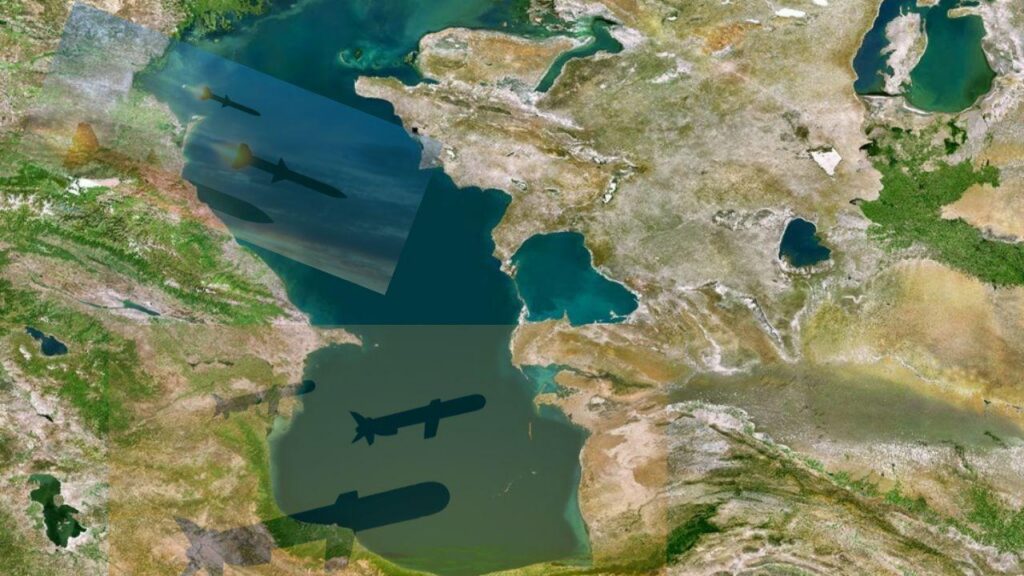
Azerbaijan, Kazakhstan, and Uzbekistan are working on a subsea electricity cable across the Caspian Sea that would enable exports of Central Asian electricity to Europe via the South Caucasus. The first phase of the feasibility study, backed by the Asian Development Bank and led by CESI, was launched in January 2026. It is assessing the technical, economic, regulatory, and environmental viability of the proposed interconnection.
The project is still at the feasibility-study stage, with capacity, routing, financing, and regulatory issues yet to be finalized.
For Kazakhstan, the project would also complement growing oil exports via the Baku-Tbilisi-Ceyhan route and help reduce dependence on traditional export channels.
The most complex element of the emerging regional architecture remains Armenia.
Following the 2020 war over Nagorno-Karabakh and the subsequent decline of Russian influence in the South Caucasus, Yerevan faces a difficult strategic choice. Armenia is seeking deeper ties with the European Union and the United States, but many of the region’s major infrastructure and energy projects are increasingly developing around the Azerbaijan-Türkiye-Central Asia axis.
The question of transport integration through Armenia’s Syunik Province has become particularly significant. For Azerbaijan and Türkiye, a route through Syunik is viewed as a logical extension of the Middle Corridor connecting China, Central Asia, the Caucasus, and Europe. For Armenia, the issue remains highly sensitive and closely tied to sovereignty and national security concerns.
Participation could give Armenia access to one of the region’s most important economic initiatives. Domestic sensitivities over the route have contributed to friction between Yerevan and its partners in both the Collective Security Treaty Organization and the Eurasian Economic Union. Armenia’s westward tilt has also sharpened tensions with Moscow.
For Russia, these developments present both challenges and opportunities. The Kremlin recognizes that the war in Ukraine has reduced its ability to control regional transport and energy flows. As the Russian economy adapts to sanctions and new trade realities, Central Asian countries are increasingly diversifying their external economic relationships.
In the 19th century, the great powers competed for influence in Central Asia in what became known as the “Great Game.” Today, a new version appears to be emerging, but this time, the competition is not primarily over territory. Instead, it revolves around energy corridors, digital infrastructure, rare earth minerals, green-energy projects, and transport networks.
The United States is seeking to strengthen alternative energy routes beyond the influence of Russia and China. Türkiye is building a geoeconomic axis linking the Mediterranean to Central Asia. Europe is searching for new guarantees of energy security. China depends on reliable overland routes to keep the Belt and Road Initiative moving across Eurasia.
At the center of this evolving geopolitical landscape stands the Caspian region. Its role is no longer limited to oil and gas. As energy exports, electricity transmission, critical minerals, and overland trade routes converge, the Caspian is becoming one of Eurasia’s most important strategic crossroads.