The preliminary memorandum signed in mid-June between the United States and Iran, followed by renewed talks between Washington and Tehran, has extended a U.S.–Iran truce and opened a 60-day window for negotiations on a final agreement. The nuclear terms remain unresolved, while Israel’s continued military presence in southern Lebanon, despite U.S. pressure for a withdrawal, underscores how fragile the broader regional de-escalation remains. At the end of this period, the parties may sign a final agreement, return to hostilities, or mutually agree to extend the interim arrangement.
Kazakhstan, Uzbekistan, Kyrgyzstan, and Tajikistan, along with neighboring Azerbaijan, have welcomed efforts to de-escalate the conflict between the United States and Iran. The fighting briefly boosted demand for alternative routes through Central Asia, but prolonged instability would disrupt trade, raise transport and insurance costs, and increase security risks. The question now is what the region could gain if the pause holds.
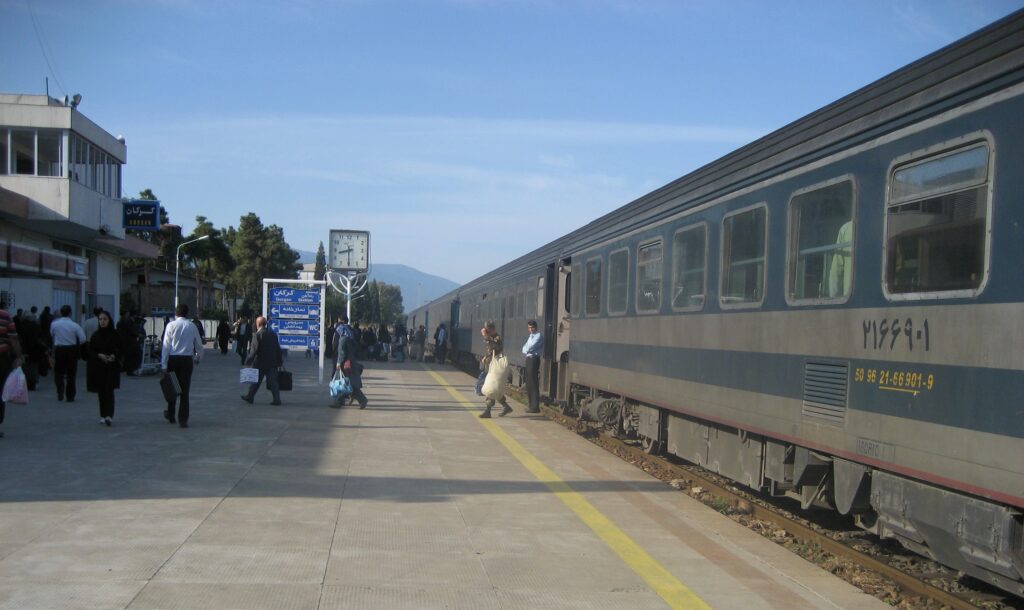
Those effects would vary across the region. Turkmenistan and Uzbekistan stand to benefit most directly from safer southern rail access through Iran to the Persian Gulf and Türkiye. Kyrgyzstan and Tajikistan, which are less directly connected to these corridors and less exposed to oil price swings, would feel the consequences mainly through freight costs, fuel prices, and wider regional trade. For Azerbaijan, a sustained pause would reinforce its role as the Caspian link between Central Asia, the South Caucasus, and Türkiye, while renewed instability would push more freight toward Trans-Caspian alternatives.
That interest is not merely theoretical. Tajik-Iranian trade reached $119.6 million in the first quarter of 2026, while Tajikistan and Kyrgyzstan are developing access to Iranian maritime infrastructure through Uzbekistan and Turkmenistan.
The opportunity, however, is conditional. A truce can reduce military risk, but it does not by itself remove the banking, insurance, and compliance problems that have long complicated trade through Iran. For Central Asian exporters and logistics companies, the question is not only whether routes are physically open, but whether carriers, lenders, insurers, and buyers are prepared to use them during a temporary 60-day window.
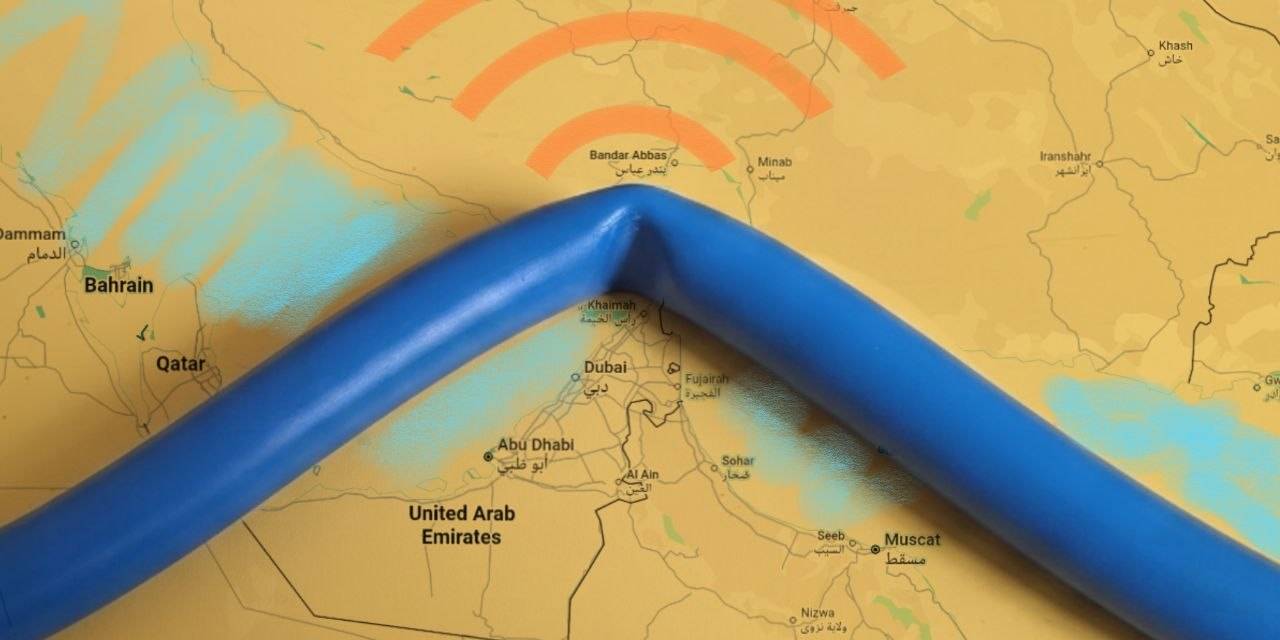
Analysts interviewed by Deutsche Welle said the framework leaves several important provisions unresolved, making a final agreement uncertain. For Central Asia, the most immediate economic variable is the Strait of Hormuz. Kazakh historian and political analyst Sultan Akimbekov identifies its reopening as the key to easing global supply fears.
A durable reopening, combined with the temporary U.S. waiver allowing Iranian oil sales through August 21, could put downward pressure on global energy prices. The effects would vary across Central Asia: weaker prices could strain hydrocarbon revenues, while lower fuel, fertilizer, and freight costs could ease imported inflation in Uzbekistan, Kyrgyzstan, and Tajikistan.
For Kazakhstan, lower global oil prices would have significant implications. National Bank Governor Timur Suleimenov has said oil generates more than 50% of the country’s export revenues and over 30% of the state budget and National Fund revenues. That would reverse one of the conflict’s few short-term economic benefits for Kazakhstan. Higher crude prices had briefly improved the outlook for export revenues, although market volatility and higher import and freight costs diluted the gain. The truce could therefore remove a temporary windfall for Astana while easing inflationary pressure in the region’s energy-importing economies.
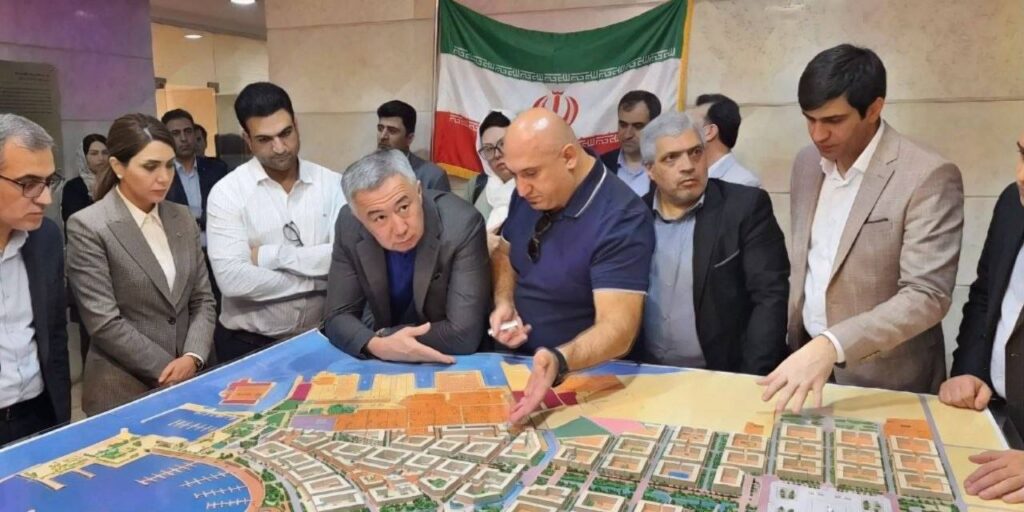
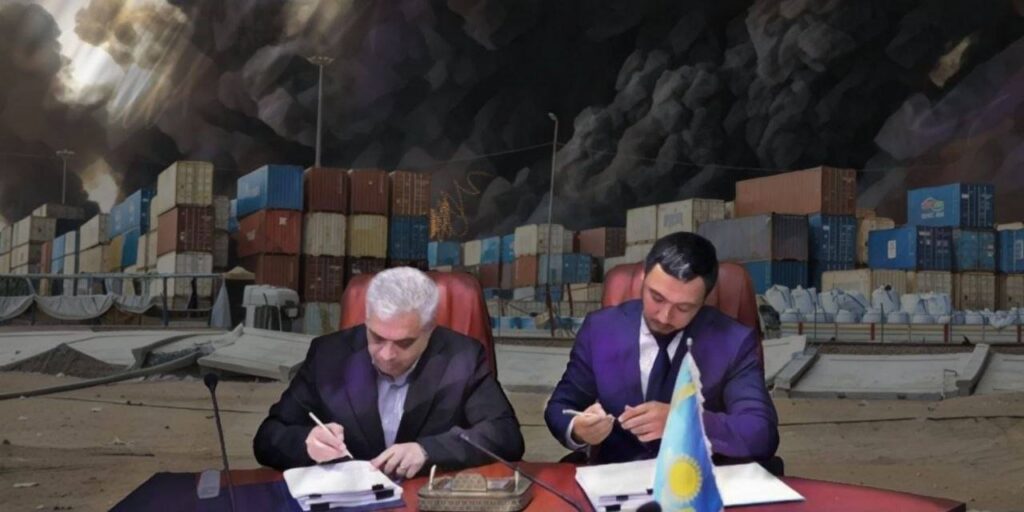
The clearest longer-term opportunity may lie in trade and transit. On June 16, Kazakhstan’s Deputy Prime Minister and Minister of National Economy Serik Zhumangarin held a bilateral meeting with an Iranian delegation led by Roads and Urban Development Minister Farzaneh Sadegh.
The sides discussed the development of the International North-South Transport Corridor, expansion of port infrastructure, increasing bilateral trade volumes, and improving transport and logistics ties. By the end of 2025, cargo volumes along the North-South corridor had increased by 12% to 3.5 million tons. Rail freight between the two countries rose by 69%.
Kazakhstan and Iran intend to modernize transport infrastructure to increase the corridor’s capacity to 20 million tons per year.
The sides also emphasized the importance of the recently signed five-party railway agreement between China, Kazakhstan, Turkmenistan, Iran, and Turkey, as well as the upcoming four-party tariff agreement between Kazakhstan, Russia, Turkmenistan, and Iran, which is expected to create additional conditions for trade and transit growth.
At the start of the military escalation between the United States, Israel, and Iran, regional economist and Logistan editor-in-chief Grigory Mikhailov had already pointed to transport and logistics opportunities for Central Asia.
“There is a chance to attract investment into logistics development from major players, primarily China. For Beijing, the current situation is evidence of the need to develop alternative routes bypassing the Middle East. Options include expanding rail transit through Central Asia and Russia, as well as gradually developing the Northern Sea Route along Russia’s Arctic coast,” he said.
De-escalation in the Middle East, even if temporary, may alter China’s plans for diversifying logistics routes, but is unlikely to cancel them altogether.
This makes the pause a test of route confidence as much as diplomacy. If the ceasefire holds, Iran could regain some value as one of Central Asia’s shortest southern outlets to the Persian Gulf and Türkiye. If it fails, the region’s search for alternatives will accelerate, strengthening demand for the Trans-Caspian route through Kazakhstan, the Caspian Sea, Azerbaijan, Georgia, and Türkiye. In that sense, both peace and renewed instability could increase Central Asia’s strategic importance, but through different corridors.
Another possible scenario involves Kazakhstan’s potential role in arrangements related to Iran’s nuclear program. Under the memorandum signed by Trump and Pezeshkian, Iran agreed not to produce or acquire nuclear weapons, but the framework sets no detailed limits on the program. The fate of Iran’s accumulated enriched-uranium stockpile is to be resolved in later talks. Washington and Tehran have publicly disputed what was agreed on inspections, although the memorandum says nuclear activities involving material and facilities would be supervised by the International Atomic Energy Agency (IAEA).
IAEA Director General Rafael Grossi said Kazakhstan had indicated its willingness to receive Iran’s stockpile of uranium enriched to 60% if Washington and Tehran reached an agreement on the nuclear program. Grossi made the statement following his May 26 meeting in Astana with President Kassym-Jomart Tokayev.
Kazakhstan’s potential role rests on an established non-proliferation record: it hosted two rounds of nuclear talks with Iran in Almaty in 2013 and now hosts the IAEA Low Enriched Uranium Bank. The bank itself is not authorized to receive or process Iran’s uranium enriched to 60%, however, meaning that any such arrangement would require separate legal documents, safeguards, financing, custody rules, and probably dedicated infrastructure.
For Central Asia, the truce is less a peace dividend than a redistribution of risk. Hydrocarbon exporters could lose from weaker energy prices, while import-dependent economies could gain from lower fuel and freight costs. The region would also benefit from having more viable routes to world markets. The real question is whether banks, insurers, transport companies, and investors are willing to do business through Iran. Unless they are, the truce will remain a political pause rather than a lasting economic benefit for Central Asia.
– Follow our interactive timeline of the Gulf crisis and its impact on Central Asia for the latest developments and the full sequence of events.