• KGS/USD = 0.01144 0%
  • KZT/USD = 0.00193 -0%
  • TJS/USD = 0.10866 0.55%
  • UZS/USD = 0.00008 0%
  • TMT/USD = 0.28490 0%
  • KGS/USD = 0.01144 0%
  • KZT/USD = 0.00193 -0%
  • TJS/USD = 0.10866 0.55%
  • UZS/USD = 0.00008 0%
  • TMT/USD = 0.28490 0%
  • KGS/USD = 0.01144 0%
  • KZT/USD = 0.00193 -0%
  • TJS/USD = 0.10866 0.55%
  • UZS/USD = 0.00008 0%
  • TMT/USD = 0.28490 0%
  • KGS/USD = 0.01144 0%
  • KZT/USD = 0.00193 -0%
  • TJS/USD = 0.10866 0.55%
  • UZS/USD = 0.00008 0%
  • TMT/USD = 0.28490 0%
  • KGS/USD = 0.01144 0%
  • KZT/USD = 0.00193 -0%
  • TJS/USD = 0.10866 0.55%
  • UZS/USD = 0.00008 0%
  • TMT/USD = 0.28490 0%
  • KGS/USD = 0.01144 0%
  • KZT/USD = 0.00193 -0%
  • TJS/USD = 0.10866 0.55%
  • UZS/USD = 0.00008 0%
  • TMT/USD = 0.28490 0%
  • KGS/USD = 0.01144 0%
  • KZT/USD = 0.00193 -0%
  • TJS/USD = 0.10866 0.55%
  • UZS/USD = 0.00008 0%
  • TMT/USD = 0.28490 0%
  • KGS/USD = 0.01144 0%
  • KZT/USD = 0.00193 -0%
  • TJS/USD = 0.10866 0.55%
  • UZS/USD = 0.00008 0%
  • TMT/USD = 0.28490 0%
10 December 2025

Kazakh Singer Dimash Kudaibergen Named UN Global Goodwill Ambassador

On December 8, during the annual session of the International Organization for Migration (IOM) Council in Geneva, world-renowned Kazakh singer Dimash Kudaibergen was officially appointed a Global Goodwill Ambassador.

The announcement, highlighted on the artist’s official website, reflects his “long-standing commitment to supporting people in crisis situations.”

Kudaibergen had previously served as the IOM’s Regional Goodwill Ambassador since 2024, using his global platform to raise awareness about the challenges facing migrants, promote their integration, and participate in various humanitarian efforts.

His engagement with the IOM deepened in 2025. The artist took part in the organization’s Ramadan campaign, voiced strong opposition to human trafficking, and met with IOM Director General Amy Pope to reaffirm his support for ongoing humanitarian programs.

Throughout his global “Stranger” tour, Kudaibergen championed messages of inclusivity and sustainability, performing in cities including New York, Mexico City, Barcelona, London, and Berlin. More than 100,000 attendees around the world heard his call to support the IOM’s mission. His performance of the iconic composition “S.O.S d’un terrien en détresse” at the Council meeting became an emotional highlight of the session.

“Dimash uses his voice not only to touch the hearts of his listeners, but also to help people affected by crises to be heard and seen,” said Pope, praising the artist’s impact.

Addressing member state delegations, Kudaibergen said, “Receiving the title of Global Goodwill Ambassador is an incredible honor. I accept it with great humility and a strong sense of responsibility.”

The IOM, established in 1951, is the leading intergovernmental organization in the field of migration and joined the United Nations system in 2016. Over the years, other UN Goodwill Ambassadors have included Angelina Jolie, Shakira, David Beckham, and Lionel Messi.

Dimash Kudaibergen is a People’s Artist of Kazakhstan (2023) and Kyrgyzstan (2025). Known for his extraordinary vocal range spanning seven octaves and seven semitones (G0 to D8), he blends pop, opera, and traditional Kazakh musical elements in his performances.

Kazakhmys Announces Shareholder Transition Amid Strategic Industry Shift

Kazakhstan’s Kazakhmys Corporation has announced the signing of a framework agreement initiating the transfer of ownership to a new shareholder, according to a statement from the company’s press service.

The agreement was reached jointly by Kazakhmys President Vladimir Kim and Chairman of the Board of Directors Eduard Ogai. It sets in motion the procedures for a share transfer, with a formal purchase and sale agreement to follow once all obligations are fulfilled in accordance with legal requirements.

The corporation emphasized that the process will be conducted in strict compliance with the law. In Kazakhstan’s mining and metallurgical sector, such transactions require authorization from the Ministry of Industry and Construction as well as the Agency for the Protection and Development of Competition.

Kazakhmys also confirmed that notification procedures for partners, creditors, minority shareholders, and other stakeholders have begun.

“According to the signed document, the upcoming change of shareholder will not affect production or operations. All contractual obligations and employee social guarantees will remain intact, and job stability will be fully maintained. Kazakhmys will continue to operate normally, with current and planned projects implemented in line with its strategic roadmap,” the company stated.

This announcement follows reports that Kazakh businessmen Shakhmurat Mutalip and Nurlan Artikbayev are in talks to acquire stakes in two of the country’s largest industrial players, KazZinc and Kazakhmys. Mutalip, who owns Integra Construction KZ, has reportedly been offered a 70% stake in KazZinc by Glencore. Artikbayev, majority shareholder of Qazaq Stroy, is negotiating a stake in Kazakhmys.

Both entrepreneurs recently met with President Kassym-Jomart Tokayev to discuss the role of private business in infrastructure development. Artikbayev, ranked 44th on the Forbes Kazakhstan 2025 list, met with the president on November 4, followed by Mutalip on November 21.

Analysts view the potential transactions as part of a broader effort to consolidate domestic control over Kazakhstan’s strategic industrial assets.

EDB Establishes Investment Bridge Between Gulf Capital and Central Asian Projects

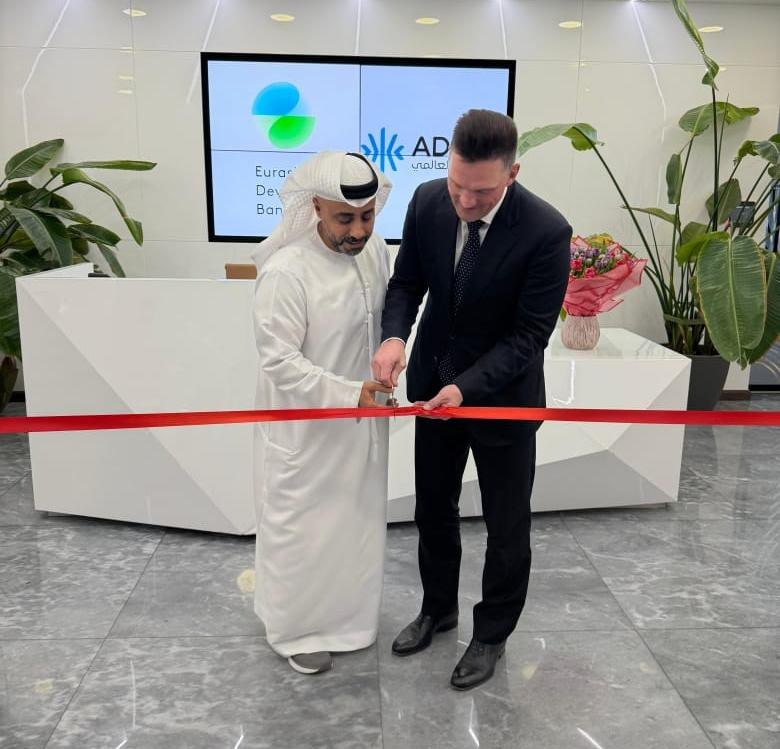
The Eurasian Development Bank (EDB), headquartered in Almaty, has opened a representative office in Abu Dhabi Global Market (ADGM), the United Arab Emirates’ international financial center, marking a strategic move to connect Gulf Cooperation Council (GCC) investors with high-potential projects across Central Asia.

According to the Bank, the new platform will offer GCC investors structured investment opportunities backed by EDB analytics, regional expertise, and strong ties with the governments of its member states, Armenia, Belarus, Kazakhstan, Kyrgyzstan, Russia, Tajikistan, and Uzbekistan. Through this initiative, investors will gain access to infrastructure and sustainable development projects with optimized risk-return profiles.

At the launch ceremony, EDB Management Board Chairman Nikolai Podguzov underscored the strategic significance of the move. “We are creating an ‘investment highway’ between Gulf capital and opportunities in Central Asia. Our new office in Abu Dhabi reinforces our role as a regional bridge, combining local knowledge with tailored financial instruments. Investors gain access to proven projects with favorable risk-return dynamics, while Central Asian economies unlock new development funding.”

A centerpiece of the new platform is a specialized credit fund dedicated to financing infrastructure development in Central Asia. Registered under ADGM jurisdiction, the fund will focus on debt financing for EDB’s infrastructure portfolio. The Bank highlighted ADGM’s regulatory advantages, noting that the fund will offer Middle Eastern and global investors a secure and efficient entry point into the region’s development landscape. EDB will serve as both a structuring partner and co-investor, providing access to a diversified project pipeline.

Priority Sectors for Investment

Transport and Logistics: The development of the North-South Corridor could boost transit volumes through Central Asia by up to 40%, significantly reducing shipping distances between the Gulf and key Eurasian markets.

Water Sector and Agribusiness: The irrigation equipment market in Central Asia is valued at approximately $426 million annually, while the broader water supply sector is worth up to $2 billion.

Renewable Energy: The sector continues to attract major players such as the UAE’s Masdar, which has established a growing footprint across Central Asia.

Strengthening Gulf-Central Asia Economic Ties

In recent years, the Gulf states have become major trading partners and investors in Central Asia. According to EDB data, trade between the Gulf and Central Asia reached $3.3 billion in 2024, a 4.2-fold increase since 2020. Imports from the Gulf made up 80% of the total trade turnover.

Top Central Asian trading partners with the Gulf in 2024 were:

  • Turkmenistan – $2 billion (61%)
  • Uzbekistan – $740 million (23%)
  • Kazakhstan – $302 million (9%)

The highest trade growth rates were recorded in:

  • Turkmenistan – up 9.9 times
  • Kyrgyzstan – up 9.5 times
  • Uzbekistan – up 8.1 times

The UAE accounted for 97% of all Gulf-Central Asia trade. For Turkmenistan, Gulf trade represented around 10% of total foreign commerce, while Kyrgyzstan’s share stood at approximately 1%, with even lower figures across other regional states.

The EDB projects continued growth in trade, citing an unrealized potential of $4.9 billion, including $4.4 billion in potential Gulf exports (motor vehicles, electronics, jewelry) and $500 million in potential Central Asian exports (precious and non-ferrous metals, agricultural products).

Gulf Investments on the Rise

A recent EDB study highlights a significant increase in Gulf investment across the Eurasian region, with Central Asia receiving the lion’s share.

The UAE is the leading Gulf investor in the region, with total investments growing 1.7-fold since 2016 to reach $12.2 billion by mid-2024. Of that, 90% was directed to Central Asia, including:

  • Hydrocarbons in Turkmenistan – $8 billion
  • Electric power in Uzbekistan – $1.7 billion

Saudi Arabia and Qatar have recently emerged as active investors. Saudi investment rose from $300 million in 2021 to $2.3 billion by mid-2024, driven largely by energy projects in Uzbekistan. Qatar made its first investment in the region in 2024, channeling $1.6 billion into a telecommunications project in Kazakhstan.

Kazakhstan Deepens Its Critical Minerals Push

Kazakhstan is pushing a new phase of geological exploration, and the early results suggest that the country’s critical minerals profile is deepening. The Ministry of Industry and Construction says the area of mapped and studied subsoil will rise from about 2.1 to 2.2 million square kilometers by 2026. Exploration work completed in 2024 across eleven sites has produced new resource forecasts in Abai, East Kazakhstan, Karaganda, and Kostanay.

The distribution matters as much as the tonnages: rare earths and other strategic metals appear across multiple regions, while gold prospects stand out in Kostanay. Five deposits have been added to the national register, alongside newly booked reserves of gold, copper, manganese, and phosphorites. Kazakhstan’s mineral importance was already widely recognized; this round of findings measurably strengthens that judgment.

Four Regions Drive a Wider Metal Mix

The most recent round of results from the national survey program is notable for the geographic spread and metals mix. The 2024 work across eleven sites also produced new forecasts of precious, rare, and strategic metals in Abai, East Kazakhstan, Karaganda, and Kostanay, according to the Ministry of Industry and Construction.

In the Abai Region, geologists have outlined forecast resources of about 3,200 tonnes of beryllium, 1,100 tonnes of yttrium, and 200 tonnes of niobium. The mix points to advanced-manufacturing relevance, not a single-commodity profile. East Kazakhstan adds a second, larger beryllium signal, with newly identified deposits estimated at roughly 20,600 tonnes of beryllium and 600 tonnes of tungsten. That pairing reinforces an emerging pattern in which the northeast and east of the country are presenting not just rare-earth potential but a broader suite of strategic inputs.

The largest rare-earth figures in this announcement sit in the Karaganda Region. Early estimates there indicate roughly 935,400 tonnes of lanthanoids, alongside prospective resources of copper, yttrium, gallium, and molybdenum. This is consistent with the earlier 2025 reporting that has repeatedly placed central Kazakhstan at the center of the country’s renewed rare-earth narrative.

Kostanay Region stands out on the precious metals side. Forecast gold resources there are reported at about 17,500 tonnes, with prospective copper resources also identified. The December update also marks formal follow-through: five new deposits have been added to the national register, with newly booked reserves that include 98 tonnes of gold, 36,000 tonnes of copper, 11 million tons of manganese, and more than 1.3 million tonnes of phosphorites.

Taken together, these regionally distributed findings give added empirical weight to a view already present in earlier coverage: Kazakhstan’s mineral importance was established; the survey now suggests a widening and deepening strategic profile rather than a single episodic discovery.

Kazakhstan Treats Geological Knowledge as Policy

The December 8 update also fits a pattern visible through 2025: the state is treating geological knowledge as a policy tool. Earlier this year, the Geology Committee described plans to expand subsurface study coverage by early 2026, while late-2025 government reporting reiterated the 2.2 million square kilometer objective as a presidential instruction tied to industrial priorities.

What separates the current cycle from older, more episodic exploration is the combination of broad mapping and targeted studies. The specialized initiative in eastern Kazakhstan that examined collision-zone granitoids is an example of this deeper push. It identifies three target zones with substantial potential for niobium, zirconium, rare earths, molybdenum, and tungsten, with very large preliminary figures attached to each category.

The pattern suggests a planned survey design rather than chance. They reflect an intensifying survey architecture that is designed to widen the national resource map and to identify multi-metal clusters that may later support higher-value processing inside the country.

Forecasts, Early Estimates, and New Reserves Clarify the Stakes

The figures in the ministry’s summary combine several categories that sit at different stages of development. Some numbers are described as forecast resources, others as preliminary estimates tied to specific target zones, and still others as newly booked reserves added to the national register.

This distinction matters for readers who track Kazakhstan’s strategic position. Forecasts and early estimates signal geological promise and help shape investor interest, but they are not yet the same as proven, commercially bankable reserves. By contrast, the registry additions reported for 2024 reflect a more formal step in resource confirmation, including newly booked figures for gold, copper, manganese, and phosphorites.

For Kazakhstan, the policy-strategic effect is not only about export volume. It is also about the ability to turn a wider resource base into a more diversified industry. The government has repeatedly linked the survey expansion to industrialization aims and to a shift toward higher value-added production.

Recent reporting by The Times of Central Asia has framed rare earths and associated strategic metals as a category where the country can move from promising geology to a more competitive midstream role, provided that investment conditions, regulatory clarity, and technical capacity keep improving. The multi-region mix outlined on December 8 reinforces that perspective. Abai and East Kazakhstan point to a broader strategic-metals bundle. Karaganda anchors the rare-earth story with large early estimates. Kostanay adds a strong gold signal.

Strategic Outlook

Internationally, the latest survey results add another layer to Kazakhstan’s positioning as a potential non-Chinese source of critical materials, at a time when the United States, the European Union, and key Asian economies are all pursuing diversified supply arrangements. The country already holds a recognized place in the global uranium supply, and broader external interest in mineral cooperation with Central Asia has been building since 2025.

The December 8 announcement strengthens the investment case because it suggests scale across multiple regions rather than dependence on a single site. It also aligns with the 2025 trend of increasing exploration funding and more formal reserve registration.

The constraints remain familiar. Large tonnages on paper still require long lead times, capital-intensive feasibility work, and confidence in permitting and infrastructure. A reasonable near-term watch list, therefore, includes new tender announcements, joint-venture frameworks, and any concrete steps toward domestic refining or separation capacity that would turn geological promise into supply-chain leverage.

Pannier and Hillard’s Spotlight on Central Asia: New Episode Available Sunday

As Managing Editor of The Times of Central Asia, I’m delighted that, in partnership with the Oxus Society for Central Asian Affairs, from October 19, we are the home of the Spotlight on Central Asia podcast. Chaired by seasoned broadcasters Bruce Pannier of RFE/RL’s long-running Majlis podcast and Michael Hillard of The Red Line, each fortnightly instalment will take you on a deep dive into the latest news, developments, security issues, and social trends across an increasingly pivotal region.

The new episode, available this Sunday, will be dedicated to 16 Days Against Gender-Based Violence, with guests Svetlana Dzardanova, a gender and human rights researcher for Freedom for Eurasia, based in Bishkek, and Janette Akhilgova, Equality Now’s Eurasia consultant.

Kyrgyzstan Adopts Online Tools to Combat Illegal Wildlife Trade

Customs and border officers in Kyrgyzstan haven’t traditionally focused on the smuggling of animals and plants, even though conservationists say the country is a transit point in Central Asia’s illegal wildlife trade. Backed by international expertise, Kyrgyzstan’s government is working to change that in a campaign that supporters hope will foster more regional collaboration.

“We recognize that this work must be done step by step; we cannot build everything at once,” said Bakytbek Tokubek uulu, Central Asia program manager of TRAFFIC, a Britain-based conservation group.

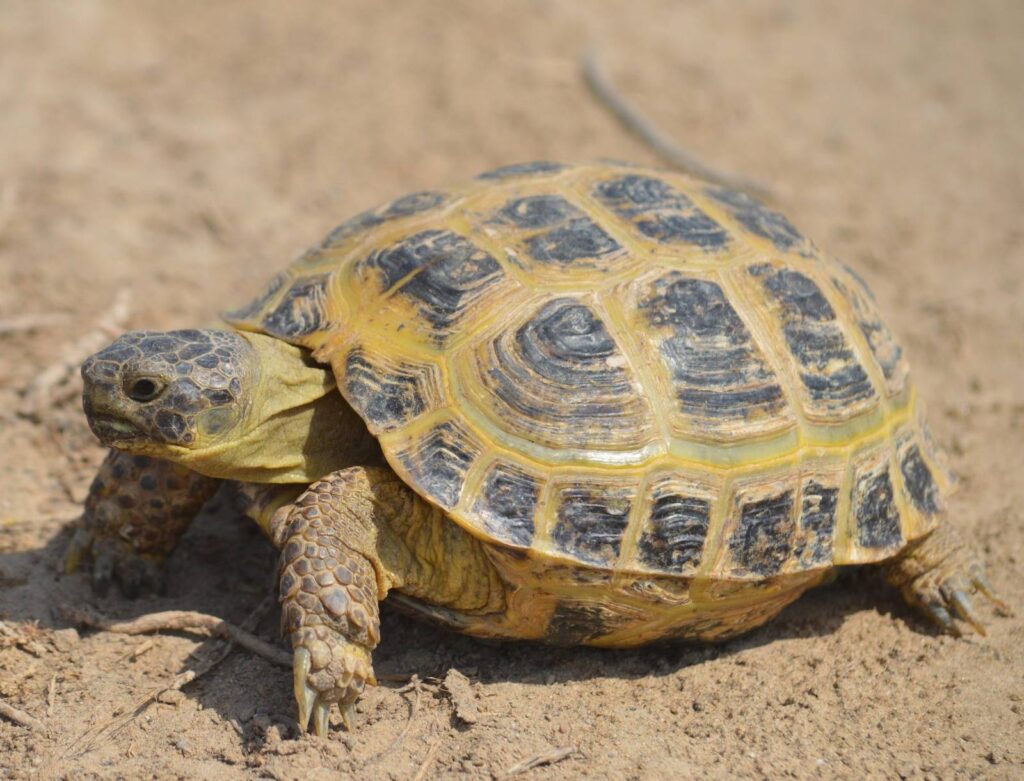
Some species considered to be vulnerable to illegal commerce in Central Asia include Saker falcons, coveted in the Middle East for falconry; Central Asian tortoises, which are smuggled as exotic pets; Saiga antelopes, whose horns are used in traditional medicine; and Argali sheep and Marco Polo sheep, which are hunted for trophies.

For the first time, Central Asia recently hosted the main meeting of the Convention on International Trade in Endangered Species of Wild Fauna and Flora, a United Nations entity also known as CITES. The conference in Uzbekistan, which ended on December 5, drew delegates from around the world and raised awareness in the region about the legal and illegal wildlife trade and protections for tens of thousands of species of animals and plants.

At a presentation during the meeting, the TRAFFIC conservation group described a new electronic database that Kyrgyzstan will use in an effort to detect and prevent wildlife smuggling. The database rollout, which followed training workshops in Bishkek over the summer, will help officials with wildlife checks, including verification of CITES permits, that were sometimes overlooked by officers more involved in searching for weapons and explosives.

Law enforcement officers in Kyrgyzstan during wildlife database training. Photo: Bakytbek Tokubek uulu/TRAFFIC.

The database will record wildlife smuggling cases, making it easier to spot suspicious conduct, and outline ways to identify animal parts and what documents are needed for import and export. Fauna & Flora, another Britain-based NGO, is also involved in the project overseen by Kyrgyzstan’s Ministry of Natural Resources, Ecology and Technical Supervision. It is funded by the U.S. State Department’s Bureau of International Narcotics and Law Enforcement Affairs.

“In the future, we envision all Central Asian governments having their own electronic CITES databases, enabling them to issue and track CITES permits online,” Tokubek uulu, the regional TRAFFIC manager, said in written responses to questions from The Times of Central Asia.

“Ultimately, our long-term goal is for all Central Asian countries to operate interconnected systems that share data in real time and enable coordinated, rapid responses like it is at TWIX,” he said.

TWIX, which stands for Trade in Wildlife Information eXchange, is an online platform, currently in operation in Europe and Africa, that allows law enforcement agencies to share information across borders as they track wildlife smuggling.

Some law enforcement officers at the summer training in Kyrgyzstan said they weren’t previously familiar with the CITES permit system, according to TRAFFIC.

“The shift in mindset takes time: officers need repeated exposure, practical examples from the region, and clear guidance on what to look for operationally. However, each session builds a bit more awareness, and you can see the change as participants start asking more concrete questions about detection, enforcement powers, and procedures,” Tokubek uulu said.

“So yes, progress is being made, but it will continue to require sustained reinforcement, practical case studies, and ongoing collaboration with law enforcement agencies to fully embed wildlife crime within their routine enforcement priorities.”