How Young Professionals from Central Asia Are Building Global Careers

Beyond opportunity, a new generation of Central Asians is learning how to compete, adapt, and fit into global work environments.
“I felt like I would understand what real work is much faster by living in the U.S.,” Ruzana Ileuova says.
Many people view building a career abroad as an opportunity. However, for Central Asian professionals, it also entails constantly adapting to new identities and expectations. While logging in to work every day from a location that feels both familiar and unfamiliar, Ruzana learns to trust her abilities and adapt to unspoken expectations. She says that pressure increases when working remotely, as it requires a high level of self-discipline.
“I always feel like I have to do more to prove myself,” she says. Despite strong language skills and academic preparation, she describes an ongoing sense of self-doubt, particularly in high-performance environments. “Even the language barrier still gives me imposter syndrome,” she adds. “And I’m the youngest on my team.”
Her narrative highlights a crucial aspect of this generation: success overseas requires constant negotiation of confidence, identity, and location, in addition to opportunity.
Reinventing the Path
For others, the path to an international career begins not with a plan, but with chance.
Originally from Bishkek, Kyrgyzstan, Aman Arykbaev did not imagine a global career. His journey began when he was unexpectedly selected for the green card lottery.
“I used to think the green card was not a real thing until I saw that I was selected,” he says.
His early years were characterized by uncertainty, as he arrived in the United States with little money and no guidance.
“I worked almost two years installing heating, ventilation, and air conditioning. At that time, my English was very weak,” Arykbaev recalls.
After attending a six-month IT boot camp, he was able to enter a new field and land his first tech job in a matter of weeks. “I had several interview stages, and by the end of the week, I got an offer.”
Arykbaev, who is currently a senior quality engineer, exemplifies a characteristic of this generation: the ability to change course. Careers are now rebuilt, sometimes from the ground up, rather than fixed.
Breaking Into Global Systems
The route was more regimented, but no less difficult, for Aldiyar Bekturganov, an Amazon software engineer. He followed a well-known path of internships, networking, and applications after relocating to the U.S. for college. However, the process was anything but easy.
“I failed my first interview completely,” he says.
That setback accelerated his learning curve. Even after landing a job, entering the workforce was not without its challenges. The shift from university to professional life, he explains, was immediate. “You suddenly realize the work actually matters,” he says. “If something is delayed, people are waiting on you.” Unlike academic settings, where mistakes are part of the process, professional environments demand results that affect teams and timelines.
While Bekturganov represents a more traditional corporate trajectory, Dameli Bozzhanova offers a contrasting perspective shaped by entrepreneurship and flexibility.
Working in London’s startup scene, Bozzhanova’s path has been characterized by experimentation and curiosity.
“It wasn’t a grand plan; it was a sequence of small yeses. In 10th grade, I was set on studying law in Kazakhstan, had already chosen a university, and had even done a legal project I was proud of. But the more I reflected, the more I realised I was drawn to something broader: business, how companies work, how value is created. My father had studied in the UK himself and had always encouraged me to consider studying abroad. So when the two things came together – my shift toward business and his advice – the decision felt natural. I got into Cardiff Sixth Form College, then the London School of Economics, and everything followed from that,” she says.
Her path from studying in the UK to joining an early-stage startup reflects a different kind of ambition, one rooted in building rather than following.
“I’ve always admired entrepreneurship, the idea that you can build something from almost nothing. That curiosity eventually led me toward the startup world. I tried to build my own health app, learned an enormous amount from that experience, and it ultimately led me to Kolleno, which I joined when there were four people and no revenue. Five years later, we’re a cash flow-positive software company,” she explains.
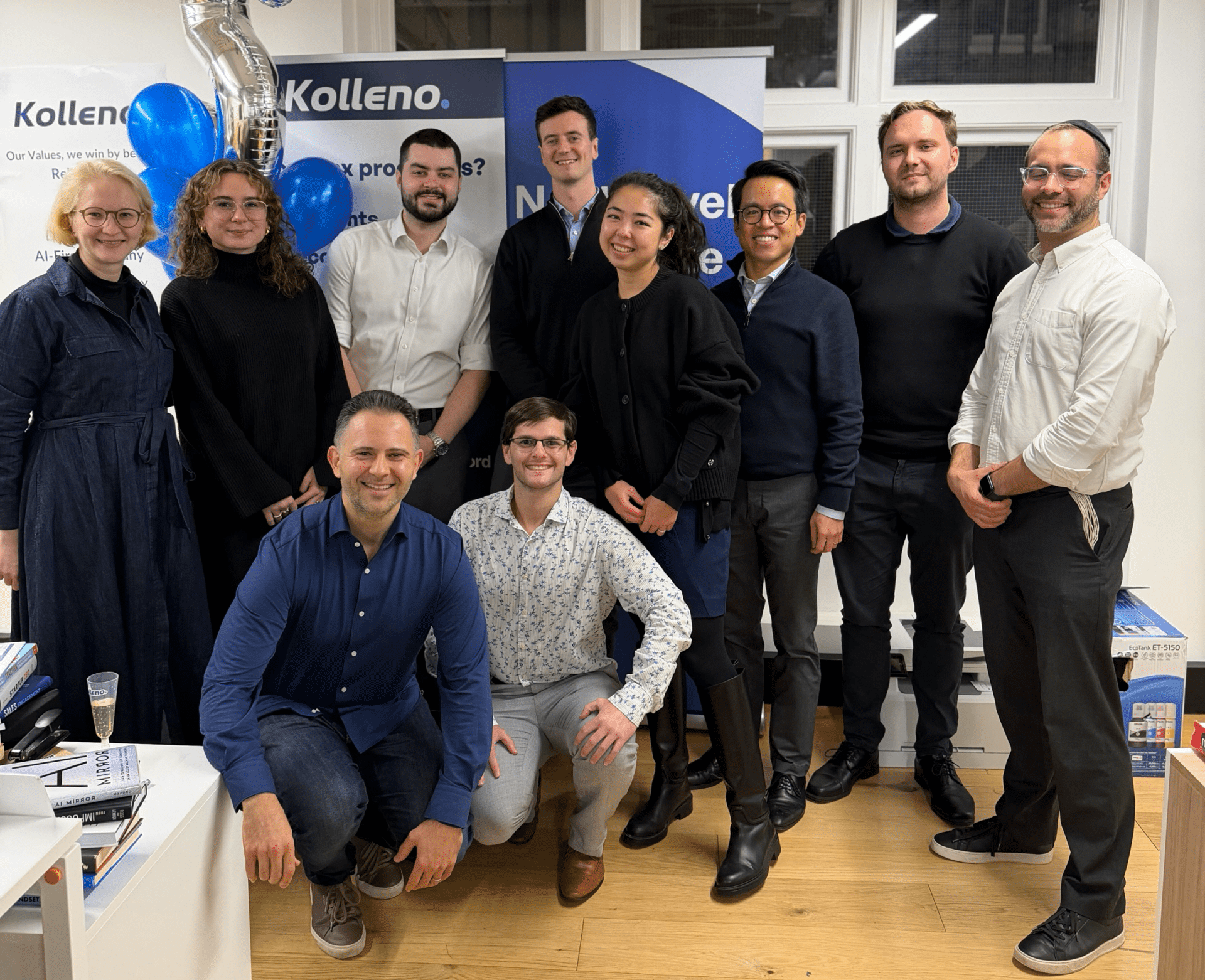
Image: Dameli Bozzhanova
When asked if she felt connected to her Central Asian heritage despite living overseas, Bozzhanova said, “Yes, very much so. London has a wonderful community of Kazakh friends, and I also have family here who came to study and work. That keeps the connection very real and present, it’s not something I have to seek out. It’s just part of my daily life here.”
Adapting and Thinking Globally
For Bozzhanova, adapting meant changing one’s viewpoint rather than trying to fit in. Her deliberate choice to stay open rather than defensive in unfamiliar situations enabled her to navigate a new environment more successfully.
“Being curious rather than defensive. When something confused me or felt unfamiliar, I got interested in it rather than retreating to what I knew.”
“London is simply one of the most competitive cities in the world to study, work, and build anything. That’s just the reality of the environment. For excellent results, you need to put in excellent, or more than excellent, effort. That’s become part of how I operate. It’s not a burden; it’s just my understanding of how things work.”
Bozzhanova presents the pressure as a normal part of a highly competitive environment rather than something related to her home country. In this sense, the need to prove oneself is not an exception but an expectation that shapes both performance and mindset.
“Our generation is increasingly connected through international projects, building startups that are getting recognised in global media, and founding companies that are attracting real investment and attention. The region is producing founders and professionals who are operating at a global level and being acknowledged for it. That visibility matters. It creates a feedback loop: when young people from Kazakhstan see others like them succeeding on the world stage, it expands what feels possible.”
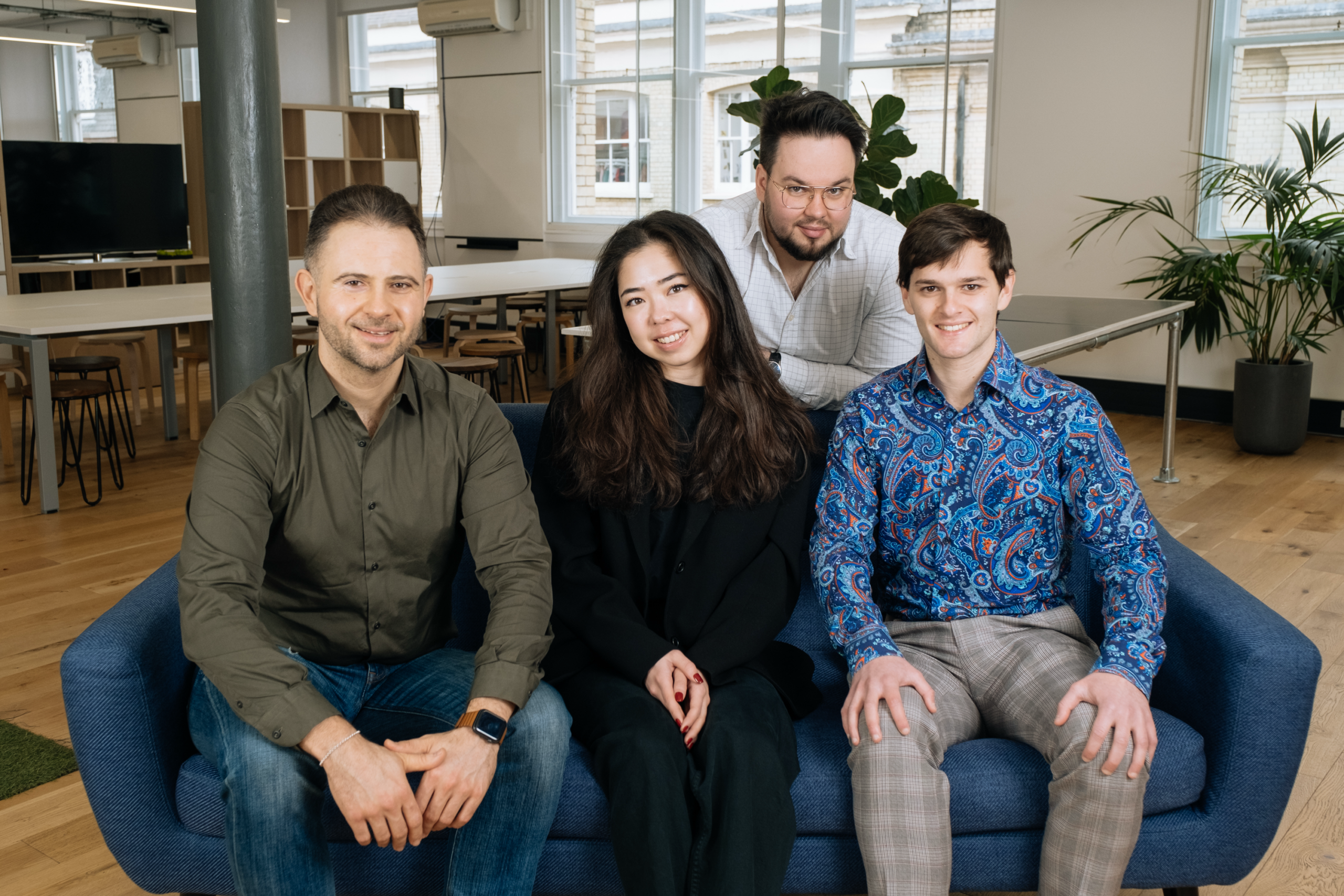
Image: Dameli Bozzhanova
“Right now, I’m focused on what’s in front of me professionally and personally. Where that leads geographically, I’m genuinely open.”
Bozzhanova does not define her future in terms of a specific location, even though she has spent years developing her career overseas. Instead, she remains open, balancing professional ambition with a continued connection to home.
A Generation That Is More Global
A recurring theme in these accounts is that this generation’s perspectives are changing as a result of their exposure to international environments.
“When you work abroad, your thinking becomes more global,” Ruzana Ileuova says.
At the same time, identity itself is evolving.
“You carry your identity with you rather than rooting it in one place,” Dameli Bozzhanova reflects.
Advice for the Next Generation
Bozzhanova emphasizes action over hesitation for those in Central Asia considering a similar path. Instead of overplanning, she advises starting before feeling fully prepared and learning through experience.
“Don’t be afraid to try, don’t overthink it, just start and learn as you go. Doing so teaches you things that no amount of planning or preparation ever will. You’ll make mistakes, you’ll course-correct, and you’ll end up somewhere better than whatever you had mapped out in your head. The path that’s right for you looks different from the one that looks good on paper and learning that difference early saves a lot of time.”
A similar perspective is shared by Ileuova, who emphasizes persistence even in moments of uncertainty:
“The most crucial thing is to keep going and taking action, even when it seems like nothing is working. Stay curious if you’re not sure what to do next. Unexpected opportunities can arise through networking, recommendations, and simply placing oneself in the right environments. You will learn and adapt as you go, so it’s important not to obsess over what is right or wrong at any given time. However, once you’ve made this decision, the only thing left to do is move forward.”
Redefining Success
This generation’s definition of success is arguably the most significant shift. Today’s young professionals are more inclined to experiment, change course, and take risks than their parents, who often followed more linear and predictable career paths.
“Older generations followed a linear path; our generation is more exploratory,” Bozzhanova says.
Many believe the future is no longer tied to a single place.
Aldiyar Bekturganov defines success as adaptability; Bozzhanova views identity as mobile rather than fixed; Aman Arykbaev’s journey exemplifies flexibility in its most literal sense; and Ileuova’s experience underscores the pressure and perseverance required to build a career abroad.
As Central Asians become more globally engaged, their presence in international spaces is evolving. Rather than waiting to be accepted, a new generation is actively reshaping its role in the global workforce, redefining success on its own terms.