Middle East Conflict May Slow Growth, but Gold and Oil Dynamics Could Cushion Impact

The escalating conflict in the Middle East could weigh on Uzbekistan’s economic growth if it persists, though higher gold prices and oil-driven gains in key partner economies may soften the impact, according to Uzbek economist Mirkomil Kholboyev.
Kholboyev shared his analysis on his Telegram channel, examining both the direct and indirect channels through which the crisis could affect Central Asia’s largest economy.
“Several days of geopolitical tensions in the Middle East have already turned into open military confrontation,” he wrote. “It is still difficult to say how long this situation will last. If it is short-term and the previous status quo is restored, the impact on our economy will likely be limited and temporary. But if the war continues for a longer period, the consequences could be more significant.”
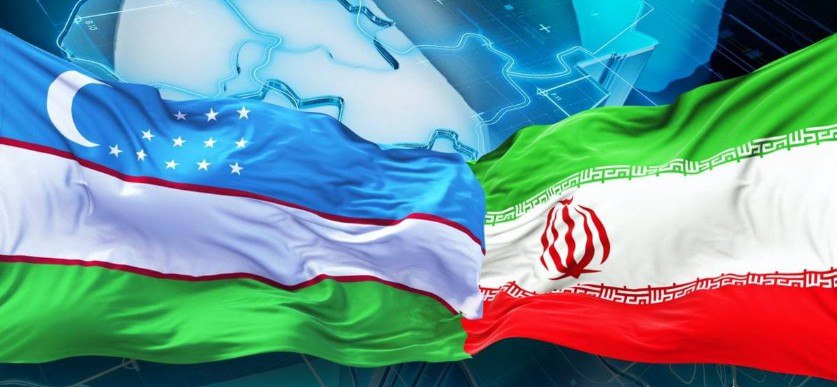
Direct trade exposure appears limited. According to data from Uzbekistan’s national statistics portal, the country exported $157 million worth of goods to Iran in 2025, accounting for just 0.5% of total exports. Imports from Iran totaled $421 million, or 0.9% of overall imports. Trade with Israel was even smaller, with exports of $33 million and imports of $22 million.
“Even a complete halt in trade with these countries would not significantly affect total exports,” Kholboyev wrote, though he noted that export and import growth could slow.
Iran also plays a role as a transit hub. Its ports are part of broader regional logistics networks, including the Central Asia-India corridor via Chabahar and the International North-South Transport Corridor (INSTC). According to a regional analytical report, Uzbekistan accounts for 5.5% of total traffic along this route, compared with 61.1% for Kazakhstan and 29.4% for Turkmenistan.
Kholboyev pointed out that while some of Uzbekistan’s trade passes through Iranian ports, the country is less dependent on them than other Central Asian countries. Still, he cautioned that prolonged fighting would inevitably disrupt both direct trade and transit flows.
“I do not have precise data on how much of our total foreign trade passes specifically through Iranian ports,” he wrote. “That makes it difficult to assess the full effect. But if the war continues, both direct trade and transit through Iran will suffer serious damage.”
Even if trade with the wider region, including Iran and other countries affected by hostilities, were to stop entirely, Kholboyev estimates the impact would remain moderate. The region accounts for about 2.4% of Uzbekistan’s exports and 1.5% of imports. A complete halt could slow export growth by roughly 3% and imports by about 2.5%, reducing overall GDP growth by around 0.6 percentage points. A 50% reduction in trade with the region would shave an estimated 0.2-0.3 percentage points off GDP growth.
Energy markets represent a more significant risk channel. As trading resumed after the latest escalation, global oil prices rose by about 9%, driven by concerns over potential disruptions in the Strait of Hormuz, through which roughly one-fifth of global oil consumption passes.
“If tensions escalate further and oil flows are restricted, or if prices continue rising amid uncertainty, this could slow the global economy,” Kholboyev wrote. He cited estimates suggesting that a 10% increase in oil prices can reduce global economic growth by 0.1-0.2 percentage points.
China’s exposure is also relevant. Around 10-13% of China’s oil imports come from Iran. Given that China is one of Uzbekistan’s main trading partners, slower Chinese growth would likely have spillover effects.
“At the same time, higher oil prices may create relatively favorable conditions for Russia, which is one of our main labor markets and key trading partners,” Kholboyev noted. Improved economic conditions in Russia could support faster growth in remittances to Uzbekistan and stronger demand for Uzbek exports. Kazakhstan, another major partner, could also benefit from elevated oil prices.
Inflation presents another risk. Disruptions in global supply chains could accelerate price growth domestically. Kholboyev recalled that although inflation in Uzbekistan slowed to 10% in 2021, it rose to 12.3% in 2022 following the outbreak of Russia’s war in Ukraine, according to data from the Central Bank. Annual inflation stood at 7.2% in January this year.
“Supply chain disruptions resulting from the war could accelerate inflation, and the Central Bank may respond by tightening monetary conditions,” he wrote.
Gold, however, may act as a counterbalance. Heightened geopolitical uncertainty typically pushes gold prices higher. Gold is Uzbekistan’s main export commodity; in 2025 the country exported $10 billion worth of gold, accounting for 30% of total exports.
“If continued uncertainty leads to a 10% increase in gold exports, this could directly accelerate GDP growth by around 0.7 percentage points,” Kholboyev said. A 20% increase in gold exports could raise growth by as much as 1.4 percentage points.
Overall, Kholboyev described the current situation as a factor likely to slow global growth and exert negative direct and secondary effects on Uzbekistan’s economy. At the same time, he emphasized that rising gold prices and improved economic conditions in oil-exporting partner countries could help offset part of the external shock.