• KGS/USD = 0.01144 0%
  • KZT/USD = 0.00211 0%
  • TJS/USD = 0.10460 0.19%
  • UZS/USD = 0.00008 0%
  • TMT/USD = 0.28490 0%
  • KGS/USD = 0.01144 0%
  • KZT/USD = 0.00211 0%
  • TJS/USD = 0.10460 0.19%
  • UZS/USD = 0.00008 0%
  • TMT/USD = 0.28490 0%
  • KGS/USD = 0.01144 0%
  • KZT/USD = 0.00211 0%
  • TJS/USD = 0.10460 0.19%
  • UZS/USD = 0.00008 0%
  • TMT/USD = 0.28490 0%
  • KGS/USD = 0.01144 0%
  • KZT/USD = 0.00211 0%
  • TJS/USD = 0.10460 0.19%
  • UZS/USD = 0.00008 0%
  • TMT/USD = 0.28490 0%
  • KGS/USD = 0.01144 0%
  • KZT/USD = 0.00211 0%
  • TJS/USD = 0.10460 0.19%
  • UZS/USD = 0.00008 0%
  • TMT/USD = 0.28490 0%
  • KGS/USD = 0.01144 0%
  • KZT/USD = 0.00211 0%
  • TJS/USD = 0.10460 0.19%
  • UZS/USD = 0.00008 0%
  • TMT/USD = 0.28490 0%
  • KGS/USD = 0.01144 0%
  • KZT/USD = 0.00211 0%
  • TJS/USD = 0.10460 0.19%
  • UZS/USD = 0.00008 0%
  • TMT/USD = 0.28490 0%
  • KGS/USD = 0.01144 0%
  • KZT/USD = 0.00211 0%
  • TJS/USD = 0.10460 0.19%
  • UZS/USD = 0.00008 0%
  • TMT/USD = 0.28490 0%

Chinese Firm to Modernize Historic Hydropower Plant Near Bishkek

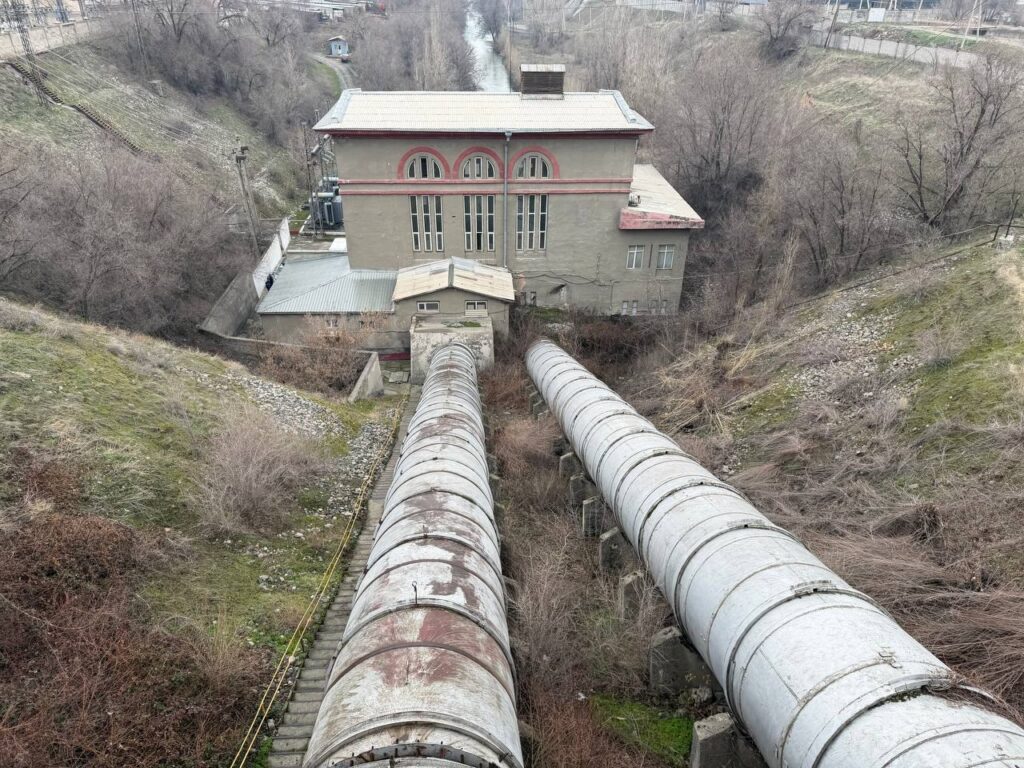
Kyrgyzstan’s state-owned Chakan HPP OJSC has signed a contract with China National Heavy Machinery Corporation (CHMC), which will serve as the general contractor for the modernization of the Lebedinovskaya hydroelectric power plant (HPP) on the outskirts of Bishkek.

The project forms part of the Ministry of Energy’s broader program to upgrade and rehabilitate hydropower facilities in an effort to reduce the country’s chronic electricity shortages and strengthen energy security.

The Lebedinovskaya HPP is the main station of the Alamedin HPP cascade, which comprises eight small hydropower plants located on the Western Big Chui Canal in the Chui region.

According to the Ministry of Energy, the modernization will involve replacing key equipment, increasing generating capacity, and extending the plant’s operational lifespan.

The project involves increasing the plant’s installed capacity from 7.6 megawatts (MW) to 10 MW and raising annual electricity generation from 37.2 million kilowatt-hours (kWh) to 53.5 million kWh.

CHMC has already begun preparing the design and cost-estimate documentation.

Lebedinovskaya HPP is one of the oldest operating hydropower plants in northern Kyrgyzstan. Construction began in May 1942, during World War II. Much of the main construction work was carried out during a harsh winter, when more than 7,000 women and children reportedly excavated frozen soil by hand, transported it across the ice, and stood in icy water to pump out up to 200 cubic meters of groundwater daily to protect the plant’s foundation. Construction was completed in one year and two weeks.

In 1943, the city of Frunze, now Bishkek, began receiving electricity from the plant. The additional power enabled factories evacuated from western parts of the Soviet Union during the war to resume operations at their new location.

The Number of Small Hydropower Plants in Kyrgyzstan Has Doubled in Five Years

Over the past five years, the number of small hydropower plants (HPPs) in Kyrgyzstan has more than doubled. The expansion of small-scale hydropower has become a key priority of state energy policy aimed at reducing electricity shortages and strengthening national energy security.

During this period, 27 small HPPs were commissioned across the country. As a result, 43 such plants are currently in operation. According to government plans, by the end of 2030, an additional 44 small hydropower facilities are expected to come online, effectively doubling the sector’s current capacity once again.

The Ministry of Energy reports that in 2026 alone, 17 new small HPPs are scheduled for construction across all regions of the country, with a combined installed capacity of 1,113.4 megawatts (MW).

Earlier, speaking before the country’s parliament, the Jogorku Kenesh, Prime Minister Adylbek Kasymaliev stated that 19 additional small HPPs with a total capacity of 203.8 MW are planned for commissioning in 2027.

“The electricity shortage is a temporary phenomenon. We are moving toward reducing the gap between electricity consumption and production,” he said.

The projected capacity figures suggest a sharp increase in generation potential. However, the announced 1,113.4 MW capacity for 17 small HPPs in 2026 appears unusually high for facilities categorized as “small” and may require clarification, as small hydropower plants typically operate at significantly lower individual capacities.

According to the Water Resources Service, Kyrgyzstan’s total hydropower potential is estimated at 174 billion kilowatt-hours (kWh), with an overall capacity of 19.8 million kilowatts (19.8 gigawatts).

This indicates that a substantial share of the country’s river-based energy potential remains undeveloped, creating room for further expansion of small-scale hydropower infrastructure.

Given Kyrgyzstan’s mountainous terrain and extensive river network, hydropower remains the backbone of its electricity generation system. The government views small HPPs as a faster and less capital-intensive complement to large hydropower stations, particularly in remote regions.

Syria After Assad: What the New Regional Order Means for Central Asia

The overthrow of Bashar al-Assad in December 2024 fundamentally reshaped Syria’s regional position. The collapse of the old power structure weakened Iran’s entrenched military and economic networks and left Russia’s previously secured foothold uncertain. As Damascus enters a new political phase, external actors are recalibrating their strategies in a landscape that looks markedly different from that of the past decade.

For Central Asian governments, the shift is not merely regional. Syria is becoming a testing ground for how mid-sized states navigate post-conflict environments shaped by larger powers, and a potential arena for economic and diplomatic outreach. As influence is redistributed and new investment and trade corridors are reconsidered, decisions taken in Damascus will increasingly intersect with Central Asia’s own foreign policy and economic calculations. In this emerging landscape, a power vacuum is being filled by states seeking to advance their interests. From the earliest days of Syria’s post-Assad transition, Turkey has been particularly active.

As part of its declared comprehensive support for the new Syrian authorities, Ankara has taken steps to consolidate its position in the Syrian Arab Republic. Turkey is actively participating in infrastructure reconstruction, investing in economic projects, and expanding military-technical cooperation with Damascus. In August 2025, Syria and Turkey signed a military cooperation agreement covering areas including counterterrorism training, cybersecurity, demining, military engineering, logistics, and enhanced coordination between their armed forces.

That same month, the two sides agreed to establish an intergovernmental business council under the Turkish Foreign Economic Relations Board to promote trade and investment cooperation between public and private companies. Turkish exports to Syria reached $3 billion in 2025, reflecting the rapid expansion of Ankara’s economic presence. For Central Asia, Ankara’s activism carries particular weight. Turkey has simultaneously deepened its political, economic, and security cooperation across the Turkic world, meaning its posture in Syria intersects with its broader regional strategy.

A central element of Turkey’s Syria policy remains the issue of refugee returns. However, the prospect of large-scale repatriation is complicated by several factors, notably the long-term presence of around 2.5 million Syrian displaced persons in Turkish society and the absence of stable socio-economic conditions in Syria to support reintegration. Over more than a decade of conflict, a generation of Syrians has grown up in Turkey, many of whom are deeply embedded in the country’s social and economic life.

Turkey’s obligations under the 1951 UN Convention Relating to the Status of Refugees, including the principle of non-refoulement, further constrain policy options. Taken together, these factors make large-scale return unlikely until Syria achieves sustained political stabilization and adequate living conditions. In the longer term, Turkey’s objective of neutralizing what it describes as the Kurdish threat emanating from Syrian territory will continue to shape its strategy.

Israel has also intensified its military and political engagement since the change of power in Damascus. It has taken steps to establish control over areas adjacent to the Golan Heights and to create a buffer zone, arguing that such measures are necessary to safeguard national security against potential terrorist threats. Israeli officials have publicly expressed support for segments of Syria’s Druze community and signaled to the new authorities in Damascus that discrimination against minorities could trigger decisive countermeasures, including military action.

These warnings were underscored in July 2025 amid intercommunal clashes in Suwayda between Druze and Bedouin groups, when Israeli forces conducted strikes against Syrian government units deployed in the area. An airstrike targeting the entrance to the Syrian Armed Forces General Staff building further demonstrated Israel’s readiness to act. Current Israeli policy suggests an intention to retain control over the buffer zone in the Mount Hermon area and along the Golan Heights for the foreseeable future.

The Persian Gulf states, Saudi Arabia, Qatar, and the United Arab Emirates view post-Assad Syria primarily as a destination for large-scale economic investment. Saudi Arabia has announced plans to invest more than $6.4 billion in sectors including airport infrastructure, energy, telecommunications, and transport, signaling a preference for tangible economic engagement over symbolic political gestures.

At the same time, Gulf states regard the new Syrian government as a potential stabilizing factor in the Middle East following the weakening of Iranian influence. Cooperation with Damascus to combat drug trafficking, which has in recent years posed a significant security challenge for Arab monarchies, remains a priority.

European states moved quickly after the political transition to restore diplomatic contacts and outline mechanisms for economic assistance. The European Union has indicated plans to allocate approximately $722 million for humanitarian and reconstruction projects in 2026-2027. For European policymakers, however, the Syrian file remains closely linked to the issue of refugee returns, which often takes precedence over broader geopolitical considerations. The repositioning of Turkey, Israel, the Gulf monarchies, and the European Union creates a new strategic landscape — one that Central Asian states cannot ignore, even if they remain cautious about direct involvement.

Central Asian states are approaching relations with Syria cautiously. During the years of conflict, Syria was widely perceived in the region as a hub of transnational terrorism and a destination for militants, including individuals from Central Asia. This perception has shaped a persistent narrative portraying Syria as a high-risk environment for travel and investment. While the new Syrian leadership has pledged to combat terrorism and distance itself from extremist networks, governments in Central Asia continue to proceed carefully.

A useful point of comparison is Central Asian engagement in Gaza, another politically sensitive conflict environment where humanitarian imperatives intersect with geopolitical risk. At the inaugural Board of Peace meeting in Washington in February 2026, Kazakhstan signaled its willingness to contribute to Gaza’s reconstruction and broader stabilization efforts, including financial support and potential participation in peacekeeping initiatives, while Uzbekistan publicly pledged support for rebuilding efforts through specific projects. No Central Asian state has yet deployed troops directly into Gaza outside these pledges. This pattern of prioritizing humanitarian and reconstruction-oriented engagement through multilateral mechanisms, rather than early military deployments, suggests that Central Asian governments are likely to approach post-Assad Syria in a similarly calibrated manner — emphasizing symbolic diplomacy and multilateral frameworks alongside carefully structured economic cooperation.

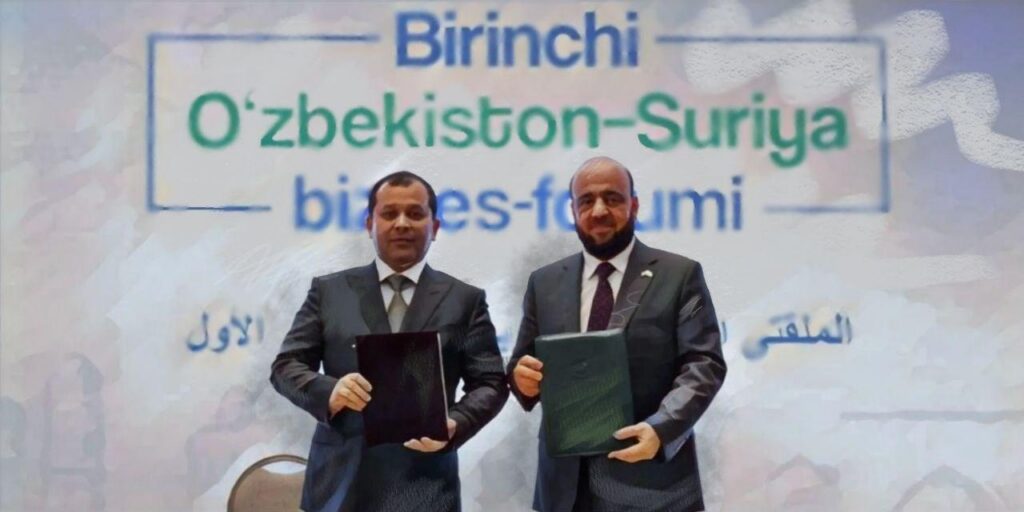
In practice, Uzbekistan appears the most likely Central Asian state to test limited cooperation with Syria first. That cautious outreach is already taking institutional form. In February 2026, Syria and Uzbekistan signed a memorandum of understanding aimed at expanding trade, investment, and economic cooperation. While the agreement does not yet imply large-scale capital commitments, it signals Tashkent’s willingness to establish formal channels with the new Syrian authorities and explore practical engagement within a controlled framework. Tashkent has, in recent years, pursued pragmatic diplomacy across the Middle East, including expanded ties with the Gulf states and Turkey, and has demonstrated a willingness to separate economic cooperation from ideological alignment.

Kazakhstan, with its multi-vector foreign policy and experience balancing relations among competing powers, could follow through humanitarian assistance or multilateral reconstruction mechanisms rather than rapid bilateral investment. Kyrgyzstan and Tajikistan, given fiscal constraints and domestic security sensitivities linked to past fighter flows to Syria, are likely to move more cautiously. Turkmenistan’s traditional neutrality would also suggest a limited, economically framed approach if engagement occurs at all.

Geographical distance and the logistical complexity of establishing cost-effective trade routes between Central Asia and the Levant further constrain immediate economic engagement.

Nonetheless, Syria’s location and the scale of external involvement are positioning it as a potential investment center and, under certain conditions, a transport hub with access to the Mediterranean Sea.

According to statements by the new Syrian authorities, $28 billion in investments were pledged in the six months following the fall of the Assad regime, primarily in infrastructure, energy, and real estate. The United States, Turkey, Qatar, Saudi Arabia, and the United Arab Emirates are reported to be among the largest investors.

Separately, international donors pledged nearly $6.5 billion in support for Syria’s recovery at a conference hosted by the European Union in Brussels in March 2025, aimed at stabilizing the country and supporting a peaceful political transition.

The Syrian authorities have amended laws to permit foreign investors to repatriate profits and transfer capital abroad as part of efforts to improve the investment climate, a change officials describe as enhancing Syria’s attractiveness for long-term capital.

The question is less whether opportunities exist than whether Central Asian governments are willing to absorb the political and reputational risks of early engagement. A phased and pragmatic approach, beginning with humanitarian and cultural aspects and gradually extending to economic cooperation, could allow Central Asian countries to test the waters while managing risk. Syria’s reconstruction needs span sectors in which Central Asian states possess relevant capabilities, including construction and basic infrastructure, energy modernization, irrigation and agricultural development, and technical training.

Historical ties may also serve as a symbolic foundation for renewed dialogue. Figures such as Sultan Az-Zahir Baybars and the philosopher Al-Farabi, associated with the broader historical space of the Great Steppe and the Arab East, are often cited as examples of long-standing cultural and political interconnections.

As Syria’s future is increasingly shaped by external actors, Central Asian states face a strategic choice: to remain marginal to unfolding developments or to seek carefully calibrated participation. Should they fail to engage, the current window of opportunity may close before it is meaningfully explored.

Opinion: Uzbekistan’s Strategic Reorientation in an Evolving International System

Almost as if responding to the pressures of a transforming international environment, the early twenty-first century has witnessed the emergence of Uzbekistan as a state seeking to redefine its strategic identity after decades of caution and relative isolation.

When Shavkat Mirziyoyev assumed the presidency of Uzbekistan in 2016, he inherited a state possessing considerable demographic weight, a pivotal geographic position, and untapped economic potential, yet constrained by regional mistrust and international isolation.

His policy has combined internal reform with a multi-vector diplomacy grounded in pragmatic calculations of national interest rather than ideological aspirations.

At the global level, Mirziyoyev has pursued a diplomacy of equilibrium. Rather than aligning unequivocally with any major power, Uzbekistan engaged simultaneously with Russia, China, the United States, and Europe, seeking economic modernization and strategic autonomy in equal measure. This multivectorism is tantamount to a classical calculation: that for a state situated at the crossroads of great-power interests, independence is preserved not by isolation but by balanced engagement.

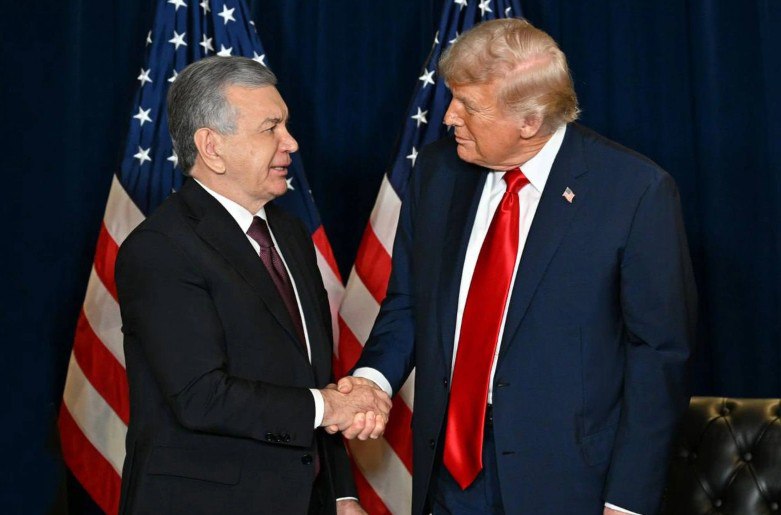
In that sense, Uzbekistan’s involvement in the Board of Peace established by U.S. President Donald Trump highlights Tashkent’s readiness to engage in emerging diplomatic frameworks beyond traditional multilateral institutions.

In his address during the first summit of the Board of Peace on February 19, Mirziyoyev stressed that “…Uzbekistan has supported the peacebuilding initiative of establishing the Board of Peace, and firmly declared its commitment to take a practical part in its successful implementation.” He added, “…Uzbekistan is ready to make a tangible contribution to the construction of residential buildings, kindergartens, schools, and hospitals.”

Uzbekistan is driven by several motivations in joining the new organization beyond its multi-vector diplomacy. First and foremost, Tashkent seeks to elevate U.S.–Uzbekistan relations to the level of a strategic partnership grounded in economic cooperation and selective collaboration on global security and peace initiatives.

In addition, Uzbekistan’s seat at the organization means its contribution to solving global crises, not just regional issues, which enhances its image as a ‘middle power’ in the foreseeable future. Secondly, this organization is aimed at maintaining international peace and stability through economic development.

In this regard, it creates an opportunity for Uzbek construction and engineering firms to gain access to Middle Eastern markets and form partnerships with major global contractors by being involved in construction, engineering, and infrastructure development.

This experience earns credibility for future projects. It should be noted that significant supply chains are needed for reconstruction, which presents Uzbekistan with opportunities to participate through its transport companies, air cargo services, transit routes, and railway logistics. Also, it is perfectly aligned with Uzbekistan’s vision of presenting itself as a regional connectivity hub.

From a political perspective, supporting U.S.-led initiatives can secure potential diplomatic backing from international financial institutions and open avenues for partnerships across multiple sectors, particularly in technology.

It sends a strong signal to Western investors that Uzbekistan is a reliable and responsible partner, which would potentially lead to increasing foreign direct investment. Political backing should be added to this list as the U.S. would assist Central Asia, including Uzbekistan, to address pressing regional issues.

Uzbekistan has consistently supported global peace and stability, as demonstrated by Mirziyoyev’s leadership in fostering cordial relations among Central Asian states and promoting the collective resolution of regional problems. The objectives of this newly established organization are consistent with Uzbekistan’s foreign policy goals of contributing to international peace and stability, thereby elevating the country’s role from a regional mediator to a more active contributor to international peace and security.

In the past, such a degree of partnership between the United States and Uzbekistan would have been almost unimaginable. However, the recent reorientation of Uzbekistan’s foreign policy, shaped by current geopolitical realities, reflects Mirziyoyev’s vision of a “New Uzbekistan” as a more open, modern, and citizen-oriented state.


The views expressed in this article are those of the author and do not necessarily reflect the official policy or position of the publication, its affiliates, or any other organizations mentioned.

An Early European View of Nomadic Central Asia

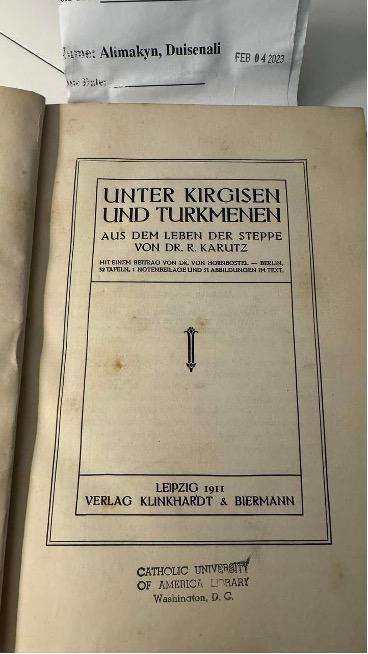
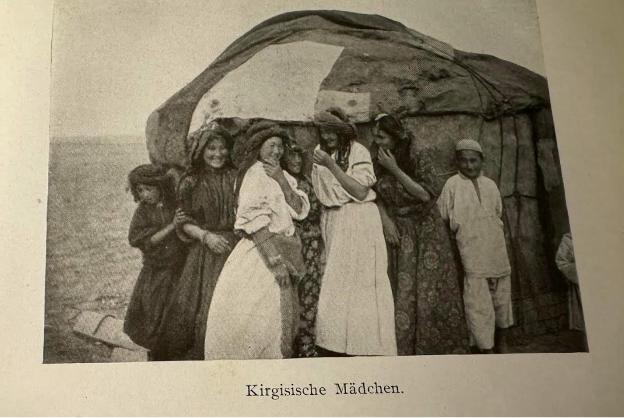
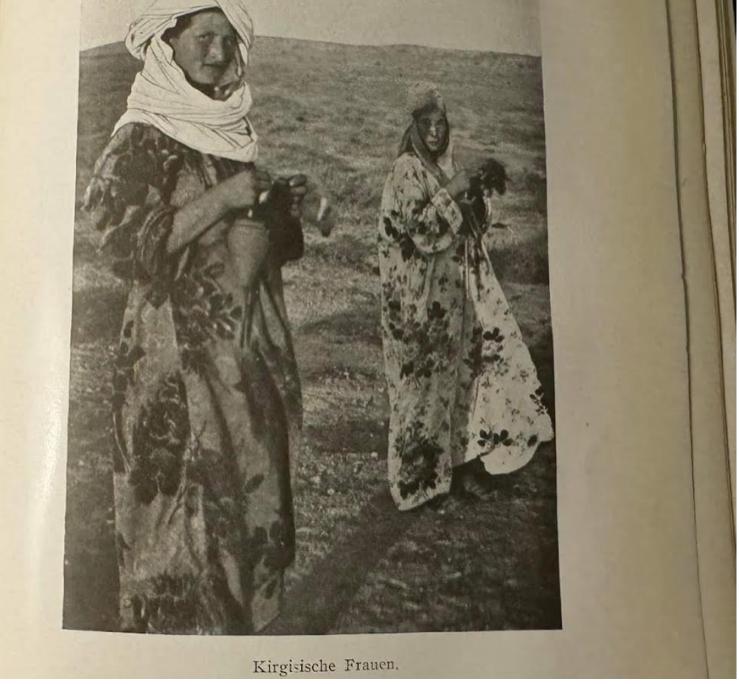
During a period when Central Asia remained largely unknown to European audiences, Among Kirghiz and Turkimans offered Western readers a rare first-hand account of the vast steppe and desert regions.

The book was written in the late nineteenth century by Richard Karutz, a German traveler whose work belongs to the broader tradition of European exploratory travel literature.

I first encountered this book while studying in the United States and later incorporated it into my research. A copy preserved in the library of the Catholic University of America in Washington, D.C., was published in Leipzig in 1911. Since then, it has been regarded as one of the more noteworthy works in early European writing on Central Asia.

Who Was Richard Karutz?

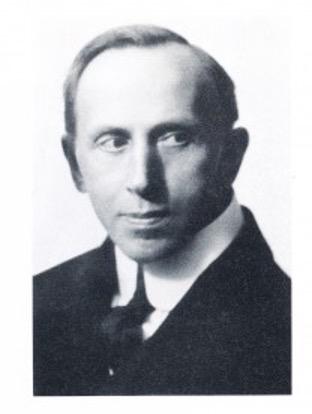
Richard Karutz was a late nineteenth-century German traveler and writer who journeyed through parts of the Russian Empire’s Central Asian territories. Though not widely known today compared to some British or Russian explorers, Karutz represents a generation of European intellectuals fascinated by the perceived “frontier zones” of empire, regions seen as remote, exotic, and culturally distinct.

Richard Karutz

He was neither a colonial administrator nor a military officer; rather, he traveled as an independent observer. His writings reflect the curiosity of an educated European shaped by the intellectual currents of his era, including Orientalism and the growing interest in ethnography. Like many travelers of his time, Karutz sought to document ways of life he believed were on the verge of transformation under imperial modernization.

Across the Steppe and Desert

In Among Kirghiz and Turkimans, Karutz traveled among communities then commonly referred to in Russian and European sources as “Kirghiz”, a historical term often applied to Kazakhs, as well as Turkmen tribes. His route took him across vast grasslands, caravan routes, and oasis settlements shaped by pastoral migration, tribal organization, and Islamic traditions.

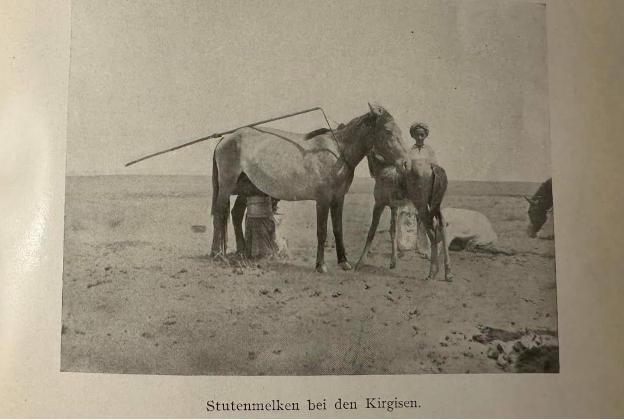
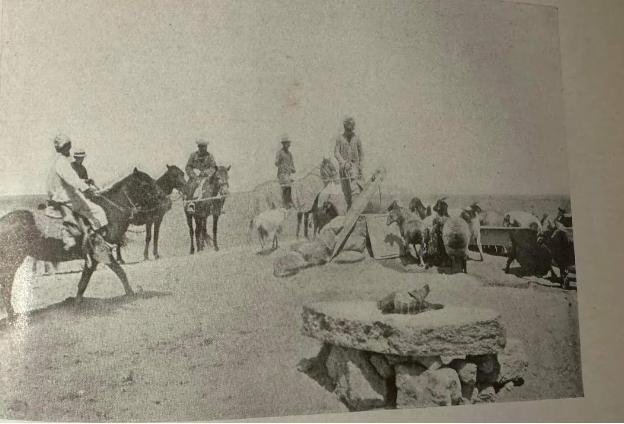
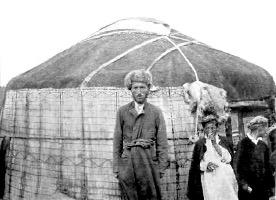
Rather than producing an official report or military survey, Karutz wrote in a personal and descriptive style typical of travel literature. His narrative often reads as impressionistic reflection rather than systematic analysis. He documents everyday life, including nomadic encampments and felt yurts, equestrian culture and elaborate codes of hospitality, tribal leadership and clan loyalty, as well as desert trade routes and caravan movement.

Mangyshlak, a peninsula on the eastern coast of the Caspian Sea in present-day Kazakhstan, features prominently in his descriptions. Significant mineral deposits were later discovered there, leading to its designation as a “peninsula of treasures.” Mangyshlak is characterized by stark desert landscapes and was once described as a barren land consisting largely of sand and stone. In the Middle Ages, it served as a gateway for trade between East and West. The region also played a role in the early history of Turkmen communities. Karutz’s writing attempts to capture both the hardship and the quiet grandeur of steppe existence.

Depicting Nomadic Society

A central strength of the book lies in its attention to social organization. Karutz was particularly struck by the mobility of Kazakh life, seasonal migrations, a livestock-based economy, and a strong attachment to land understood as ancestral heritage rather than private property.

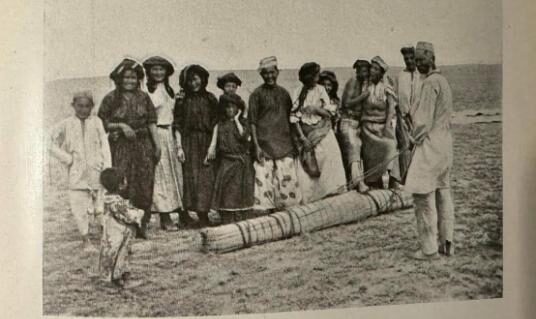
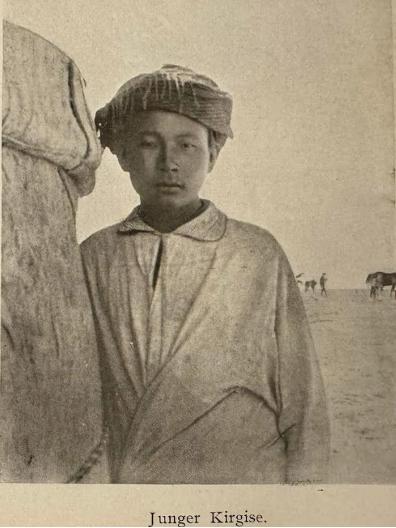
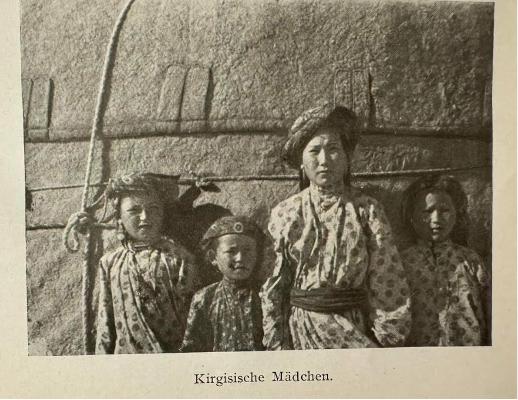
He described the ways of life of Turkmen and Kazakh communities in detail: nomadic movements, settlements and dwellings, clothing, and the human life cycle, including birth, childhood, marriage, family life, illness, and death, as well as beliefs and customary practices.

Karutz encountered these cultures at a time when they had not yet been fully transformed by imperial policies. He provided detailed accounts of everyday life and material culture, examining the close relationship between daily practices and religion. He identified both shared and distinctive features of Kazakh culture in comparison with other Islamic nomadic societies. He also noted elements of pre-Islamic belief systems, including the use of amulets and protective charms, which he interpreted as remnants of earlier traditions. His work includes descriptions of children’s games and toys, traditional Islamic education, interethnic contacts, and perceptions of foreign cultures.

Between Expanding Empires

Karutz traveled during a period of significant geopolitical change. Russian imperial expansion was reshaping Central Asia through railways, administrative reforms, and military consolidation. Although his account is not overtly political, it captures a transitional moment: nomadic autonomy remained visible even as imperial authority strengthened and indigenous systems of governance coexisted with expanding external control.

The book therefore preserves a snapshot of Central Asia before full imperial consolidation and long before Soviet transformation.

Landscape as Identity

Karutz frequently dwells on the landscape. The vast steppe horizons, the sands of the Karakum Desert, and the silence of open plains become active forces shaping human character in his narrative. For him, geography helps explain culture: mobility fosters resilience; isolation encourages independence; boundless space invites contemplation. The environment is not merely a backdrop but a formative influence on identity.

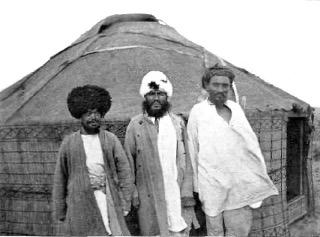
Among Turkmen communities, he describes strong tribal cohesion, warrior traditions, and detailed honor codes. He also comments on craftsmanship, particularly carpet weaving, noting the artistic sophistication embedded in nomadic culture. At the same time, his perspective is shaped by nineteenth-century European intellectual frameworks. His observations, while valuable, reflect the assumptions of an outsider influenced by Orientalist thinking. Modern readers must therefore approach the text critically, balancing appreciation for its ethnographic detail with an awareness of its historical limitations.

A Record of Cultural Encounter

Today, Among Kirghiz and Turkimans remains significant for several reasons. First, it preserves nineteenth-century descriptions of customs, clothing, and social practices. Second, it reveals how Central Asian nomadic societies were interpreted by Western observers. At the same time, the book invites reconsideration: How were images of the “steppe nomad” constructed in European writing? How did such portrayals shape later academic and political narratives?

Ultimately, Among Kirghiz and Turkimans is more than a travel memoir. It is a document of cultural encounter, at times perceptive, at times constrained by the worldview of its era. Karutz writes as an outsider attempting to interpret societies with deep historical roots. For readers interested in Central Asian history, nomadic civilization, or the evolution of European travel literature, his work remains a meaningful, though imperfect, window into a region on the threshold of profound change.

Why Tajikistan’s Courts Rarely Hand Down Acquittals

The issue of extremely rare acquittals in Tajikistan has once again become the focus of public debate following a statement by the chairman of the Supreme Court. The authorities explain these statistics by pointing to the high quality of investigative and judicial work, while lawyers cite systemic problems related to objectivity and respect for human rights.

Supreme Court Chairman Rustam Mirzozoda said at a press conference that the absence of acquittals reflects compliance with the law and the professional performance of law enforcement agencies.

According to him, each criminal case is examined in strict accordance with the requirements of the Criminal Procedure Code, and courts do not issue acquittals because the defendants’ actions are determined to constitute a crime. In 2025, city and district courts referred 16 criminal cases involving 21 individuals for further investigation, but all of the defendants were subsequently convicted.

By comparison, in previous years acquittals were handed down, albeit extremely rarely: three cases in 2023, 11 in 2021, and two in 2020. Even then, they accounted for less than 1% of the total number of decisions.

Part of the legal community views the absence of acquittals as an alarming signal. Lawyer Navruz Odinaev notes that in developed legal systems, acquittals are a normal part of the criminal process.

In his view, the lack of acquittals requires serious analysis, as it affects the fundamental principles of justice, fairness, judicial independence, and the presumption of innocence.

Lawyer Uguloy Bobova highlights another aspect, the potential reputational consequences for law enforcement agencies. An acquittal means that a person’s freedom was unlawfully restricted and therefore that investigative authorities made an error. In addition, an acquittal entails full rehabilitation and entitles the individual to compensation, creating additional legal and reputational risks for the state.

Statistics show that the proportion of acquittals in Tajikistan has remained below 1% in recent years. In international practice, such a low figure is often regarded as an indicator of a possible bias toward conviction in criminal proceedings.