• KGS/USD = 0.01144 0%
  • KZT/USD = 0.00213 0%
  • TJS/USD = 0.10607 0.57%
  • UZS/USD = 0.00008 0%
  • TMT/USD = 0.28530 0%
  • KGS/USD = 0.01144 0%
  • KZT/USD = 0.00213 0%
  • TJS/USD = 0.10607 0.57%
  • UZS/USD = 0.00008 0%
  • TMT/USD = 0.28530 0%
  • KGS/USD = 0.01144 0%
  • KZT/USD = 0.00213 0%
  • TJS/USD = 0.10607 0.57%
  • UZS/USD = 0.00008 0%
  • TMT/USD = 0.28530 0%
  • KGS/USD = 0.01144 0%
  • KZT/USD = 0.00213 0%
  • TJS/USD = 0.10607 0.57%
  • UZS/USD = 0.00008 0%
  • TMT/USD = 0.28530 0%
  • KGS/USD = 0.01144 0%
  • KZT/USD = 0.00213 0%
  • TJS/USD = 0.10607 0.57%
  • UZS/USD = 0.00008 0%
  • TMT/USD = 0.28530 0%
  • KGS/USD = 0.01144 0%
  • KZT/USD = 0.00213 0%
  • TJS/USD = 0.10607 0.57%
  • UZS/USD = 0.00008 0%
  • TMT/USD = 0.28530 0%
  • KGS/USD = 0.01144 0%
  • KZT/USD = 0.00213 0%
  • TJS/USD = 0.10607 0.57%
  • UZS/USD = 0.00008 0%
  • TMT/USD = 0.28530 0%
  • KGS/USD = 0.01144 0%
  • KZT/USD = 0.00213 0%
  • TJS/USD = 0.10607 0.57%
  • UZS/USD = 0.00008 0%
  • TMT/USD = 0.28530 0%

Turkmenistan in World’s Top Ten for Cheap Gasoline

According to The Global Petrol Prices portal, the cheapest gasoline price in the world is $0.029 per liter in Iran. In addition, low prices were observed in Libya ($0.032), Venezuela ($0.035), Egypt ($0.309), Algeria, Kuwait ($0.344), Malaysia ($0.471) and Nigeria ($0.485).
According to the portal, the price of one liter of gasoline, Octane-95, in Turkmenistan is $0.0429. It ranks 8th in the list of most affordable gasoline prices.

The highest gasoline prices are recorded in countries such as Israel, Barbados, Singapore, Denmark, Switzerland, the Netherlands, Liechtenstein, Iceland, Monaco, and Hong Kong. The highest price is observed in Hong Kong—$3.269 per liter.

Kazakhstan has the next lowest price among Central Asian countries. The country is placed 11th in the ranking for the cheapest gasoline prices. In Kazakhstan, one liter of Octane-95 gasoline costs $0.507.

The price of gasoline in Kyrgyzstan, which is 30th on the list, was $0.874 per liter at the beginning of September 2024.

The price of a liter of gasoline in Uzbekistan during this period was $0.986, ranking 42nd.

Fuel markets in these Central Asian countries are regulated, and prices stay mostly the same. The table does not include information about the cost of gasoline in Tajikistan.

The Global Petrol Prices portal has been tracking retail energy prices since 2012, including fuel prices, electricity, and natural gas prices in more than 150 countries. Neven Valev, Ph.D., an economist with extensive scientific experience, leads the team of economists.

Tajikistan Proposes Launching Oil Refinery With Russian Tatneft

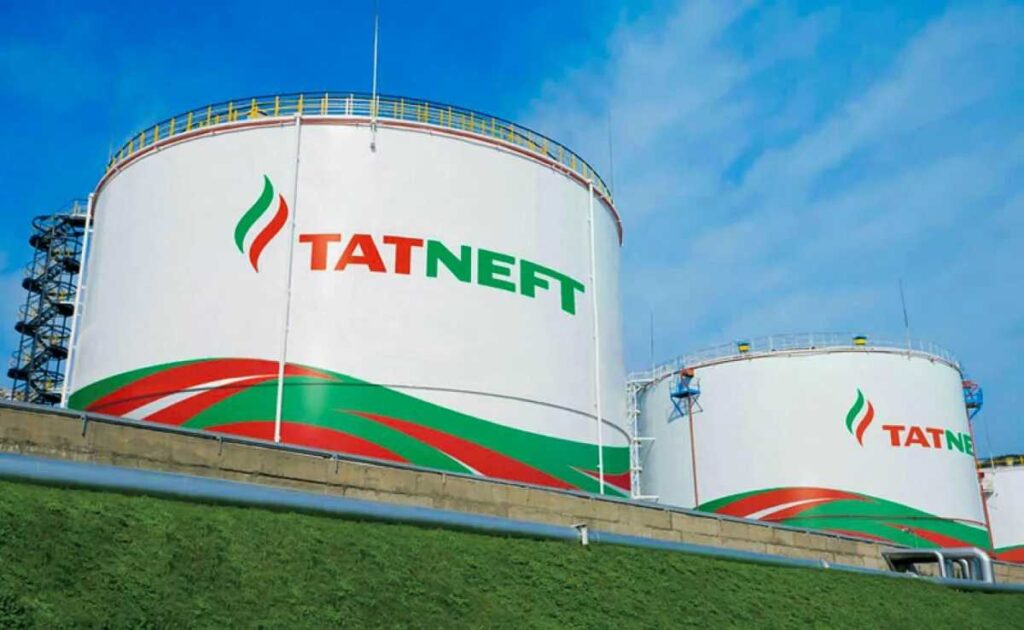
Tajikistan wants to establish cooperation with Russia’s Tatneft to open an oil refinery in the Dangara free economic zone, in Tajikistan’s Khatlon region. This was announced by the country’s Minister of Industry and New Technologies, Sherali Kabir, during a recent investment forum in Dushanbe between Tajik and Russian companies.

“One of the most important issues that we see in the development between our countries is the improvement of our production capacities, including the production of fuel and lubricants, cooperation, and the creation of new mechanisms. If we launch this enterprise together with Tatneft, we can achieve great progress in this regard.” Kabir said.

It is noted that this will help Tatneft enter the markets of Afghanistan and Pakistan.

“As was said, up to 30% of Tatneft’s raw materials are exported. Bring them here (Tajikistan), process them — and imagine what a huge market the company could open up for itself. 40 million people in Afghanistan, and over 230 million in Pakistan,” Timur Yoribek, Head of the International Relations Department of the Ministry of Industry of Tajikistan, commented.

According to him, Tajikistan has ideal logistics routes for this — seven bridges leading to Afghanistan, and the shortest links to the Pakistani seaports.

Construction of the Dangara oil refinery began in 2014 and was completed in 2018. The plant’s planned capacity is 1.2 million tons of oil per year, but the commissioning has been delayed due to a shortage of raw materials.

Tajikistan produces a small amount of oil, which is not enough to supply the refineries.

Canadian-Manufactured Aircraft Arrives in Kyrgyzstan to Perform Domestic Flights

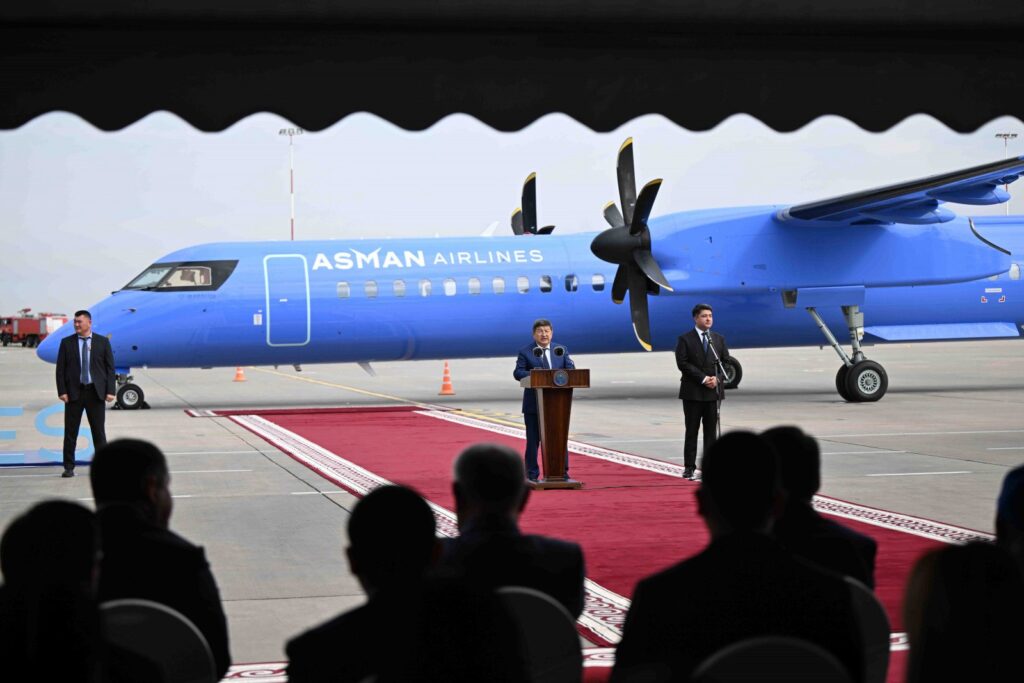
The first Bombardier Dash 8 Q400 aircraft, purchased by Kyrgyzstan’s Manas International Airport Open Joint Stock Company for its Asman Airlines, has arrived in Bishkek.

The airplane, made by Canadian manufacturer De Havilland Aircraft, is a short-haul plane capable of carrying up to 80 passengers and transporting them over a distance of up to 2,000 kilometers.

Manas International Airport, which runs all airports in the country, is purchasing two Bombardier Dash 8 Q-400 aircraft for the local Asman Airlines at its own expense. Another Q-400 aircraft will arrive later.

Kyrgyzstan is experiencing growth in passenger traffic on both domestic and international flights. In 2023, the total passenger traffic amounted to 5.609 million passengers, an increase from 3.98 million, or 41%, in 2021.

In addition, the regional airports in Karakol, Kazarman, Kerben, Talas, and Naryn have been reconstructed at the expense of Manas International Airport, allowing the launch of new domestic routes. A new international airport in the southern Jalal-Abad region is under consideration.

Kyrgyzstan Removes Taliban From List of Terrorist Organizations

Kyrgyzstan has quietly removed the Taliban from its list of banned terrorist organizations.

Kyrgyzstan’s Prosecutor General’s Office recently published a list of extremist terrorist organizations whose activities are banned by courts in the country. The list includes 20 organizations, but the Taliban is not among them.

The State Commission on Religious Affairs could not answer precisely why the Taliban is not on the list. Azamat Yusupov, the agency’s deputy head, told reporters that the commission had nothing to do with approving the list.

“Given the recent changes in Afghanistan, the Taliban can be removed from the list of terrorist organizations. It is better to contact the judiciary, which can answer this question more accurately,” Yusupov stated.

Afghanistan’s Taliban government has already responded. The foreign ministry of the unrecognized Islamic Emirate said it “welcomes and approves of the Kyrgyz authorities’ decision to remove the Taliban from the list of banned groups.”

“The step taken by Kyrgyzstan signifies the growing political recognition of the Islamic Emirate of Afghanistan at both regional and international levels and removes an obstacle to strengthening bilateral relations between Afghanistan and other countries,” the foreign ministry said in a statement.

The Taliban has been recognized as a terrorist organization in different years and by other countries and organizations. For example, in Kazakhstan, the Taliban was recognized as a terrorist organization by the Supreme Court on March 15, 2005. And in Kyrgyzstan by the decision of the Pervomaisky District Court of Bishkek on September 15, 2006. In Russia, the Taliban was recognized as a terrorist organization by a decision of the Supreme Court in 2003.

In June this year, Kazakhstan removed the Taliban regime from the terrorist list to develop economic interaction with Afghanistan. This was announced by President Kassym-Jomart Tokayev, at a meeting of the Council of the Parliamentary Assembly of the Collective Security Treaty Organization (CSTO).

In May of this year, the Russian Foreign Ministry and the Ministry of Justice reported to Russian President Vladimir Putin that the Taliban could be removed from the list of banned organizations; however, this issue still needs to be resolved in Russia.

Uzbek Politician Calls for Ban on Soviet Symbols

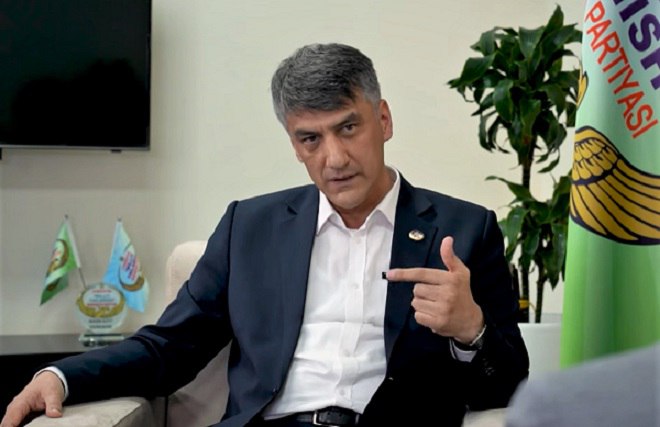
Alisher Qodirov, the deputy speaker of the legislative chamber of Uzbekistan’s Parliament (Oliy Majlis) and leader of the Milliy Tiklanish (National Revival) Party, has proposed an initiative to ban the promotion of Soviet ideology and symbols in the country.

The idea emerged after the high-profile case of a Samarkand pensioner who expressed a desire to restore the Soviet Union, for which he was sentenced to three years of restricted freedom under an article on encroachment on Uzbekistan’s constitutional order.

Qodirov supported the court’s decision, noting that he considered Soviet ideology harmful and hostile to national values. In his statement, he emphasized that the Soviet regime had harmed not only Uzbekistan but the whole world, undermining the cultural and spiritual foundations of the people. He recalled the discrimination suffered by the Uzbek people during the Soviet period and emphasized the need to analyze this period. He stands firmly against its justification and promotion.

“The Uzbek people were discriminated against and humiliated by the Soviet authorities and are still healing the wounds of the past. The Soviet ideology, which rejected nations, values, and faith, harmed not only our people but also the entire humanity, and these phenomena continue to be a misfortune,” Qodirov said.

The politician also called the promotion of Soviet ideas a crime against the constitutional order and a betrayal of the people and ancestors who were victims of the regime.

Qodirov has repeatedly spoken out against symbols relating to the USSR. In May 2021, he called the raising of the red flag at a concert in Tashkent a provocation and an insult to the people, explaining that the symbol of the Soviet occupier state was soaked in the blood of Uzbek intellectuals who had been repressed by the regime.

The Onset of “Friend-Shoring” in Central Asia

As Central Asia’s significance for global supply chains grows, the world’s major economic powers are seeking closer economic ties with the region’s countries. China, Russia, and the West all curry favor through investments and initiatives to bolster the region’s exports and secure their supply chains.

Bordering China and Russia, Central Asia spans a land surface area corresponding to 87% the size of the entire European Union (EU). The region has a combined market of 76 million people and gross domestic product of 450 billion U.S. dollars. It is critical to global energy supply chains as it possesses 20% of the world’s uranium reserves, as well as 17.2% of total oil and 7% of natural gas deposits. Kazakhstan produces over half of the EU’s critical raw materials,  i.e. substances used in technology which are subject to supply risks and are hard to replace with substitutes. In the first seven months of 2024, rail cargo across the Middle Corridor, a trans-Caspian trade route linking China to Europe, has increased 14-fold compared to the same period last year.

As the region opens up and undergoes significant economic transformation, supply chains are increasingly directed there, sparking competition for control over its vast natural resources and production capabilities. Major economic powers are stepping in to strengthen bilateral ties to ensure reliable trade partnerships. These strategies, known as “friend-shoring,” aim to reduce geopolitical risks, enhance supply chain stability, and transform Central Asian countries into trusted allies by fostering strong bilateral relationships and deeper economic ties.

China and Russia remain at the helm of regional activity

China has been actively engaging with Central Asian countries through strengthening economic ties and building strategic partnerships. Through the Belt and Road Initiative (BRI), which aims to enhance infrastructure and trade connectivity across the region, China has helped strengthen the region’s rail network. China supplies equipment and invests in Uzbekistan’s electric vehicles, scooters, and leather production. Uzbekistan, in partnership with PowerChina and Saudi company ACWA Power, is also constructing the country’s first green hydrogen plant. Kyrgyzstan’s bilateral trade with China was up 30% in 2023 compared to 2022. This year, Turkmenistan has surpassed Russia in gas exports to China. In 2023, Kazakhstan’s agricultural exports to China doubled to $1 billion compared to 2022, making China the largest importer of agricultural products from the country.

Historically, Russia has been a major trading partner for Central Asian countries due to the Soviet legacy of a command economy, which established strong economic interdependencies that persisted in post-USSR period. While the region is aggressively diversifying its trade relationships, Russia is increasing gas supplies and energy infrastructure investments, specifically in renewables and nuclear facilities. Kazakhstan delivers most of its oil to Europe through Russia.

Russian-led organizations, including the Eurasian Economic Union (EAEU) and the Commonwealth of Independent States (CIS), promote cooperation and economic integration with free movement of goods, services, and capital among member states.

Russia’s war against Ukraine has disrupted supply chains, but it has also opened up new trade opportunities, especially for Kazakhstan, as Western companies look for alternatives to conducting business in Russia. In 2022, over 50 international companies relocated to Kazakhstan.

Are the EU and the U.S. doing enough to catch up?

The EU is turning to partner countries in Central Asia to provide critical imports as a way to lessen its riskier dependencies (such as on Russian supplies). Various initiatives by the EU, Germany, France and the United Kingdom are working with Kazakhstan to further the green transition through harvesting critical raw materials (CRMs), green hydrogen and battery components to further the green transition. The EU is cooperating with Uzbekistan in the field of CRM development, as well as the import of green energy.

The European Union’s Generalized System of Preferences Plus (GSP+) program strengthens ties with developing countries with relatively low incomes through trade incentives. As beneficiaries of this program, Uzbekistan and Kyrgyzstan have gained better access to the EU market via tariff reductions, most notably on exports of food, chemicals and textiles.

Unlike China, Russia, and Europe, the U.S. lacks state-backed companies to carry out its trade and investments. However, a Chevron-Exxon project in Kazakhstan, budgeted at $48.5 billion, is by far the largest private sector investment in the region.

Like China and Europe, the U.S. is also interested in developing and sourcing Central Asia’s critical materials deposits. In February 2024, the U.S. Department of State hosted the inaugural meeting of the C5+1 Critical Minerals Dialog (CMD) which aims to increase the region’s involvement in global critical minerals supply chains and strengthen economic cooperation.

Kazakhstan, Kyrgyzstan, and Uzbekistan participated in the U.S. Generalized System of Preferences (GSP), the largest and oldest U.S. trade preference program, until it expired on December 31, 2020. It fosters bilateral partnerships by promoting economic development through duty-free imports of thousands of products into the U.S. The program’s renewal is currently pending action by the U.S. Congress. Unlike the EU’s GSP+, the U.S. version supports trade in goods that are produced less domestically, emphasizing areas of comparative advantage. It also encourages “friend-shoring,” i.e., aiming to build robust supply chains with allied nations, thereby reducing reliance on rivals for essential materials.

During a recent Senate Finance Committee hearing, U.S. Sen. Mike Crapo (R-Idaho) underscored the consequences of not renewing GSP: “For the United States, they [programs such as GSP] can help facilitate equitable market access and, strategically, help partners become more competitive vis-à-vis China”. In Central Asia, the U.S. has partners as well as a strategic need to source critical materials and diversify away from rivaling states such as Russia and China.

A strategic contest

Friend-shoring in Central Asia represents a strategic contest over the region’s natural resources. As the countries of Central Asia seek to diversify their partnerships and engage with multiple countries, businesses from nations that actively reduce trade barriers (such as tariffs) and maintain favorable diplomatic relations with these countries will have a competitive edge in the region. Strengthening bilateral trade ties with Central Asia offers significant benefits for global supply chains, while neglecting these relationships could result in substantial economic and strategic losses.