• KGS/USD = 0.01144 0%
  • KZT/USD = 0.00197 -0%
  • TJS/USD = 0.10904 0%
  • UZS/USD = 0.00008 0%
  • TMT/USD = 0.28490 0%
  • KGS/USD = 0.01144 0%
  • KZT/USD = 0.00197 -0%
  • TJS/USD = 0.10904 0%
  • UZS/USD = 0.00008 0%
  • TMT/USD = 0.28490 0%
  • KGS/USD = 0.01144 0%
  • KZT/USD = 0.00197 -0%
  • TJS/USD = 0.10904 0%
  • UZS/USD = 0.00008 0%
  • TMT/USD = 0.28490 0%
  • KGS/USD = 0.01144 0%
  • KZT/USD = 0.00197 -0%
  • TJS/USD = 0.10904 0%
  • UZS/USD = 0.00008 0%
  • TMT/USD = 0.28490 0%
  • KGS/USD = 0.01144 0%
  • KZT/USD = 0.00197 -0%
  • TJS/USD = 0.10904 0%
  • UZS/USD = 0.00008 0%
  • TMT/USD = 0.28490 0%
  • KGS/USD = 0.01144 0%
  • KZT/USD = 0.00197 -0%
  • TJS/USD = 0.10904 0%
  • UZS/USD = 0.00008 0%
  • TMT/USD = 0.28490 0%
  • KGS/USD = 0.01144 0%
  • KZT/USD = 0.00197 -0%
  • TJS/USD = 0.10904 0%
  • UZS/USD = 0.00008 0%
  • TMT/USD = 0.28490 0%
  • KGS/USD = 0.01144 0%
  • KZT/USD = 0.00197 -0%
  • TJS/USD = 0.10904 0%
  • UZS/USD = 0.00008 0%
  • TMT/USD = 0.28490 0%
08 December 2025

Kyrgyzstan Breaks Ground on First Tunnel of China-Kyrgyzstan-Uzbekistan Railway

Construction of a 12-kilometer tunnel has commenced in Kyrgyzstan’s Jalal-Abad region, marking a significant milestone in the development of the China-Kyrgyzstan-Uzbekistan railway, a strategically important transport corridor aimed at linking East and West.

At the groundbreaking ceremony on April 29, Kyrgyz Deputy Chairman of the Cabinet of Ministers Bakyt Torobayev emphasized the railway’s broader significance. “This project is not only of infrastructural importance. It opens the way to improving the quality of life, economic growth, and strengthening ties between regions and peoples. It will create new opportunities for trade, investment, industrial development and logistics, provide thousands of jobs, and give a powerful impetus to the economies of our countries,” he said.

A Major Infrastructure Undertaking

The railway will span 523 kilometers, with over 300 kilometers passing through Kyrgyzstan. In addition to the current tunnel project, two more large tunnels are planned in the Naryn and Jalal-Abad regions. The project involves challenging terrain and extensive engineering work, including the construction of 46 bridges and 27 tunnels.

The China-Kyrgyzstan-Uzbekistan railway was officially launched during a ceremony in Jalal-Abad on December 27, 2024.

Once completed, the route will connect Kashgar (China), Torugart, Makmal, and Jalal-Abad (Kyrgyzstan), and Andijan (Uzbekistan). The railway is expected to have an annual cargo capacity of up to 15 million tons.

Currently, neither Kyrgyzstan nor Uzbekistan has a direct railway connection with China. At present, Central Asia’s only rail link to China passes through Kazakhstan, underscoring the significance of this long-anticipated trilateral project.

Kazakhstan to Equip Emergency Medical Workers with Body Cameras in Security Push

The Ministry of Health of Kazakhstan plans to introduce body cameras for emergency medical personnel by the end of 2025, in a move aimed at increasing their protection amid rising incidents of violence. Health Minister Akmaral Alnazarova announced the initiative during a government briefing.

“As for protection, we will introduce video badges that will record everything that happens. We have issued a corresponding order. Local authorities will have to allocate funds. I think we will carry out this work in stages by the end of this year,” said Alnazarova, as quoted by Zakon.kz.

According to the minister, the pilot initiative may later be expanded to other categories of healthcare workers, including doctors and nurses in outpatient clinics. Alnazarova noted that body cameras are intended to deter both aggressors and healthcare workers from misconduct.

In parallel, the Ministry of Health has proposed criminal penalties for assaults on medical personnel while on duty. The proposal has received support from the Prosecutor General’s Office, the Ministry of Justice, and the Ministry of Internal Affairs.

Response to Violence Against Medical Staff

Kazakhstan has witnessed a series of alarming assaults on healthcare professionals in recent years. In Almaty, a gynecologist was struck with a mobile phone by a patient; in Kokshetau, intensive care doctors were attacked by the parents of a child; and in Talgar, relatives of a deceased person assaulted medical staff attempting to retrieve the body. Victims have sustained severe injuries, including fractures and traumatic brain injuries.

One of the most tragic incidents occurred in Almaty, where gastroenterologist Yuri Shumkov was shot and killed at point-blank range by a patient dissatisfied with his diagnosis. The suspect fled but was later apprehended. In another shocking case in the Aktobe region, a young doctor participating in the government’s “With a Diploma to the Village” program was brutally beaten and raped.

From Promises to Policy

Alnazarova initially announced plans for body cameras in December 2024, following a violent attack in Kostanay in which a paramedic was assaulted by relatives of a deceased woman. The ministry subsequently began drafting legal and physical protection measures for healthcare workers.

“We want to ensure that our employees can work safely, using the experience of law enforcement agencies. This will be regulated at the regulatory level,” the minister stated at the time.

Additional proposals under discussion include health insurance coverage for personnel at high risk of assault, aimed at compensating for physical harm and emotional trauma sustained while on duty.

Opinion – Central Asia’s Looming Water Crisis: A Ticking Time Bomb

When people think of Central Asia, they often picture vast deserts, ancient Silk Road cities, and oil pipelines stretching to distant markets. Yet the region’s most urgent and combustible resource is not buried underground — it flows above it. Water, or more precisely the lack of it, is rapidly becoming the defining fault line of Central Asia’s future. For decades, the five Central Asian republics have tiptoed around a growing water crisis. The two major rivers that sustain life in this arid region, the Amu Darya and the Syr Darya, are now so contested and depleted that what was once a technical issue has metastasized into a geopolitical threat.

The region’s major rivers, the Amu Darya and the Syr Darya are under immense pressure, threatening agriculture, livelihoods, and regional stability. At the heart of the crisis is a tragic irony. The upstream countries, Kyrgyzstan and Tajikistan, are rich in water but poor in energy and cash. They need to release water in winter to generate hydropower. Downstream nations, particularly Uzbekistan and Turkmenistan, want water stored until the summer to irrigate vast cotton and wheat fields. The result? Mutual distrust, occasional diplomatic spats, and an accelerating race to dam, divert, and hoard water in a region already gasping under the weight of climate change.

A Region Parched

Central Asia annually utilizes over 60 billion cubic meters of water for irrigation from the Amu Darya and Syr Darya basins. However, recent years have seen a decline in river flows, with the actual flow of the Syr Darya being 20–23% less than the norm. Further, the ghost of the Aral Sea — a once-thriving inland lake that has now shrunk by over 90% in its volume and 74 % in surface area — serves as a haunting reminder of the cost of mismanagement. The Soviet legacy of excessive irrigation has morphed into a post-Soviet scramble for control, where water is not just a tool of survival but a lever of power. This desiccation has transformed the region, leading to the emergence of the Aralkum Desert and causing severe ecological and health issues.

Climate Change Intensifies the Crisis

Climate change is exacerbating water scarcity in Central Asia. A recent study revealed that an extreme heatwave in March 2025, with temperatures soaring 5 to 10°C above pre-industrial levels, was significantly amplified by global warming. Such temperature surges accelerate glacier melt and increase evaporation rates, further reducing water availability. By some estimates, Central Asia could lose over 30% of its freshwater resources by 2050. Yet, rather than galvanize cooperation, this existential threat has sparked more competition. International efforts have largely fallen flat. The International Fund for Saving the Aral Sea (IFAS), the region’s main water cooperation body, is riddled with inefficiencies and lacks enforcement power. External actors like China and Russia have their own interests, often deepening the regional divide rather than healing it.

Inefficient Water Management

Inefficient agricultural practices remain one of the most profound and persistent contributors to water mismanagement across Central Asia. In Uzbekistan — a country heavily reliant on irrigation for its agricultural output — only an estimated 12% of irrigation canals are lined or waterproofed, resulting in extensive water losses through seepage and infiltration. This infrastructural inadequacy is symptomatic of a broader systemic neglect, wherein outdated Soviet-era irrigation systems continue to dominate the rural landscape, despite their inefficiency and ecological cost.

Scholars like Philip Micklin have extensively documented how the expansion of irrigation since the 1960s has drastically reduced the inflow of the Amu Darya and Syr Darya rivers into the Aral Sea. Similarly, Michael Glantz has highlighted that the lack of water-saving technologies and poor irrigation management have been primary culprits in the ecological collapse of the Aral Sea. The persistence of these outdated practices, coupled with inadequate policy reforms, underscores a critical need for investment in water-efficient technologies and the implementation of sustainable water management practices to mitigate further environmental degradation.​

The consequences are not merely environmental but profoundly socio-economic. Excessive water withdrawals have not only decimated one of the world’s largest inland seas but have also led to increased soil salinization, declining crop yields, and heightened rural vulnerability. This failure to modernize irrigation infrastructure, in the face of growing climatic stress and declining freshwater reserves, reflects a critical policy inertia that continues to undermine regional sustainability and transboundary resource cooperation.

Geopolitical Tensions Over Water

A fundamental tension underpins Central Asia’s transboundary water dynamics: the stark temporal mismatch between upstream and downstream water demands. Kyrgyzstan and Tajikistan — both resource-constrained yet water-rich — are heavily dependent on winter water releases to fuel hydropower generation, their primary source of domestic energy and economic stability. In sharp contrast, downstream states such as Uzbekistan and Turkmenistan require substantial water flows during the summer months to sustain their irrigation-intensive agriculture, particularly cotton and wheat cultivation. This seasonal disjuncture has given rise to persistent friction, exacerbated by the absence of binding, enforceable water-sharing frameworks. What could serve as a foundation for cooperative interdependence has instead become a vector for recurring discord. The lack of integrated water governance mechanisms has not only stymied trust among riparian states but also entrenched a zero-sum mindset, where unilateral action often replaces coordinated planning. In effect, Central Asia’s water diplomacy remains a fragile patchwork, vulnerable to political volatility, climate shocks, and the centrifugal pull of national self-interest.

A Call for Cooperative Action

What is urgently required is not merely policy reform, but a fundamental reimagining of water governance across Central Asia. The region must transcend the outdated perception of water as a sovereign commodity and instead embrace it as a shared, existential resource — a vital artery sustaining multiple nations. Transparent data exchange, equitable distribution frameworks, and strategic investment in water-efficient technologies must no longer be considered optional aspirations, but essential instruments for regional survival.

Yet even these measures will prove insufficient without the political will to act collectively. So long as national leaders weaponize water as an instrument of influence rather than a foundation for cooperation, the rivers that once unified ancient civilizations will continue to fracture modern states. Hence, resolving Central Asia’s water crisis demands more than technical interventions; it necessitates a renewed ethos of collaboration, robust infrastructure planning, and a bold commitment to sustainable water management. In the absence of such concerted regional action, the future portends not only ecological collapse but also intensified economic vulnerability and geopolitical discord.

Nuclear Energy Project in Uzbekistan Enters Construction Phase

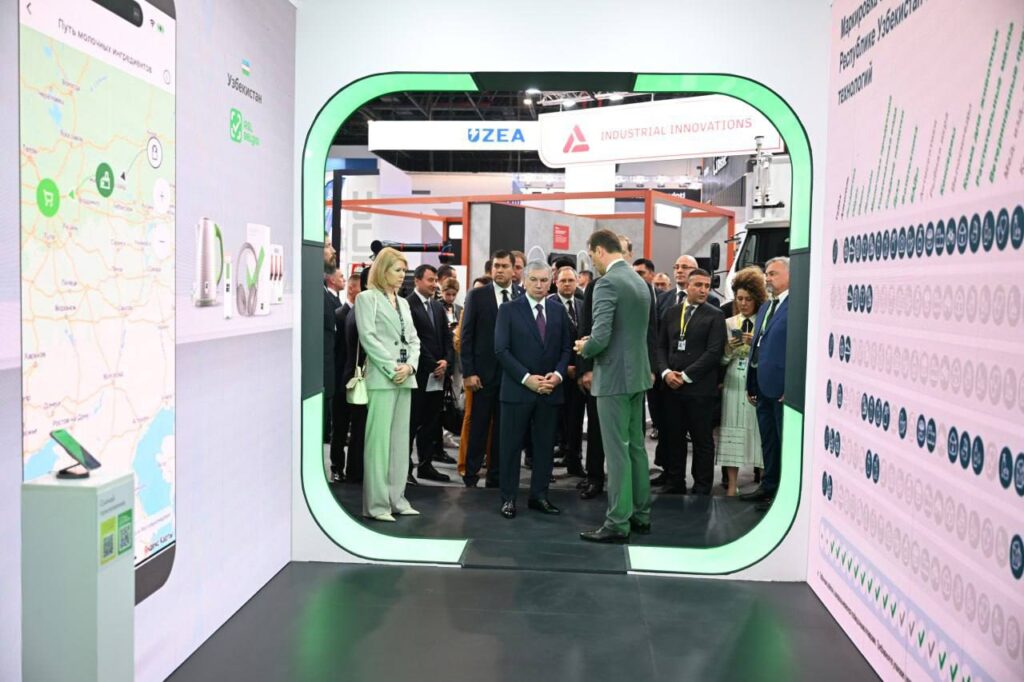
Uzbekistan has entered a new phase in its energy strategy as construction begins on the country’s first small-capacity nuclear power plant. The announcement was made during the INNOPROM. Central Asia industrial exhibition, held on April 28 in Tashkent, according to the presidential press service.

The event, hosted at the Central Asian Expo Uzbekistan center, spans more than 18,000 square meters and has attracted over 10,000 delegates from Russia, neighboring Central Asian countries, China, India, and other nations.

President Shavkat Mirziyoyev toured the exhibition pavilions and emphasized the importance of innovative business ideas and economic cooperation. He noted that the forum serves as a platform to advance new projects and strengthen long-term partnerships.

Nuclear Power in Focus

On the sidelines of the event, President Mirziyoyev met with a Russian delegation led by First Deputy Prime Minister Denis Manturov. The sides reviewed progress on bilateral agreements made during Putin’s visit to Uzbekistan in May 2024 and reaffirmed their commitment to expanding cooperation across multiple sectors.

A central topic of discussion was Uzbekistan’s nuclear energy project. Rosatom Director General Alexey Likhachev confirmed that all legal formalities have been completed and that construction could officially begin within the year.

“Not if, but when the leadership of Uzbekistan returns to the topic of a large nuclear power plant, we will already have proposals ready, not only on the design of future facilities but also on financing and local manufacturing,” Likhachev told TASS.

“This project will be carried out through international cooperation, drawing on global best practices in electrical and mechanical engineering. However, the core nuclear technologies, the reactor island, will be Russian,” he added.

Project Overview

The plant is located in Uzbekistan’s Jizzakh Region and will consist of six reactors, each with a capacity of 55 megawatts, for a total output of 330 MW. While Rosatom serves as the main contractor, local Uzbek companies are also involved in the construction process.

Officials say the project is a strategic step toward Uzbekistan’s long-term energy security. Azim Akhmadkhodjaev, head of Uzbekistan’s Atomic Energy Agency, recently called nuclear energy the most viable alternative to imported fossil fuels. He noted that Uzbekistan aims to increase the share of renewable energy in its national mix from 16% today to 54% by 2030.

China is also playing a significant role in Uzbekistan’s nuclear energy project. Shanghai Electric, a leading Chinese manufacturer, is being considered for providing turbine equipment for the non-nuclear island of the plant. Additionally, the Export-Import Bank of China (Eximbank) is in discussions to provide financial support.

Energy analysts agree that a combined strategy of nuclear and renewable sources will allow Uzbekistan to meet rising domestic demand while reducing its environmental footprint.

Kazakhstan Boosts Rail Transit of Grain and Coal Through Russia

Kazakhstan has significantly increased the volume of grain and coal transported via rail through Russia, particularly along the eastern route of the North-South transport corridor. According to Kazakhstan Temir Zholy (KTZ), the country’s national railway operator, container traffic along this corridor rose by 63% in the first quarter of 2025, surpassing 1,000 twenty-foot equivalent units (TEU). 

The North-South corridor links Russia, Kazakhstan, Turkmenistan, and Iran, with an annual cargo capacity of 10 million tons. Its eastern route, which passes through Kazakhstan, is emerging as a vital artery for regional trade.

Grain and Container Exports on the Rise

Between September 2024 and April 2025, Kazakhstan exported over 650,000 tons of grain through Russian and Baltic Sea ports. Meanwhile, containerized freight between China and Russia via Kazakhstan increased by 30% year-on-year during the first quarter of 2025, exceeding 132,000 TEU.

Coal Shipments Surge

Coal transit volumes saw a particularly dramatic rise. From January to March 2025, Kazakhstan exported 2.3 million tons of coal through Russian territory, an increase of 44.5% compared to the same period in 2024. Of this total, 1.3 million tons were shipped through Baltic Sea ports, while another 900,000 tons were exported via Azov and Black Sea ports, a fivefold increase over last year.

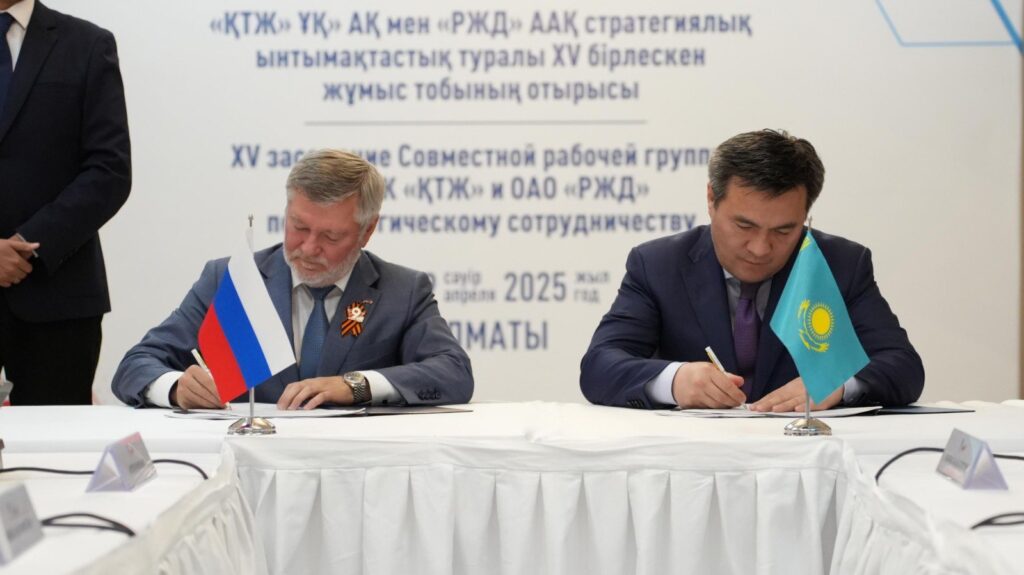
At an April 28 meeting in Almaty, representatives from KTZ and Russian Railways reaffirmed their commitment to expanding cooperation. The two sides agreed to increase shipments of Kazakh coal to Russian ports and continue developing strategic joint initiatives.

In November 2024, KTZ and Russian Railways signed a landmark agreement to modernize railway infrastructure at nine key border stations. The deal includes plans to increase capacity and implement a unified digital system to streamline transportation and cross-border logistics. 

Korean Universities Expand Cooperation with Kazakhstan

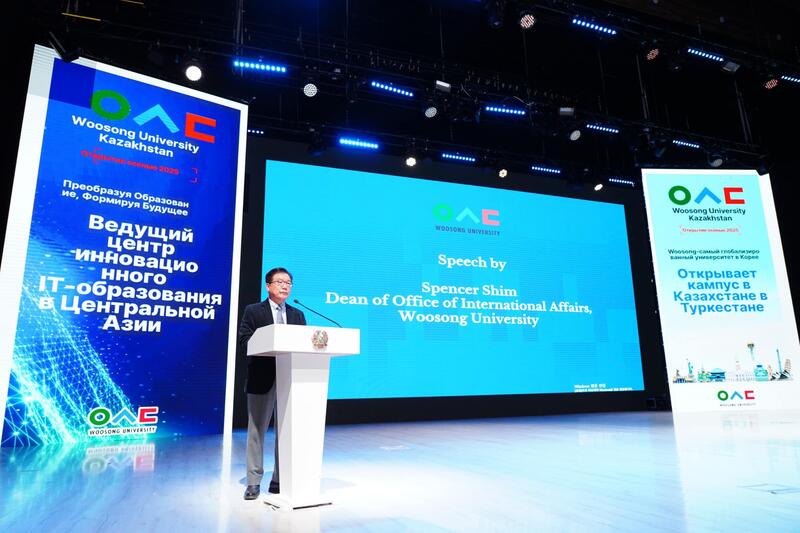
South Korea’s Woosong University is set to open its branch in Turkestan, Kazakhstan, before the start of the new academic year, according to Kazakhstan’s Minister of Science and Higher Education, Sayasat Nurbek. The announcement came during a meeting with South Korea’s Vice Minister of Education, Oh Seok Hwan, on April 28 in Almaty. 

Construction of the university premises is currently underway. For the initial intake, Woosong University has allocated 110 scholarships, which will supplement academic grants provided by the Kazakh government.

Strengthening Educational Ties

During the meeting, Minister Nurbek highlighted several ongoing joint educational and scientific projects between Korean and Kazakhstani institutions:

  • Dong-Eui University, one of South Korea’s leading mechanical engineering universities, is collaborating with Akhmet Baitursynov University to train mechanical engineers for automobile plants in Kostanay.
  • Korkyt Ata University in Kyzylorda has launched dual-degree programs with Seoul National University of Science and Technology (SeoulTech).
  • Satbayev University in Almaty is partnering with the Korea Advanced Institute of Science and Technology (KAIST) to establish a center for rare earth metals processing.

According to Nurbek, the establishment of foreign university branches plays a crucial role in Kazakhstan’s ambition to become a regional hub for higher education and to further integrate into the global educational landscape.

Vice Minister Oh Seok Hwan expressed confidence that Kazakhstan’s systemic approach and academic potential would ensure its leadership position in the Central Asian educational market.

Following their meeting, Nurbek and Oh Seok Hwan attended the opening of the Study in Korea exhibition in Almaty, which featured participation from more than 30 Korean universities.

Kazakhstan’s Expanding Educational Horizon

Kazakhstan’s growing reputation as an academic hub is further evidenced by other international initiatives. As previously reported by The Times of Central Asia, the Moscow State Institute of International Relations (MGIMO), one of Russia’s top universities, will open a branch in Astana in September 2025. 

Additionally, Cardiff University in Wales plans to launch a campus in Astana later this year, reinforcing the Kazakh capital’s rising status as a regional center for higher education.