• KGS/USD = 0.01144 0%
  • KZT/USD = 0.00194 0%
  • TJS/USD = 0.10879 0%
  • UZS/USD = 0.00008 0%
  • TMT/USD = 0.28571 0%
  • KGS/USD = 0.01144 0%
  • KZT/USD = 0.00194 0%
  • TJS/USD = 0.10879 0%
  • UZS/USD = 0.00008 0%
  • TMT/USD = 0.28571 0%
  • KGS/USD = 0.01144 0%
  • KZT/USD = 0.00194 0%
  • TJS/USD = 0.10879 0%
  • UZS/USD = 0.00008 0%
  • TMT/USD = 0.28571 0%
  • KGS/USD = 0.01144 0%
  • KZT/USD = 0.00194 0%
  • TJS/USD = 0.10879 0%
  • UZS/USD = 0.00008 0%
  • TMT/USD = 0.28571 0%
  • KGS/USD = 0.01144 0%
  • KZT/USD = 0.00194 0%
  • TJS/USD = 0.10879 0%
  • UZS/USD = 0.00008 0%
  • TMT/USD = 0.28571 0%
  • KGS/USD = 0.01144 0%
  • KZT/USD = 0.00194 0%
  • TJS/USD = 0.10879 0%
  • UZS/USD = 0.00008 0%
  • TMT/USD = 0.28571 0%
  • KGS/USD = 0.01144 0%
  • KZT/USD = 0.00194 0%
  • TJS/USD = 0.10879 0%
  • UZS/USD = 0.00008 0%
  • TMT/USD = 0.28571 0%
  • KGS/USD = 0.01144 0%
  • KZT/USD = 0.00194 0%
  • TJS/USD = 0.10879 0%
  • UZS/USD = 0.00008 0%
  • TMT/USD = 0.28571 0%
16 December 2025

Is Kazakhstan Preparing to Take on the Oil Consortium “Whales”?

The filed lawsuits and environmental claims totaling $159.6 billion against the consortiums operating the Kashagan and Karachaganak fields reflect the Kazakhstani government’s intention to revise the largest oil & gas contracts.


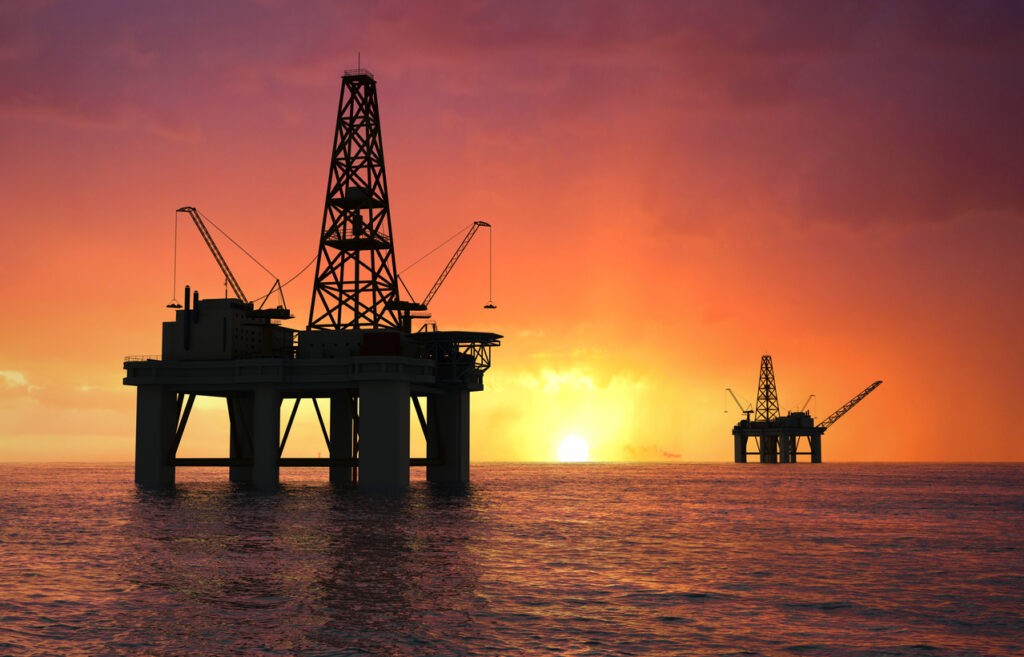
Kazakhstan, due to drought in Central Asia and a drop in oil production after the expiration of major oil & gas contracts by 2040, will likely look like Arrakis, the fictional desert planet from Dune: Part Two over whose valuable commodity the Great Houses struggle. Meanwhile, the Dune sandworms, which produce the spice needed by all the planets, resemble the consortiums developing the Tengiz, Karachaganak, and Kashagan fields – just as huge and just as rare, with almost no such production sharing agreements (PSAs) with 40-year stabilization contracts left in the world. In Kazakhstan, the three operators are known as the “three whales.”


What’s going on

At the beginning of April 2024, Bloomberg published an article about the claims exceeding $16.5 billion brought forward by Kazakhstan, through PSA LLP, against the consortiums North Caspian Operating Company (NCOC), which is developing the offshore Kashagan field, and Karachaganak Petroleum Operating (KPO). The environmental regulator for the Atyrau region has additionally filed a claim for $5.1 billion against NCOC, while another lawsuit for $138 billion of lost revenue has been launched.

Consortium

Amount of PSA claim

Environmental fine

Total

NCOC

$13 billion + $138 billion

$5.1 billion

$156.1 billion

KPO

$3.5 billion

$3.5 billion


The total amount is possibly the largest in the world for the oil & gas sector. Since 2016, PSA LLP has been the authorized state institution in the production sharing agreements for NCOC, KPO, and the Dunga project (previously owned by Total E&P Dunga GmbH; in November 2023, the state-owned KazMunayGas bought the TotalEnergies stake for an estimated $300 million).

Kazakhstan’s Ministry of Energy is currently entrusted to run PSA LLP, while the stakes in Karachaganak and Kashagan are held by KazMunayGas (KMG) and the sovereign wealth fund Samruk-Kazyna (SK).

The international arbitration claims followed inspections in 2013-20 that revealed costs not agreed upon with the Kazakhstani government (costs are reimbursed from oil revenues), along with failure to hit planned oil production targets and violations during tenders, etc. The initial amount of the lawsuit against NCOC was raised from $13 billion to $15 billion.

The new claim for $138 billion relates to lost revenue “reflecting the calculation of the value of oil production that was promised to the government but not delivered by the field developers,” Bloomberg reported, citing sources familiar with the matter.

The $5.1 billion fine levied by regional environmental regulators against NCOC has to do with the storage of excessive amounts of sulfur on site (more than a million tons more than permitted), as well as 10 other Administrative Code violations. Later, however, a court partially satisfied the consortium’s appeal.

Deputy General Director of PSA LLP Nurlan Serik has made clear that Kazakhstan intends to challenge the consortium’s costs and failure to fulfil plans only through courts.

According to various estimates, about $60 billion has been invested in the Kashagan field, so the $15 billion figure means the state is calling into question about a quarter of the total investment by NCOC.

The new claim for $138 billion – considering the total investment of $60 billion – would, if granted, mean that the stakeholders must hand over the project to the Kazakhstani government for free and pay about $78 billion on top.


A complex project

The NCOC stakeholders are KMG Kashagan (16.88% stake), the Anglo-Dutch Shell Kazakhstan Development (16.81%), the French Total EP Kazakhstan (16.81%), the Italian Agip Caspian Sea (16.81%), the American ExxonMobil Kazakhstan (16.81%), the Chinese CNPC Kazakhstan (8.33%) and the Japanese INPEX North Caspian Sea (7.56%). The initial agreement was signed in November 1997 for 40 years, followed by a final PSA, with the end date pushed back to 2041. Commercial oil production began in 2016.

In 2023, oil and gas condensate production at the field amounted to 19 million tons (about 450 thousand barrels per day). Meanwhile, Phase 2 and Phase 3 of Kashagan’s development seem to have been postponed indefinitely. The former entailed an increase in production to 700-900 thousand barrels per day and the latter to 1.2 million barrels per day, which on a global scale would have been a big boost to production and Kazakhstan’s role. However, the price tag was $150 billion, with oil prices needing to be over $100 per barrel to recoup that investment.
Kashagan turned out to be a difficult field, and the Caspian Sea turned out to be very unfriendly to such projects.

The sea level of the Caspian Sea, which is in fact a lake, drops every year, creating difficulties for oil platforms and cargoes. Currently, the depth is about 3-7 meters in the production area (the oil itself is about 4 km below that), and the consortium has considered digging “marine access channels” in the seabed to artificial islands, as well as a multi-billion-dollar bridge.

Proven offshore oil reserves are estimated at 13 billion barrels, while geological reserves are put at over 35 billion barrels.


Stable Karachaganak

The production sharing agreement for Karachaganak was signed in 1997, also for 40 years. The KPO consortium is made up of Shell (29.25%), the Italian Eni (29.25%), the American Chevron (18%), the Russian Lukoil (13.5%) and KMG (10%). Kazakhstan received its 10% stake only in December 2011, after tax and other claims against the consortium were raised and settled.

The final PSA is effective until 2038. Karachaganak, one of the largest gas condensate fields in the world, has reserves estimated at more than 8 billion barrels of oil and about 1.4 trillion cubic meters of gas.

Unlike Kashagan, the operator has a solid record, without various accidents and delays in project implementation. In 2023, production amounted to 142.7 million barrels of oil equivalent.

KPO is currently implementing the Karachaganak Expansion Project Phase 1 (KEP1), with the goal of maintaining the stabilized liquid production plateau. Kazakhstan is disputing approximately 10% of the total investment made by the consortium, which exceeds $31 billion.


The Tengiz diamond

The Tengiz field has been called the diamond in the crown of Chevron’s international projects. Besides Chevron (50%), Tengizchevroil’s stakeholders include ExxonMobil (25%), KMG (20%), and Lukoil (5%).

The stabilization contract for Tengiz was one of the first signed at the dawn of Kazakhstan’s independence in 1993, also for a term of 40 years, meaning it should be the first to expire in 2033. This month, Chevron CEO Mike Wirth said “Tengizchevroil will certainly be in discussion with the government over the potential extension.”

My sources indicate that the American companies have been negotiating for several years to extend the contract for another 20 years until 2053. The field turned out to be much more lucrative than originally estimated. Initial oil reserves were 15 billion barrels.

Over the 30 years of Tengizchevroil operations, payments to the state and Samruk-Kazyna, as well as the purchase of local goods and services, have exceeded $176 billion.

Its $48.5-billion Future Growth Project (FGP) is currently being implemented and planned to boost production to 900,000 barrels per day. American companies spend several times less on similar projects.

It remains a mystery how the American companies are investing $48.5 billion in the next phase of an onshore project with ready infrastructure, while $60.0 billion was invested in the offshore Kashagan, which produces about 50% more oil than Tengiz with the FGP.

A reason for the lack of claims against Tengizchevroil (TCO) could be that Kazakhstan’s stake is owned and managed not by PSA LLP, but directly by KMG. Perhaps the stake will be transferred to PSA LLP, as KMG is not seen as active in defending Kazakhstani national interests at Tengiz.


Revision of the PSAs

Despite Kazakhstan’s reputation as an oil power and its participation in the OPEC+ oil production cuts, it accounts for only a small share of global production.

The country’s oil and gas condensate production in 2023 came to 89.9 million tons (about 1.8 million barrels per day), with TCO, NCOC, and KPO accounting for 67% of that: Tengiz with 28.9 million tons, Kashagan with 18.8 million tons and Karachaganak with 12.1 million tons. The production of the “whales” rose 12% in 2023, while that of other companies was down 3%.

The “whales” extract oil in Kazakhstan on preferential terms and do not supply oil to the domestic market (Kazakhstani companies supply 50-70% of the crude they produce to domestic refiners at $20-25 per barrel).

Kazakhstan does not have the crude oil it needs for refining to meet the needs of its growing population, so leaning on the large consortiums seems logical and reasonable given the country’s budget deficit – currently, tax revenues are half the size of expenditures (the difference is covered by borrowing and transfers from the National Fund).

Whether the consortiums are ready to make concessions, or whether many years of international arbitration proceedings are in front of us – only time will tell. In any case, Kazakhstan is sending a clear message: the country is dissatisfied with the work of NCOC and KPO and is keeping quiet about Tengiz for now.
Olympic Success Nudges Central Asians Closer Together in Paris

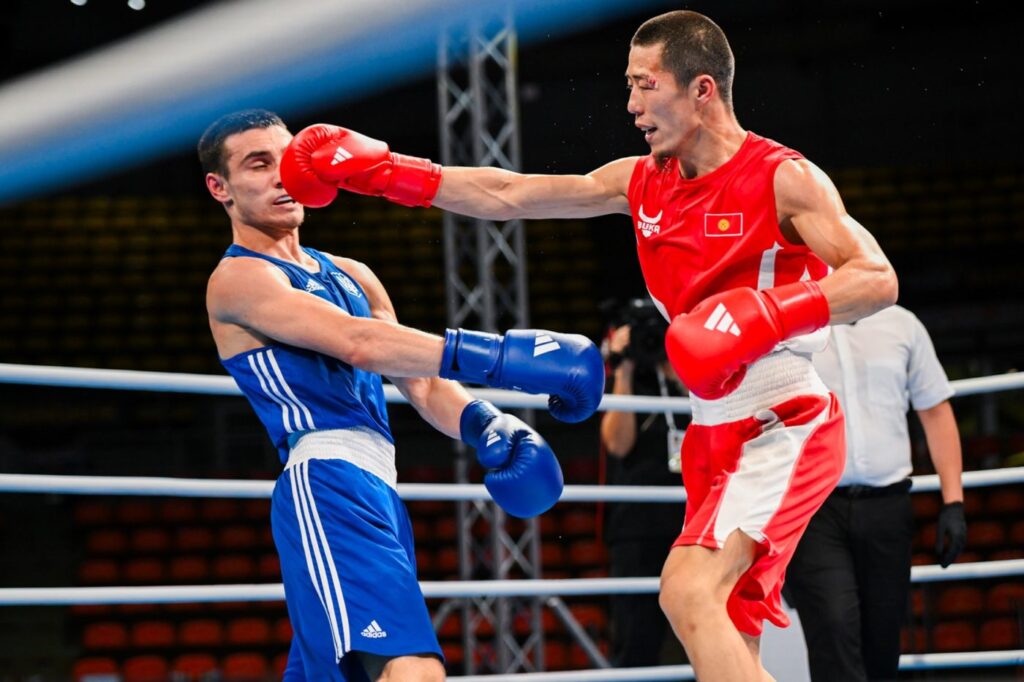
Uzbekistan’s athletes grabbed the most glory for Central Asia at the Olympic Games, delivering eight gold medals, mostly in boxing, and propelling the nation to 13th on the medal table in Paris. But the occasional displays of solidarity among competitors, coaches and fans from Central Asia were just as inspiring for those who want the region’s countries to draw closer together – at a time when the world seems increasingly perilous.

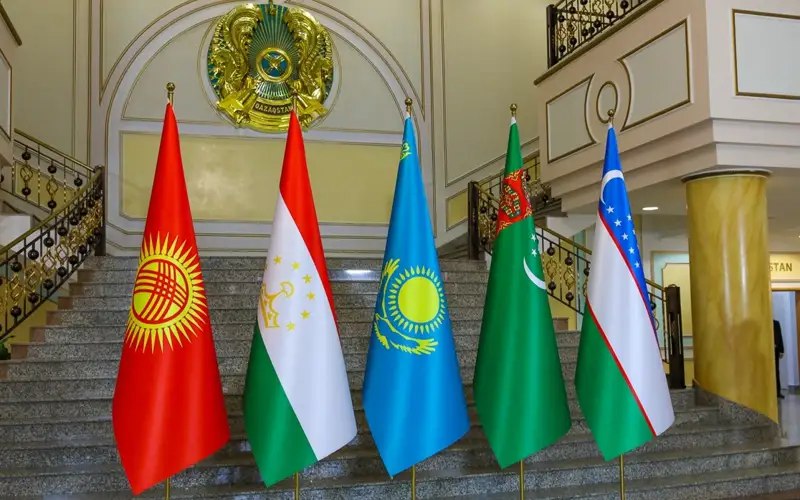
One video clip from the games showed ebullient Uzbek fans in the stands with the flags of Uzbekistan, Turkmenistan, Tajikistan, Kyrgyzstan and Kazakhstan held aloft in the background.

“This moment reflects the shared bonds of our region, showcasing Central Asia’s presence on the global stage at Paris 2024,” said the International Institute of Central Asia, a state-run center in Tashkent, Uzbekistan, that promotes regional cooperation.

Then there was Uzbek coach Akmal Hasanov, who helped out Kyrgyz boxer Munarbek Seyitbek uulu because his personal trainer and head coach were absent. Competing in the 57kg category, Seyitbek uulu lost to Uzbekistan’s Abdumalik Khalokov in the final, but it was the first Olympic medal for a Kyrgyz boxer.

“Unprecedented unity of fans from all five countries. Love, mutual cheering. Before it wasn’t like this at all. I hope politicians will see a potential and will speed up integrational processes. People want it,” Nikita Makarenko, a journalist and producer from Uzbekistan, said on the X platform.

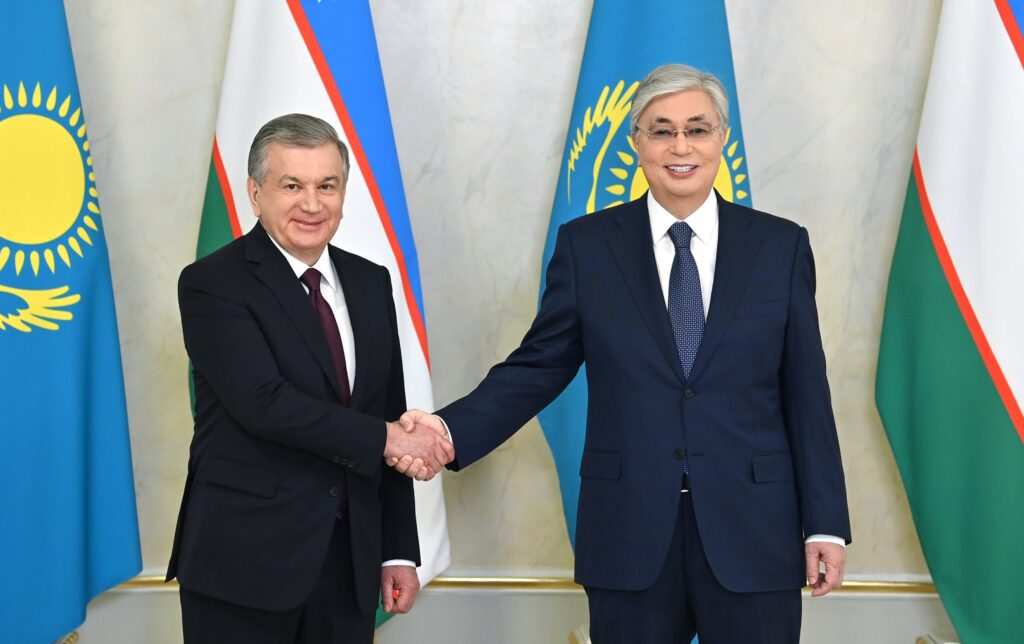
The politicians see that potential, judging by recent meetings. On Thursday, Kazakh President Kassym-Jomart Tokayev and Uzbek counterpart Shavkat Mirziyoyev met in Kazakhstan and the leaders talked about cooperation, especially in trade. There are plans, for example, for an industrial facility on the border between the two countries that will speed up cargo delivery and reduce logistics costs.

On Friday, Kazakhstan hosted a meeting with the leaders of Uzbekistan, Kyrgyzstan, Tajikistan and Turkmenistan, all former Soviet republics that today seek to balance their relationships with neighboring powers Russia and China, the United States and Europe, as well as relatively new partners in the Middle East and elsewhere. The goal of Central Asian solidarity – and regional security – is getting more attention as geopolitical tensions simmer, and the war in Ukraine, another former Soviet republic, shows little sign of resolution well into its third year.

“Today we notice that the fundamental foundations of the system of international relations have changed. This is a dangerous phenomenon,” Tokayev said at the regional meeting. “It is clear that the current challenges can be overcome only through political dialogue and strengthening measures of mutual trust between our states.”

There are moves to translate rhetoric into action.

The forces of Kyrgyzstan and Tajikistan clashed as recently as 2022 over a border dispute, but negotiators of the two countries have pushed methodically toward resolution of the dispute. Last month, several Central Asian countries, plus Azerbaijan, held joint military exercises – Russia, the erstwhile security guarantor in the region, was absent. Water scarcity is acute in Central Asia, whose governments acknowledge they need to collaborate more to get a grip on the problem.

Turkmenistan has a self-declared policy of neutrality and tends to shun membership in regional blocs and alliances, though its president, Serdar Berdimuhamedov, was on hand for the regional meeting in Astana on Friday.

If the flashes of Central Asian solidarity at the Olympic Games were just feelgood moments, they still showed a spontaneity that is often absent from the diplomacy and realpolitik of the sometimes protocol-heavy governments in the region.

The solidarity wasn’t restricted to people from Central Asia. Two members of the British team’s medical unit rushed to the aid of Uzbek boxing team coach Tulkin Kilichev, who went into cardiac arrest while celebrating the gold medal won by Uzbek boxer Hasanboy Dusmatov in the men’s 51-kilogram weight category on Aug. 8. Kilichev was in stable condition in a hospital, the BBC reported.

Uzbekistan and Kazakhstan Aim for $10 Billion Trade Volume

Following on from our previous report on the President of the Republic of Uzbekistan’s current visit to Kazakhstan, on August 8, a meeting was held between Shavkat Mirziyoyev and the President of the Republic of Kazakhstan, Kassym-Jomart Tokayev, at the residence in Аkorda. Meetings of the Intergovernmental Commission, the business forum, and several cultural events were also held on the eve of the visit. A strategic partnership and alliance program until 2034 has been prepared, and a council chaired by the heads of foreign policy agencies is being established.

In recent years, the volume of trade has doubled, the number of joint ventures has increased five-fold, the volume of cargo transportation is increasing, and large cooperation projects are being implemented.

At the meeting, the presidents supported a further comprehensive cooperation program and the establishment of an inter-parliamentary forum with the participation of the chambers of the two countries’ parliaments. Before the current summit, a portfolio of new deals and contracts with a total value of $7 billion was initiated to develop industrial cooperation which includes projects in energy, transport and logistics, metallurgy, textiles, agriculture, and construction, as well as inter-regional projects. The highest priority was given to implementing strategic regional projects as soon as possible, such as the Kambarata HPP-1. It was also agreed that the first meeting of the two countries’ regional leaders in Samarkand will be held this fall.

In unison, the first session of the Supreme Interstate Council was held under the president’s chairmanship. The two countries’ leaders noted the adoption of the strategic partnership and alliance program for 2024-2034, stating that the volume of trade should increase to $10 billion in the coming years, and for this purpose, a separate program will be adopted by the end of the month. Special attention was paid to the mutual formation of markets and eliminating existing restrictions.

At the end of the Supreme Interstate Council’s first meeting, a ceremony was held, wherein the presidents signed the decisions of the Supreme Interstate Council on approving the strategic partnership and alliance program for 2024-2034 and establishing the Council of Foreign Ministers. In addition, agreements were reached on mutual cooperation in agriculture, health, and the economy. A memorandum on establishing the Uzbekistan-Kazakhstan Council of Experts, protocols on cooperation in the regulation of natural monopolies and competition policy, and a plan for several other activities were also signed.

At the end of the bilateral negotiations, branches of the Tashkent Institute of Irrigation and Agricultural Mechanization Engineers in Almaty (Kazakhstan) and the South Kazakhstan State University named after Mukhtar Avezov in Chirchik (Uzbekistan) were ceremonially opened.
The leaders of Uzbekistan and Kazakhstan also took part in a ceremony dedicated to the arrival of the first freight train on the route Xi’an–Khorgos–Almaty–Saryogoch–Tashkent.

Presidents Mirziyoyev and Tokayev unveiled a statue in Astana of the founder of the Uzbek literary language, poet and great thinker, Alisher Navoi. In 2020, the late Kazakh poet Nesipbek Aytuli translated and published Navoi’s most important work, Khamsa, into Kazakh, and President Tokayev personally wrote the foreword to this book.

Furthermore, there was a ceremony to award President Mirziyoyev the Order of Altyn Qyran (Golden Eagle) of the Republic of Kazakhstan. This order is awarded to statesmen for their contribution to strengthening friendly relations with Kazakhstan.

Uzbekistan’s Reserves Reach $37.4 billion

As of August 1, Uzbekistan’s official reserves reached $37.4 billion, 1.06 billion dollars more than a month ago, according to a Kun.uz report based on data from the Central Bank of the Republic of Uzbekistan.

This reserve value is a record indicator for the period after 2018 when data disclosure began. Still, $37.4 billion is enough to cover 12 months of imports.

The increase in the value of international reserves is mainly due to the continued rise in gold reserves and prices. The physical volume of gold in reserves increased by 310,000 ounces (9.64 tons) to 12.05 million ounces (374.8 tons), and the value reached $29.15 billion (+$1.84 billion). According to the Central Bank, the impact of the increase in the price of gold from $2,327.6 to $2,419.6 in July amounted to $1.11 billion.

In July, foreign currency assets decreased by $781.5 million to $7.69 billion and since the beginning of the year, have declined by $1.68 billion, partly affected by the extinguishment of the sovereign Eurobonds issued in 2019, worth $500 million.

The value of securities purchased by the Central Bank was 35.3 million dollars.

Israeli Companies Ready to Invest in Construction of Reservoirs in Kazakhstan

Israeli companies have expressed interest in participating in the construction and reconstruction of reservoirs in Kazakhstan as well as their readiness to provide the country with modern flood forecasting and protection systems.

The announcement was made during a meeting on August 8 between Kazakhstan’s Minister of Water Resources and Irrigation Nurzhan Nurzhigitov, and a consortium of leading Israeli companies in the field of water resources management, headed by Managing Partner of Value LBH and Chairman of the Board of the investment company Dan Capital, Shimon Ben-Hamo.

Discussions  focused on potential cooperation in various areas of the water industry, from the construction and reconstruction of water facilities to joint personnel training, as well as the introduction of  water-saving technologies, water purification and reuse, drinking water quality control, and automation of water distribution and metering.

Reporting on the meeting, Minister Nurzhigitov commented: “Israeli companies have extensive experience and modern technologies for high-quality water management. Some companies have been successfully operating in Kazakhstan for a long time. We intend to achieve the most efficient water use in all sectors, so we count on mutually beneficial cooperation.”

The Kazakh Ministry of Water Resources and Irrigation plans to build 20 new reservoirs with a 2.5 billion cubic meters capacity by 2030.

Once completed, the project will reduce the country’s dependence on water flowing from upstream Kyrgyzstan and China by 25%, help combat drought in southern Kazakhstan, and reduce the threat of flooding in 70 rural settlements with a total population of nearly 140 thousand people. In addition, irrigation will be provided for a further 250 thousand hectares of farmland.

Plans are also in place to reconstruct 15 existing reservoirs with a total capacity of 1.9 billion cubic meters.

Sixth Consultative Meeting of Heads of Central Asian States Takes Place in Astana

On August 9, 2024, Astana will host the Sixth Consultative Meeting of Heads of State of Central Asia, bringing together the leaders of Kazakhstan, Kyrgyzstan, Tajikistan, Turkmenistan, and Uzbekistan. This event has become an important platform for discussing critical issues of regional cooperation, strengthening economic ties, and addressing everyday challenges. This year’s guests of honor were the President of Azerbaijan, Ilham Aliyev, and the head of the UN Regional Center for Preventive Diplomacy for Central Asian countries, Kakha Imnadze.

The main topics of this year’s meeting will be economic cooperation, regional security and cooperation, water resources, and energy. Special attention will be paid to water resources management, which is critical to the region’s sustainable development. The leaders will also discuss strengthening trade and economic ties, which has become especially important given the growing indicators of mutual trade, which have grown 2.5 times over the past ten years, reaching almost $11 billion.

Another important topic will be ensuring regional stability, including fighting terrorism and extremism, and developing joint measures to strengthen border security. The summit is also expected to adopt the “Strategy for the Development of Regional Cooperation in Central Asia-2024”, which aims to expand the five-party interaction and strengthen the international role of the region.

These consultative meetings of Central Asian leaders, which began in 2018, have become an important tradition and serve as a constructive platform to discuss and address common challenges. The 2024 meeting emphasizes Central Asia’s growing importance in the international arena and the readiness of the region’s countries to address current challenges and seize opportunities for joint development jointly.

On August 9, 2024, a meeting of Central Asian foreign ministers was also held in Astana. Kazakh Foreign Minister, Murat Nurtleu opening the meeting, emphasizing that the event demonstrates the strong commitment of Central Asian countries to strengthening cooperation in all spheres, and that the region’s governments have all made significant progress in economic and political interaction in recent years. The total GDP of the Central Asian countries now stands at about $450 billion, and mutual trade has grown by 80% over the past five years, reaching $11 billion.

The meeting focused on strengthening regional cooperation in the key areas of energy, transportation, logistics, industry. Kazakhstan proposed developing a long-term comprehensive mechanism of collaboration in the area of water resources and hydropower that would consider the interests of all countries in the region.

On the same day, the summit, Central Asia + Japan was to be attended by Japanese Prime Minister Fumio Kishida; however, Kishida cancelled his visit to Kazakhstan due to a powerful earthquake which struck off the coast of Japan.