• KGS/USD = 0.01144 0%
  • KZT/USD = 0.00211 0%
  • TJS/USD = 0.10460 0%
  • UZS/USD = 0.00008 0%
  • TMT/USD = 0.28571 0.28%
  • KGS/USD = 0.01144 0%
  • KZT/USD = 0.00211 0%
  • TJS/USD = 0.10460 0%
  • UZS/USD = 0.00008 0%
  • TMT/USD = 0.28571 0.28%
  • KGS/USD = 0.01144 0%
  • KZT/USD = 0.00211 0%
  • TJS/USD = 0.10460 0%
  • UZS/USD = 0.00008 0%
  • TMT/USD = 0.28571 0.28%
  • KGS/USD = 0.01144 0%
  • KZT/USD = 0.00211 0%
  • TJS/USD = 0.10460 0%
  • UZS/USD = 0.00008 0%
  • TMT/USD = 0.28571 0.28%
  • KGS/USD = 0.01144 0%
  • KZT/USD = 0.00211 0%
  • TJS/USD = 0.10460 0%
  • UZS/USD = 0.00008 0%
  • TMT/USD = 0.28571 0.28%
  • KGS/USD = 0.01144 0%
  • KZT/USD = 0.00211 0%
  • TJS/USD = 0.10460 0%
  • UZS/USD = 0.00008 0%
  • TMT/USD = 0.28571 0.28%
  • KGS/USD = 0.01144 0%
  • KZT/USD = 0.00211 0%
  • TJS/USD = 0.10460 0%
  • UZS/USD = 0.00008 0%
  • TMT/USD = 0.28571 0.28%
  • KGS/USD = 0.01144 0%
  • KZT/USD = 0.00211 0%
  • TJS/USD = 0.10460 0%
  • UZS/USD = 0.00008 0%
  • TMT/USD = 0.28571 0.28%

What the U.S. Really Wants in Central Asia: Behind the B5+1 Forums

The B5+1 business forum continued in Kyrgyzstan’s capital on February 5, as government officials, regional business leaders, and a sizable U.S. delegation met to discuss trade, investment, and regulatory barriers shaping economic ties between Central Asia and the United States.

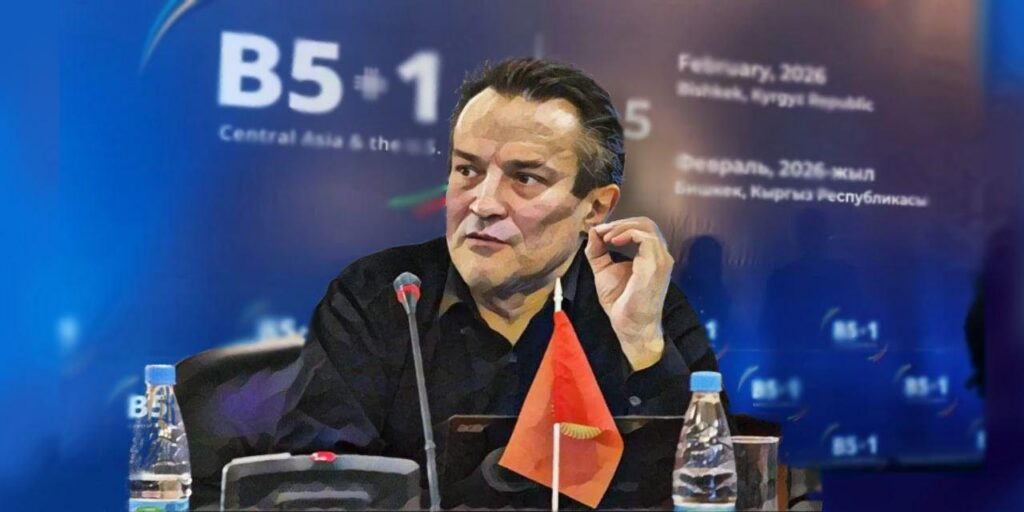
As Washington signals a more pragmatic, commercially driven approach to the region, questions persist over why U.S. investment has lagged behind political engagement and which markets are truly seen as priorities. The Times of Central Asia spoke with Dmitry Orlov, director of the Strategy: East–West analytical center, about the structural obstacles deterring American capital, the shift in U.S. policy thinking, and how Central Asian states are positioned within Washington’s evolving economic calculus.

TCA: What serious U.S. capital investments in Central Asia can we talk about today?

ORLOV: It is important to understand the main point. Talk of large investments, the arrival of American business, and long-term economic cooperation only makes sense in one case: if the U.S. repeals the Jackson-Vanik amendment, which was adopted back in the 1970s and extended to all former Soviet republics after the collapse of the USSR. Today, it remains a formal and, in many ways, psychological obstacle to a fully-fledged business partnership.

At the same time, it is necessary to establish contacts at a business level right now. This is because if the amendment is repealed – and such statements are regularly heard in Washington – it is difficult to predict which countries in the region will receive investment flows and in what volumes.

Recent international forums, including Davos, have shown that Kazakhstan and Uzbekistan are of the greatest interest to the U.S. in Central Asia. Their economies are developing more dynamically, and they can offer large-scale projects and a clear export base. The other countries in the region, Kyrgyzstan, Tajikistan, and Turkmenistan, are still perceived by investors as lower priorities.

TCA: Previously, the U.S. actively promoted a political agenda in the region, including human rights and freedom of speech. Now these are rarely mentioned. Why do you think this is the case?

ORLOV: The approach has become more pragmatic. The history of U.S. foreign policy shows that strategic and economic interests have always taken precedence. If a territory is attractive in terms of resources or transit routes, a format for cooperation will be found.

In Europe, relatively speaking, the rule of law prevails. In Asia, the situation is different, and the Americans understand this perfectly well. Issues of ideology and human rights can move to the background if economic expediency comes first. This is especially true in Central Asia, where many issues are resolved through personal agreements and informal connections. Washington understands this.

TCA: What exactly can Central Asia offer the U.S.?

ORLOV: In terms of individual countries, Kazakhstan and Uzbekistan are again in the lead. They offer oil, gas, and, no less importantly, control over transit routes.

There is currently a lot of discussion about rare earths and critical minerals, but their development is always long and expensive. As a result, interest in them is largely political and declarative. First and foremost, it is about signaling presence and intent. It may take decades before such projects actually materialize.

Kyrgyzstan and Tajikistan also have a resource base, but developing deposits there is difficult and costly. Turkmenistan stands apart as a special case. A significant share of its gas volumes has already been contracted by China in exchange for earlier infrastructure loans. At the same time, it has a petrochemical industry, transport arteries, and logistics potential.

TCA: What does Central Asia expect from the U.S.?

ORLOV: Beyond investment and technology, political balance is important for the region. Against the backdrop of talk about possible EU sanctions against Kyrgyzstan, diplomatic activity has intensified. In my view, the key question for the U.S. is what it can offer that Russia and China, already deeply integrated into the region’s economy, cannot.

U.S. trade turnover with Kyrgyzstan, for example, does not even rank in the top ten. Therefore, there is not only economic but also political logic at work, an attempt to strengthen its presence in the region.

Central Asia today is a space where the interests of China, Russia, Iran, and the West intersect. None of these actors has a monopoly on influence. That is why the region remains an area of balance.

American and European companies extract oil in Kazakhstan. Chinese companies do as well. Russian companies are also present. So far, these interests have not come into direct conflict. As a result, we should not expect open confrontation between global players, at least in the near future.

TCA: How realistic is it that repealing the Jackson-Vanik amendment could change the investment landscape in Central Asia?

ORLOV: For now, it is more of a political signal than an economic calculation. Western media have barely discussed potential investment volumes in the event of its repeal. No concrete figures are being cited.

This resembles a situation in which a decision has ostensibly been “made,” but real steps remain distant. The amendment has been discussed since the Clinton administration, yet it has never progressed beyond declarations. In essence, it remains a carrot dangling in front of a donkey.

TCA: Would it be fair to say, then, that regional forums, including the B5+1, are largely symbolic?

ORLOV: Exactly. The first forum in Almaty in 2024 was a stage of familiarization and mutual assessment. The meeting in Bishkek is an attempt to outline the contours of possible cooperation. The key questions for both sides today are extremely pragmatic: what are we being offered, and what can we get in return?
Rubio Hosts Critical Minerals Meeting; Central Asia Is Key to U.S. Vision

The United States welcomed delegations from dozens of countries to a meeting in Washington, D.C. on Wednesday that was aimed at strengthening and diversifying supply chains for critical minerals. With large reserves of these minerals, Central Asia is emerging as a key player in U.S. plans to secure components deemed necessary for advances in technology, economic development, and national security.

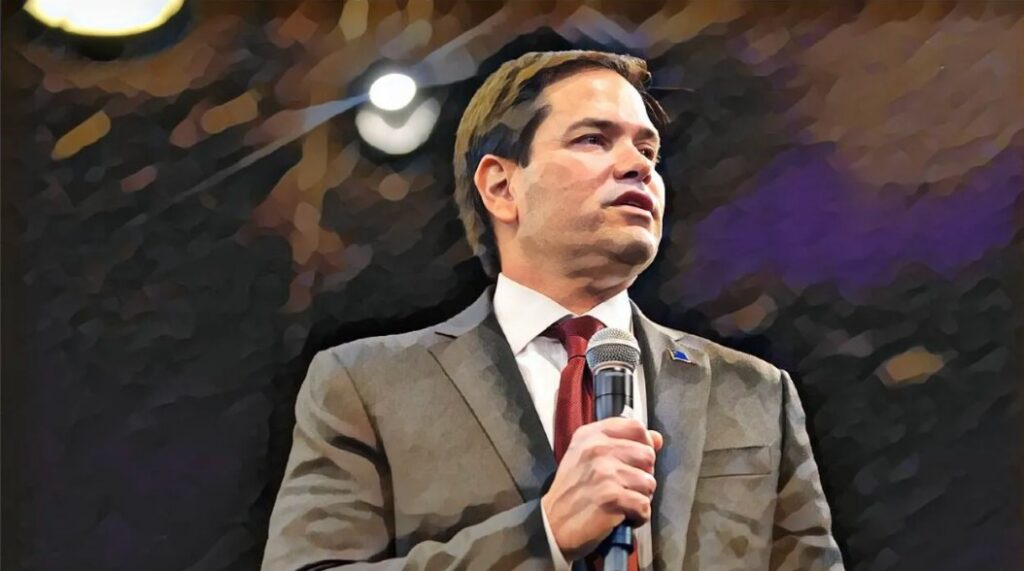
“I don’t need to explain to anybody here that critical minerals are vital to the devices that we use every single day,” U.S. Secretary of State Marco Rubio said in his opening remarks at the minister-level conference. “They power our infrastructure, our industry, and our national defense… Our goal is to have a global market that’s secure, a global supply that’s enduring and is available to everyone, every nation, at an affordable price.”

U.S. Vice President JD Vance also spoke at the event, saying the United States wants to form a trading bloc among allies and partners that expands production of critical minerals in an environment of stable prices and supply chains immune from disruption.

“By regulating imports to preserve free and fair competition within the preferential trading zone, we will elevate our nation’s miners and refiners, our investors and producers alike,” Vance said. “We are all on the same team, and we need to create the economic incentives that reward people for investing and building in our countries.”

The United States is seeking to counter China’s dominance of the critical minerals market. China is a key trading partner for Central Asia, whose countries aim to diversify their relationships among the major powers.

Foreign Minister Yermek Kosherbayev of Kazakhstan was among those slated to attend the critical minerals conference in the United States. The visit follows intensifying discussions involving the United States and Central Asian countries on how to develop trade and investment. On Wednesday, business leaders and government officials from Central Asia and the United States gathered in Kyrgyzstan’s capital, Bishkek, for the start of the second B5+1 Business Forum.

Why Kazakhstan Is Not Celebrating Its Multi-Billion-Dollar Win in the Karachaganak Oil Arbitration Just Yet

In late January 2026, international media reported that Kazakhstan had won a significant arbitration case against the shareholders of the Karachaganak oil field, with compensation estimated between $2 billion and $4 billion. The Ministry of Energy has not commented on the substance of the ruling, citing confidentiality, though experts say it strengthens Kazakhstan’s position in ongoing legal proceedings related to the Kashagan oil field.

According to Bloomberg and Reuters, the Kazakh government initiated legal action in 2023 over what it described as unjustified cost deductions. Originally filed for $3.5 billion, the claim later expanded to include additional allegations, such as inflated expenses tied to corruption.

In 2025, the shareholders of Karachaganak Petroleum Operating proposed settling the dispute by financing a domestic gas processing plant in Kazakhstan. The government rejected the proposal, however, and arbitration continued, resulting in a ruling in favor of Kazakhstan. Sources familiar with the proceedings said the consortium, led by Eni and Shell, has been ordered to pay compensation of up to $4 billion. The tribunal has yet to finalize the exact amount. As the arbitration process remains confidential, sources requested anonymity, noting that the Karachaganak consortium still has the option to appeal.

While the ruling represents a partial victory, Kazakhstan had originally sought a significantly higher sum; the tribunal accepted the government’s core argument: under the production sharing agreement (PSA), the consortium charged the state for unapproved and non-reimbursable expenses.

Kazakhstan’s external legal advisers estimate the final payment will range between $2 billion and $4 billion. According to sources familiar with the proceedings, the recovery mechanism will likely involve revisions to the oil distribution formula within the PSA.

In its written decision, the tribunal referenced Kazakhstan’s own admission that it had tolerated “corruption and kleptocracy” until 2022. A source familiar with the ruling said Kazakh officials had accepted bribes to approve inflated costs at Karachaganak, expenses that were then inappropriately reimbursed by the state.

During the arbitration, Kazakhstan’s legal team presented documents from criminal proceedings in Italy. These revealed that, in 2017, several Italian contractors pleaded guilty to bribing Kazakh officials to secure contracts at both Karachaganak and the Kashagan offshore field.

Oil and gas analyst Olzhas Baidildinov said the ruling gives Kazakhstan a stronger position in the Kashagan case. He asserted that Kazakhstan can now “firmly defend its rights in major oil and gas projects,” and that the “decades of privileged status enjoyed by foreign oil and gas majors in Kazakhstan’s oil industry are over.”

Baidildinov added that the operating models at Karachaganak and Kashagan are likely to be restructured and possibly “de-Italianized”.

He also criticized the national oil company, KazMunayGas, for its silence on the Tengizchevroil (TCO) expansion project, whose capital expenditure has surged from $12 billion to $48.5 billion. Drawing comparisons to Uzbekistan, Baidildinov noted that former Uzbekneftegaz head Bahodir Sidikov was dismissed in December 2025 and later detained on corruption charges. In the same month, presidential energy adviser Alisher Sultanov was also removed.

“I’m astonished that, while regional Kazakh officials are being arrested for bribes worth mere hundreds of thousands of tenge, we continue to accept the TCO budget of $48.5 billion without scrutiny,” said Baidildinov. “That’s 33 times the cost of the Burj Khalifa, six times the price of the Large Hadron Collider, and more than the infamous Kashagan offshore project, even though Tengiz is an onshore field with existing infrastructure.”

Baidildinov concluded that senior figures overseeing Tengiz at KazMunayGas should be held accountable.

Business analyst Abzal Narymbetov observed that Kazakhstan has rarely prevailed in large-scale disputes over the past 15 years, describing the Karachaganak ruling as a turning point that signals Kazakhstan’s evolution beyond its traditional role as a “raw material territory.” He also believes the experience gained from this case will prove valuable in future litigation over Kashagan.

“Many are calling for a statement from the Ministry of Energy,” Narymbetov said. “But the ministry has made clear it cannot comment for now. In international arbitration, any premature or triumphant remarks from government agencies could provide grounds for appeal or obstruct payment enforcement. It appears the ministry is completing the process discreetly to ensure funds are properly transferred to the state budget”.

Uzbekistan Probes Alleged Personal Data Leak from State Information Systems

Reports circulating on social media and Reddit have raised concerns that the personal data of Uzbek citizens may have been leaked from government information systems and shared on darknet forums.

In response, several state agencies have issued statements confirming that investigations are underway, and that their systems remain secure.

According to posts shared on Reddit, links were posted to online platforms, including darknet sites, allegedly containing data from Uzbek state institutions. Some users claimed the leak could involve personal information on as many as 15 million citizens. These claims quickly gained traction across social media, prompting official responses.

On February 3, Uzbekistan’s Cybersecurity Center acknowledged the reports and confirmed that it had launched an investigation. “In recent days, messages have been observed on social networks about the alleged dissemination of personal data of Uzbek citizens from certain state information systems,” the Center said in a statement. It added that a comprehensive review is ongoing and that further details would be shared upon completion of the inquiry.

The Center also issued guidance to the public, urging citizens not to disclose personal information to third parties, to use complex usernames and passwords when accessing state and other digital systems, and to avoid entering data through suspicious links.

In response to public speculation that information from the recent population and agricultural census may have been compromised, the Statistics Agency also issued a statement. It affirmed that all data collected during the online census, conducted between January 15 and 31, is securely stored. “All collected data are kept in encrypted form on a separate server. There is no reason for concern regarding the safety of census-related information,” the agency said.

The State Tax Committee similarly denied any breach involving its systems. Addressing claims circulating on social media and various websites, the committee said it had implemented all necessary cybersecurity measures and that its interactive services and systems were functioning normally and without interruption.

The Ministry of Internal Affairs echoed these reassurances, stating that the integrity of its information systems is fully intact. The ministry confirmed that no unauthorized access to personal data under its control had been detected.

Authorities emphasized that investigations are ongoing and urged the public to rely on official sources for updates as checks continue.

B5+1 Forum Opens as U.S. Companies Expand Economic Footprint in Central Asia

Business leaders and government officials from Central Asia and the United States gathered in Kyrgyzstan’s capital on February 4 for the start of the second B5+1 Business Forum. Co-organized by the Kyrgyz government and the Center for International Private Enterprise (CIPE), the event is intended to bring together private companies, business associations, officials, and experts interested in expanding U.S.–Central Asia commercial ties. More than 50 U.S. companies are participating in the event.

The B5+1 is the business-track counterpart to the C5+1 diplomatic format that links the United States with Kazakhstan, Kyrgyzstan, Tajikistan, Turkmenistan, and Uzbekistan. The B5+1 brings companies and policymakers together to identify barriers to investment and propose cross-border regulatory changes.

This week’s meeting in Bishkek follows the inaugural B5+1 forum held in Almaty on March 14–15, 2024, which drew more than 250 stakeholders from across Central Asia and the United States. It produced 21 private-sector recommendations aimed at easing trade, improving regulations, and building regional economic integration. The Bishkek agenda is built around reviewing progress on those recommendations and setting priorities for the next phase of work.

Central Asian officials have used the event to signal interest in region-wide coordination rather than country-by-country deals. In comments made in Bishkek, Kazakhstan’s Minister of Industry and Construction, Ersaiyn Nagaspaev, emphasized that foreign investors increasingly assess Central Asia as a single market, reflecting a push to align regulations and investment conditions across borders. Nagaspaev noted that more than 600 U.S. companies currently operate in Kazakhstan.

Kyrgyzstan, meanwhile, used the forum to highlight domestic economic performance within that regional context. In a speech at the forum, Kyrgyzstan’s First Deputy Chairman of the Cabinet of Ministers, Daniyar Amangeldiev, said Kyrgyzstan’s economy grew by 11.1% in 2025, which he described as one of the highest growth rates in the region.

Addressing the forum, U.S. Special Envoy for South and Central Asia Sergio Gor stated that the United States intends to expand its economic engagement with Central Asia. “The private sector, not intergovernmental agreements, will become the key instrument of interaction,” he told those in attendance, identifying electronic commerce, artificial intelligence, critical minerals, agriculture, and transport infrastructure as priority areas.

Gor noted that the American companies present at the forum represent the largest and most comprehensive U.S. commercial delegation ever to visit Central Asia. The U.S. recognizes the importance of Central Asia in global trade and connectivity, he stated.

“The United States is open for business. We’re open for peace. We’re opening to strengthen our ties around the world. So that’s why it’s fitting that the first C5 event in 2026 is this B5 + 1 forum,” Gor said, linking the Bishkek discussions to economic commitments made at the C5+1 summit in Washington in November 2025.

“The Transport Corridor for Peace and Prosperity will provide reliable connectivity from Central Asia through the South Caucasus to global markets,” Gor said. “This is a historic opportunity to strengthen economic integration and long-term prosperity across the region.”

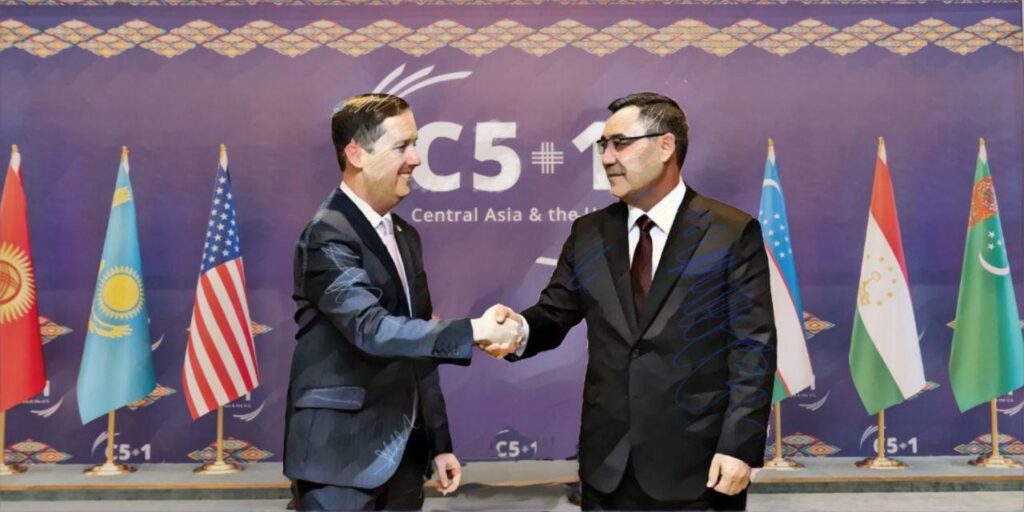
During his visit to Bishkek, Gor also met with Kyrgyz President Sadyr Japarov, with the meeting covering economic cooperation and U.S. business engagement in Kyrgyzstan, including the participation of American companies in the B5+1. The Kyrgyz presidency said the two sides also discussed prospects for expanding trade, attracting investment, and developing cooperation in priority economic sectors.

Discussions in Bishkek highlighted how the B5+1 is being positioned as a standing mechanism rather than a one-off meeting. CIPE has framed the forum as part of an ongoing cycle in which private-sector proposals are developed through working groups and carried forward between annual meetings.

U.S. officials have linked the B5+1 more directly to Washington’s broader economic approach toward Central Asia. During his regional trip, which also includes Uzbekistan, Sergio Gor’s schedule has centered on business engagement and investment promotion rather than security or political consultations.

For the Kyrgyz authorities, hosting the forum is part of a broader effort to position the country as a regional convening hub. A December notice from Kyrgyzstan’s Ministry of Economy and Commerce described the B5+1 as a regional business mechanism within the C5+1 framework, rather than a Kyrgyz-specific initiative.

Previous B5+1 recommendations have focused on regulatory alignment, trade facilitation, and investment conditions, but no public timeline has been announced for publishing updated recommendations from the Bishkek meeting. CIPE has said outputs from earlier forums were compiled after consultations rather than issued as immediate communiqués.

The absence of signed agreements or joint statements on the opening day has kept attention focused on whether the forum produces measurable follow-up. Earlier B5+1 recommendations from the 2024 Almaty meeting were published weeks after the event, following additional consultations with governments and business groups.

The B5+1 concludes on February 5. Any updated recommendations or sector-specific commitments are expected to emerge after the forum rather than during the event itself.

Man Imprisoned in Kyrgyzstan for Evading Child Support

In Kyrgyzstan’s southern Batken region, a man who had evaded court-ordered child support payments since 2017 has been sentenced to two years in prison, according to the Bailiff Service under the Prosecutor General’s Office of the Kyrgyz Republic.

This is reportedly the first known prison sentence for such an offense in Kyrgyzstan, signaling a shift as authorities move to strengthen penalties against non-compliant parents following divorce.

Under a July 3, 2017 ruling by the Batken District Court, the man was ordered to pay one-quarter of his income in child support until his child reached the age of 18. However, he failed to comply with the court’s decision. As of September 1, 2025, his arrears totaled 501,000 Kyrgyz som (approximately $5,700).

On February 2, the Batken Regional Court sentenced him to two years in prison for non-payment.

Klara Masalbekova, Head of the Department for Enforcement of Court Decisions at the Prosecutor General’s Office, noted that failure to fulfill child-support obligations falls under Article 178 of Kyrgyzstan’s Criminal Code. This article has been progressively tightened in recent years. Under current law, evading child support can result in a prison sentence of up to three years.

According to the Prosecutor General’s Office, 1,205 individuals in Kyrgyzstan are currently wanted for child-support evasion.

The Family Code of the Kyrgyz Republic stipulates the following alimony contributions for children under 18:

  • One child – 1/4 of the parent’s income
  • Two children – 1/3 of the income
  • Three or more children – 1/2 of the income

In a related development, the Kyrgyz parliament has approved in the first reading a bill introducing stricter penalties for non-compliance with alimony agreements or court orders, 24.kg reported.

The proposed measures include:

  • Three days’ arrest for a three-month overdue payment
  • Community service of 100-200 hours or up to one year of imprisonment for a 12-month overdue payment
  • A fine of 100,000 som (approx. $1,140) or up to three years in prison for concealing income, understating wages, or refusing employment mandated by a court order

The bill aims to reduce the number of delinquent child-support cases and improve compliance with family law rulings across the country.