• KGS/USD = 0.01144 0%
  • KZT/USD = 0.00212 0%
  • TJS/USD = 0.10432 -0.29%
  • UZS/USD = 0.00008 0%
  • TMT/USD = 0.28571 0.28%
  • KGS/USD = 0.01144 0%
  • KZT/USD = 0.00212 0%
  • TJS/USD = 0.10432 -0.29%
  • UZS/USD = 0.00008 0%
  • TMT/USD = 0.28571 0.28%
  • KGS/USD = 0.01144 0%
  • KZT/USD = 0.00212 0%
  • TJS/USD = 0.10432 -0.29%
  • UZS/USD = 0.00008 0%
  • TMT/USD = 0.28571 0.28%
  • KGS/USD = 0.01144 0%
  • KZT/USD = 0.00212 0%
  • TJS/USD = 0.10432 -0.29%
  • UZS/USD = 0.00008 0%
  • TMT/USD = 0.28571 0.28%
  • KGS/USD = 0.01144 0%
  • KZT/USD = 0.00212 0%
  • TJS/USD = 0.10432 -0.29%
  • UZS/USD = 0.00008 0%
  • TMT/USD = 0.28571 0.28%
  • KGS/USD = 0.01144 0%
  • KZT/USD = 0.00212 0%
  • TJS/USD = 0.10432 -0.29%
  • UZS/USD = 0.00008 0%
  • TMT/USD = 0.28571 0.28%
  • KGS/USD = 0.01144 0%
  • KZT/USD = 0.00212 0%
  • TJS/USD = 0.10432 -0.29%
  • UZS/USD = 0.00008 0%
  • TMT/USD = 0.28571 0.28%
  • KGS/USD = 0.01144 0%
  • KZT/USD = 0.00212 0%
  • TJS/USD = 0.10432 -0.29%
  • UZS/USD = 0.00008 0%
  • TMT/USD = 0.28571 0.28%

Kazakhstan’s Irrigation Water to be Swelled by 560 Million Cubic Meters from Kyrgyzstan

On June 18, Kazakhstan’s Ministry of Water Resources and Irrigation announced that during this year’s irrigation season, the country will receive 180 million cubic meters of water from the Shu River and 380 million cubic meters of water from the Talas River from upstream Kyrgyzstan.

As reported by Kazakh Minister of Water Resources and Irrigation Nurzhan Nurzhigitov, the agreement between the two countries was reached during the 33rd meeting of the Shu-Talas Water Commission.

Agreements were also settled on the extent of work required on the repair and reconstruction of water management facilities located on the transboundary Shu and Talas rivers.

Welcoming the decisions, Minister Nurzhigitov commented: “International cooperation is one of our ministry’s key goals. In preparation for the irrigation season, a lot of work has been undertaken to provide farmers in the south of Kazakhstan with necessary volumes of water, and important negotiations have taken place with neighbouring countries. Today’s agreement with the Ministry of Water Resources of Kyrgyzstan to increase water supply along the Shu and Talas rivers, will be implemented from June 21.”

The agreement follows that between Kazakhstan and Uzbekistan for the supply of 922 million cubic meters of water to the former through the Dostyk interstate canal.


Kazakhstan to Establish 5G Mobile Coverage by 2026

On June 18, Kazakhstan’s Minister of Digital Development, Innovation and Aerospace Industry Zhaslan Madiev updated the government on progress on improvements to the country’s Internet and mobile communication.

International data indicates that the share of the population using the Internet in Kazakhstan is now on par with that of developed countries. Traffic growth has increased by 61.5% since 2020, and the number of users, by 12.9%.

According to Speedtest Ookla, in April 2024, Kazakhstan ranked 66th with an average Internet speed of 43.6 Mbps, higher than Russia, Kyrgyzstan, and Uzbekistan.

Wired Internet is currently available in 2,606 of Kazakhstan’s 6,290 villages, with plans in place to connect optical communication lines through the PPP mechanism to 3,010 villages.

Mobile Internet is now accessible in 4,866 villages. As part of tax incentives in 2023, 1,161 villages were connected to 4G technology. Work to connect the remaining 1,424 villages is ongoing.

Regarding the further development of 5G technology, operators Kcell and Tele2 will continue work to expand 5G coverage in the cities of Astana, Almaty, Shymkent, as well as regional centres. To date, 1,144 base stations have been installed in 20 cities.

“In accordance with instructions issued by the Head of State, the introduction of 5G mobile communications should be completed before the end of 2025,” reported the minister.

Madiev then outlined the three steps required to develop the Digital Silk Road and turn Kazakhstan into a regional digital hub.

The first is to lay a 370-kilometer fiber-optic line along the bed of the Caspian Sea with investment by telecom operators in Kazakhstan and Azerbaijan amounting to more than 23 billion tenge. A joint venture has been created between Kazakhtelecom JSC and Azertelecom LLC, and a tender to select a contractor for the design and installation of an underwater fibre-optic line is underway.

The second is the construction of the national West-East Internet hyper highway, which will increase Internet transit traffic across  Kazakhstan.

The final step is the construction of a data processing centre, no lower than Tier-III level, for storing transit and international traffic.


Sogd-2024 International Trade Fair Marks First Decade

The international trade fair, Sogd-2024 officially opened at the sports palace in Khojand, Tajikistan, on June 18th. This year marks a decade of the Sogd—Valley of Opportunities fair, which will run from June 18th-19th. More than 500 guests from Tajikistan and abroad have gathered, Andar Rahmani, the head of the press service of the Sogd regional administration informed Sputnik Tajikistan, adding that regional ambassadors are also participating in this important economic event.

“Ambassadors and representatives of the diplomatic corps of Russia, Turkey, Uzbekistan, Saudi Arabia, Azerbaijan, Japan, Iran, Belarus, Turkmenistan, Slovakia, Poland, Pakistan, Kyrgyzstan and Kazakhstan visited the region,” Rahmani said. Representatives from the Tashkent, Namangan, Ferghana, Samarkand, Bukhara, and Syr Darya regions of Uzbekistan, and business- people from China’s Shaanxi province and representatives of international financial organizations also participated.

Controversial Kazakh Opposition Figure Aidos Sadykov Shot in Kyiv

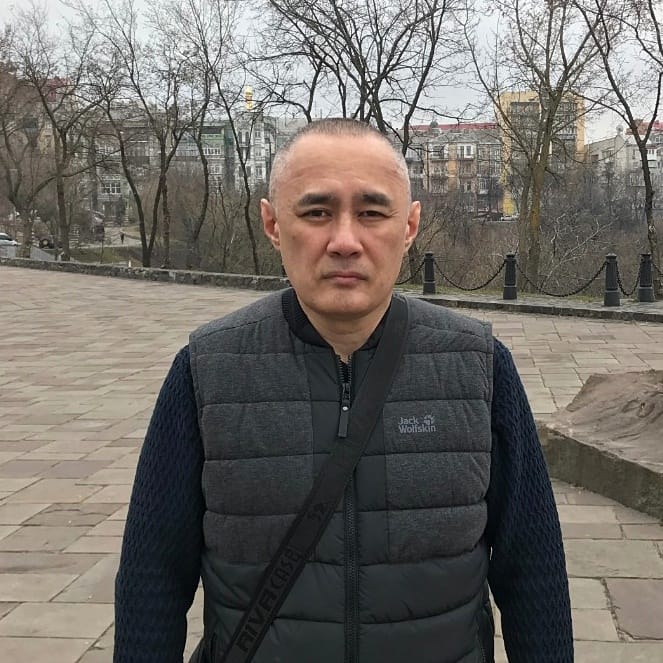
An unknown man in Kyiv fired several shots at Kazakh activist and oppositionist Aidos Sadykov, who has been granted official refugee status in Ukraine. It is reported that the incident occurred in the Shevchenkivskiy district of the Ukrainian capital when Sadykov was approaching his car with his wife, Natalia, who previously worked for Mukhtar Ablyazov’s opposition paper, Respublika. The gunman used a silencer on the firearm.

Sadykov’s condition is currently assessed as serious; his wife was not injured. As this is a case involving a high-profile individual, the head of the regional police, Andriy Nebytov, was called to the crime scene.

Sadykov is the author of the Telegram channel ‘Base’, which has 59,000 subscribers, and has been permanently residing in Kyiv since 2014. Over the years, he has criticized the current Kazakh authorities, including the current president, Kassym-Jomart Tokayev. In 2020 Base, together with the initiative to create the opposition Democratic Party, became the co-organizers of a rally in Almaty demanding a boycott of the upcoming parliamentary election. The Democratic Party of Kazakhstan, an unregistered political party, was founded and led by Zhanbolat Mamai, a former journalist who was convicted for receiving funds from Ablyazov in 2017.

Sadykov and Mamai both actively supported the protests in January 2022 in Kazakhstan, widely seen as an attempted coup. He is wanted in Kazakhstan under the articles on the incitement of discord.

Men in Black Blamed for Series of Murders in Northern Tajikistan

People in the Konibodom area of northern Tajikistan are locking themselves in their homes when darkness falls. Some are arming themselves. Others have left altogether out of fear.

There appears to be a serial killer or killers on the loose. At least 13 people have been murdered in their homes in or near Konibodom since late March, and local police seem baffled as to who is doing this or why.

It started with the killing of five members of the Sharipov family in late March.

Initially investigators believed the 65-year-old head of the house had killed his wife, daughter-in-law, and two grandchildren, then hanged himself, but they later determined someone broke into the home and the killer hanged the man to make it look like a domestic dispute and suicide.

On the night of April 16-17, someone broke into a home in the Gafurjon Ortikov neighborhood of Konibodom and killed the husband and wife who lived there. Police said the bodies of the victims, whom police did not identify, bore the signs of a violent death.

The most recent killings happened on the night of May 28-29 in the village of Sanjidzor, outside Konibodom.

Mahbuba Ahmedova and her two children were killed in their home and that same night, at a different house, the deputy director of a local school, Zulho Ibragimova, her brother and brother’s wife were killed. Local law enforcement said preliminary evidence showed all six people were strangled.

Locals speak about men in black who break into people’s homes at night and kill them.

A video was posted, purportedly from a surveillance camera in Konibodom, that shows a person with black clothing and a black hood or mask trying to break into a home.

Konibodom resident Mahsuda Kodirova said she and her daughter were sitting in the courtyard of their home a little after 10 in the evening on June 11, when a man in black clothing with a black mask suddenly appeared and approached them.

Kadirova said she and her daughter screamed and ran out into the street.

When the police arrived, they told Kadirova they had received many similar calls from terrified residents during the previous 48 hours.

Understandably, there is panic in Konibodom. Many of the men, especially the young men of Konibodom, are currently migrant laborers in Russia who are supporting their elderly parents, wives, and children back home.

The bodies of Mahbuba Ahmendova and her two children were found by neighbors after Ahmedova’s husband had been calling her from Russia and finally called a neighbor to go and check on his family.

Konibodom is near the border with Kyrgyzstan and the population of the city is mixed, mostly Tajiks, but many Kyrgyz as well.

Most of the victims have been ethnic Tajiks, but Ibragimova, her brother, and her brother’s wife were Kyrgyz.

The seeming randomness of the victims puts everyone on edge, at least everyone still there.

The Tajik news outlet Asia-Plus sent its reporters to Sanjidzor after the killings in late May. Those reporters said many homes were locked up. Their owners left to stay with friends or relatives in some other region of Tajikistan until the killers in Konibodom are caught.

Abdusalom Abdurahmonov, 71, remains in the Konibodom area. He said something of a neighborhood patrol has been organized in his community. He said every night, two to four men go out at night and walk around neighborhoods where the men have left to work in Russia, leaving women and children behind.

Ninety-year-old Ashurali Sobirov said his family sleeps with knives, axes, and pitchforks next to their beds. “We practically do not sleep at night,” Sobirov said; “we can’t go outside when we want.”

Police are intensifying their efforts to locate and apprehend the perpetrator or perpetrators. A special temporary headquarters has been established at the Sanjidzor school where one of the victims of the May 28-29 attacks, Zulho Ibragimova, was deputy director.

The teachers and children from that school have temporarily been sent to a different school.

Some 55,000 people live in Konibodom and there are several thousand more people living in surrounding villages.

Asia-Plus reported people are afraid of their own shadow, some are too afraid to go to the bazaar for food during the day.

There is no precedent for these serial murders, not only Konibodom, but across Central Asia. Until these men in black are caught, the residents of Konibodom area will watch the sun set every evening with a feeling of dread.

Eurasian Connectivity Comes One Step Closer at the 2024 CAMCA Forum in Bishkek

The wider Eurasia region took another step towards cooperation and connectivity last week, as the 10th annual CAMCA Regional Forum was held in Bishkek.

CAMCA – standing for Central Asia, Mongolia, the Caucasus and Afghanistan – is an initiative to accelerate dialogue between governments, private enterprises and media figures from these ten nations. Organized by the Washington, D.C.-based Central Asia-Caucasus Institute and the Rumsfeld Foundation, this year’s Forum – the first such event to take place in Kyrgyzstan – featured over 300 delegates across its two days, and presented insights from over 70 speakers. Attendees came from 25 countries in total.

Professor Frederick Starr, the Central Asia-Caucasus Institute’s chairman, used his opening address to call on the countries of the region to start preparing for a future within a cohesive international bloc. Dr Starr reasoned that Russia and China, imperial powers that have traditionally had a controlling presence in Central Asia, may see their global influence wane in the coming decade. This would give the countries of Central Asia, and their neighbors, more space to create projects that serve their economies directly. A leading CAMCA regional project is the ‘Middle Corridor’ trade route, which bypasses Russia to transport goods more efficiently between Europe and China. Discussions are also taking place concerning the creation of single business and tourist visas for the whole Central Asia region. The importance of collaboration between countries in the Caucasus and Central Asia to mitigate the impact of climate change has never been so great.

Addresses by senior members of the Kyrgyz government highlighted the progress that Kyrgyzstan has made since the administration of president Sadyr Japarov began its work in 2021. The country’s deputy prime minister Edil Baisalov reported that Kyrgyzstan is on track to double its GDP to $30 billion by 2030, while the minister for digital development, Nuria Kutnaeva, spoke about the rapid digitalization of the country’s government services. 

In a noticeably warm and collaborative atmosphere, the event nonetheless highlighted the barriers that prevent the ten countries from forming a tangible ‘CAMCA’ space in the present. A key goal is the harmonization of their legislation and policy directions; however, no delegates from Tajikistan could travel to Bishkek for the Forum, as otherwise solid relations between Tajikistan and Kyrgyzstan are still strained by a dispute over their common border. Likewise, Armenian voices were also absent this time, in light of several of the sessions featuring Azerbaijani speakers and talking points. The event featured only one guest from Turkmenistan. 

Even in these conflicts, however, Central Asian diplomacy is at work. The conflict on the Kyrgyz-Tajik border, mainly in Tajikistan’s Vorukh district, is being resolved through negotiations between the two countries’ governments, which would have been unthinkable even five years ago. Meanwhile, Kazakhstan is acting as a mediator between Baku and Yerevan in the aftermath of the war in Nagorno-Karabakh.

Other topics on the agenda included security priorities for Central Asia, digital innovation in business, cooperation with Afghanistan, transitions in global energy markets, and infrastructure projects in the Caspian region.

The Forum concluded with a session on new media and regional voices in the CAMCA region, with input from journalists from The Diplomat, the Georgian agency OC Media, and The Times of Central Asia. While intended to showcase positive new trends in Central Asian media, what followed was more an open criticism of some Eurasian governments’ hostility towards independent reporting. As restrictive, Russian-inspired “foreign agent” laws come into force in some of the region’s countries, Kyrgyz and Georgian journalists on the panel spoke about the realities of government pressure on media outlets, and the increasing need for self-censorship to avoid closure. 

The CAMCA Regional Forum is a unique platform for Eurasia’s issues to be addressed. It will be interesting to see what progress will be made before next year’s gathering in Ulaanbaatar, Mongolia.