As Kyiv works to rebuild ties across Central Asia, Kazakhstan has become one of Ukraine’s most important regional interlocutors. The relationship has been shaped by war, trade disruption, humanitarian support, and the search for new transport routes linking Asia and Europe. The Times of Central Asia has previously reported on Ukraine’s efforts to deepen engagement with Central Asia and on Astana and Kyiv’s attempts to restore trade ties.
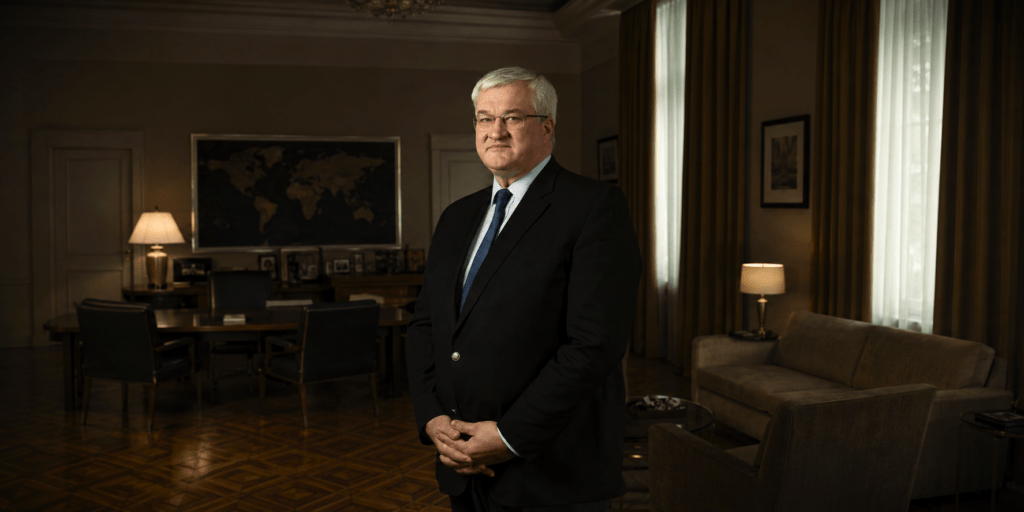
In an interview with TCA, Ukraine’s Foreign Minister Andrii Sybiha discussed Kazakhstan’s role in this changing landscape, the prospects for economic cooperation, the Middle Corridor, post-war reconstruction, and the humanitarian and cultural ties connecting the two countries.
TCA: Against the backdrop of shifts in global politics and Central Asia’s growing role, Ukraine has been deepening its dialogue with the region. How are these relations being translated into practical cooperation in politics, economics, and the humanitarian sphere?
Foreign Minister Sybiha: Ukraine and Kazakhstan share a long-standing, traditionally friendly relationship, not only at a governmental level, but also between our peoples. My own family history is directly connected with Kazakhstan. My father worked in your wonderful country, in Kostanay. Many of his friends still live there. He often told me that he dreams of returning one day to see them again.
Personally, I associate Kazakhstan with many warm memories, including your unique cuisine. I love qazy; it is an incredibly delicious dish. Kazakhstan possesses a rich and distinctive culture, language, and national identity. I greatly admire how all of this continues to develop in modern Kazakhstan, especially how young people are embracing traditions and striving to preserve and enrich them. This is a sign of a strong nation that knows its roots and therefore has a future.
Kostanay is also linked to the story of our outstanding writer, Mykola Khvylovy, who lived and worked there for a period of time. You see how much connects our countries, even if we take just one city as an example. Unfortunately, there are tragic chapters as well. It was in Kostanay that our world-renowned orientalist, Slavic scholar, and one of the founders of the Ukrainian Academy of Sciences, Ahatanhel Krymsky, died in imprisonment. Those were terrible times, a painful past from which we must draw the right conclusions for the present and the future.
Turning to politics and global issues, I would emphasize the following: all our efforts are aimed at achieving peace. This war cannot be ended solely on the battlefield; Ukraine understands this very realistically. The question is whether Moscow is finally prepared to understand it as well. It is time to end the war and move toward diplomacy.
Today, Ukrainians are defending their homes and their children with weapons in their hands against unprovoked aggression. This is an existential struggle for the future of the next generations and for the right to remain Ukrainian. This struggle did not begin four and a half or even twelve years ago. Russia’s strategic objective is to complete what the Russian Empire began and what the Soviet Union failed to finish: the eradication of national identity and the destruction of the very foundation of our existence as a separate nation.
Ukraine and Kazakhstan both remember the tragic pages of our history: bans on language and culture, the destruction of the intelligentsia, deportations, repression, and famines. We cannot allow this to happen again.
That is why support from international partners is fundamentally important to us. Ukraine highly values Kazakhstan’s clear position regarding the need to uphold the principles of international law and the UN Charter. For us, this is an important signal. It reflects a shared understanding of the fundamental principles of international relations.
Ukraine has practical proposals even on the most sensitive aspects of the peace process. What is needed is the political will of the international community to compel Russia to turn toward diplomacy and peace rather than aggression and terror.
One of the essential prerequisites for safeguarding our independence and sovereignty is the development and strengthening of ties with friendly nations. Central Asia is firmly within our focus, and Kazakhstan undoubtedly plays a key role here.
We see how the region is emerging as an important component of the Eurasian economic, trade, energy, and logistics system. Kazakhstan’s importance is defined not only by its regional role, but also by its active participation in international organizations and formats, from the United Nations to the OSCE. Kazakhstan is an active participant in a number of regional initiatives and the initiator of its own platforms, including the Conference on Interaction and Confidence Building Measures in Asia (CICA).
Recently, I took part in the Antalya Diplomacy Forum, where President Kassym-Jomart Tokayev was also present. I was pleased to have the opportunity to briefly speak with him and convey a message from President Volodymyr Zelenskyy. We reaffirmed our readiness to deepen cooperation between our countries.
It is extremely important that our dialogue is regaining momentum. Recently, interagency consultations took place for the first time in quite a long period. Business dialogue is also continuing: just a few weeks ago, a joint business forum was held.

Photo courtesy of the Embassy of Ukraine in Kazakhstan
TCA: Indeed, we have recently witnessed growing engagement between Ukrainian and Kazakh businesses. In this regard, what prospects do you see for increasing trade turnover and attracting Kazakh investment into the Ukrainian economy?
Foreign Minister Sybiha: Businesses tend to respond very sensitively to the overall state of bilateral relations. Therefore, I would say that business missions, forums, and sectoral meetings are evidence of a return to more systematic economic interaction. Without this “living fabric” of cooperation, political agreements, frankly speaking, cannot function fully. By the end of this year, we plan to hold at least two more major business events.
At the Ministry of Foreign Affairs, we devote considerable attention to economic diplomacy: facilitating direct contacts between companies, supporting business initiatives through the Embassy of Ukraine in Kazakhstan, and assisting in organizing visits, forums, and sectoral dialogues. Today, our diplomatic missions are working much more actively as platforms for identifying partners, supporting projects, and establishing communication between business communities.
We are seeing growing interest from Ukrainian companies in the Central Asian market, particularly Kazakhstan, and especially in agriculture, food processing, engineering, IT, and other high-value-added sectors. At the same time, it is crucial that this process remains two-way.
A considerable number of enterprises in Kazakhstan were established with the participation of Ukrainian specialists using Ukrainian technologies and equipment. One well-known example is Dmytro Yurchenko, the first director of the Mangystau Atomic Energy Combine (MAEK), who is still remembered and respected in the Mangystau region. Today, Ukraine is also ready to offer partnership in the modernization and technical upgrading of relevant industries.
There is also significant potential for expanding cooperation in transport and logistics, particularly in the context of the development of the Middle Corridor, which is increasingly emerging as a key alternative route between Asia and Europe. Ukraine views this not merely as a transit opportunity but also as a space for practical cooperation and for utilizing its own capabilities to build an integrated logistics chain with high added value, including tariff coordination, digitalization of transportation, and port infrastructure development.
We are prepared to contribute to these processes by offering our own experience in multimodal transportation, digital logistics solutions, and integration into European transport networks.
In this regard, the development of the Trans-Caspian International Transport Route (TITR) and related corridors creates additional opportunities for trade, and we are interested in ensuring that Ukrainian businesses become active participants in these processes.
An important element of this architecture will also be Ukrainian Black Sea ports, which are capable of providing an effective gateway for further transportation of goods into the European Union. With the proper integration of logistics processes, this could significantly increase the corridor’s capacity and reduce delivery times. In this way, Ukraine can serve not only as a destination point but also as a fully integrated participant in the regional logistics system.
Kazakhstan’s recent diplomatic engagement with South Caucasus countries is particularly noteworthy, as it is directly aimed at strengthening the western segment of the Middle Corridor. These are not merely political declarations, but concrete infrastructure and institutional decisions, including the development of multimodal terminals, tariff coordination, the creation of digital cargo-tracking mechanisms, and efforts to improve logistics predictability.
In effect, an integrated chain is being formed: “China-Central Asia-Caspian-South Caucasus-Black Sea-EU,” with Azerbaijan and Georgia serving as the key western artery of the route. In this context, Ukraine objectively complements this configuration by providing access to European markets through its own port and transport infrastructure.
I am convinced that the current intensification of contacts is only the beginning of a much broader stage of economic cooperation that will have very practical consequences from expanded trade and new logistics routes to joint participation in Ukraine’s reconstruction.
TCA: What prospects do you see for the participation of Kazakh businesses and investors in Ukraine’s reconstruction processes? Which areas do you consider most realistic for such cooperation?
Foreign Minister Sybiha: We view Ukraine’s reconstruction separately and very pragmatically as a long-term process that goes beyond post-war rebuilding alone. In fact, it is shaping a new economic architecture for the country: from investment decisions, joint ventures, and localization of production to infrastructure, industry, logistics, social development, and energy.
It is important that Kazakhstan remains one of the key suppliers of energy resources in Eurasia while simultaneously diversifying and modernizing its energy sector. Kazakhstan is also one of the world’s leading producers of uranium, which is a critical resource for nuclear energy generation. This plays an important role in global energy security.
Ukraine is open to transparent, pragmatic, and mutually beneficial participation in these processes.
In this context, we regard Kazakhstan as one of our natural regional partners, above all because of the already established economic ties, the experience Ukrainian and Kazakh enterprises have gained in each other’s markets, and the historically accumulated human and professional capital. We effectively share a common industrial and technological history, which it is entirely logical to continue today in the form of modernization and new investment projects.
For our part, we are interested in seeing Kazakh businesses and investors participate in Ukraine’s reconstruction after the war ends. Importantly, Kazakhstan is among the partner countries with which this dialogue already has practical substance.
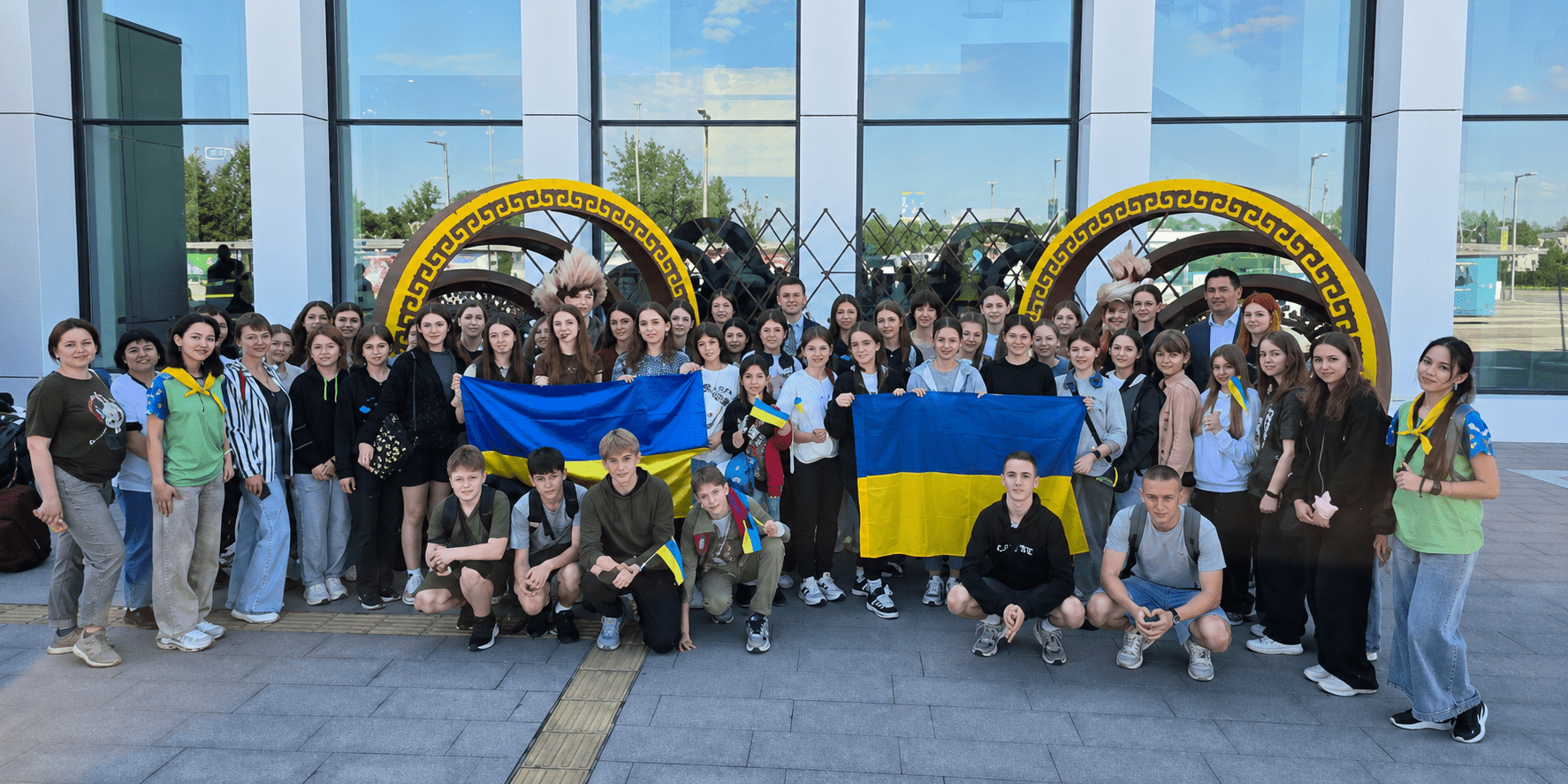
Ukrainian children on vacation in Kazakhstan. Photo courtesy of the Ukrainian Embassy in Kazakhstan
TCA: Kazakhstan has consistently pursued balanced relations both with neighboring states and with Western countries. How does Ukraine assess this position, and what opportunities for cooperation does it see in areas of mutual interest, particularly in energy security, transport corridors, and humanitarian interaction?
Foreign Minister Sybiha: Kazakhstan is implementing a thoughtful economic strategy aimed at developing infrastructure, energy, and industrial projects in cooperation with a wide range of international partners across different regions of the country.
President Tokayev, an experienced statesman and diplomat who has consistently shaped Kazakhstan’s foreign policy and economic development model, plays an important role in strengthening the country’s sovereignty and international standing.
The Central Asia Plus (CA+) format has also become increasingly prominent internationally, and nearly all of Ukraine’s key partners have already joined it: the EU, the United Kingdom, the United States, Germany, Japan, and Türkiye. We also positively assess the participation of Azerbaijan’s president in the annual Consultative Meetings of Central Asian leaders.
We are interested in launching a “Ukraine + Central Asia” dialogue platform, with transregional transport and logistics connectivity at its core. In our understanding, such a format would in no way be directed “against anyone.” Its primary goal would be to intensify direct dialogue without intermediaries, identify practical mutual benefits, and strengthen the traditionally friendly ties between our peoples.
We observe with respect how Kazakhstan is naturally undergoing a process of strengthening Kazakh national identity and historical self-awareness, while at the same time preserving its multinational character and safeguarding the rights and cultural needs of ethnic communities. Ethnic Ukrainians constitute the country’s fourth-largest ethnic group, around 2% of Kazakhstan’s population of 20.5 million.
The policy of “Unity in Diversity” is being effectively implemented, and in this context, I would recall President Tokayev’s statement that “Ukrainian culture is an important part of the cultural diversity of the Great Steppe.”
There is also an interesting historical parallel. Taras Shevchenko is sometimes described as the first Ukrainian diplomat in Kazakhstan. He is deeply respected and appreciated in Kazakhstan as a Ukrainian who made a significant contribution to the representation and understanding of Kazakh culture. In fact, he became one of the first internationally recognized artists to depict the life of the Kazakh people, their landscapes, everyday life, and the culture of the Great Steppe.
Without exaggeration, Shevchenko is a truly unifying figure for our peoples. He spent ten years in Kazakhstan, during which he created a substantial portion of his artistic work, much of it portraying the lives of Kazakhs.
We are sincerely grateful to Kazakhstan for preserving Shevchenko’s memory with such respect both in the places connected to him and toward his legacy itself. In Kazakhstan, he is often called Akyn Tarazi.
In particular, the city of Fort-Shevchenko, where he spent part of his exile, holds special significance. It is not merely a location on the map, but an important cultural space. It houses a memorial museum, his dugout shelter, and the world’s first monument to Taras Shevchenko, Akyn Tarazi, stands there.
This year, Fort-Shevchenko marks the 180th anniversary of its founding, which also creates an opportunity for joint cultural and humanitarian initiatives dedicated to this milestone.
With the participation of the Embassy of Ukraine in Kazakhstan, local authorities, and museum institutions from both countries, including the National Taras Shevchenko Museum in Kyiv and the museum in Fort-Shevchenko, a Memorandum of Cooperation has been signed. It provides for exchanges of specialists and work on expanding the museum exhibition through digital copies of Shevchenko’s works.
This is especially important because today, only one original portrait painted by Taras Shevchenko is preserved in Kazakhstan.
Expanding the digital collection will make the exhibition more complete and accessible to a broader audience. This is not only about preserving memory, but about maintaining a living humanitarian bridge between Ukraine and Kazakhstan: culture, history, and art help people understand one another more deeply.
A vast field for joint research also concerns the notorious Stalinist labor camps, ALZHIR, Steplag, and Karlag, through which hundreds of thousands of Ukrainians and Kazakhs passed. At the end of May this year, an international academic conference dedicated to this topic and to the 80th anniversary of the liquidation of the Ukrainian Greek Catholic Church by the Soviet authorities will take place in Astana with the participation of the Ukrainian side.
Another important direction remains the implementation of exhibition and creative projects that give our cooperation tangible and living substance.
TCA: Which humanitarian areas, particularly in education and science, currently form the strongest basis for the sustainable development of Ukrainian-Kazakh interaction?
Foreign Minister Sybiha: Humanitarian projects, from supporting people to cultural and educational initiatives, remain the very foundation that sustains trust between our societies despite all existing challenges.
If we speak about academic cooperation between Ukraine and Kazakhstan, this has long been a natural and ongoing process of interaction. Today, a significant number of Ukrainian specialists work in Kazakhstan’s universities, both in the capital and in regional institutions.
At Alkey Margulan Pavlodar Pedagogical University, there is a unique International Laboratory for the Conservation and Restoration of Cultural Heritage “UMAI,” headed by the Ukrainian researcher, restorer, and archaeologist Tetiana Krupa, who has received both state and professional awards in Kazakhstan for her major contribution to the development of science. This is an example of sustainable professional exchange and the mutual enrichment of experience.
Another important bridge between our educational systems consists of Kazakh citizens who graduated from Ukrainian universities. Having once studied in Ukraine, they now ensure continuity in academic ties between our countries, keeping them vibrant and sustainable.
It should be noted that before 2019, prior to the pandemic, academic mobility and university exchanges between Ukraine and Kazakhstan were significantly more intensive. Academic exchange programs and distance-learning opportunities were actively utilized.
However, because of COVID-19 and later Russia’s aggression and the introduction of martial law in Ukraine, the pace of academic exchanges and the use of existing educational quotas slowed down. Nevertheless, I am convinced that after the war, these educational quotas between Ukraine and Kazakhstan will once again be fully utilized and will likely need to be expanded on both sides.
Even so, Ukrainian-Kazakh cooperation in education and science continues to develop. One example is the organization of international scientific and practical conferences, which bring together academic communities from different countries and serve as platforms for sharing experience, building inter-university ties, and developing new joint projects.
Within the framework of this professional dialogue, we intend to initiate the establishment of a Council of Rectors of Ukraine and Kazakhstan as an institutional mechanism for systematically strengthening cooperation between higher educational institutions in both countries. Such a format has the potential to improve coordination between universities, foster joint educational and research programs, and deepen academic ties.

Photo courtesy of the Ukrainian Embassy in Kazakhstan
TCA: Interestingly, one of the “Yurts of Invincibility” has been operating for several years near the main building of Taras Shevchenko University. These initiatives also helped Ukrainians survive the winter months. In this context, what human and cultural factors do you believe most strongly unite Ukrainians and Kazakhs today?
Foreign Minister Sybiha: The “Yurts of Invincibility,” which provided warmth and food to people during the harshest wartime winters, have been operating in Ukraine for four years already. Such yurts are currently functioning in various Ukrainian cities; if I am not mistaken, there are now eight of them.
We remain in constant contact with the Embassy of the Republic of Kazakhstan in Ukraine, which is also a regular participant in cultural and humanitarian missions.
Ukraine is sincerely grateful to Kazakhstan for its warmth of heart, for its real acts of assistance and support. Since the beginning of Russia’s full-scale aggression, Kazakhstan has provided Ukraine with around 600 tons of humanitarian aid. This has included medicines, essential goods, generators, and other critically important support items.
We also highly value the opportunity for Ukrainian children to undergo rehabilitation and recreation in Kazakhstan’s health resorts. In June 2025, a group of children from the Cherkasy region, accompanied by three adults, visited Kazakhstan for rest and recuperation at the Baldauren educational and wellness center. In January 2026, another group of children from the Sumy region arrived in Aktau for rest and recuperation.
This program is supported at the presidential level in Kazakhstan and is an example of the kind of human interaction that builds trust and lays the foundation for deeper relations in the future.
Ukrainian-Kazakh cooperation is undoubtedly a deep and multilayered relationship that has evolved over many years and possesses enormous potential for further development. It is not only about politics or economics; above all, it is about the living human connection between our peoples, which ultimately defines the strength of our relationship.