• KGS/USD = 0.01144 0%
  • KZT/USD = 0.00194 0%
  • TJS/USD = 0.10841 -0.37%
  • UZS/USD = 0.00008 0%
  • TMT/USD = 0.28571 0.28%
  • KGS/USD = 0.01144 0%
  • KZT/USD = 0.00194 0%
  • TJS/USD = 0.10841 -0.37%
  • UZS/USD = 0.00008 0%
  • TMT/USD = 0.28571 0.28%
  • KGS/USD = 0.01144 0%
  • KZT/USD = 0.00194 0%
  • TJS/USD = 0.10841 -0.37%
  • UZS/USD = 0.00008 0%
  • TMT/USD = 0.28571 0.28%
  • KGS/USD = 0.01144 0%
  • KZT/USD = 0.00194 0%
  • TJS/USD = 0.10841 -0.37%
  • UZS/USD = 0.00008 0%
  • TMT/USD = 0.28571 0.28%
  • KGS/USD = 0.01144 0%
  • KZT/USD = 0.00194 0%
  • TJS/USD = 0.10841 -0.37%
  • UZS/USD = 0.00008 0%
  • TMT/USD = 0.28571 0.28%
  • KGS/USD = 0.01144 0%
  • KZT/USD = 0.00194 0%
  • TJS/USD = 0.10841 -0.37%
  • UZS/USD = 0.00008 0%
  • TMT/USD = 0.28571 0.28%
  • KGS/USD = 0.01144 0%
  • KZT/USD = 0.00194 0%
  • TJS/USD = 0.10841 -0.37%
  • UZS/USD = 0.00008 0%
  • TMT/USD = 0.28571 0.28%
  • KGS/USD = 0.01144 0%
  • KZT/USD = 0.00194 0%
  • TJS/USD = 0.10841 -0.37%
  • UZS/USD = 0.00008 0%
  • TMT/USD = 0.28571 0.28%
17 December 2025

Rahmon Outlines Measures to Address Tajikistan’s Winter Power Shortages

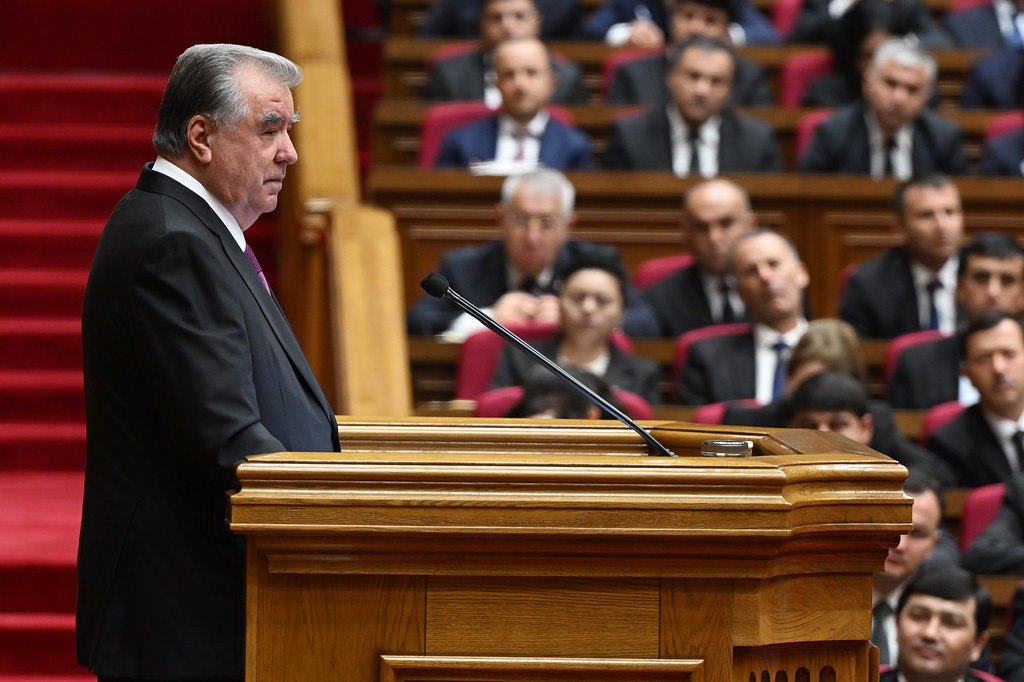
President Emomali Rahmon has acknowledged that Tajikistan’s population continues to endure severe electricity rationing during the winter months, and has outlined steps the government is taking to alleviate the crisis.

“We are fully aware of the challenges faced by the people of Tajikistan during the period of temporary restrictions on electricity supply,” Rahmon said in his annual address to parliament on December 16, adding that authorities are implementing all necessary measures to address the issue.

Rahmon attributed the shortages primarily to rapid population growth and the expansion of industrial production, both of which have significantly increased domestic electricity consumption. He also cited unfavorable weather conditions, including below-average rainfall last autumn, which reduced water inflows into reservoirs that supply the country’s hydropower plants.

He noted that since independence, 1.3 million new homes have been built to accommodate over 8.4 million people. In the past seven years alone, 2,600 new industrial enterprises have begun operations, further raising electricity demand.

Despite these pressures, Tajikistan has steadily increased electricity production. Over the past decade, annual generation has risen by 7 billion kilowatt-hours, from 17.2 billion in 2015 to 24.2 billion in 2025, an increase of approximately 40%. However, domestic demand is projected to grow by an additional 31% by 2030 compared to 2025 levels.

Over the past ten years, investments in the energy sector have added 1,017 megawatts to the country’s installed capacity. A further 200 megawatts were gained through the rehabilitation and modernization of existing plants. One of the most recent projects was the modernization of the Kairakkum Hydroelectric Power Plant, completed in November 2025, which increased its capacity from 114 megawatts to 174 megawatts.

While Tajikistan possesses vast hydropower potential, it has long struggled with chronic energy shortages. In response, the government has prioritized large-scale hydropower projects, particularly the Rogun Dam and Hydropower Plant, which is expected to be central to achieving domestic energy security and establishing Tajikistan as a regional electricity exporter.

Rahmon announced that the third generating unit of the Rogun plant is scheduled for commissioning in September 2027, marking a key milestone on the path to full energy independence.

In parallel, construction has begun on two large solar power plants, each with a capacity of 250 megawatts, in the Sughd and Khatlon regions. Both facilities are expected to be operational by August 2026.

He also emphasized the importance of improving energy efficiency alongside expanding generation capacity. Electricity losses remain high, exceeding 3 billion kilowatt-hours annually. Rahmon called for accelerating the rollout of a nationwide digital billing system, which he said has already reduced losses.

The introduction of modern digital billing and payment technologies revealed that 30% to 40% of households were previously not paying for electricity. Since the system’s implementation, losses have declined. In the first 11 months of 2025, total electricity losses stood at approximately 3 billion kilowatt-hours, 500 million kilowatt-hours less than during the same period the previous year.


Pannier and Hillard’s Spotlight on Central Asia: New Episode Available Now

As Managing Editor of The Times of Central Asia, I’m delighted that, in partnership with the Oxus Society for Central Asian Affairs, from October 19, we are the home of the Spotlight on Central Asia podcast. Chaired by seasoned broadcasters Bruce Pannier of RFE/RL’s long-running Majlis podcast and Michael Hillard of The Red Line, each fortnightly instalment will take you on a deep dive into the latest news, developments, security issues, and social trends across an increasingly pivotal region.

This week, we’re unpacking Turkmenistan’s Neutrality Summit, a rare moment where a string of big names quietly rolled into Ashgabat, and where the public messaging mattered just as much as the backroom deals. We’ll also cut through the noise on the latest reporting from the Tajik–Afghan border, where misinformation is colliding with real security developments on the ground. From there, we’ll take a hard look at the results of Kyrgyzstan’s elections, what they actually tell us about where Bishkek is heading next, and what they don’t, before examining the looming power rationing now shaping daily life and political pressure in two Central Asian states.

And to wrap it up, we’re joined by two outstanding experts for a frank conversation on gendered violence in Central Asia: what’s changing, what isn’t, and why the official statistics may only capture a fraction of the reality. On the show this week: Daryana Gryaznova (Equality Now) Svetlana Dzardanova (Human Rights and Corruption Researcher)

Roscosmos: Damaged Baikonur Launch Pad To Be Ready in Early 2026

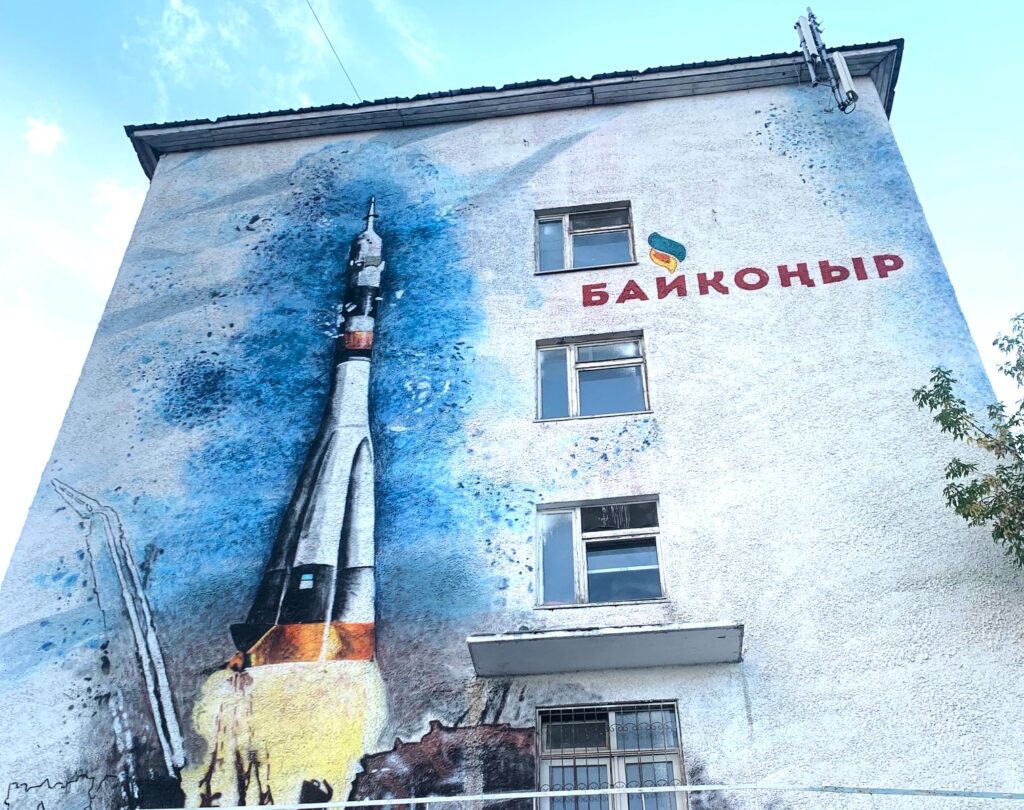
Russia’s space agency Roscosmos says a Baikonur Cosmodrome launch pad that was damaged during the lift-off of a crewed spacecraft in late November is being repaired and will be ready to resume operations at the end of February next year.

“The manned program continues,” Roscosmos said following two weeks of speculation about the impact of delays on crewed flights from the leased Baikonur facility in Kazakhstan. If Russia meets its repair schedule, it would beat some predictions that said the launch pad might not back in operation for up to two years.

More than 130 Roscosmos employees, working in two shifts from 8 a.m. to midnight, and 18 heavy vehicles are involved in replacing a service cabin that was damaged in the launch of the Soyuz MS-28 craft that took two Russian cosmonauts and one American astronaut to the International Space Station, the agency said on Monday.

“Work has begun on priming and painting the cabin parts. As they become ready, they will be transported to the launch pad. Some of the equipment is already there,” Roscosmos said. “After priming and painting the parts, specialists will begin installing the cabin and conducting autonomous tests.”

Space journalists and analysts said the previous mobile service platform was not properly secured during the November launch and collapsed into a flame duct below the launch pad. A cargo flight to the International Space Station had been scheduled for this month from Baikonur but was delayed after the mishap.

Kazakhstan Accelerates Development of Trans-Kazakhstan Railway Corridor

With a closed domestic railway network now fully in place, Kazakhstan has shifted focus toward developing new routes aimed at enhancing export and transit cargo delivery. In early 2025, President Kassym-Jomart Tokayev ordered the acceleration of the Trans-Kazakhstan railway corridor, an essential component of the Trans-Caspian International Transport Route. Central to this effort is the construction of the Mointy-Kyzylzhar railway line.

Rail transport remains a vital sector of Kazakhstan’s economy, shaping both domestic commodity markets and the country’s strategic transit potential. In the face of shifting geopolitical dynamics and rising demand for freight transport, Kazakhstan has gained fresh opportunities to expand its international logistics capabilities. However, aging infrastructure, bottlenecks, and missing links continue to restrict this potential and hinder trade growth.

In response, Kazakhstan has launched a series of major infrastructure projects, including the Mointy-Kyzylzhar line, an extension of the existing Dostyk-Mointy branch. According to JSC “NC “KTZ”, the project will expand the nation’s transit capacity, ease congestion on the Mointy-Zharyk segment, remove key bottlenecks, and reduce delivery times through route optimization. It is also expected to stimulate economic activity in the Karaganda and Ulytau regions by strengthening export logistics and creating new jobs.

The direct link between Mointy and Kyzylzhar stations will shorten the Trans-Caspian corridor and reduce traffic on overburdened parts of the network.

In an interview with The Times of Central Asia, Saken Rakhmetov, Managing Director of the Mainline Network Directorate at KTZ, noted that the project will shorten delivery distances and eliminate locomotive changeovers at Mointy and Zharyk. This, he said, could reduce shipping times from the Chinese border to the port of Aktau by more than a day, depending on the route.

The project entails constructing over 390 kilometers of rail infrastructure, including single-track lines, stations, two overpasses, 35 bridges, 21 cattle crossings, 108 culverts, 16 passing loops, and five stations.

Topographic, geodetic, geological, and hydrological surveys have been completed. More than 96% of the planned 12.9 million cubic meters of roadbed has been filled. Installation of culverts is underway, with 11 already completed and 14 in progress. More than half of the rail-sleeper grid, 165 kilometers out of 323, has been assembled, with track laying initiated at both ends.

According to the approved timeline, construction of pipes, bridges, and overpasses, along with power and communication systems and related infrastructure, is scheduled for completion in 2026.

A notable feature of the project is the use of jointless track technology, which employs long continuous welded rails rather than standard 25-meter links. This design reduces dynamic stress on the track, cuts wear and tear on infrastructure and rolling stock, improves energy efficiency, and allows higher train speeds.

At the height of construction during July-August, approximately 550 pieces of machinery and up to 1,150 workers were deployed. Upon completion, the line is expected to create at least 700 permanent jobs. According to KTZ, about 80% of the goods, services, and labor used in the project are sourced locally, with final figures to be confirmed after a state review of the design and estimate documentation.

Rakhmetov acknowledged the project’s complexity due to the geographic remoteness of the construction zone, limited nearby settlements, and insufficient transport and engineering infrastructure. Construction is being conducted on a rotational basis, with makeshift field bases and storage facilities in place. Due to the absence of major power supply nodes, significant investment in external energy infrastructure is also planned.

KTZ emphasizes that environmental protection measures are integrated into the project. The company claims that construction and operation will not disturb ecosystems beyond the designated work sites and pose no threat to valuable natural resources or the surrounding landscape.

Once operational, the Mointy-Kyzylzhar line is expected to significantly improve access to coal and metallurgical facilities in Central and Northern Kazakhstan. It will facilitate increased transport of iron ore, coal, and grain to the country’s southern regions, as well as to Uzbekistan, Kyrgyzstan, and China. Passenger traffic is also expected to benefit, with annual growth projections of 5.1% toward Kyzylzhar and 4.6% toward Mointy, based on 2021-2024 trends.

Looking ahead, the new line is envisioned as part of a broader effort to establish a dedicated container corridor, enabling double-stack freight operations to improve efficiency. The use of next-generation locomotives powered by liquefied natural gas is also planned, which would extend range between refueling stops by 3.5 times.

Over the past 15 years, more than $35 billion has been invested in the rail sector. By 2030, KTZ plans to invest an additional $15 billion in infrastructure upgrades, fleet renewal, and new technologies. Transport volumes rose by 4% in the first 11 months of 2025 compared to the same period in 2024, highlighting the need to expand network capacity and optimize freight flows.

The development of transport and logistics infrastructure remains a national policy priority. Projects such as second tracks on the Dostyk-Mointy line, the Darbaza-Maktaaral and Bakhty-Ayagoz lines, the Mointy-Kyzylzhar extension, and the Almaty bypass are central to resolving bottlenecks and improving the efficiency of Kazakhstan’s railway network, an essential factor in maintaining the country’s competitiveness in global supply chains.

Bishkek to Host Second B5+1 Forum of Central Asia and the U.S.

Kyrgyzstan is preparing to host the second B5+1 Forum of Central Asia and the United States, scheduled for February 4-5, 2026, in Bishkek. On December 12, Kyrgyzstan’s Ministry of Foreign Affairs and Ministry of Economy and Commerce held a joint briefing for ambassadors from Central Asian countries and the United States to outline preparations for the event.

The B5+1 platform serves as the business counterpart to the C5+1 diplomatic initiative, which unites the five countries of Central Asia – Kazakhstan, Kyrgyzstan, Tajikistan, Turkmenistan, and Uzbekistan – with the United States. Launched by the Center for International Private Enterprise (CIPE) under its Improving the Business Environment in Central Asia (IBECA) program, B5+1 is supported by the U.S. Department of State and aims to foster high-level engagement between business leaders and policymakers.

The upcoming forum in Bishkek builds on the outcomes of the C5+1 Summit held in Washington on November 6 this year. Its objective is to deepen U.S.-Central Asia economic cooperation and highlight the private sector’s pivotal role in advancing economic reform across the region.

The event is co-hosted by CIPE and the Kyrgyz government. According to organizers, the forum’s agenda will focus on key sectors including agriculture, e-commerce, information technology, transport and logistics, tourism, banking, and critical minerals. These thematic areas reflect emerging regional priorities and shared interests in enhancing sustainable growth and economic resilience.

The B5+1 Forum aims to create a platform for sustained dialogue between governments and private sector actors, encouraging the development of long-term partnerships and policy coordination.

The inaugural B5+1 Forum was held in Almaty in March 2024, and brought together over 250 stakeholders from all five Central Asian countries and the United States. The first event centered on regional cooperation and connectivity, with a strong emphasis on empowering the private sector to support the objectives of the C5+1 Economic and Energy Corridors.

Glacier Melt Threatens Central Asia’s Water Security, Experts Warn at Regional Forum

The accelerating retreat of glaciers poses a serious risk to water security across Central and West Asia, scientists and journalists warned during an online media forum jointly hosted by the Asian Development Bank (ADB) and the International Centre for Integrated Mountain Development (ICIMOD) on December 10, according to Asia-Plus.

The forum focused on the growing impact of glacial melt in mountain regions, including the Pamirs, Tien Shan, Hindu Kush, and Himalayas, where shrinking ice reserves are increasingly disrupting water supplies for agriculture, energy, and drinking water. A key highlight was the ADB’s Glacier to Farms (G2F) program, presented by senior climate adaptation specialist Chris Dickinson. The initiative, spanning nine countries including Tajikistan, Uzbekistan, Armenia, and Georgia, aims to link glacier monitoring with practical, climate-resilient policy measures.

Unlike past approaches that primarily diagnosed the problem, G2F offers technical and financial solutions designed to support communities in adapting to climate change. The $3.5 billion initiative, backed in part by $250 million from the Green Climate Fund, leverages a co-financing model that aims to attract $10 in additional investment for every dollar committed.

The program envisions a full climate adaptation chain from satellite-based glacier monitoring and mountain observation stations to downstream interventions such as crop insurance, farmer support, and modernization of water infrastructure. “Glaciers are the origin of the entire food and water system,” Dickinson said. “Their rapid retreat threatens lives and livelihoods far beyond mountain regions.”

Tajikistan serves as a pilot site for the program due to its heavy reliance on hydropower and its largely mountainous terrain. One of the project’s key goals is to enhance the country’s hydrometeorological services and strengthen monitoring of snow cover, glacier movement, landslides, and related hazards. A modern early warning system is being developed for the Panj River basin, combining data on glacial lakes, mudflows, precipitation, and seismic activity. The alerts will be sent to vulnerable communities via mobile networks, complemented by local training programs to ensure proper responses.

Forum participants noted that the effects of glacial retreat are already evident. Glaciers in the Tien Shan and Pamir ranges feed the Amu Darya and Syr Darya rivers, vital water sources for Central Asia’s agriculture, energy, and drinking needs. An estimated 74% of the Amu Darya’s flow comes from snow and glacier melt. In the Indus basin, the figure is about 40%. Yet only a small number of the region’s more than 54,000 glaciers are regularly monitored, leaving gaps in early warning systems and long-term planning.

Experts from ICIMOD and ADB described glacier melt as a “cascading crisis.” Rising temperatures are fueling more frequent landslides, floods, and mudflows, while droughts reduce crop yields and damage pastures. Glacial lake outburst floods, sudden and destructive releases of water, pose grave risks to nearby settlements. Since the 19th century, the region has recorded around 500 such incidents, and their frequency could triple by the end of this century. Heatwaves and water quality issues further compound the risks.

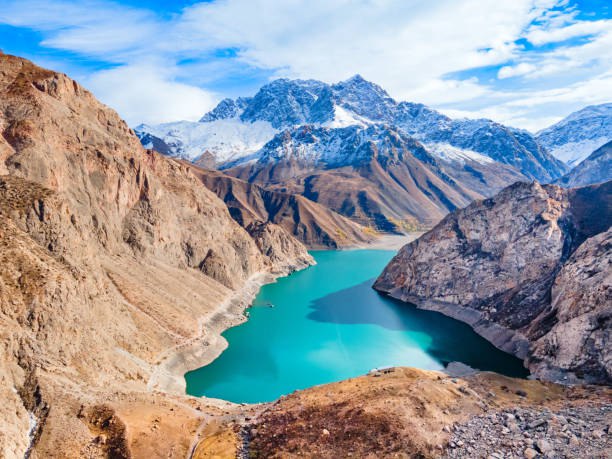
Recent glacial activity in Tajikistan underscored the forum’s urgency. In October, a massive segment of a glacier broke off Mount Ismoil Somoni in the Tajikabad district, near the village of Safedobi. The ice mass measured approximately two kilometers in length, up to 25 meters in height, and between 150 and 200 meters wide. It slid into a gorge, but emergency services quickly stabilized the situation, with no casualties reported.

In a separate incident, a large portion of the Didal Glacier in the same district detached and slid more than five kilometers downslope. Experts from Tajikistan’s Center for Glaciology reported that the ice continued to shift for several days and remained unstable. Field teams measuring the glacier in the Surkhob River basin found it to be 1.5 kilometers long, 200 meters wide, and up to 50 meters high.

Research shared by ICIMOD and Norway’s Water Resources and Energy Directorate revealed that Central Asia accounts for roughly 8.5% of global glacier mass loss, one of the highest regional shares worldwide. Miriam Jackson, an ICIMOD representative, warned that if global temperatures rise by 1.9°C, the region could lose up to 50% of its glaciers, significantly worsening pressure on already strained water supplies.