• KGS/USD = 0.01143 -0%
  • KZT/USD = 0.00192 -0%
  • TJS/USD = 0.10820 0.19%
  • UZS/USD = 0.00008 0%
  • TMT/USD = 0.28575 0%
  • KGS/USD = 0.01143 -0%
  • KZT/USD = 0.00192 -0%
  • TJS/USD = 0.10820 0.19%
  • UZS/USD = 0.00008 0%
  • TMT/USD = 0.28575 0%
  • KGS/USD = 0.01143 -0%
  • KZT/USD = 0.00192 -0%
  • TJS/USD = 0.10820 0.19%
  • UZS/USD = 0.00008 0%
  • TMT/USD = 0.28575 0%
  • KGS/USD = 0.01143 -0%
  • KZT/USD = 0.00192 -0%
  • TJS/USD = 0.10820 0.19%
  • UZS/USD = 0.00008 0%
  • TMT/USD = 0.28575 0%
  • KGS/USD = 0.01143 -0%
  • KZT/USD = 0.00192 -0%
  • TJS/USD = 0.10820 0.19%
  • UZS/USD = 0.00008 0%
  • TMT/USD = 0.28575 0%
  • KGS/USD = 0.01143 -0%
  • KZT/USD = 0.00192 -0%
  • TJS/USD = 0.10820 0.19%
  • UZS/USD = 0.00008 0%
  • TMT/USD = 0.28575 0%
  • KGS/USD = 0.01143 -0%
  • KZT/USD = 0.00192 -0%
  • TJS/USD = 0.10820 0.19%
  • UZS/USD = 0.00008 0%
  • TMT/USD = 0.28575 0%
  • KGS/USD = 0.01143 -0%
  • KZT/USD = 0.00192 -0%
  • TJS/USD = 0.10820 0.19%
  • UZS/USD = 0.00008 0%
  • TMT/USD = 0.28575 0%
13 December 2025

Turkmenistan and Iran to Expand Cooperation in Natural Gas and Transport

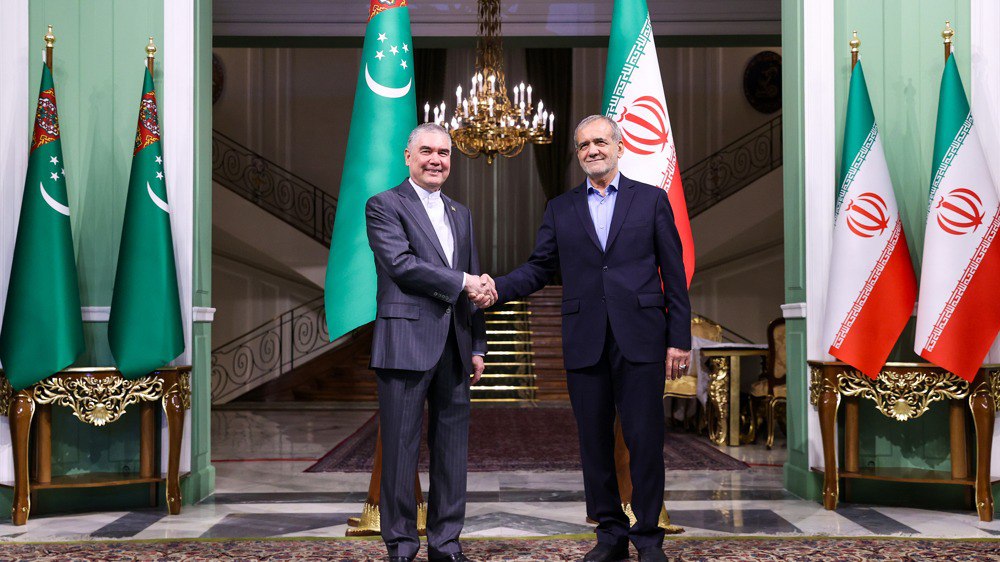
On August 28, the chairman of the Halk Maslahaty (People’s Council) of Turkmenistan, the country’s former president Gurbanguly Berdimuhamedov, visited Iran and held talks with the Iranian president Masoud Pezeshkian.

Iran’s Press TV news agency quoted Pezeshkian as describing four memorandums of understanding signed during Berdimuhamedov’s visit as “strategic,” saying that a document signed between Iran’s state gas companies and Turkmenistan will turn Iran into a regional gas transfer hub.

No details of the document have been released.

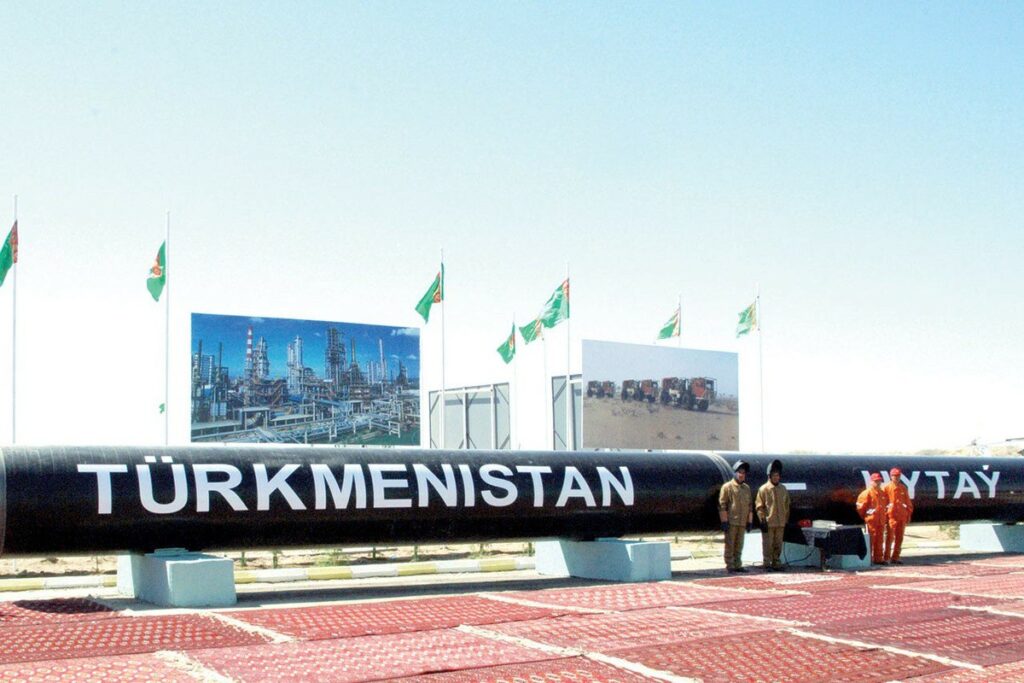
Turkmen media reported that Gurbanguly Berdimuhamedov proposed implementing joint projects with Iranian companies to increase the volume of gas supply to Iran to 40 billion cubic meters per year.

The Turkmen side also reported that the talks in Tehran discussed exporting Turkmen electricity to Iran.

Concerning cooperation in the transport sector, Berdimuhamedov urged increasing cargo transportation along the Kazakhstan-Turkmenistan-Iran railway route, while the Iranian president proposed increasing cargo flows along the Armenia-Iran-Turkmenistan-Kazakhstan route.

Turkmenistan and Iran have agreed to start negotiations for a comprehensive deal on transportation issues. The talks, expected to kick off next month, will be part of an intergovernmental committee chaired by Iran’s transportation minister.

Uzbekistan’s Largest Glacier Melts by 20 Meters in 12 Months, Expedition Finds

BBC Uzbekistan has reported, quoting the country’s Hydrometeorology Research Institute, that at the beginning of August an expedition of Uzbek and German scientists trekked to the Pakhtakor glacier, situated in the eastern part of Uzbekistan.

The study of the Pakhtakor glacier, which is extremely difficult to reach and located in the Bostonliq district of the Tashkent region, near the borders with Kyrgyzstan and Kazakhstan, started in July of last year.

The latest expedition found that Uzbekistan’s largest glacier tongue (an extension of a glacier or ice stream projecting seaward) had retreated by 20 meters in the last year. The surface of the ablation part (the initial part of the glacier where the ice melts faster) has melted by 3 meters.

Pakhtakor is one of the largest glaciers feeding the Pskom River. There are about 140 large and small glaciers in the Pskom River basin, which has a total area of 128 square kilometers.

According to the BBC report, after the collapse of the Soviet Union, studies of permafrost were rarely conducted in other Central Asian countries except Kazakhstan. Although there are few glaciers in Uzbekistan, they play an essential role in the ecosystem. In low-water years, glaciers provide up to 25% of the total flow.

Maksim Petrov, the head of the Center for Glacial Geology at the Institute of Geology and Geophysics of Uzbekistan, says the country’s glaciers are melting at different rates.

“The melting rate is almost in line with the average rate in Central Asia. However, the melting rate in our mountains in the eastern part is not high, and the glaciers have melted only up to 20%. The glaciers in Surkhandarya have melted by 40%. The most catastrophic situation is in Kashkadarya — up to 70%,” Petrov said at a roundtable discussion held by Cabar Asia in May.

Petrov added: “Large glaciers are breaking up and breaking into pieces. It seems the number of glaciers is increasing, but their area is shrinking.”

Various scientists point out that the shrinking area of glaciers has yet to seriously affect the water balance in Central Asia, and the observed water shortage is mainly caused by population and industrial growth.

But in 2015, German researchers warned that glaciers in the Tian Shan mountains, which play an essential role in maintaining the water cycle in the region, are rapidly melting. Half of the total ice mass is forecast to melt by 2050. “Today, Tian Shan is losing an amount of ice equivalent to twice the annual water consumption of all of Germany,” the 2015 study stated.

Turkmenistan Surpasses Russia in Gas Exports to China

Turkmenistan now ranks ahead of Russia in terms of revenue from gas supplies to China. It is being reported that the country became the largest gas supplier to China in the first half of 2024, exporting gas worth $5.67 billion. Russia is now in second place with a trade of $4.69 billion.

At the same time, the chairman of the Halk Maslahaty (People’s Council) of Turkmenistan, the former president Gurbanguly Berdimuhamedov, said during his recent visit to Iran that Turkmenistan plans to increase the volume of gas supplies to Iran to 40 billion cubic meters per year.

Two gas compressor stations and a 125-kilometer-long gas pipeline are being planned in Turkmenistan. This will allow Iran to supply additional volumes to the “Çaloýuk” gas measuring station.

In addition, Turkmen gas will soon be exported to Iraq and Turkey under the SWAP scheme.

Although many countries are interested in Turkmenistan’s gas, the nation still struggles to organize an adequate supply to the domestic market.

Top Nuclear Expert in Uzbekistan Dies at Age 79

Behzod Yo’ldoshev, a prominent Uzbek scientist who was deeply involved in international efforts to ensure the safe use of nuclear power and was a key player in Uzbekistan’s ongoing drive to build a nuclear power plant for energy generation, has died.

Yo’ldoshev, president of the Academy of Sciences of Uzbekistan, worked as a scientific adviser at the Vienna-based International Atomic Energy Agency and “received wide international recognition in the field of high-energy physics,” the office of President Shavkat Mirziyoyev said in a statement. After Yo’ldoshev died at the age of 79 on Wednesday, Mirziyoyev visited his family at their home, where mourners prayed and recited verses of the Quran.

The Uzbek scientist collaborated with the Joint Institute for Nuclear Research, an international center in the Moscow region where he earned his PhD in physics and mathematics, and also had teaching jobs at Stanford University and the University of Washington. Yo’ldoshev published several hundred scientific papers on particle and nuclear physics and other topics, and held more than 20 patents on nuclear applications, according to Stanford.

“Uzbek science has suffered a heavy loss,” the Uzbek sciences academy said on social media.

Others paying tribute to Yo’ldoshev included the Department of Astronomy and Astrophysics of the National University of Uzbekistan, as well as Gennady Krasnikov, president of the Russian Academy of Sciences.

Uzbekistan has been planning to build a nuclear power plant with Russian help for years, but the project has encountered delays. The project got a boost in May when Russian President Vladimir Putin visited Tashkent and signed a new deal to build a smaller plant than previously envisioned.

Yo’ldoshev was involved in the fitful efforts to deliver nuclear power in Uzbekistan. In 2019, he was in Vienna to inform the International Atomic Energy Agency that the plant would be built in line with the U.N. watchdog’s requirements. In 2020, Rosatom, Russia’s nuclear energy agency, gave Yo’ldoshev a medal for his contributions to the use of atomic energy.

Over his decorated career, Yo’ldoshev contributed to international non-proliferation work, such as upgrading research reactors, developing ways to stop illicit trafficking of nuclear material, as well as the transport and securing of highly enriched spent fuel. His other roles included director of the Institute of Nuclear Physics of the Academy of Sciences of Uzbekistan and as a member of parliament.

As Kazakhstan Marks Constitution Day, What Does the Occasion Really Symbolize?

Kazakhstan marks Constitution Day on August 30, an event inaugurated by the country’s second and current president, Kassym-Jomart Tokayev. The day has taken on a new meaning since the events of January 2022, when a violent coup-attempt challenged Tokayev’s authority and caused deadly destruction in the nation. Since then, the country has adopted various democratic and economic reforms.

Most significantly, key amendments to the country’s constitution were adopted following a national referendum in 2022. One of the main changes was to limit the president’s time in office to a single seven-year term and banning consecutive terms. In 2022, Tokayev was re-elected under the new rules and his presidential term will now expire in 2029.

The first constitution of independent Kazakhstan was adopted in January 1993 and was based on the model of a parliamentary republic. It incorporated laws on sovereignty, the independence of the state, the Kazakh language as the state language, the president as head of state, and identified the country’s judicial bodies as the Supreme Court, Constitutional Court, and Higher Arbitration Court.

The current constitution was then adopted on 30 August 1995 through a national referendum. It was amended in 1998, 2007, 2011, 2017, and 2019. The most significant changes, however, took place in the above-mentioned referendum after the mass unrests of January 2022. On May 5, 2022, Tokayev announced a referendum on amendments “to transition to a new state model, a new format of interaction between the state and society … from a super-presidential form of government to a presidential republic with an influential parliament and an accountable government.” The referendum was held on June 5, 2022, and 77% of the people supported the changes. Overall, 33 articles of the current constitution were amended.

Today’s celebrations mark this new and improved constitution that represents a significant step in the path forward for Tokayev’s New Kazakhstan

Ecological Limit: Five Year Countdown to Water Scarcity in Central Asia

Combating climate change requires collective action by all or a sufficient majority of the world’s players supporting global initiatives. Otherwise, it may soon be too late to take any action.

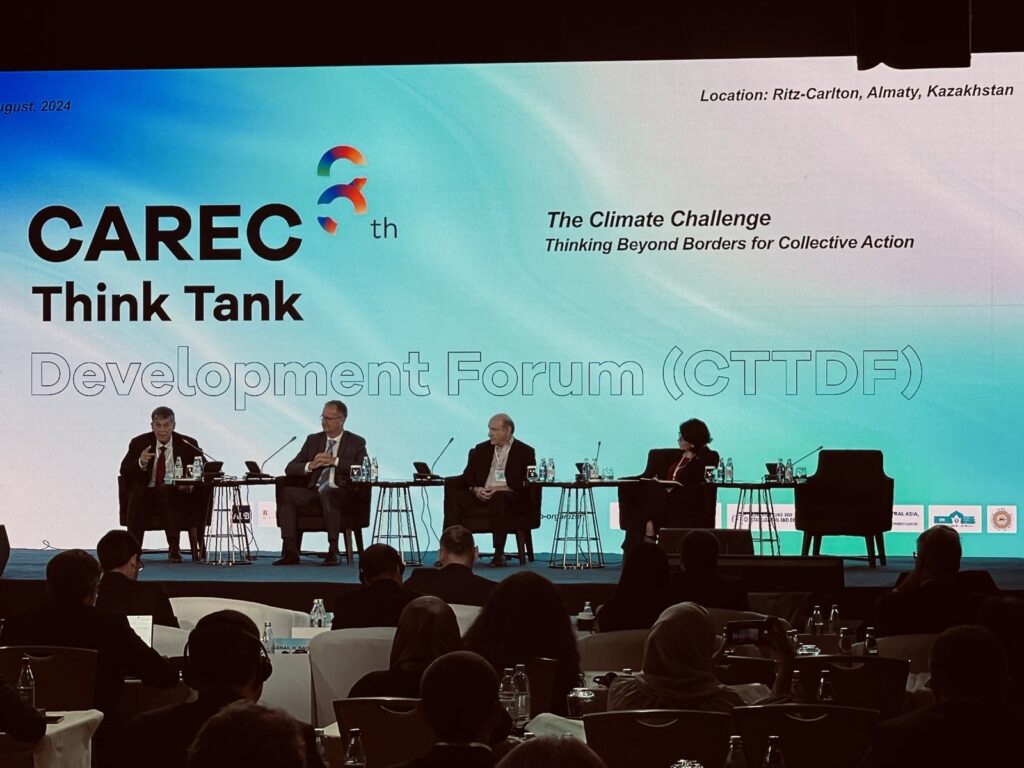
To address the issue, the Eurasian Development Bank, the CAREC Think Tank, and the Asian Development Bank organized a two-day forum entitled The Climate Challenge: Thinking Beyond Borders for Collective Action,” in Almaty, Kazakhstan.

Focusing on means of achieving genuine regional cooperation on Asian climate action, the eighth CAREC Think Tank Development Forum was attended by policymakers, experts, and opinion leaders from more than 30 countries.

The extensive two-day dialog, consisting of eight sessions, opened with a discussion on the effectiveness of current global initiatives related to climate change: the Paris Agreement, the Global Environment Facility, and the Green Climate Fund. Attention then turned to deepening cooperation among as many stakeholders as possible through multilateral platforms such as the UN Framework Convention on Climate Change.

Asia’s role in the global fight against climate change, and the difficult balancing act between economic growth and decarbonization efforts were discussed at length. Simply put, the rapid growth of the Asian economy is inevitably accompanied by an increasing consumption of energy, the generation of which leads to increased emissions and pollution.

Climate damage due to human impact can be halted and even reversed. However, because this can only be achieved with technological intervention, it poses problems for developing economies unable to afford advanced technologies. Hence, establishing a framework and mechanisms for global technology transfer were key to discussions.

Water and finance were also high on the agenda and the subject of a paper presented by Arman Ahunbaev, Head of the Center for Infrastructure and Industrial Research of the Eurasian Development Bank on “Ways to close the investment gap in the drinking water supply and wastewater sector in Central Asia.”

Ahunbaev reported that 10 million people, or 14% of the population in Central Asia, do not have access to safe drinking water and warned that without intervention, the situation would reach the point of no return in the coming years. To prevent this from happening, he stressed the urgent need for solutions to four problems.

The first problem is a twofold increase in the volume of water intake for municipal and domestic needs, based on past figures which showed a growth from 4.2 cubic kilometers in 1994 to 8.6 cubic kilometers in 2020.

The second problem is the severe deterioration of water supply infrastructure and treatment equipment, and the third, technological and commercial water losses in distribution networks.

The fourth problem is related to the demographic boom and, consequently, the rapid urbanization of Central Asia’s population. Cities are expanding and  their infrastructure needs to develop accordingly. According to experts, in 2023, urbanization in Central Asian countries will reach 49%, and by 2050, 61%. By 2030, the urban population will exceed that in rural areas.

Ahunbaev noted the need for improvement in financing the water supply and sanitation sector in Central Asia since according to rough estimates, the regional deficit in this area is around 12 billion dollars or 2 billion dollars annually.

He proposed strengthening public-private partnership as a potential solution, whereby the water sector would be reformed to allow expansion of ownership and management of its enterprises.

“It is necessary to improve legislation so that there would be an opportunity to attract, among other things, private capital. We see that the state’s budget is limited. Hence, the idea is to develop public-private partnerships and open the possibility of attracting private capital,” Akhunbayev explained.

The expert clarified that rather than transferring the sector’s enterprises and facilities entirely into private hands, his proposal would provide an opportunity for private investors to invest alongside the state, to help it fulfil its remit.

“But the state must retain its leading role,” stressed Ahunbayev. ” International experience only talks about this. But private capital can greatly help professional management.”

Another possible measure to correct the situation regarding the region’s water sector is to prioritize investments, optimize the volume of funds attracted, and free up a significant share of capital investments. The EDB also believes it  necessary to improve tariff policy, i.e., to raise tariffs, which in Central Asian countries today, are around five times lower than those in Europe.

“Tariff setting functions should be gradually transferred to the water supply and wastewater sector enterprises. But -should only be implemented-  under the supervision of local executive bodies or an independent regulator and with public participation,” added Ahunbayev.

To prevent possible water shortages, Central Asian countries need to make institutional and legal decisions regarding the creation of precise inter-sectoral coordination mechanisms, help restore project expertise, train engineering and technical personnel and the systematic instigation of water protection principles.

Ahunbayev closed by emphasizing the need for the immediate implementation of all of the above recommendations.  In addition to the demographic explosion, Central Asia is experiencing relatively rapid economic development, which in turn, leads to increasing water consumption. If we do not take care of it right now, it will be too late in five years’ time.