• KGS/USD = 0.01144 0%
  • KZT/USD = 0.00211 0%
  • TJS/USD = 0.10537 0%
  • UZS/USD = 0.00008 0%
  • TMT/USD = 0.28530 0%
  • KGS/USD = 0.01144 0%
  • KZT/USD = 0.00211 0%
  • TJS/USD = 0.10537 0%
  • UZS/USD = 0.00008 0%
  • TMT/USD = 0.28530 0%
  • KGS/USD = 0.01144 0%
  • KZT/USD = 0.00211 0%
  • TJS/USD = 0.10537 0%
  • UZS/USD = 0.00008 0%
  • TMT/USD = 0.28530 0%
  • KGS/USD = 0.01144 0%
  • KZT/USD = 0.00211 0%
  • TJS/USD = 0.10537 0%
  • UZS/USD = 0.00008 0%
  • TMT/USD = 0.28530 0%
  • KGS/USD = 0.01144 0%
  • KZT/USD = 0.00211 0%
  • TJS/USD = 0.10537 0%
  • UZS/USD = 0.00008 0%
  • TMT/USD = 0.28530 0%
  • KGS/USD = 0.01144 0%
  • KZT/USD = 0.00211 0%
  • TJS/USD = 0.10537 0%
  • UZS/USD = 0.00008 0%
  • TMT/USD = 0.28530 0%
  • KGS/USD = 0.01144 0%
  • KZT/USD = 0.00211 0%
  • TJS/USD = 0.10537 0%
  • UZS/USD = 0.00008 0%
  • TMT/USD = 0.28530 0%
  • KGS/USD = 0.01144 0%
  • KZT/USD = 0.00211 0%
  • TJS/USD = 0.10537 0%
  • UZS/USD = 0.00008 0%
  • TMT/USD = 0.28530 0%

Saudi Islamic Development Bank Increasing Its Presence in Central Asia

The Saudi-based Islamic Development Bank (IDB) has been particularly active in Central Asia so far in 2024. The growing IDB role is part of Central Asian region’s foreign policy shift toward the Arab world as financial backers to replace Russia, which is devoting huge attention and resources to its war in Ukraine, and China, which is increasingly reluctant to spend large sums of money in Central Asia after pouring in tens of billions of dollars there during the last 25 years. Some of the Central Asian governments owe China substantial amounts of money that they are unlikely to be able to pay for possibly decades.

The Central Asian states have been members of the IDB for many years. Kyrgyzstan was first, joining in 1993, followed by Turkmenistan in 1994, Kazakhstan in 1995, Tajikistan in 1996, and Uzbekistan in 2003. One of the IDB’s three regional offices is in Almaty, Kazakhstan (the other two are in Kuala Lumpur, Malaysia and Rabat, Morocco). 

The IDB has been dealing individually with the five Central Asian countries on a wide range of projects and programs in recent months.

Energy Resources

In February, Tajik Minister of Economic Development and Trade Zavqi Zavqizoda announced a deal was reached for the IDB to provide $250 million to Tajikistan. Zavqizoda said $150 million of that would go toward construction of the Rogun hydropower plant (HPP). 

The Rogun HPP was a Soviet-era project. Construction started in 1976 but was discontinued shortly after the Soviet Union collapsed. Tajikistan restarted work on the HPP in 2008. Tajik President Emomali Rahmon has repeatedly said that building the HPP with a planned 3600 MW capacity will make the country energy independent and even allow Tajikistan to bring in extra revenue exporting electricity to neighboring countries. 

In its 28 years as an IDB member, Tajikistan had received some $620 million from the IDB, so the $250 million announced in February 2024 represents a significant jump in IDB financial help.

Not surprisingly, when IDB President Muhammad Al-Jasser visited Kyrgyzstan in June, Kyrgyz President Sadyr Japarov sought IDB investment in the Kambar-Ata-1 HPP, another decades-old project with a multi-billion-dollar price tag that has barely made any progress in being realized during the 33 years Kyrgyzstan has been independent.

Al-Jasser did not commit to IDB financing for the Kyrgyz HPP. However, less than a week after Al-Jasser was in Kyrgyzstan, the IDB was one of several international financial organizations that signed on at a conference in Vienna to be a members of a coordination donors’ committee for the Kambar-Ata-1 projects.

At a meeting in Istanbul in February, the IDB reaffirmed its support for the Central Asia-South Asia-1000 (CASA-1000) project that aims to export electricity from HPPs in Kyrgyzstan and Tajikistan to Afghanistan and Pakistan. Kyrgyz Energy Minister Taalaybek Ibrayev met with Al-Jasser in June during the latter’s visit to Kyrgyzstan to discuss funding for Kyrgyzstan’s section of CASA-1000.

Not Only Energy

In June, the IDB pledged up to $2 billion in funding for improvements to water management in Kazakhstan that included projects for repairing or constructing new reservoirs, dams,  and irrigation canals, as well as reconstruction of some 500 kilometers of the country’s major highways.

Previously, Kazakhstan has received some $1.8 billion in IDB assistance since 1995.

In late April, the IDB announced it was allocating $79 million for construction of housing for some 1,800 low-income families in Kyrgyzstan during the 2024-2028 period, and $10 million more in assistance for Kyrgyzstan’s education system.

At the start of April, the IDB said it would provide $260 million for a 2024-2028 program to improve infrastructure in 21 rural districts in Uzbekistan’s Samarkand, Surhandarya, and Kashkadarya provinces. The money will go toward building new schools, local medical facilities, new water pipes to homes, and upgrading electricity distribution systems. 

In early July, Turkmenistan reported the IDB would give $156.3 million for construction of three new oncological hospitals and training for the staff.

During his visit to Kyrgyzstan in June, Al-Jasser discussed IDB financing for socio-economic programs, including ways to combat poverty with Kyrgyz Minister of Economy and Commerce Daniyar Amangeldiyev

Nodirjon Turgunov, Uzbekistan’s Ambassador to Saudi Arabia, met in early July with IDB Director General of the Project Planning Department Anasse Aisammi for talks on IDB funding for Uzbek projects in transport, logistics, education, agriculture, water management, ecology, and animal husbandry, as well as programs for women and young people.

The Asian Development Bank, World Bank, European Bank for Reconstruction and Development, and other international financial organizations have been working with the Central Asian countries since shortly after the five states became independent in late 1991. The IDB has been on the margins of investment and loans in Central Asia for most of the last 33 years, but it appears the IDB is now strengthening its ties in Central Asia. 

Construction begins on Kazakhstan’s First Hybrid Power Plant

On July 16, Kazakhstan celebrated the launch of construction on a hybrid power plant in Zhanaozen, funded by national oil and gas company KazMunayGas (KMG) and Italian energy company Eni S.p.A., in its western region of Mangystau.

According to KMG, the 247 MW hybrid project developed by Eni Plenitude will combine renewable energy sources -wind and solar – and a gas power plant to generate, balance and stabilize electricity production.

The solar power plant will have a capacity of 50 MW; the wind power component, 77 MW, and the gas power plant,120 MW. By combing all three, the hybrid power plant will ensure a stable and reliable supply of electricity to KMG’s regional subsidiary companies, including Ozenmunaygas and the Kazakh gas processing plant, and eliminate risks of shutdowns resulting from frequent interruptions to power supplies.

Since approximately 40% of all electricity produced by the hybrid plant will be “green,” the project will make a significant contribution to the implementation of  KMG’s decarbonization strategy by reducing its carbon footprint.

Askhat Khassenov,  Chairman of the Management Board of KazMunayGas, welcomed the initiative to provide Kazakhstan with its first hybrid plant and stated, “The project leverages Eni’s international industrial experience and represents an innovative combination of various technologies. It also aims to diversify and decarbonize the energy supply in the Mangystau region. Additionally, the project will create new employment opportunities for highly skilled professionals in the region.”

Present in Kazakhstan since 1992,  Eni is a joint operator of the Karachaganak field, an equity partner in various projects in the Northern Caspian Sea, including the Kashagan offshore field, and KMG’s partner in the exploration block Abay.

Kyrgyz Security Chief’s Brother-In-Law Detained on Large-Scale Fraud Charges

The brother-in-law of the head of Kyrgyzstan’s State Committee for National Security (SCNS), Kamchybek Tashiyev, has been detained on suspicion of large-scale fraud.

The investigation found that the relative, having conspired with a Turkish citizen by deceit and breach of trust, took possession of a large sum of money from a local businessman, who then appealed to the SCNS with a corresponding statement.

The Committee said that despite close family relations, Tashiyev was instructed to conduct an objective investigation and give a legal assessment.

Based on the decision of the Pervomaisky District Court of Bishkek, the suspects were detained and taken into custody as part of the investigation. The investigation is underway, and measures are being taken to compensate the injured party.

Large-Scale Logistics Center to Open in Samarkand

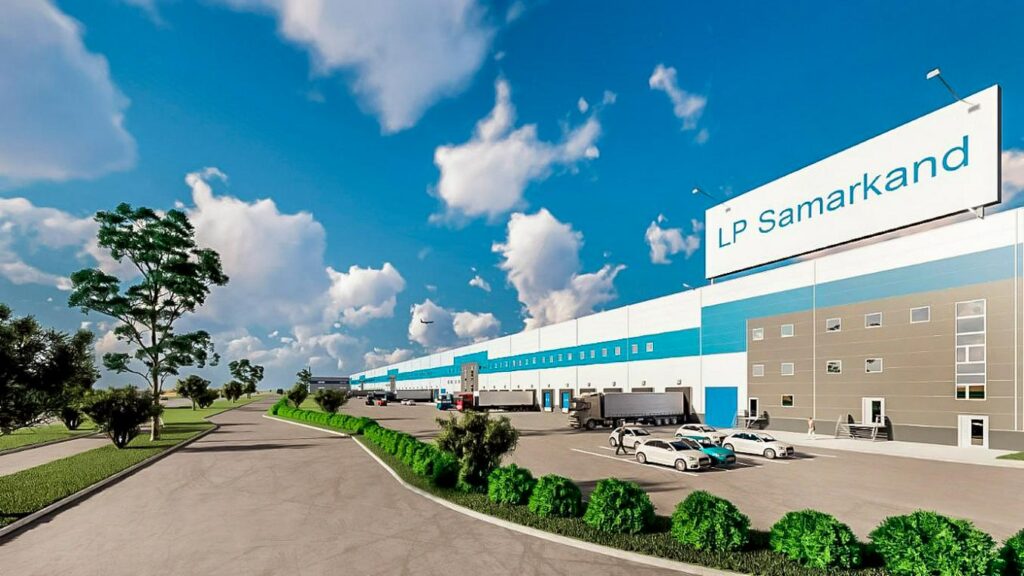
The multimodal transport and logistics center “Logopark Samarkand” will open in 2025 in Uzbekistan’s Samarkand region.

The center, which covers an area of more than 40,000 square meters, is designed to accommodate the products of leading international and local companies engaged in e-commerce, distribution, manufacturing, and logistics.

The new logistics center is expected to significantly shorten supply chains and their timelines and increase cargo transportation maneuverability. It is located on the main M-37 highway near Samarkand airport, which provides convenient access and favorable service conditions.

The complex includes premises with different temperature storage modes and a wide range of auxiliary services and facilities. Contracts for organizing warehousing activities and leases have already been signed.

Construction of this world-class logomark started in February this year and is scheduled to open in the second quarter of 2025. Marakand Logair is in charge of implementing the project.

“We are confident that the center’s services will help Uzbekistan’s commodity producers to sell their products both within the country and abroad,” Ikrom Yadgarov, General Director of the company, noted.

ADB Allocates $100 Million for Perinatal Care in Uzbekistan

The Asian Development Bank (ADB) has approved a $100 million soft loan to help Uzbekistan improve perinatal health services for pregnant women and newborns.

The Integrated Perinatal Care Project will help the government modernize nearly 230 perinatal centers nationwide, equipping them with modern energy-efficient medical equipment, updated clinical standards and protocols, and capacity and quality assurance mechanisms for health workers.

The project will also improve the perinatal referral system. Strengthening emergency response teams will help identify health risks early. The project will expand access to appropriate and timely life-saving care by introducing electronic patient records for pregnancy monitoring.

“ADB’s support will also help the government implement targeted awareness-raising and behavior-change interventions and training of midwives and nurses to encourage pregnant women and mothers to seek health care services,” said ADB Country Director for Uzbekistan Kanokpan Lao-Araya.

Four New Gas Processing Plants to be Commissioned in Kazakhstan

Four new gas processing plants will be gradually operated in Kazakhstan until 2030. According to the Ministry of Energy forecasts, the volume of marketable gas production in Kazakhstan will steadily grow from 22.5 billion cubic meters in 2023 to 36.6 billion cubic meters by 2030.

To attract investment in the exploration and development of new gas fields, QazaqGaz and Chevron signed an agreement on joint implementation of geological exploration works at the Zhalibek area in the Aktobe region. The Road Map aims to increase the resource base of marketable gas. In 2023, the Rozhkovskoye, Urikhtau Vostochny, and Anabai fields, which have total recoverable gas reserves of 35.5 billion cubic meters, were put into commercial operation.

Four gas processing plants are planned for commissioning from 2026 to 2030: two at the Kashagan field with annual capacities of 1 and 2.5 billion cubic meters (Qatari investor UCC Holding was involved), one at the Karachaganak field with a capacity of 4 billion cubic meters per year, and KazGPZ in Zhanaozen with a capacity of 900 mln cubic meters per year.