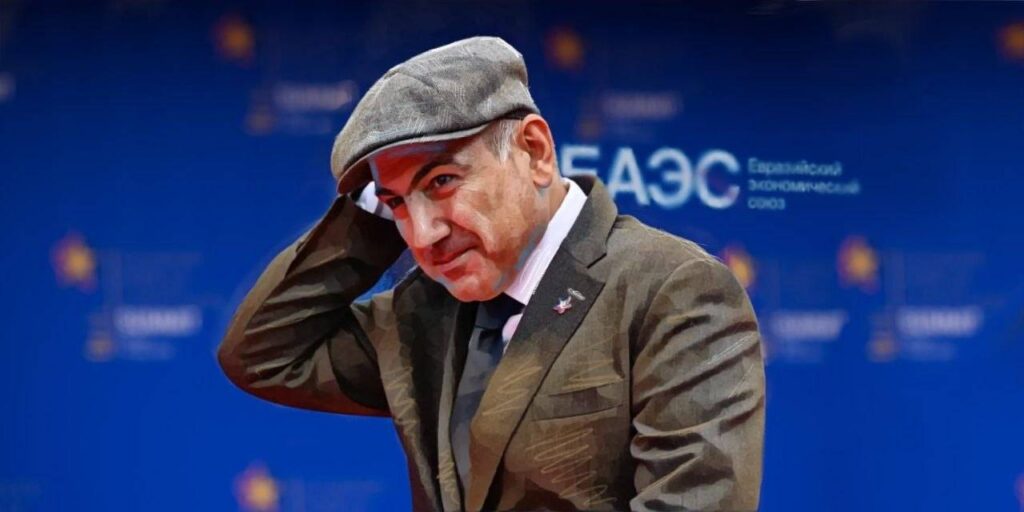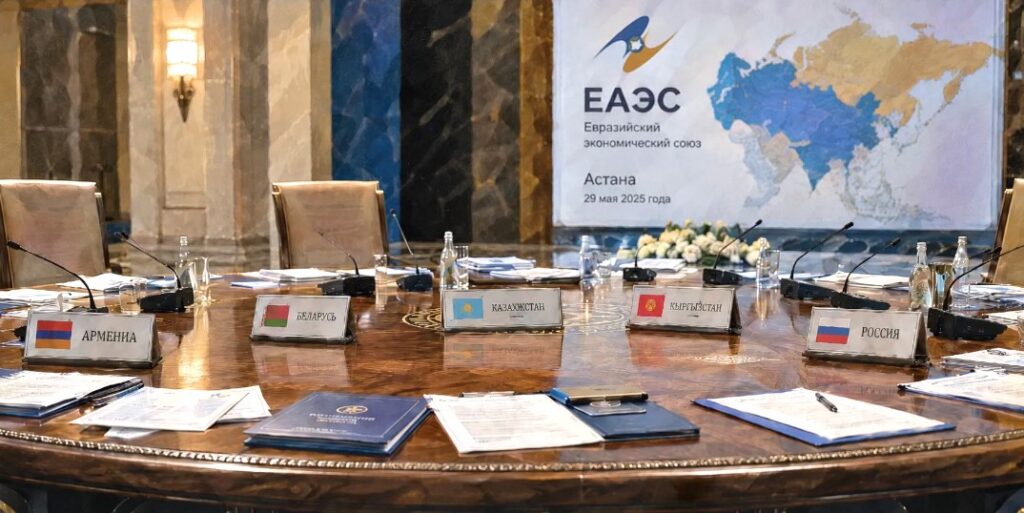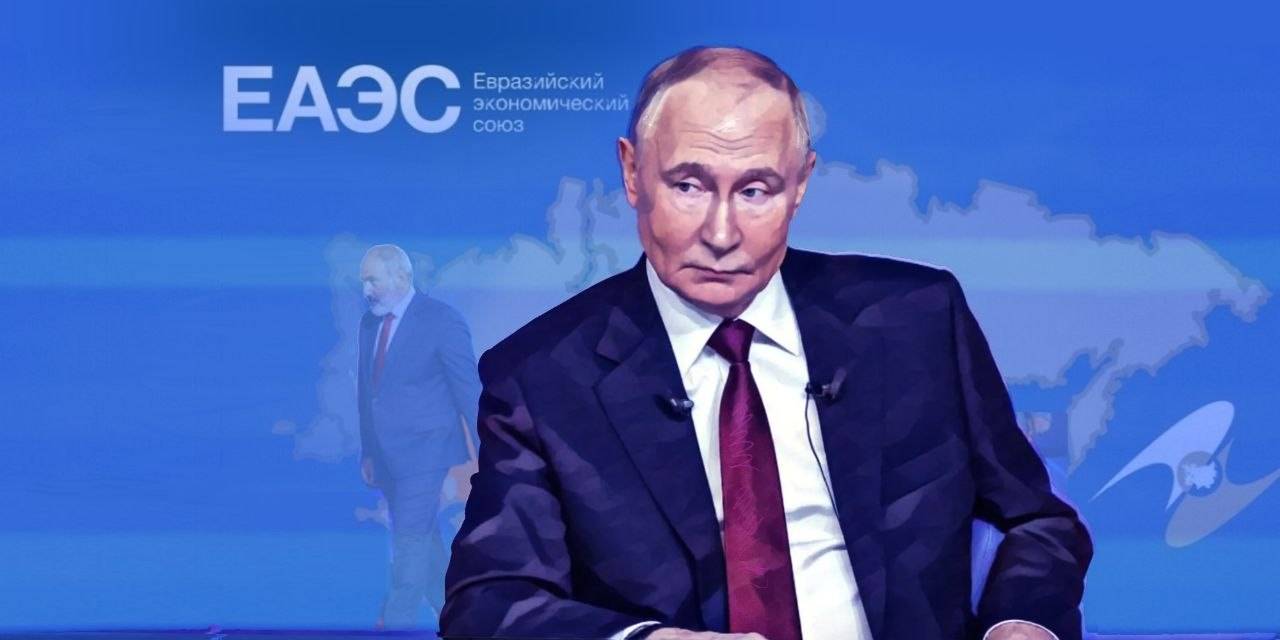
Russian President Vladimir Putin is due to arrive in Astana on May 27 for a state visit, while the Eurasian Economic Forum and a meeting of the Supreme Eurasian Economic Council will take place in Kazakhstan’s capital on May 28-29. Against the backdrop of increasingly strained relations between Moscow and Yerevan, Armenian Prime Minister Nikol Pashinyan will not attend the summit. Armenia will instead be represented by Deputy Prime Minister Mher Grigoryan.
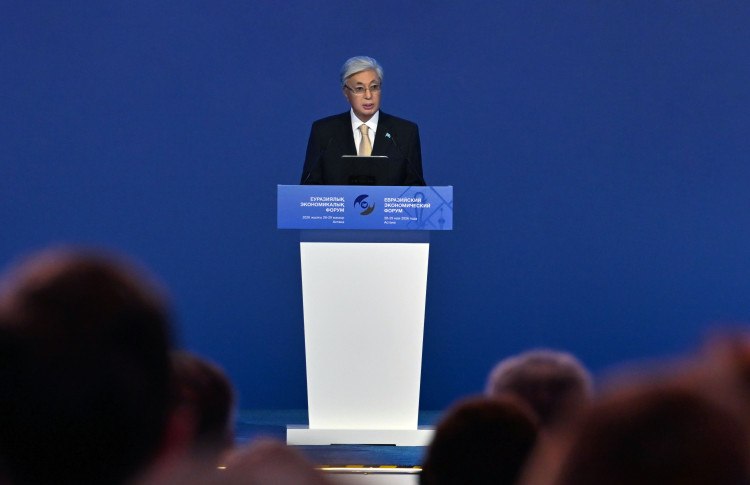
Kazakhstan’s presidential administration has already outlined the agenda for the visit. Putin is expected to receive full state honors. After the official welcoming ceremony, Putin and Kazakh President Kassym-Jomart Tokayev will hold bilateral talks.
On May 28-29, Tokayev, Putin, and other EAEU leaders are expected to take part in the Eurasian Economic Forum and the Supreme Eurasian Economic Council meetings.
Strategic Partnership and Growing Pressure
Political analyst Andrey Chebotarev said the agenda of the Tokayev-Putin talks is likely to focus on implementing the declaration signed during Tokayev’s state visit to Russia in November 2025, which raised Kazakhstan-Russia relations to the level of a “comprehensive strategic partnership and alliance.” The declaration envisioned expanded cooperation in politics, security, economics, integration, high technology, and humanitarian affairs.
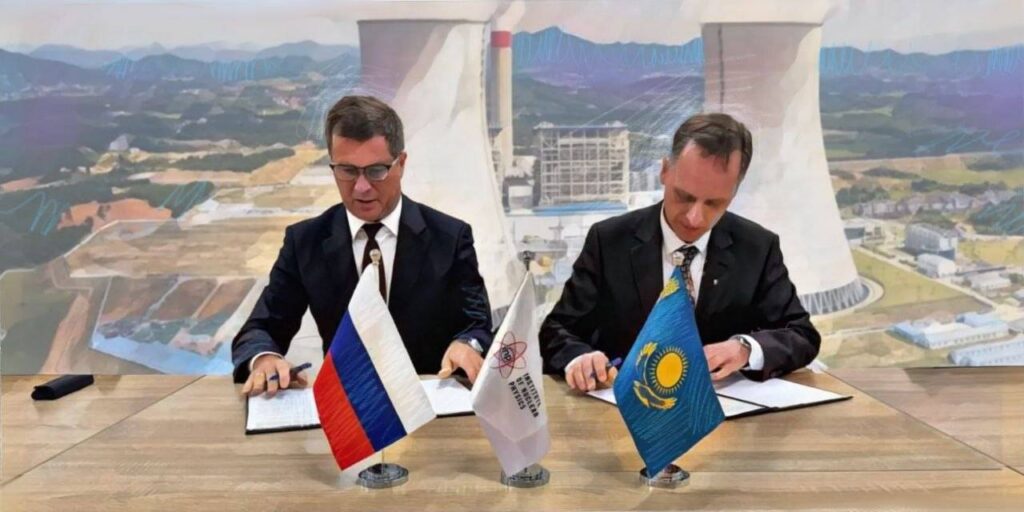
According to Chebotarev, the two presidents now need to define concrete mechanisms for implementing those agreements. Among the most sensitive issues is the planned construction of Kazakhstan’s first nuclear power plant with the participation of Russia’s Rosatom. Astana, Chebotarev argued, is particularly interested in ensuring the continuity of the project as Western sanctions against Moscow tighten.
Another key issue is the uninterrupted transit of Kazakh oil exports to Europe through Russian territory.
“This issue is especially relevant given, first, the suspension of oil deliveries through the Druzhba pipeline, which the Russian side explains as being due to technical reasons, and second, the continuing Ukrainian drone attacks on the Russian ports of Novorossiysk and Ust-Luga on the Black and Baltic seas,” Chebotarev said.
Other likely topics include logistics linked to the North-South transport corridor and the worsening decline in the Caspian Sea’s water level, particularly ahead of the planned seventh summit of Caspian littoral states later this year.
Information Wars and the Golden Horde Debate
The Putin-Tokayev meeting is taking place against an increasingly difficult information backdrop shaped by several Russian media outlets and commentators. Russian public discourse has continued to react strongly to the recent international symposium in Astana dedicated to the legacy of the Golden Horde, as well as to Tokayev’s remarks during the event.
Kazakh political analyst Daniyar Ashimbayev, commenting ahead of Putin’s visit, argued that Kazakhstan-Russia relations were being subjected to “attacks and information provocations.” He described this as part of a campaign to turn Kazakhstan into “a platform for confrontation with Russia” amid the broader Russia-West conflict.
He added that similar efforts were visible in attempts to inflame tensions between Kazakhstan and China.
At the same time, Ashimbayev avoided publicly criticizing Russian opinion leaders, many of whom have become increasingly vocal in questioning the alliance between Moscow and Astana.
Armenia’s Growing Rift With Moscow
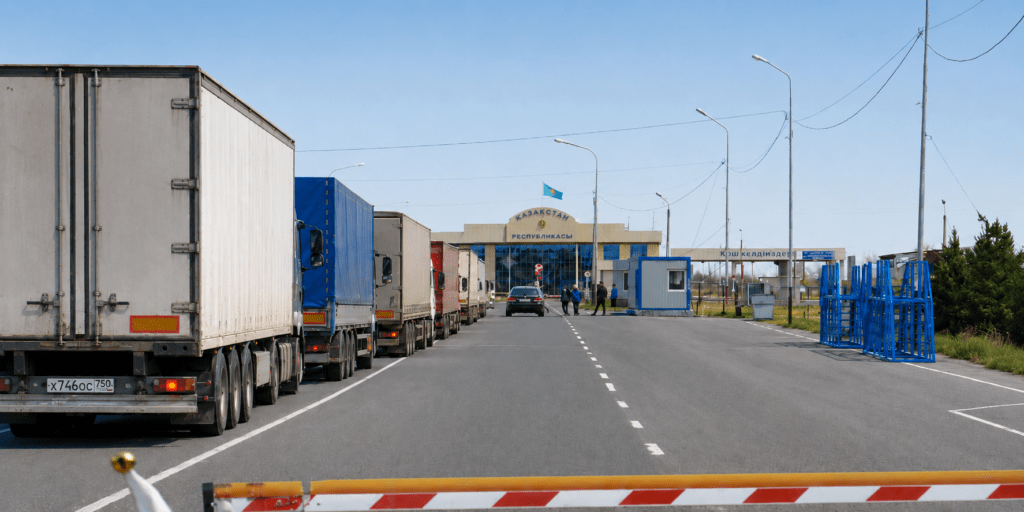
Yet the deepest tensions inside the EAEU currently revolve around Armenia. Analysts expect one of the main priorities at the Supreme Eurasian Economic Council meeting to be the removal of trade barriers and the development of the union’s transport and logistics potential. Ironically, this is precisely the area where Russia has recently intensified pressure on Armenia.
On May 22, Russia imposed restrictions on imports of Armenian flowers, officially citing concerns over phytosanitary safety and Russia’s export potential. Armenian fruit and vegetable exports have also reportedly encountered difficulties, according to the head of Russia’s agricultural watchdog, Rosselkhoznadzor. Meanwhile, Russia’s consumer protection agency suspended imports and sales of Armenia’s well-known Jermuk mineral water.
Russian restrictions have been widely interpreted in the media as retaliation for Armenia’s increasingly open interest in closer ties with the European Union and its possible eventual withdrawal from the EAEU.
However, just one day earlier, on May 21, Armenian Foreign Minister Ararat Mirzoyan insisted that Armenia had no intention of leaving the Eurasian Economic Union.
“The issue of Armenia leaving the EAEU cannot be discussed unless Armenia submits the appropriate application and expresses such a desire. We have not done so,” Mirzoyan said.
Nevertheless, Moscow’s trade restrictions increasingly create the impression that Russia may not be trying to prevent Armenia’s drift away from the bloc, but rather pushing it toward the exit.
Armenia Looks Westward
Pashinyan appears to understand the message. On May 23, he announced that Armenia had secured a new railway connection to the European Union.
“Railway communication with the European Union is now also possible through Georgia and Turkey. In the near future, railway links Armenia-Turkey and Armenia-Azerbaijan are expected to open, followed by Armenia-Iran via Nakhichevan. We will witness these developments soon as part of the implementation of the TRIPP project,” Pashinyan said.
Kazakh political analyst Gaziz Abishev argued that Armenia’s suspension of participation in the CSTO, its distancing from EAEU activities, and its declared aspiration to join the EU form a central part of Pashinyan’s political platform ahead of parliamentary elections.
“From a purely research perspective, it is interesting whether Armenia can actually join the EU, how quickly it could happen, and what effect leaving the EAEU would have on its economy,” Abishev said. “The Baltic states joined the EU. Moldova is moving toward the EU through Romania. Now, Armenia is trying to do the same. What if it succeeds and becomes better off rather than worse?”
If Armenia does decouple from the EAEU in the near future and seeks to join the EU, the question will be how Moscow responds. So far, Russia has relied on selective trade restrictions rather than a direct political break.
But Pashinyan’s absence from Astana will make that ambiguity harder to ignore. For the EAEU, the summit is therefore not only about tariffs, transit routes, and integration plans. It is also a test of whether the bloc can keep one of its most disaffected members inside the room.