• KGS/USD = 0.01144 0%
  • KZT/USD = 0.00192 -0%
  • TJS/USD = 0.10895 -0%
  • UZS/USD = 0.00008 0%
  • TMT/USD = 0.28490 0%
  • KGS/USD = 0.01144 0%
  • KZT/USD = 0.00192 -0%
  • TJS/USD = 0.10895 -0%
  • UZS/USD = 0.00008 0%
  • TMT/USD = 0.28490 0%
  • KGS/USD = 0.01144 0%
  • KZT/USD = 0.00192 -0%
  • TJS/USD = 0.10895 -0%
  • UZS/USD = 0.00008 0%
  • TMT/USD = 0.28490 0%
  • KGS/USD = 0.01144 0%
  • KZT/USD = 0.00192 -0%
  • TJS/USD = 0.10895 -0%
  • UZS/USD = 0.00008 0%
  • TMT/USD = 0.28490 0%
  • KGS/USD = 0.01144 0%
  • KZT/USD = 0.00192 -0%
  • TJS/USD = 0.10895 -0%
  • UZS/USD = 0.00008 0%
  • TMT/USD = 0.28490 0%
  • KGS/USD = 0.01144 0%
  • KZT/USD = 0.00192 -0%
  • TJS/USD = 0.10895 -0%
  • UZS/USD = 0.00008 0%
  • TMT/USD = 0.28490 0%
  • KGS/USD = 0.01144 0%
  • KZT/USD = 0.00192 -0%
  • TJS/USD = 0.10895 -0%
  • UZS/USD = 0.00008 0%
  • TMT/USD = 0.28490 0%
  • KGS/USD = 0.01144 0%
  • KZT/USD = 0.00192 -0%
  • TJS/USD = 0.10895 -0%
  • UZS/USD = 0.00008 0%
  • TMT/USD = 0.28490 0%
15 December 2025
Uncategorized

Watches Bearing Berdimuhamedov Portraits Become Unofficial Currency in Turkmenistan’s Security Sector

In Turkmenistan, wristwatches adorned with the images of President Serdar Berdimuhamedov and his father, former president Gurbanguly Berdimuhamedov, are increasingly being used as informal bribes by citizens dealing with law enforcement.

Chronicles of Turkmenistan reports that these timepieces, once symbols of official loyalty, have evolved into an unofficial currency within the country’s security apparatus.

Distributed primarily through the company Sagat Turkmenistan, the watches are embellished with silver-plated cases, gold accents, precious stones, and the emblems of various law enforcement agencies. Prices range from 3,000 to 5,000 Turkmenistani Manat (TMT), or approximately $870-1,450.

But few security officers reportedly pay for them out of pocket. Instead, citizens facing potential criminal prosecution are expected to offer the watches as “gifts” to investigators.

“If you are told that a criminal case will be brought against you, then you need to buy such a watch and go to the investigator. This does not mean that the case will be closed. But it is the first payment,” said a resident of the town of Bayramali who had prior dealings with law enforcement.

The standard version comes with a black leather strap, although a white version is seen as particularly luxurious. In some instances, investigators reportedly request a strap upgrade, an added cost that the briber must cover.

The practice is not limited to security services. In May 2024, The Times of Central Asia reported that in the Balkan region, heads of state institutions were required to purchase similar watches featuring the Berdimuhamedov portraits.

Prices ranged from 1,500 to 3,000 TMT ($435-870 at the official rate, or $75-150 on the black market), depending on the design and seniority of the buyer. Higher-tier models feature both Serdar Berdimuhamedov in a black tie and Gurbanguly Berdimuhamedov in a red tie, along with the Turkmen flag and a map of the country. Simpler versions show only one portrait, or a portrait combined with national symbols.

All public sector entities, including institutions in healthcare, education, communications, transport, and law enforcement, were reportedly compelled to participate. Senior officials were instructed to purchase the higher-end watches, while lower-level managers had to acquire less expensive models.

The use of personalized accessories as symbols of political loyalty is not new in Turkmenistan. Under former president Saparmurat Niyazov, watches featuring his image were widely distributed among schoolchildren and state employees.

“We saw watches with the president’s image during Niyazov’s time. It is not surprising that Serdar [Berdimuhamedov] has also started producing gift watches with his portraits. Now all that remains is for him to start erecting monuments to himself throughout the country,” remarked an employee of a state-funded organization in the city of Turkmenbashi.

What began as a tool of soft propaganda has now transformed into a transactional item, part status symbol, part bargaining chip, in the interactions between citizens, officials, and security services.

Uncategorized

Karaganda Engineers Unveil Safety-Enhancing Drone Prototypes

The Karaganda-based research and production association Perspektiva has unveiled three prototypes of unmanned aerial vehicles (UAVs) designed to enhance public safety across Kazakhstan. The drones are intended for a range of uses, including recording traffic violations, locating missing persons, and detecting fires. The company is currently assessing the feasibility of launching mass production.

The initiative is part of Kazakhstan’s broader effort to develop high-tech industries with a high degree of domestic localization. Among the newly developed UAVs are the Vista-7, a long-range drone; the compact Chimera-5, which is suitable for indoor use and operation in hard-to-reach areas; and the versatile Apex-7, designed for street patrols, mass event monitoring, and fire safety surveillance.

According to Maxim Kim, project manager at NPO Perspektiva, the drones integrate foreign electronic components with locally manufactured frames, which are low-cost and easily replaceable.

“Even if the body is damaged, it can be printed in 20 minutes and the existing electronics can continue to be used,” he explained.

Imported drones currently cost upwards of 12 million KZT (approximately $22,000), and their frames are often irreparable. By contrast, local production is expected to significantly reduce costs, making drones more accessible to both government agencies and private enterprises. Kim added that UAVs could serve as a cost-effective alternative to fixed surveillance cameras on highways and could also be deployed to monitor infrastructure such as oil pipelines.

Perspektiva previously developed the Argus-Pedestrian automated system, which captures violations at pedestrian crossings in Karaganda. According to developers, no pedestrian accidents have occurred in areas where the system has been installed. There are plans to expand the program to other cities across the country.

As The Times of Central Asia previously reported, members of Kazakhstan’s parliament have proposed introducing a mandatory remote identification system for drones weighing 250 grams or more, a regulatory step aimed at ensuring greater transparency and accountability in UAV operations.

Marking 34 Years of Independence: Uzbekistan’s Past, Present, and Future

Uzbekistan declared its independence from the Soviet Union on August 31, 1991, during the final, turbulent months of the USSR’s collapse. On that day, an extraordinary session of the Uzbek SSR Supreme Council in Tashkent adopted a Declaration of Independence and passed the law “On the Foundations of State Independence.” The same session resolved that September 1 would henceforth be celebrated annually as Independence Day.

The move came just days after the failed Moscow coup attempt (GKChP) against Soviet leader Mikhail Gorbachev, and in the wake of Ukraine and Belarus declaring their own independence. Uzbekistan’s then-leader Islam Karimov moved swiftly to follow suit.

At the time, Karimov served both as the leader of Soviet Uzbekistan and First Secretary of the Communist Party of Uzbekistan. He presided over the landmark session on August 31 and proposed September 1 as the national holiday. Shortly afterward, his administration began establishing the institutions of statehood, including a Ministry of Defense and a National Security Service, both created in early September 1991. Later that year, on December 29, a national referendum overwhelmingly supported independence, and Karimov was elected the first president of the new republic.

Karimov’s position in 1991 was not without contradictions. Earlier that year, during a USSR-wide referendum in March, he had campaigned for the preservation of the Soviet Union. At the time, he reportedly warned Uzbeks: “Our rivers will run with milk if we stay within the Soviet Union, but if we leave it, our rivers will fill with blood.”

For many Uzbeks, the first Independence Day came as a surprise. The declaration was made hastily, and the celebrations of September 1, 1991, were unlike the orchestrated commemorations seen in later years.

According to Kursiv, citizens awoke to an unfamiliar atmosphere, karnay horns echoed through the streets, cars were spontaneously decorated, and celebrations broke out informally. “Citizens didn’t even know they had woken up in a new independent state,” one account recalled. Emotions ranged from pride and elation to confusion and concern. The post-Soviet transition proved challenging: economic hardship and shortages left some wondering whether independence had been a mistake.

“People in the villages were very unhappy, a bit scared, and already wondering if independence was a big mistake,” wrote Bruce Pannier in 2016. At the time, Pannier, now a contributor to The Times of Central Asia, was traveling through Uzbekistan in 1992. Others remained hopeful, viewing independence as a long-awaited moment of self-determination. For older generations raised under Soviet rule, the sense of historic transformation was profound.

Today, 34 years later, Independence Day remains Uzbekistan’s most important national holiday, marked by public ceremonies and official remembrances. The events of 1991 continue to shape national identity and memory. Islam Karimov is remembered by some as the founding father of the republic; a legacy still debated in public discourse. For those who lived through the early 1990s, memories of watching a new flag rise and hearing a new anthem are inseparable from the hardship and promise of the era.

Journalist Aziza Qurbonova reflected on her Telegram channel:

“Independence is the greatest blessing a country can achieve. Ensuring peace is the greatest victory a leader can bring to their people. It is clear that securing independence, peace, and progress is the main mission of Uzbekistan’s leadership. Other issues can be solved with time and effort. Long live independence! Long live independent Uzbeks!”

Economist Behzod Hoshimov also commented on the broader significance of independence:

“One of the most sacred things in the world is freedom. That is why we must never forget that our country’s independence and sovereignty are the most precious gifts given to our people. We can see the true value of this holiday by looking at the events happening in the world today. While we celebrate, many nations still struggle for freedom. In Gaza and the West Bank, Palestinians suffer because they have no homeland. The war in Ukraine is, in essence, a war for independence. In Hong Kong, people went out for their rights and freedoms, while in Xinjiang thousands are deprived of them.”

He added that Hong Kong’s experience demonstrates how fragile civic freedoms can be. In June 2025, the League of Social Democrats, the last active street-level pro-democracy party, disbanded under political pressure, effectively ending formal opposition in the city.

“These examples remind us how vital and valuable independence is. Of course, we have many problems yet to solve, but the fact that we can openly and freely discuss and resolve them as one society is itself a great fortune. We must always strive and fight for freedom. A people who value something more than freedom will lose both their freedom and what they placed above it.”

He concluded with a call to unity:

“May our independence and thus our freedom become even stronger. May it be our destiny to decide our future together, in democracy and openness. This country belongs to all of us, and ensuring its freedom is the responsibility of us all.”

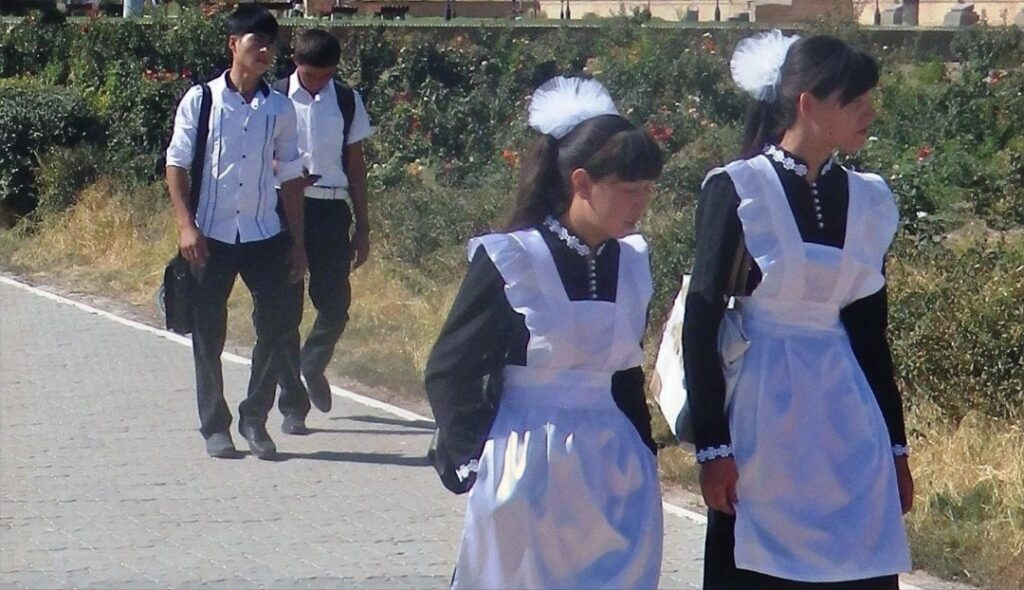
Knowledge Day in Central Asia: What’s Changing in Schools This Academic Year?

Secondary schools across Central Asia are embracing modern teaching methods and aiming to elevate the status of teachers, as the new academic year begins with a wave of reforms.

Kazakhstan: AI in Classrooms and Teacher Protections

In Kazakhstan, the academic year begins on September 2, as Constitution Day on the 1st is a national holiday. Over 370,000 first-graders are expected to enter school this year.

As previously reported by The Times of Central Asia, significant reforms are underway in the country’s education system. Amendments to the Law “On the Status of Teachers” will shield educators from non-teaching duties and protect them from undue legal responsibility. President Kassym-Jomart Tokayev has emphasized that educators should not be held accountable for incidents involving children that occur outside school or due to parental negligence.

New “personal safety” lessons will also be introduced across all educational levels, from kindergartens to colleges. These age-appropriate classes will cover topics ranging from water safety and interaction with strangers to cyberbullying, financial literacy, and legal awareness.

Schools and colleges are also rolling out DosbolLIKE, an anti-bullying initiative piloted in 50 schools last year, designed to curb bullying in student communities.

Artificial intelligence will be introduced into the curriculum via “Digital Literacy” and “Computer Science” classes. AI-focused online courses called Day of AI are now available for grades 1-11, with training programs also developed for teachers.

Despite the construction of 1,200 new schools accommodating over a million students in recent years, the high birth rate continues to strain infrastructure. In Almaty alone, the shortage exceeds 34,000 school places.

Uzbekistan: Ivy League Aspirations and Civic Values

In Uzbekistan, school also starts on September 2, a customary date. The first lesson will be conducted under the motto: “In the name of the Motherland, in the name of the nation, in the name of the people!” According to the Ministry of Preschool and School Education, 738,000 first-graders will receive gifts from President Shavkat Mirziyoyev.

An international school is set to open this September, initially enrolling 60 top-performing graduates of the 8th grade. The curriculum will include leadership and social activism training, with a focus on preparing students for admission to Ivy League universities. A nationwide talent identification and development program is also in development.

The weekly Kelazhak Soati (“Hour of the Future”) class will debut this year, aiming to strengthen students’ moral values and encourage reflection on their future roles in society.

Kyrgyzstan: Transition to 12-Year Education

This academic year marks Kyrgyzstan’s official transition to a 12-year education system. The reform affects lesson structures, curricula, and textbooks.

The transition, to be completed by 2028, includes the redistribution of students across grade levels. For example, third graders born in 2015 will skip to fifth grade, and sixth graders born in 2012 will advance to eighth grade. Further shifts are scheduled for the next two academic years.

While the extended education model is expected to allow deeper learning and skills development, the transition period may cause confusion among students, parents, and educators. Adapting to new materials and standards will be a challenge.

Chairman of the Cabinet of Ministers Adylbek Kasymaliev has also highlighted the persistent issue of overcrowded schools, particularly in Bishkek, Osh, and surrounding areas. Many students attend school in two or three shifts, impacting educational quality and motivation. Authorities aim to address the issue partly through expanding the private school sector.

Tajikistan: Grading Reforms and Teacher Shortages

Tajikistan is undertaking structural changes in its education system, with reforms aimed at modernizing conditions for students and teachers.

Beginning this year, schools will adopt a 10-point grading scale, replacing the traditional 5-point system. The transition to a 12-year general education system is slated for the 2029-2030 academic year. Currently, there are over 4,000 general education institutions serving approximately 2.36 million students.

Minister of Education and Science Rahim Saidozoda has acknowledged a teacher shortfall of nearly 3,850, despite the system employing over 130,000 educators, 66% of whom are women. The reforms will be phased in to allow time for institutional adaptation.

Turkmenistan: Early Discipline and Tech Gifts

On September 1, over 18,000 first-graders will start school in Turkmenistan. Each will receive a laptop from President Serdar Berdimuhamedov, an initiative symbolizing the country’s commitment to digital education.

The ongoing transition to a 12-year education system continues. To ease this shift, schools began orientation for incoming first-graders as early as August 20.

Children begin school at age six, where discipline is emphasized from day one. Students must remain seated unless given permission, and are prohibited from running or making noise, even during breaks.

These region-wide education reforms underscore a growing focus on modernization, safety, and academic competitiveness, highlighting Central Asia’s broader ambitions for socio-economic development through education.

Uncategorized

Central Asian Countries Launch New Contact Group on Afghanistan

At Uzbekistan’s initiative, the special representatives of four Central Asian countries convened in Tashkent on August 26, for the inaugural meeting of a new regional Contact Group on Afghanistan. Delegations from Uzbekistan, Kazakhstan, Kyrgyzstan, and Tajikistan participated, launching a platform for regular envoy-level dialogue on shared concerns related to Afghanistan.

According to the ministry, the participants emphasized the “relevance and timeliness” of creating this Contact Group as an independent mechanism for regional coordination.

The meeting builds on commitments made by the presidents of the four countries during the August 2024 Central Asian summit in Astana, which produced a joint statement and a 2025-2027 roadmap for regional cooperation. In Tashkent, delegates reiterated the need for a unified regional approach to Afghanistan, given Central Asia’s geographic proximity and long-standing cultural and economic ties with its southern neighbor.

The envoys underscored that the region must take a self-reliant, coordinated stance on Afghan affairs, one that promotes stability, security, and sustainable development across Eurasia.

During the talks, the participants pledged to pursue common, balanced, and realistic policies toward the situation in Afghanistan based on consensus. They identified the urgent need to restore and expand trade, transport, logistics, and cultural-humanitarian connections with Afghanistan, which have deteriorated in recent years. The envoys also exchanged views on engaging with Afghanistan’s de facto Taliban authorities in line with each country’s interests.

They expressed support for enhanced cooperation on regional security challenges, including the fight against terrorism, extremism, narcotics trafficking, and cross-border crime.

Although none of the Central Asian states formally recognize the Taliban government, all maintain practical working relationships with Kabul, particularly in areas such as border control, counterterrorism, trade, and humanitarian support.

Since the Taliban’s return to power in 2021, Central Asia has navigated a delicate diplomatic path, maintaining cautious ties with Kabul while also deepening relations with China and Russia.

Uzbekistan has taken a leading role. In August 2024, its prime minister visited Kabul, signing 35 agreements worth $2.5 billion. Bilateral trade reached $866 million in 2023.

Kazakhstan, Afghanistan’s primary supplier of wheat and flour, has kept its embassy open in Kabul and held multiple business forums since 2023. According to the CACI Analyst, Kazakh-Afghan trade reached $700 million in the first nine months of 2024, with projections aiming for $3 billion within five years.

Opinion: China’s Diplomatic Power Play Unfolds in Tianjin

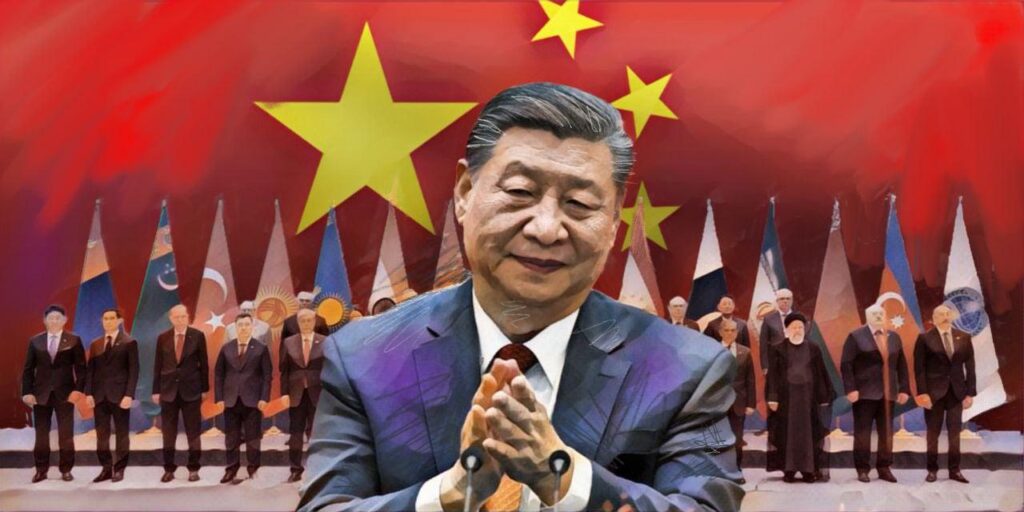
On August 31, the next SCO Plus summit will begin in the Chinese city of Tianjin and run through to September 1. Judging by the list of participants, China, under Chairman Xi Jinping, is positioning itself to challenge the United States for influence over the global geopolitical agenda. As part of the Shanghai Cooperation Organization (SCO) summit, Xi will host a formal banquet for the attending heads of state, according to the Chinese Foreign Ministry. Xi is also scheduled to chair the 25th meeting of the SCO Council of Heads of State and lead the expanded SCO Plus session – the largest since the establishment of the organization – where he will deliver a keynote address.

Clues to the themes of Xi’s speech can be found in the diverse array of leaders expected to attend. Chinese Deputy Foreign Minister Liu Bin confirmed at a Beijing press conference that among the SCO member states, participants will include Russian President Vladimir Putin, Indian Prime Minister Narendra Modi, Pakistani Prime Minister Shahbaz Sharif, Iranian President Masoud Pezeshkian, Belarusian President Alexander Lukashenko, Kazakh President Kassym-Jomart Tokayev, Kyrgyz President Sadyr Japarov, Tajik President Emomali Rahmon, and Uzbek President Shavkat Mirziyoyev.

Several leaders from non-member states will also join, including Turkish President Recep Tayyip Erdoğan; Mongolian President Ukhnaagiin Khurelsukh; Azerbaijani President Ilham Aliyev; Indonesian President Prabowo Subianto; and Turkmen President Serdar Berdimuhamedov, whose participation suggests Ashgabat’s cautious but growing interest in regional dialogue.

Also in attendance will be the prime ministers of Armenia (Nikol Pashinyan), Cambodia (Hun Manet), Nepal (Khadga Prasad Sharma Oli), Egypt (Mostafa Madbouly), Malaysia (Anwar Ibrahim), and Vietnam (Pham Minh Chinh).

The summit will also host key international institutional leaders, including UN Secretary-General António Guterres; SCO Secretary-General Nurlan Yermekbayev; CIS Secretary-General Sergey Lebedev; ASEAN Secretary-General Kao Kim Hourn; CSTO Secretary-General Imangali Tasmagambetov; EAEU Chairman Bakytzhan Sagintayev; and AIIB President Zhou Ji.

Kazakhstan will be prominently represented. In addition to President Tokayev, three high-profile Kazakhs mentioned above – Yermekbayev, Tasmagambetov, and Sagintayev – will attend in their capacities as heads of international organizations. Their presence signals Astana’s growing diplomatic weight and reflects the strategic outreach led by Tokayev, himself a former UN Deputy Secretary-General. This background likely contributes to the rapport between Kazakhstan and Guterres.

The summit will also inevitably draw attention due to the presence of the Armenian and Azerbaijani leaders, figures central to the ongoing realignment in the South Caucasus. Both Baku and Yerevan have increasingly distanced themselves from Moscow, favoring closer ties with Turkey and the United States. The recent peace agreement between Aliyev and Pashinyan, signed in the presence of President Trump, underscored the growing American role in the region and the diminishing influence of Russia.

While Moscow appears willing to tolerate this shift, Tehran views it with deep concern, especially after its recent 12-day conflict with Israel. Russia, for its part, seems to be signaling disengagement from the region. Its silence in response to Baku and Yerevan’s Western overtures suggests strategic apathy, if not withdrawal.

Beijing, of course, is acutely aware of these tensions. Xi’s decision to host such a complex and potentially divisive gathering in Tianjin may reflect a broader ambition: to position China as a central node in an evolving multipolar world order.

Tianjin itself is a symbolically rich location. Once part of a prehistoric ocean bed, it is now China’s third-largest urban area. Its growth began under the Ming dynasty in the late 14th century, when it served as a key gateway to Beijing. Today, its well-preserved temples stand alongside ultramodern infrastructure, offering a visual metaphor for China’s global aspirations.

Among these historic and technological landmarks, Xi is expected to stage a high-level diplomatic performance, one aimed at seizing the initiative in any future talks about the global balance of power.


The views expressed in this article are those of the author and do not necessarily reflect the official policy or position of the publication, its affiliates, or any other organizations mentioned.