• KGS/USD = 0.01144 0%
  • KZT/USD = 0.00196 -0%
  • TJS/USD = 0.10899 -0%
  • UZS/USD = 0.00008 -0%
  • TMT/USD = 0.28490 0%
  • KGS/USD = 0.01144 0%
  • KZT/USD = 0.00196 -0%
  • TJS/USD = 0.10899 -0%
  • UZS/USD = 0.00008 -0%
  • TMT/USD = 0.28490 0%
  • KGS/USD = 0.01144 0%
  • KZT/USD = 0.00196 -0%
  • TJS/USD = 0.10899 -0%
  • UZS/USD = 0.00008 -0%
  • TMT/USD = 0.28490 0%
  • KGS/USD = 0.01144 0%
  • KZT/USD = 0.00196 -0%
  • TJS/USD = 0.10899 -0%
  • UZS/USD = 0.00008 -0%
  • TMT/USD = 0.28490 0%
  • KGS/USD = 0.01144 0%
  • KZT/USD = 0.00196 -0%
  • TJS/USD = 0.10899 -0%
  • UZS/USD = 0.00008 -0%
  • TMT/USD = 0.28490 0%
  • KGS/USD = 0.01144 0%
  • KZT/USD = 0.00196 -0%
  • TJS/USD = 0.10899 -0%
  • UZS/USD = 0.00008 -0%
  • TMT/USD = 0.28490 0%
  • KGS/USD = 0.01144 0%
  • KZT/USD = 0.00196 -0%
  • TJS/USD = 0.10899 -0%
  • UZS/USD = 0.00008 -0%
  • TMT/USD = 0.28490 0%
  • KGS/USD = 0.01144 0%
  • KZT/USD = 0.00196 -0%
  • TJS/USD = 0.10899 -0%
  • UZS/USD = 0.00008 -0%
  • TMT/USD = 0.28490 0%
08 December 2025

Uzbekistan’s New Emphasis on the Military

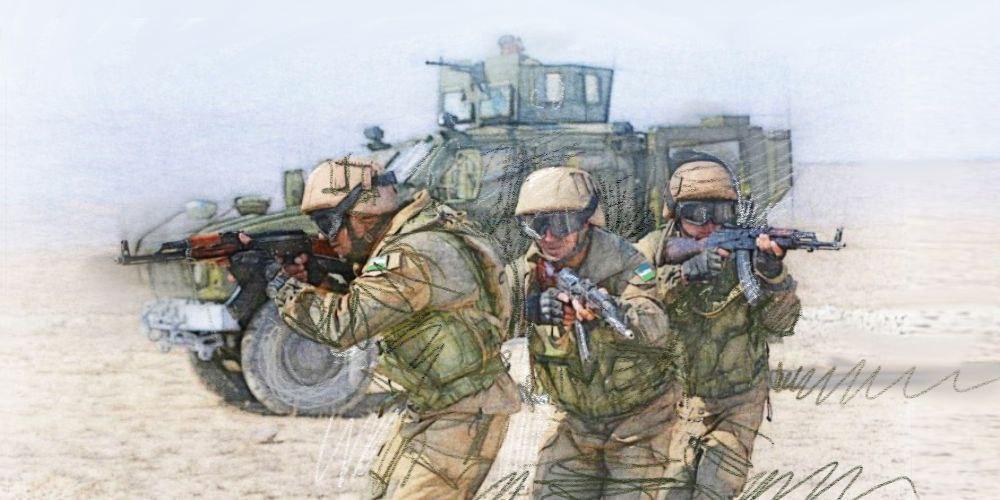
Uzbekistan has become Central Asia’s leader in terms of military spending. This raises some questions about why Uzbekistan has boosted its military spending, but it should also get the attention of Uzbekistan’s Central Asian neighbors.

According to Global Firepower’s 2025 Military Strength ranking, Uzbekistan’s defense budget was a little more than $2.8 billion, ahead of Kazakhstan which spent just over $2 billion. Kazakhstan still ranked ahead of Uzbekistan in overall military strength, 57th and 58th, respectively, but in 2024, Global Firepower ranked Kazakhstan 58th and Uzbekistan 65th.

Voice of America noted in a July 2024 report that military spending was generally increasing across Central Asia, a “development officials link to regional conflicts such as the war in Ukraine.”

Kyrgyzstan and Tajikistan boosted their military spending after they fought brief but destructive battles against each at the end of April 2021, and again in mid-September 2022. In March 2023, Kamchybek Tashiyev, the head of Kyrgyzstan’s security service, said that since the 2021 conflict, his country had spent some $1 billion on military equipment, including military drones from Turkey.

Global Firepower’s 2025 report stated that Kyrgyzstan spent $221.8 million and Tajikistan $446 million on defense in 2024.

Kyrgyzstan and Tajikistan are the poorest countries in Central Asia.

Where is the Threat?

Uzbekistan and more broadly Central Asia’s increase in defense spending raise the question of why is it necessary.

Kyrgyzstan and Tajikistan’s surge in military spending was a reaction to the border conflicts of 2021 and 2022. The root cause of that fighting was disputed territories along their frontier, but this year the two countries finally signed a delimitation agreement and relations have improved.

The Central Asian states have legitimate security concerns, most emanating from Afghanistan, though not necessarily from the Taliban. Despite occasional saber-rattling, the Taliban are unlikely to ever try to attack or invade any Central Asian country, and presently most of the Central Asian states have established an amiable business relationship with the Taliban.

Militant groups operating in Afghanistan are the major concern.

These groups based in Afghanistan are the main threats to the Central Asian governments and require the Central Asian states to develop counter-terrorism capabilities, something they have been doing since the late 1990s. The anti-aircraft systems and missiles the Central Asian states, including Uzbekistan, are purchasing are ill-suited to counter-terrorism operations.

The timing of the significant increase in military spending came not long after Russia launched its full-scale invasion of Ukraine in late February 2022. Several Russian politicians and political commentators have spoken of reclaiming part of all of Kazakhstan in particular, but Uzbekistan has also been mentioned lately.

It would be understandable for Kazakhstan and Uzbekistan to bolster their defenses in case the day comes when Russia looks to forcibly reincorporate Central Asia back into its empire. But Russia is listed second on Global Firepower’s ranking of military powers and the country’s defense budget in 2024 was some $126 billion. Without outside assistance, it is unlikely Kazakhstan or Uzbekistan could hold out for long against a determined Russian military assault.

The same is true when looking at Central Asia’s eastern neighbor, China, which is ranked third on the Global Firepower list and spent a whopping $266.85 billion on defense in 2024.

Regional Superpower

There is something of an arms race underway in Central Asia, and that is driving all five states to increase their defense budgets. Uzbekistan has good relations with all its immediate Central Asian neighbors, including Afghanistan, so there is no discernible threat that would compel the country to boost military spending.

One possible explanation is that Uzbekistan is once again looking to become Central Asia’s military superpower.

Uzbekistan’s first president, Islam Karimov, pursued such a policy. He envisioned a Central Asia with as little Russian military presence as possible and worked to make Uzbekistan’s army the dominant force in the region. Unfortunately for Uzbekistan’s neighbors, the cantankerous Karimov often intimidated or insulted their leadership, making Uzbekistan’s growing military power an ominous development.

For a variety of reasons, including financial and the unforeseen rise of the Taliban in Afghanistan that required courting Russian security assurances, the aim of being a regional policeman went unrealized.

Uzbek President Shavkat Mirziyoyev can take credit for the new spirit of regional cooperation in Central Asia today. When he came to power in late 2016 after Karimov’s death, Mirziyoyev made improving Uzbekistan’s tattered ties with its neighbors one of his first priorities. He succeeded to the point where Central Asian unity is helping mitigate past dependences on Russia, including for security guarantees.

In the future, Uzbekistan, alongside Kazakhstan, could provide a solid military foundation for regional forces. Uzbekistan and Kazakhstan, by far the two biggest countries in Central Asia, have strengthened military and security cooperation since Russia’s full-scale invasion of Ukraine. In 2024, the two countries conducted the Hanjar (Dagger) joint exercises in November, and the Hamkorlik (Cooperation) joint exercises in October, and in 2023, the Hanjar exercises in August, and the Qalqon (Shield) drills in May.

The two countries could be looking toward a day when their neighboring Central Asian countries call for Kazakh-Uzbek help instead of Russian aid if there is an internal or regional security problem. None of the countries in Central Asia are anxious to call for Russian troops to arrive in large numbers unless it is the only way to avoid some sort of catastrophic defeat. Given the current sentiment in the Kremlin, those Russian troops might stay in Central Asia. Being able to depend on security assistance from strong cultural cousins would likely be infinitely preferable to requesting help from a former colonizer.

One other possibility for Uzbekistan’s recent push to expand its military potential involves long-term strategy. Uzbekistan has the largest population in Central Asia, more than 37 million people, or nearly half of Central Asia’s total population.

Global Firepower’s rankings put Uzbekistan’s number of military personnel at an estimated 60,000 (not including security and interior ministry forces, and border guards), but notes the number of people “fit for service” is nearly 16 million. Tajikistan’s total population was nearly 10.5 million at the start of 2025, Kyrgyzstan’s was some 7.3 million, and Turkmenistan’s was just over 7 million, according to the Turkmen government’s official statistics, which are widely suspected of being greatly inflated.

Again, Uzbekistan’s relations with all its neighbors are better now than at perhaps any time previously in the country’s nearly 34-year history. But Uzbekistan’s relations with its neighbors were not always good and often in the past Uzbekistan was at odds with two or more of those neighbors at the same time. That is something none of the other Central Asian governments are likely to have forgotten.

These are uncertain geopolitical times in many areas of the world and many countries are upping their purchases of weapons. Central Asia is no exception, and with better reason than many as Central Asia borders China, Russia, Iran, and Afghanistan.

However, when the most populous Central Asian country, which in the recent past has exhibited signs of aiming for military dominance in the region, begins to spend more on its military than any of its neighbors, it cannot help but raise a few eyebrows.

Power Shifts in Central Asia: The Unpredictable Path of Leadership

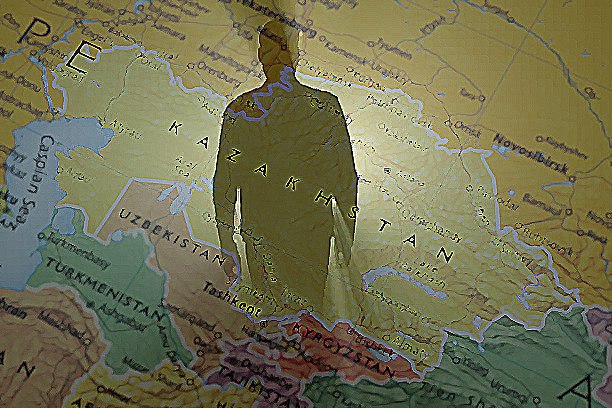
European Union Commissioner for International Partnerships Josef Sikela has concluded his tour of Central Asia, a visit conducted against the backdrop of global geopolitical turbulence. Unlike previous engagements, where European officials often criticized the region’s leadership for a lack of democratic progress, Sikela refrained from making demands on local governments.

Historically, Europe has accused Central Asian states of authoritarianism and the entrenchment of long-serving leaders. However, the idea that power is uniquely permanent in the region is increasingly questioned. Critics point to Western examples, such as Angela Merkel’s 16-year tenure as Germany’s chancellor, and alleged electoral manipulation within the EU, such as in Romania, where elections were annulled after an undesired candidate’s victory. Meanwhile, in Central Asia, even presidents once considered “eternal” have eventually left office, sometimes peacefully, sometimes under turbulent conditions.

Kyrgyzstan: The Unpredictable Outlier

Kyrgyzstan is often described as a “democratic exception” within Central Asia, yet its history is marked by political instability and frequent leadership changes, arguably more so than in many of the world’s most conflict-prone regions.

The country’s first president, Askar Akayev, held power from 1990 to 2005. Though re-elected three times, his rule ended in March 2005 when protests erupted over parliamentary election results that heavily favored pro-government candidates. Demonstrators stormed the Government House in Bishkek, prompting Akayev to flee. Reports, though unverified, claimed he was smuggled out wrapped in a carpet.

Following Akayev’s ouster, Kurmanbek Bakiyev took power, but his rule ended in 2010 after violent unrest. His downfall was allegedly facilitated by Kazakhstan’s intelligence services, and he later found political asylum in Belarus under President Alexander Lukashenko.

Since Bakiyev’s departure, Kyrgyzstan has continued to experience political turbulence. Presidents Almazbek Atambayev (2010-2017) and Sooronbai Jeenbekov (2017-2020) both left office under pressure. Atambayev’s tenure saw a diplomatic fallout with Kazakhstan, while Jeenbekov resigned in 2020 amid protests over parliamentary elections. His successor, Sadyr Japarov, remains in office, but whether he will complete his term is an open question.

Uzbekistan: Reform Within Limits

Islam Karimov, Uzbekistan’s first post-Soviet leader, ruled for over 26 years before his death in 2016. While he maintained a strictly centralized government, his tenure was also marked by violent crackdowns, most notably the Andijan uprising in 2005, which resulted in a Western diplomatic fallout​.

His successor, Shavkat Mirziyoyev, has introduced some reforms, loosening restrictions on civil liberties and the economy. However, the fundamental structure of state control remains intact, with opposition movements still tightly monitored.

Kazakhstan: From Nazarbayev to Tokayev

Kazakhstan’s transition from Nursultan Nazarbayev to Kassym-Jomart Tokayev is often described as managed succession rather than a genuine power shift. Nazarbayev, who led Kazakhstan for nearly three decades, officially stepped down in 2019, yet retained significant influence until the January 2022 unrest, which forced him to relinquish much of his remaining power.

These protests, initially sparked by fuel price hikes, rapidly escalated into anti-government riots. While official accounts describe the unrest as an attempted coup orchestrated by figures within Nazarbayev’s inner circle, critics suggest Tokayev used the crisis to consolidate power. Tokayev initiated and passed a new constitutional amendment now limiting Kazakhstan’s presidency to a single seven-year term​.

Tokayev secured victory in Kazakhstan’s most recent election on November 20, 2022, capturing 81.31% of the vote, solidifying his presidency.

Tajikistan: A Family Dynasty in Waiting?

Tajikistan’s first president, Rakhmon Nabiyev, faced early instability, and his 1992 resignation amid civil war paved the way for Emomali Rahmon, who has ruled ever since. Many believe Rahmon is preparing his son, Rustam Emomali, the current mayor of Dushanbe, to inherit power, effectively transforming the presidency into a family dynasty​.

Turkmenistan: Power in Name or Reality?

Turkmenistan remains the only Central Asian republic where leadership has formally passed from father to son. Saparmurat Niyazov, known as “Turkmenbashi”, ruled until his death in 2006, after which Gurbanguly Berdimuhamedov took power. In 2022, he handed the presidency to his son, Serdar Berdimuhamedov, though many suspect real power remains with the elder Berdimuhamedov, who now chairs the Halk Maslahaty (People’s Council)​.

Conclusion: A Shifting Political Landscape

Central Asia presents a complex picture of governance, where long-term rulers have either strategically passed power or been removed through upheaval. While critics argue that the region remains authoritarian, others point out that Western models of democracy are not always as transparent or stable as they appear.

What remains undeniable is that political evolution in Central Asia continues, sometimes through carefully managed transitions, sometimes through unrest, coups, or protest-driven resignations. Whether these shifts lead to lasting reforms or entrenched power structures in new forms remains to be seen.

French Companies Eye Role in Uzbekistan’s Nuclear Energy Plants

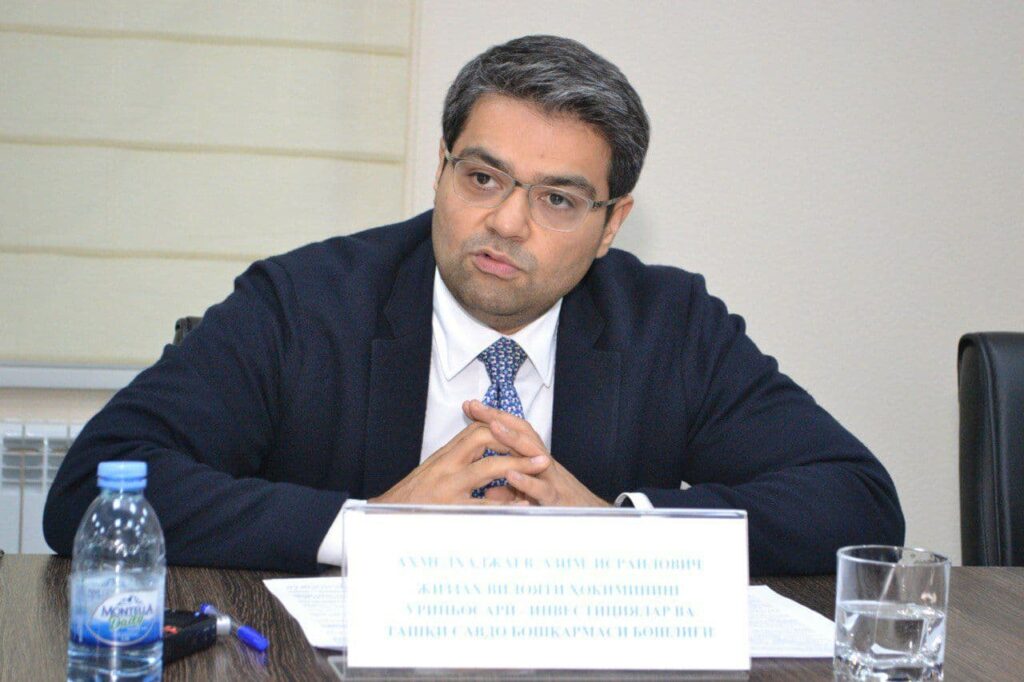
Uzbekistan is exploring collaboration with French firms in the construction of a small-capacity nuclear power plant (SCNPP) in the Jizzakh region, according to Azim Akhmadkhodjaev, Director of Uzbekistan’s Atomic Energy Agency, in an interview with Le Figaro.

Akhmadkhodjaev noted that France could offer some of the most effective solutions and support for the project. Ongoing discussions involve several French companies: Assystem for technical support, Bureau Veritas for specialist training, and Framatome for technical management of the facility.

Uzbekistan’s Minister of Energy, Jurabek Mirzamakhmudov, emphasized that French companies view Uzbekistan not only as an investment opportunity but also as a technological partner. Talks have centered on training local personnel to meet the technical demands of the nuclear sector. Joanna Golas, president of the France-Uzbekistan Economic Chamber, underscored the importance of preparing skilled technical specialists for the project.

Uzbekistan is also advancing its renewable energy agenda, aiming to raise the share of renewables in its energy mix from 16% to 54% by 2030. Cooperation with French companies could bolster the country’s efforts to build a more sustainable and diversified energy system.

Previously, Uzbekistan signed a protocol with Russia, appointing Rosatom as the main contractor for the SCNPP project in Jizzakh. The agreement includes the construction of six reactors with a combined capacity of 330 MW. A successful partnership with French firms would bring additional technological expertise to the table and complement the existing plan.

China to Support Hydrogen Innovation Center in Kazakhstan

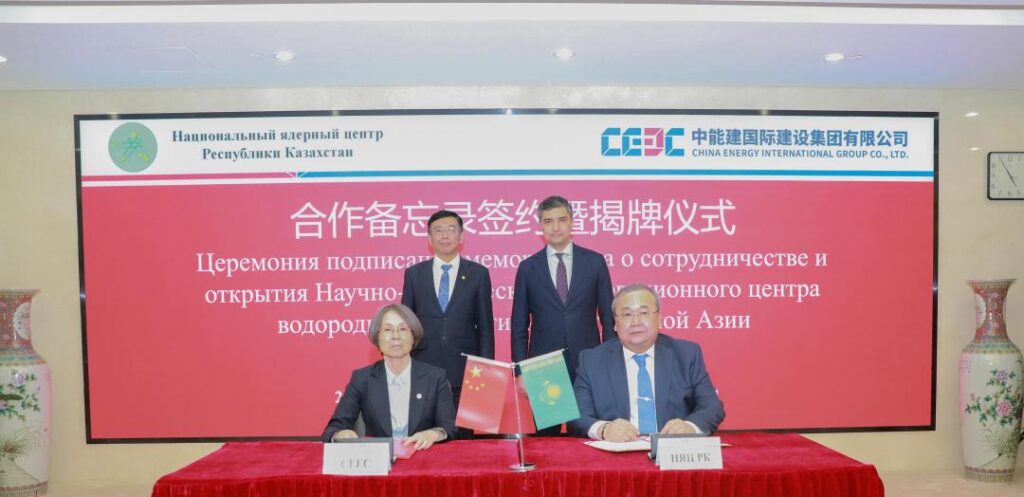
On March 20 in Beijing, Kazakhstan’s National Nuclear Center, part of the Ministry of Energy, signed a memorandum with China Energy Overseas Investment Co., Ltd. and Shanghai Jiao Tong University to establish a Scientific and Technical Innovation Center for Hydrogen Energy in Central Asia. The facility will be located in the city of Kurchatov, in Kazakhstan’s Abai Region, according to a statement from the Ministry of Energy.

The future center is intended to serve as a key scientific and technological platform for research, testing, and the implementation of advanced hydrogen energy solutions. It aims to boost Kazakhstan’s competitiveness in the hydrogen sector, foster international cooperation in green energy, support innovative energy projects, and help train a new generation of highly qualified specialists.

“Hydrogen energy is one of the key areas of the global energy transition,” said Deputy Minister of Energy, Bakytzhan Ilyas. “Kazakhstan has significant potential in this area, and the creation of the center in Kurchatov will open up new opportunities for the development of science, technology, and industry.”

The initiative is also closely tied to Kazakhstan’s long-term climate goals. The center is expected to support the country’s strategy to achieve carbon neutrality by 2060 and to promote the adoption of environmentally friendly technologies in the energy sector.

In September 2024, Kazakhstan approved its Concept for the Development of Hydrogen Energy until 2030. The policy outlines key objectives including:

  • Fulfilling international commitments to reduce greenhouse gas emissions
  • Advancing the national goal of carbon neutrality
  • Expanding access to modern, sustainable energy sources

While the strategy prioritizes hydrogen technologies as a cornerstone of Kazakhstan’s low-carbon transition, the global hydrogen sector remains in its early stages, and significant technical and economic hurdles must still be overcome.

A New Chapter of Peace and Cooperation in Central Asia: The Kyrgyz-Tajik Border Agreement

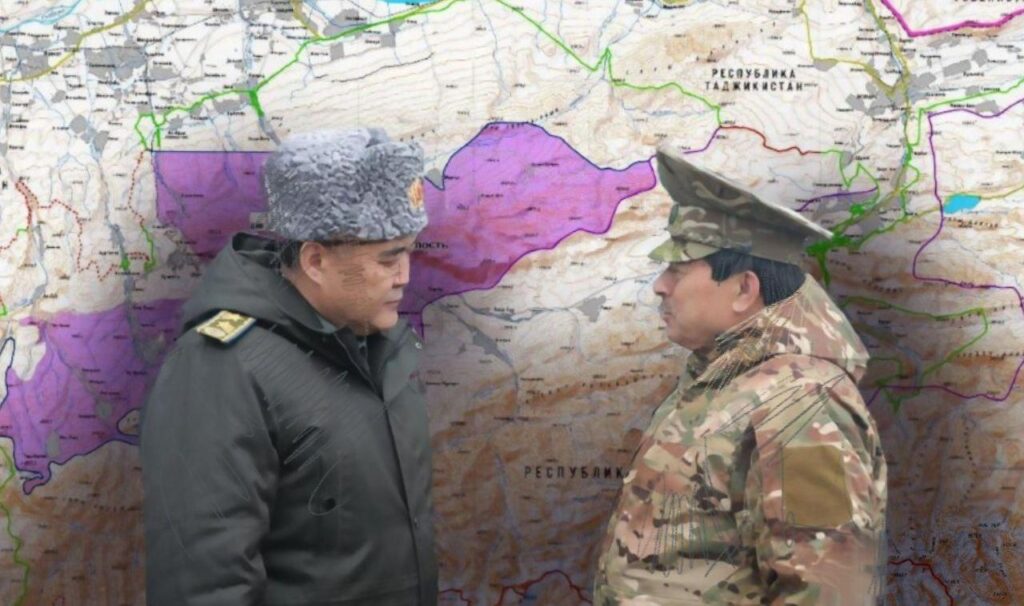
On March 13, 2025, a historic milestone was achieved with the signing of the Kyrgyz-Tajik border agreement. This long-anticipated treaty, signed by Kyrgyzstan’s President Sadyr Japarov and Tajikistan’s President Emomali Rahmon, resolved a long-running dispute over the 984-kilometer boundary between the two nations. Clashes in 2021 and 2022 left scores dead, hundreds wounded, and thousands displaced. The resolution marked not only the end of an enduring source of regional tension but also the beginning of a prospective era of peace and collaboration.

The significance of this agreement is substantial and far-reaching. For decades, the unresolved Kyrgyz-Tajik border remained a flashpoint for clashes, occasionally escalating into violence between communities living in border regions such as Batken. The new treaty now promises a peaceful future, with both leaders showing their commitment to long-term regional stability.

A Diplomatic Achievement

The path to this agreement was anything but straightforward, with Kyrgyz President Japarov characterizing the land exchanges involved in the treaty as a “tough but necessary decision.” During Nauryz celebrations in Osh, Japarov praised the expert teams who worked for four years to reach a settlement that balanced the interests of both sides.

Japarov emphasized the benefits of the treaty for border-area communities, specifically in Batken, where tensions have been acute. The “lives of our citizens in border areas of the Batken region will be peaceful from now on,” he stated, promising new homes for residents displaced during past conflicts. The treaty aims to bring not only peace but also economic development, as secure frontiers pave the way for cross-border trade and infrastructure investment.

For Tajikistan’s President Rahmon, the agreement not only resolved a geopolitical challenge but reinforced the shared value of cooperation in the region. His message during Nauryz to President Japarov symbolized the optimism underpinning their new relationship. “I am confident that our countries, relying on the high universal values of this ancient holiday, will continue their joint efforts to enrich the content of their multifaceted relations,” Rahmon wrote.

Messages of Support on a Symbol of Renewal

The signing of the treaty aligned closely with Nauryz, the ancient festival that symbolizes renewal, prosperity, and unity across Central Asia. World leaders also viewed the timing as auspicious, with U.S. President Donald Trump extending his congratulations to President Rahmon in a message of goodwill on the occasion of Nauryz. “This is a major achievement that will bring great economic benefits and security to both countries,” Trump wrote, highlighting the agreement’s potential to stabilize the region.

Trump also reaffirmed America’s support for Tajikistan’s sovereignty, underscoring the importance of ongoing cooperation. His words echoed a broad international sentiment celebrating the Kyrgyz-Tajik agreement as a step toward enhanced regional partnerships.

Regional Cooperation on the Rise

The Kyrgyz-Tajik border agreement forms part of a broader trend of strengthening ties among Central Asian nations. Recently, Kyrgyzstan resolved a similar border issue with Uzbekistan, setting a precedent for peaceful dispute resolution. Now, Japarov has suggested taking the next step by creating a visa-free travel regime and even a unified regional visa for international visitors. Such moves could transform the region into a hub for tourism and cooperation, further integrating Central Asia both economically and diplomatically.

The possibility of closer ties will once again take center stage when the leaders of Kyrgyzstan, Tajikistan, and Uzbekistan meet in Khujand on March 31 to sign an agreement on their respective borders.

Challenges and Opportunities Ahead

While the landmark Kyrgyz-Tajik treaty paves the way for peace, challenges remain. Inhabitants of border regions will require assurance and tangible support to adapt to the newly drawn boundaries. Infrastructure, housing, and public services will be crucial to the pact’s long-term success. Nonetheless, the treaty has set a powerful example of diplomacy triumphing over discord.

Kazakhstan to Build $1.35 Billion Fertilizer Plant in Mangistau

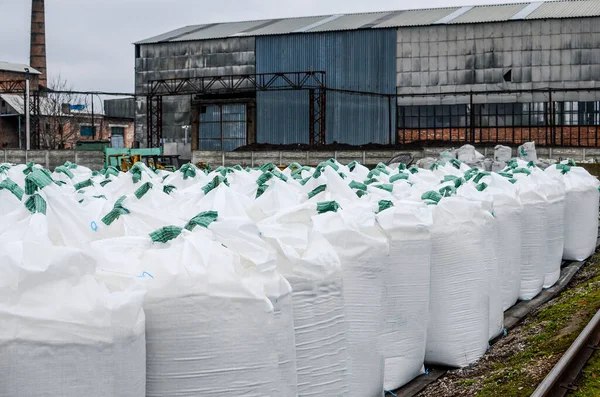
Kazakhstan will begin construction of a major fertilizer plant valued at $1.35 billion, under an investment agreement recently approved by the government. The project aims to boost domestic fertilizer production and reduce the country’s reliance on imports.

Strategic Industrial Partnership

The facility will be built in the Mangistau region under a joint venture between Kazakhstan’s national gas company QazaqGaz and Turkish construction firm ESTA Construction. The new company, Qazesta Fertilizers Ltd., will oversee the project, which is expected to benefit from Mangistau’s favorable logistics for export across the Caspian Sea.

The plant is designed to produce up to 700,000 tonnes of urea and 42,000 tonnes of ammonia annually. Construction is scheduled to take three and a half years, creating an estimated 3,000 jobs during the building phase and 400 permanent positions upon completion.

Officials say the project will support the development of Kazakhstan’s gas chemical industry and contribute to import substitution. Currently, the country produces three types of fertilizers, ammonium nitrate, ammophos, and ammonium sulfate, but domestic output meets only half of the 3.2 million tonnes required to satisfy national demand.

Challenges in Fertilizer Use and Production

Kazakhstan’s limited fertilizer use has drawn concern from analysts. According to Energyprom.kz, citing UN Food and Agriculture Organization (FAO) data, nitrogen fertilizer application has not exceeded 4.0 kg per hectare since 2000, and dropped to just 2.4 kg in 2022. In contrast, Uzbekistan applied 187.2 kg per hectare that year, while Russia applied 17.6 kg.

Phosphate fertilizer usage in Kazakhstan was similarly low at 1.33 kg per hectare, compared to 5.91 kg in Russia.

Domestic fertilizer production also declined in 2024. Total output fell by 9.3% to 367,500 tonnes. Production of nitrogen fertilizers dropped by 11.4% to 345,500 tonnes, while phosphate fertilizer output rose by 47.1% to 22,000 tonnes. Despite the gains, national supply still lags behind farmers’ needs.

Import Dependency and Export Growth

Kazakhstan remains dependent on foreign supplies of nitrogen fertilizers, with imports accounting for 57.8% of the market. In 2024, imports rose by 7.3% to 472,300 tonnes. Meanwhile, exports of nitrogen fertilizers nearly doubled to 214,400 tonnes. Phosphate fertilizers, however, are largely produced domestically, with imports making up just 1.2% of supply.

Kazakhstan’s largest fertilizer export destinations in 2024 included Brazil (187,600 tonnes), Poland (92,500 tonnes), Ukraine (87,600 tonnes), and Russia (67,400 tonnes). However, declining global prices led to a 13.5% drop in export revenue, despite only a 1.1% decrease in volume.

Global Market Dynamics

Geopolitical factors continue to shape global fertilizer markets. Sanctions imposed on Russia and Belarus in 2022 initially triggered shortages and price spikes, although some restrictions were later eased to mitigate food security risks. In 2024, U.S. imports of Russian fertilizers rose by 20% to $85.5 million.

At the same time, the European Union is weighing new duties on fertilizer imports from Russia and Belarus, a move that has drawn criticism from European agricultural associations concerned about rising input costs.

In this shifting global context, Kazakhstan’s expanded fertilizer capacity could enhance its role as a regional supplier. The launch of the Mangistau plant is expected to not only reduce reliance on imports but also strengthen Kazakhstan’s export potential, positioning the country more competitively in the global agro-industrial market.