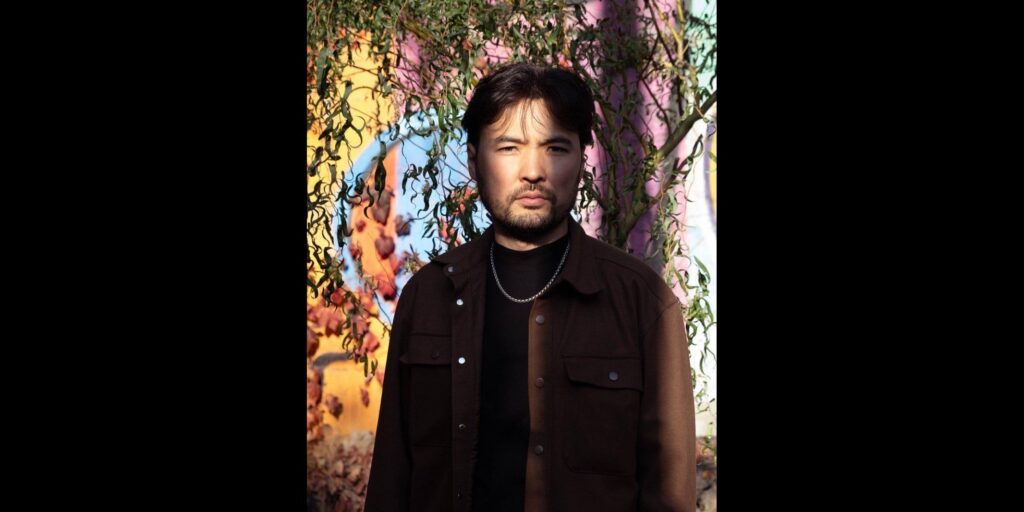
Contemporary theater in Kazakhstan is undergoing a period of active development, balancing the preservation of cultural heritage with the search for new forms of expression. The Times of Central Asia spoke with Abai Kazbayev, an actor at the Zhambyl Regional Russian Drama Theater who is currently studying acting and directing, about how the theater scene is evolving, the challenges faced by actors and directors, and why experimentation has become essential.
TCA: Tell us about yourself. How did your journey into theater begin, and what influenced your decision to become an actor?
Abai: I entered the profession through my love of cinema. At first, I took part in crowd scenes, and then I became fascinated with the filmmaking process itself. To deepen my involvement, I joined a private theater on the recommendation of friends. There, I had the opportunity to work with Saulius Varnas from Lithuania, as well as with professionals such as Marat Amirayev and Altynshash Shayakhmetova.
Today, I’m studying acting and directing at university, while also working at the Zhambyl Regional Russian Drama Theater.
TCA: How do you assess the current state of contemporary theater in Kazakhstan?
Abai: If we distinguish contemporary theater from traditional formats, most such productions are concentrated in Almaty. In other cities, theater tends to follow a more academic style, although there are exceptions.
Personally, I’m drawn to how contemporary theaters reinterpret and reimagine classical works. This approach attracts both new and more discerning audiences.
TCA: What makes Kazakhstani theater distinctive compared to that of other countries?
Abai: Its uniqueness lies in the combination of cultures. We have European forms, ballet and opera, alongside contemporary interpretations, including those inspired by Bulat Ayukhanov.
On the one hand, there are traditional productions about khans and batyrs; on the other, there are stories such as that of a boxer in Almaty in the 1980s, a stage adaptation of Martin Scorsese’s Raging Bull.
TCA: How can contemporary theater preserve national traditions while remaining engaging for younger audiences?
Abai: Through experimentation. For example, last year in Taraz, a sound drama based on Alexander Grin’s novella Scarlet Sails was staged. It offered a new interpretation: some lines were delivered in Kazakh, and Captain Grey’s song was also performed in Kazakh.
It was an attempt to reflect Kazakhstan’s multiculturalism. Interestingly, the production was staged by students from GITIS in Russia. I believe such experiments help attract younger audiences while preserving national traditions.
TCA: How important are elements of national culture, language, music, and folklore in today’s productions?
Abai: There’s currently a broader trend across the arts of returning to cultural roots, and theater is no exception. Every culture seeks self-identification. In cinema, folklore characters are widely used, particularly in the horror genre. In the theater, however, folklore tends to remain within traditional productions and is often treated with a sense of reverence.
At the same time, it is worth mentioning the ballet Aldar Köse at the Abai Kazakh National Theater of Opera and Ballet in Almaty.
TCA: How do you view experimental productions and contemporary interpretations of classical works?
Abai: Positively. Of course, there should be limits, but experimentation is essential to understanding how far we are willing to go.
TCA: Has the audience changed in recent years? Has it become more demanding?
Abai: It’s difficult for me to judge, as I’ve only been in the profession for a few years. However, I can share an example: a production staged by Saulius Varnas was considered too complex and surreal for Almaty audiences; some people left during the first half, perhaps because they didn’t understand it.
Today, it might be received differently. There is a noticeable increase in young people’s interest in the arts.
TCA: What challenges do theaters in Kazakhstan face today, financial, organizational, or creative?
Abai: In the regions, financial difficulties are probably the main issue due to smaller audiences. In Almaty, this problem is less pronounced, largely thanks to an influx of creative young people. Overall, there are more theaters there, especially private and contemporary ones.
TCA: How easy is it for younger directors and actors to bring their ideas to the stage?
Abai: It depends on how willing they are to work on themselves consistently. I can speak more confidently about acting than directing.
TCA: Do digital technologies and social media influence the development of theater?
Abai: Absolutely. It is a new reality that affects every sphere, from small cafés to theaters.
TCA: How do you see the future of Kazakhstani theater in the next 10-15 years?
Abai: We already have strong directors, such as Galina Pyanova, the artistic director of ARTiSHOCK Theater, one of the leading representatives of contemporary theater in Kazakhstan. I believe that in 10-15 years, there will be more theaters like this. At least, I hope so. ARTiSHOCK itself will likely grow into something even larger.