• KGS/USD = 0.01144 0%
  • KZT/USD = 0.00192 -0%
  • TJS/USD = 0.10849 0.37%
  • UZS/USD = 0.00008 0%
  • TMT/USD = 0.28571 0.28%
  • KGS/USD = 0.01144 0%
  • KZT/USD = 0.00192 -0%
  • TJS/USD = 0.10849 0.37%
  • UZS/USD = 0.00008 0%
  • TMT/USD = 0.28571 0.28%
  • KGS/USD = 0.01144 0%
  • KZT/USD = 0.00192 -0%
  • TJS/USD = 0.10849 0.37%
  • UZS/USD = 0.00008 0%
  • TMT/USD = 0.28571 0.28%
  • KGS/USD = 0.01144 0%
  • KZT/USD = 0.00192 -0%
  • TJS/USD = 0.10849 0.37%
  • UZS/USD = 0.00008 0%
  • TMT/USD = 0.28571 0.28%
  • KGS/USD = 0.01144 0%
  • KZT/USD = 0.00192 -0%
  • TJS/USD = 0.10849 0.37%
  • UZS/USD = 0.00008 0%
  • TMT/USD = 0.28571 0.28%
  • KGS/USD = 0.01144 0%
  • KZT/USD = 0.00192 -0%
  • TJS/USD = 0.10849 0.37%
  • UZS/USD = 0.00008 0%
  • TMT/USD = 0.28571 0.28%
  • KGS/USD = 0.01144 0%
  • KZT/USD = 0.00192 -0%
  • TJS/USD = 0.10849 0.37%
  • UZS/USD = 0.00008 0%
  • TMT/USD = 0.28571 0.28%
  • KGS/USD = 0.01144 0%
  • KZT/USD = 0.00192 -0%
  • TJS/USD = 0.10849 0.37%
  • UZS/USD = 0.00008 0%
  • TMT/USD = 0.28571 0.28%
11 December 2025

Victory Day in Central Asia: Honoring Sacrifice Amid Shifting Narratives

For the countries of Central Asia, Victory Day holds a deep significance. Although debates over the nature of the May 9 commemorations have intensified in recent years, the importance of the holiday remains unchallenged.

A War That Touched Every Family

Attitudes toward the celebration marking the defeat of Nazi Germany are largely shaped by each nation’s level of participation in the war effort. Kazakhstan mobilized over 1.2 million people, nearly 20% of its pre-war population of 6.5 million. Of these, more than 600,000 perished at the front, with an additional 300,000 dying in the rear due to malnutrition, forced labor, and inadequate medical care.

With a similar sized population, Uzbekistan sent approximately 1.95 million people to the front – or one in every three residents. Around 400,000 Uzbeks did not return home. Over 500 Kazakhstani and more than 300 Uzbekistani soldiers were awarded the title Hero of the Soviet Union.

Eternal flame and Crying Mother Monument, Tashkent; image: TCA, Stephen M. Bland

Kyrgyzstan, home to just 1.5 million people at the time, sent over 363,000 to the front. Approximately 100,000 perished, and 73 received the Hero of the Soviet Union medal. Tajikistan mobilized more than 300,000 troops, with over 100,000 never returning. Fifty-five Tajiks received Hero of the Soviet Union honors. Turkmenistan, with a population of 1.3 million, sent around 200,000 soldiers and officers; 16 received Hero status.

Central Asian soldiers played vital roles in major battles, including the defense of Moscow. They helped liberate territories across the Soviet Union and Eastern Europe. The region also contributed 20-30% of its horse population, then a central component of local economies, for military use.

The war profoundly reshaped Central Asia. Thousands of Soviet enterprises were relocated to the region, fueling industrialization. Millions of refugees from Nazi-occupied zones found sanctuary in Central Asian republics. Many children were taken in by local families and raised as their own.

Today, many in Central Asia feel that outsiders fail to grasp the weight of Victory Day. While countries like the UK, U.S., Italy, and France recorded wartime deaths of 380,000, 417,000, 479,000, and 665,000 respectively, the USSR suffered over 26 million losses. German losses are estimated at 8.4 million.

Celebrating Amid Controversy

Recent years have brought a shift in how Victory Day is perceived in Central Asia. Symbols such as the Guards ribbon, criticized for echoing imperial Russian motifs, have sparked debate. Some argue that the holiday reflects colonial oppression, as the peoples of Soviet Asia were conscripted into a foreign war. These debates have grown louder since Russia annexed Crimea in 2014, with some now viewing the May 9 celebrations as a tool of Russian influence in the region. Nonetheless, Central Asian leaders have rejected efforts to “cancel” Victory Day, reaffirming its deep personal and national resonance.

Efforts to distinguish the celebration from Russian state narratives are evident. Many events now emphasize patriotism rather than Soviet nostalgia. On May 7, Kazakhstan held its first military parade in Astana in seven years, marking both Defender of the Fatherland Day and the 80th anniversary of Victory Day. In Almaty, a procession called Batyrlarğa Tağzym (“Let’s Bow to the Heroes”) will honor Kazakhstani front-line soldiers. This event mirrors Russia’s “Immortal Regiment” but is positioned within a distinct national context.

Veterans will be honored across the region through concerts, shows, community festivals, and financial support. Kazakhstan plans to name over 500 streets after World War II veterans, according to President Kassym-Jomart Tokayev.

Military parades took place on May 8 in Bishkek and Dushanbe. In Tashkent and other Uzbek cities, major festivities are planned. Uzbekistan is leading the region in veteran support, providing $10,000 to each of the 82 surviving war veterans, one of whom is 114 years old. Kazakhstan will grant $9,686.90 to its 111 veterans. Kyrgyzstan’s 32 remaining veterans will receive $1,140 each. In Tajikistan, 17 veterans will receive $4,810, with those in Dushanbe getting an additional $2,000 from the city administration.

In contrast, Russian veterans will receive less than $1,000 each.

The Turkmen Rifles march in Red Square, Moscow; image: Telegram @ejpredbot

Against the backdrop of ongoing conflicts and shifting alliances, all five Central Asian leaders attended this year’s Victory Day parade on Moscow’s Red Square, which speaks volumes about the region’s delicate relationship with Russia. In Moscow, Vladimir Putin vowed that the Russian army would always stand up to “nazism,” a narrative previously used by Russia to justify its invasion of Ukraine. In one of a number of growing examples of Central Asia’s agency, however, Kazakhstan’s President Tokayev has voiced his support for Ukraine’s territorial integrity

Kazakhstan Plants Over 1 Billion Trees as Reforestation Drive Extends to 2027

Between 2021 and 2024, Kazakhstan planted a total of 1.15 billion tree saplings, according to the Ministry of Ecology and Natural Resources. The effort forms part of a sweeping national campaign aimed at reversing deforestation and mitigating climate impacts.

Initially, President Kassym-Jomart Tokayev had set a target of planting two billion trees by 2025. However, the government has now extended the deadline to the end of 2027 and re-approved its Comprehensive Plan for Reforestation and Afforestation.

As part of the initiative, one and two-year-old saplings of both deciduous and coniferous species are being planted across various ecosystems. Currently, 251 forest nurseries operate across the country on 3,178 hectares of land, producing more than 280 million saplings for future planting.

Urban greening is also a key focus. Under the presidential initiative to plant 15 million trees in cities and villages nationwide, 14.3 million have already been planted between 2021 and 2024. The plan calls for more than three million trees to be planted annually through 2025.

To support this effort, the government has approved detailed landscaping and green zone development plans for Kazakhstan’s regions, as well as for its three major cities, Astana, Almaty, and Shymkent.

Another priority is the afforestation of the dried bed of the Aral Sea, a critical environmental concern in Central Asia. Over the past three decades, trees and shrubs have been planted on more than 600,000 hectares of the former seabed, including 413,000 hectares over the last four years alone.

Kazakhstan Faces Record Power Deficit as Electricity Shortfall Hits 2.4 Billion kWh

Kazakhstan has experienced its most significant electricity imbalance in recent years. According to data from Energyprom.kz, the gap between electricity production and consumption reached 2.4 billion kilowatt-hours (kWh) in 2024, an increase of 200 million kWh from 2023, when the shortfall stood at 2.2 billion kWh. While the country’s total generation amounted to 117.9 billion kWh, domestic consumption exceeded 120.4 billion kWh.

Imports Offset Domestic Shortfalls

To address this growing energy deficit, Kazakhstan primarily imports electricity from Russia. Smaller volumes are supplied by Kyrgyzstan, although these are typically part of Russian transit deliveries to Kyrgyz consumers.

Despite these imports, domestic electricity generation continues to grow at a modest pace. In 2024, total generation rose by 4.2%, with a 3% year-on-year increase recorded in the first two months of 2025. Nevertheless, the production boost has not been sufficient to meet demand, necessitating continued reliance on external suppliers.

Decline in Coal Dependence

One notable trend is the gradual reduction in Kazakhstan’s dependence on coal-fired thermal power plants (TPPs), traditionally among the most polluting energy sources. In 2024, the share of coal-fired generation declined from 77.4% to 74.9%, equivalent to approximately 88.4 billion kWh of total output.

In contrast, the share of alternative power sources increased. Hydroelectric power plants (HPPs) contributed 9.5% of total generation, up 1.8 percentage points year-on-year, while gas turbine power plants (GTPPs) accounted for 10.1%, a 0.3-point increase. Renewable energy sources, including wind, solar, and biogas, produced 6.4 billion kWh, representing 5.4% of total electricity output.

Revised Forecasts and Growing Challenges

The Ministry of Energy of the Republic of Kazakhstan has updated its projections to reflect the sector’s challenges. As of early 2025, officials estimate the country’s electricity deficit could grow to 5.7 billion kWh by year-end. This revision stems from downgraded forecasts for generation volumes, which are now projected at 117.1 billion kWh, down from an earlier estimate of 121.8 billion kWh. Expectations for the commissioning of new generation capacity have also been lowered, further exacerbating the shortfall.

Nonetheless, government planners remain cautiously optimistic. If several large-scale energy projects move forward on schedule, the deficit could shrink to 2.6 billion kWh by the end of 2026. A full build-out of planned capacity could even lead to a surplus.

New Capacity and Long-Term Plans

The government has outlined plans to construct 59 new energy facilities with a combined capacity of 26.4 gigawatts (GW). These include both new builds and upgrades to existing plants. Major initiatives involve constructing a nuclear power plant (2.4 GW) and a third state district power station (GRES-3) with 2.6 GW of capacity. Additionally, 11 regional centers are set to receive combined-cycle gas turbines with a total capacity of 4.5 GW.

Renewable energy is also a key focus. By 2029, Kazakhstan aims to commission four large wind power plants equipped with energy storage systems, totaling 3.8 GW in capacity. These projects are being developed through intergovernmental agreements with investors from the United Arab Emirates, France, and China.

Victory Day Diplomacy: Central Asia’s Balancing Act and Putin’s Diminished Spotlight

Every year, Moscow’s Red Square transforms into a stage for one of Russia’s most celebrated traditions: Victory Day, an event which marks the Soviet Union’s triumph over Nazi Germany in World War II. Yet, as tanks roll through the cobblestone streets and military bands echo under the Kremlin walls, the occasion feels more heavily laden with geopolitical undertones than historical reminiscence these days. Against the backdrop of ongoing conflicts and shifting alliances, the presence of Central Asian leaders at this year’s event speaks to the region’s delicate relationship with the Russian Federation. But the question remains: amidst the pomp and circumstance, is there much for Vladimir Putin to celebrate?

Central Asia’s Careful Balancing Act

The attendance of Central Asian leaders at the Victory Day parade is a striking show of diplomatic choreography. On the surface, their presence will underscore the shared historical legacy of the Soviet era, when the sacrifices of the Central Asian republics contributed to the Allied victory in the Second World War.

However, a more pragmatic lens reveals a balancing act that defines the region’s foreign policy. The region finds itself at the crossroads of global powers vying for influence in Central Asia. While Moscow leans on historical ties and cultural commonalities to retain its sway, Beijing’s economic clout continues to reshape the region’s trade networks and infrastructure projects. Meanwhile, as the inaugural EU-Central Asia Summit attests to, the European Union is eager to expand its reach, whilst hungry for Rare Earth Elements in which the region is rich, the U.S. is waiting in the wings.

For Central Asian leaders, participating in Victory Day celebrations signals a nod to Russia’s historic role but also keeps the door open for economic and security cooperation. Amidst the shifting architecture of global politics, their diplomatic strategy remains one of pragmatism, seeking benefits from multiple partners while avoiding any over-alignment.

What Does Russia Gain from the Optics?

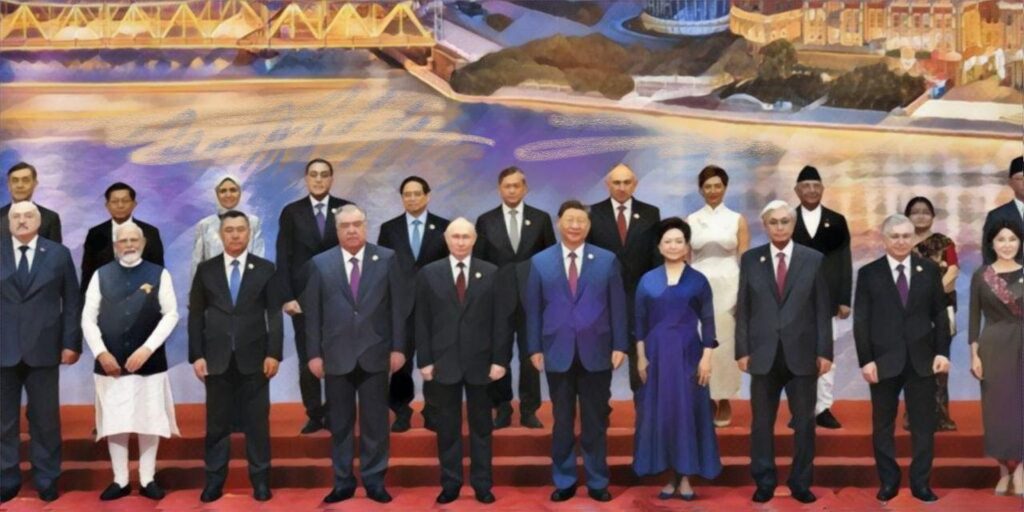
The presence of 29 leaders from across the globe – including Chinese President Xi Jinping – offers Moscow valuable optics at a time when its international relationships face significant strain. Last year, only nine attended. Isolated by Western sanctions over the invasion of Ukraine and with much of the world’s media painting Russia as cut off from the global stage, the impression of a united front with Central Asia helps the Kremlin portray the opposite.

Victory Day, therefore, becomes a geopolitical tool, with the attendance of Central Asian leaders enabling Putin to send a message of shared unity within Russia’s historical sphere of influence. It tells both domestic and international audiences that Moscow retains significant allies, reinforcing the image of resilience despite ongoing challenges.

How Much Does Moscow Truly Celebrate?

The Victory Day parade is an event that is watched by an estimated three-quarters of the Russian public, drumming up patriotism as the state seeks to become the custodian of collective memory. Behind the spectacle, however, signs of disquiet are proving hard to ignore. Russia’s invasion of Ukraine has disrupted trade and migration flows central to its ties. The war has also starkly exposed the limits of Moscow’s power. Sanctions have weakened its economy, leaving Central Asia less dependent on Russian investments. Meanwhile, China continues to rise as the dominant force in the region’s economic development, chipping away at Russia’s influence.

Even as Central Asian leaders attend events in Moscow, therefore, they tread with caution. Kazakhstan, for example, has refused to recognize Russia’s annexation of Ukrainian territories. President Tokayev has voiced his support for Ukraine’s territorial integrity, making it clear that sovereignty and territorial integrity are also paramount concern for Kazakhstan. This serves to illustrate how the purported unity displayed at Victory Day parades is complicated. While maintaining relations with Russia remains important, Central Asian countries do not want to be drawn into Moscow’s geopolitical confrontations.

Central Asia’s Ascendant Voice

In the so-called ‘New Great Game,’ Central Asian nations find themselves in a stronger position than before. Their ability to engage both Russia and China while also exploring relationships with the U.S., Turkey, and the European Union, grants them leverage. Leaders in the region are increasingly pushing back when their sovereignty is questioned, as seen in Kazakhstan’s refusal to accede to all of Russia’s demands related to sanctions enforcement and its cautious neutrality over the Ukraine war. A bold stance was also taken by Uzbekistan in its summoning of the Russian Ambassador over annexation comments made by the far right in Moscow.

The Real Takeaway from Victory Day

For Central Asia, Victory Day celebrations in Moscow are less about solidarity with Russia and more about safeguarding their interests. By attending, leaders strike a delicate balance, acknowledging a shared history without endorsing Moscow’s current actions on the world stage. This calculated diplomacy allows them to ensure stability in their relationships with Russia while continuing to expand alliances with other global powers.

For Vladimir Putin, this cautious allegiance may not be a cause for celebration, but it is much needed. Russia’s influence in Central Asia has not completely waned, even if the region’s priorities have shifted. So, while Moscow puts on its grand spectacle, the broader narrative reveals a world where former Soviet republics are increasingly finding their voice, even as they stand in Red Square.

Kazakhstan’s Lower House Passes Controversial New Tax Code Amid Public Backlash

On April 30, the Mazhilis, the lower house of Kazakhstan’s parliament, approved a new Tax Code by majority vote. The draft law, part of President Kassym-Jomart Tokayev’s broader economic reforms, has triggered intense public and political debate. While proponents highlight its emphasis on modernization and fairness, critics warn of increased pressure on businesses and potential inflation. The final decision now rests with the president, following Senate review.

Key Reforms and Adjustments

According to Berik Beisengaliyev, head of the Mazhilis working group, the final version of the Tax Code diverges significantly from the original draft submitted in August 2024.

One of the major changes concerns VAT (value-added tax). The government’s initial proposal to raise the VAT rate to 20% was scaled back to 16%. The threshold for mandatory VAT registration has been raised from 15 million to 40 million tenge. Reduced VAT rates are set for medical services and medicines, 5% from 2026 and 10% from 2027. Goods and services tied to guaranteed free medical care, compulsory health insurance, and treatment of orphan and socially significant diseases will be VAT-exempt.

Additionally, the VAT exemption will extend to socially significant food items, books published domestically, and related publishing services. Agricultural producers will benefit from a higher VAT offset, increased from 70% to 80%.

Other reforms include a shift from a permissive to a prohibitive activity list, with a unified 4% tax rate that regional maslikhats can adjust by ±50%. Special tax regimes for business-to-business transactions are also being expanded.

Corporate income tax (CIT) has been reduced to 5% from 2026 and 10% from 2027 for social sector organizations. The social tax deduction for people with disabilities has increased to 5,000 MCI (19.6 million tenge in 2025). Meanwhile, the CIT rate for banks and the gambling industry has been raised to 25%, though a 20% rate remains on banks’ business lending income.

A progressive income tax scale will be introduced: 10% on annual wages up to 8,500 MCI (33.5 million tenge or roughly $65,000), and 15% on income above that threshold. For dividends, the rate will be 5% on income up to 230,000 MCI (1 billion tenge, or $2 million), and 15% thereafter.

The code also proposes higher excise taxes on alcohol, tobacco, and heated tobacco products, along with a new excise on energy drinks as part of a health initiative.

Land use provisions have been amended to penalize inefficient use of agricultural land, with payment rates increasing up to 100-fold. Mineral resource usage rates will vary based on license duration and the number of plots held.

Political Dissent and Criticism

The Ak Zhol party opposed the code in both readings, citing disproportionate fiscal burdens on SMEs while sparing large extractive firms. The party also criticized the VAT hike as inflationary and warned about the opaque nature of the risk management system (RMS), which they say allows for discretionary actions by tax authorities.

“The code is bloated with over 100 new articles, making it more difficult for entrepreneurs to navigate. This is not what President Tokayev instructed,” the party stated.

Mazhilis member Erlan Stambekov abstained from voting and publicly explained his reasons:

“I couldn’t vote ‘yes’ because I believe these changes do not support the development of our economy or SMEs. Quite the opposite,” he wrote on Facebook. “The code is being used to plug a fiscal gap the government can’t cover, even with National Fund borrowings.”

Political analyst Daniyar Ashimbayev echoed these concerns, suggesting that the reform package was poorly timed and inadequately managed:

“Of all the fiscal policy scenarios, the most unfortunate was chosen at the most unfortunate time. Many officials appear unconvinced, some remain silent, and others voice their views on social media. It signals a lack of political coordination and common-sense governance.”

Uncertain Presidential Approval

Despite its passage in the Mazhilis, the future of the new Tax Code remains uncertain. Given the public and political pushback, President Tokayev may call for revisions or delays. As Ashimbayev put it, this could be a moment to “let off steam” rather than push through contentious reforms unchanged.

Soviet-Era Spacecraft May Crash to Earth This Week, Uzbekistan Among Monitored Zones

As previously reported by The Times of Central Asia, a Soviet spacecraft launched from Baikonur more than five decades ago is expected to re-enter Earth’s atmosphere between May 9 and 11, 2025. Known as Kosmos-482, the probe was part of the Soviet Union’s Venera program aimed at exploring Venus. However, due to a launch failure in 1972, it never escaped Earth’s orbit and has been circling the planet ever since.

Kosmos-482 was engineered to endure the extreme conditions of Venus, making it significantly more robust than typical satellites. Its descent module, weighing around 495 kilograms (approximately 1,100 pounds), features a durable titanium shell, raising the possibility that parts of the spacecraft could survive re-entry and reach the Earth’s surface.

Experts estimate the spacecraft will re-enter at speeds of up to 27,000 kilometers per hour (around 17,000 miles per hour). The potential impact zone spans between 52 degrees north and south latitude, covering much of the inhabited world. Despite this wide range, the risk to human life is regarded as minimal. Most likely, the spacecraft will either disintegrate in the atmosphere or fall into the ocean.

In Uzbekistan, the national space agency Uzcosmos has assessed the probability of debris landing within the country at between 0.3% and 0.5%. Ahror Agzamov, head of the New Technologies Department at Uzcosmos, stated that while the risk is low, the agency is closely monitoring the situation.

“While most of the spacecraft will burn up upon re-entry, the nearly half-ton titanium sphere, designed to operate under Venus’s harsh conditions, poses a particular concern,” Agzamov explained. “It is expected to survive re-entry, and despite being equipped with a parachute, that system may not function after 53 years in space. The object could strike the Earth at speeds up to 500 kilometers per hour.”

Agzamov cautioned the public against interacting with any debris. Due to the possibility of hazardous chemical residues in the spacecraft’s components, any discovered fragments should be reported immediately to local authorities, he stated.

Uzbekistan’s Role in the Venera Program

Uzbekistan has a historical connection to the Soviet space program. The former Tashkent Mechanical Engineering Design Bureau contributed to the later stages of the Venera missions by developing soil sampling and drilling equipment used on Venera-13 and Venera-14 (1982), and Vega-1 and Vega-2 (1985). These devices were tested at a facility in the village of Nevich in the Tashkent region.

As Kosmos-482 begins its final descent, space agencies around the world continue to track its trajectory to provide timely updates and ensure public safety.