• KGS/USD = 0.01144 0%
  • KZT/USD = 0.00215 0%
  • TJS/USD = 0.10718 0.28%
  • UZS/USD = 0.00008 0%
  • TMT/USD = 0.28530 0%
  • KGS/USD = 0.01144 0%
  • KZT/USD = 0.00215 0%
  • TJS/USD = 0.10718 0.28%
  • UZS/USD = 0.00008 0%
  • TMT/USD = 0.28530 0%
  • KGS/USD = 0.01144 0%
  • KZT/USD = 0.00215 0%
  • TJS/USD = 0.10718 0.28%
  • UZS/USD = 0.00008 0%
  • TMT/USD = 0.28530 0%
  • KGS/USD = 0.01144 0%
  • KZT/USD = 0.00215 0%
  • TJS/USD = 0.10718 0.28%
  • UZS/USD = 0.00008 0%
  • TMT/USD = 0.28530 0%
  • KGS/USD = 0.01144 0%
  • KZT/USD = 0.00215 0%
  • TJS/USD = 0.10718 0.28%
  • UZS/USD = 0.00008 0%
  • TMT/USD = 0.28530 0%
  • KGS/USD = 0.01144 0%
  • KZT/USD = 0.00215 0%
  • TJS/USD = 0.10718 0.28%
  • UZS/USD = 0.00008 0%
  • TMT/USD = 0.28530 0%
  • KGS/USD = 0.01144 0%
  • KZT/USD = 0.00215 0%
  • TJS/USD = 0.10718 0.28%
  • UZS/USD = 0.00008 0%
  • TMT/USD = 0.28530 0%
  • KGS/USD = 0.01144 0%
  • KZT/USD = 0.00215 0%
  • TJS/USD = 0.10718 0.28%
  • UZS/USD = 0.00008 0%
  • TMT/USD = 0.28530 0%

European Summit in Yerevan Sends a Signal to Central Asia

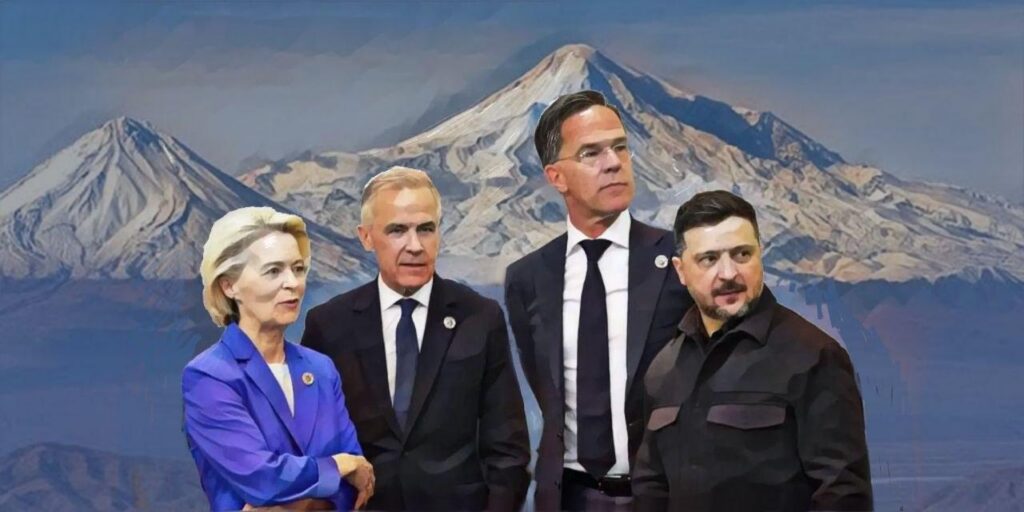
The 8th European Political Community summit in Yerevan highlighted deepening geopolitical fault lines while signaling that some post-Soviet countries, notably Azerbaijan and Armenia, are gradually shifting their geopolitical orientation away from Moscow. It is a realignment that Central Asian states are watching with increasing interest.

On May 4, attention across post-Soviet space, from Russia and Belarus to Central Asia and the South Caucasus, turned toward Yerevan. Armenia, still a member of the Commonwealth of Independent States and the Eurasian Economic Union and formally tied to the Collective Security Treaty Organization despite freezing its participation, hosted Europe’s political leadership.

Among those attending were French President Emmanuel Macron, NATO Secretary General Mark Rutte, European Commission President Ursula von der Leyen, European Council President António Costa, and prime ministers including Donald Tusk, Keir Starmer, and Petteri Orpo. Azerbaijani President Ilham Aliyev participated via video link.

No Central Asian leaders attended the summit. Even so, the gathering carried a message for the region. Armenia hosted Europe’s political leadership while remaining tied to Moscow-led structures, including the CIS and the Eurasian Economic Union. For Central Asian governments pursuing their own multi-vector policies, the summit showed how a post-Soviet state can widen its diplomatic options without a clean break from Russia.

The parallel is not exact, but it is visible. Kazakhstan and Kyrgyzstan remain in the Eurasian Economic Union, while Kazakhstan, Kyrgyzstan, and Tajikistan remain in the CSTO. All five Central Asian states maintain working ties with Moscow, while expanding contacts with the EU, Turkey, China, and the Gulf, part of a wider effort to diversify foreign policy options through closer engagement with Europe and other outside powers.

Turkey was represented by Vice President Cevdet Yılmaz, the highest-level Turkish official to visit Armenia since then-President Abdullah Gül in 2008.

Turkey and Azerbaijan largely positioned themselves as counterweights to the dominant European framing, marking one of the summit’s key geopolitical divides. Aliyev adopted a confrontational tone, announcing a suspension of relations with the Parliamentary Assembly of the Council of Europe and the European Parliament.

“Instead of addressing fundamental problems of some member states, such as xenophobia, Islamophobia, antisemitism, migration, competitiveness, and homelessness, the European Parliament targets Azerbaijan, spreading slander and lies,” Aliyev said. “And the reason is that Azerbaijan restored its territorial integrity and sovereignty, put an end to separatism, and brought war criminals to justice.”

In response, António Costa sought to soften tensions, emphasizing the summit’s historical significance as the first of its kind held in the South Caucasus and highlighting Aliyev’s participation as a symbol of peace efforts in the region.

Cevdet Yilmaz focused on bilateral diplomacy, meeting Romanian President Nicușor Dan to discuss trade, regional issues, and global challenges.

He also held talks with Armenian Prime Minister Nikol Pashinyan, the summit’s host. The two sides signed a memorandum of understanding on the joint restoration of the historic Ani Bridge, located on the border between the two countries and dating back to the 11th century.

Yilmaz suggested that Armenia would benefit from closer alignment with Turkey and Azerbaijan, citing regional stability and economic integration.

“This is one of the most strategically important regions in the world. Historically, it has always been a transit region. We believe that with the establishment of peace and normalization of the situation in the South Caucasus, all residents of the region will benefit first and foremost. Azerbaijan, Armenia, and Turkey—all these countries will benefit,” he said.

European leaders used the summit to highlight other geopolitical tensions. Russian President Vladimir Putin and Belarusian President Alexander Lukashenko were again framed as adversaries.

Ukrainian President Volodymyr Zelenskyy, invited to the summit, warned that the coming months would be decisive.

“This summer will be the moment when Putin decides what to do next. We must push him toward diplomacy and not agree to sanctions relief,” Zelenskyy said.

Belarusian opposition leader Sviatlana Tsikhanouskaya was also invited, underscoring Europe’s stance toward Minsk.

Another focus of discussion was U.S. President Donald Trump, particularly his recent statements on tariffs on EU cars and plans to significantly reduce U.S. troop numbers in Germany.

“This has been discussed for a long time, but the timing of this announcement was certainly unexpected,” EU foreign policy chief Kaja Kallas said, adding that it underscored the need to strengthen Europe’s role within NATO.

Macron described the summit as part of a broader “European awakening” driven by developments in Ukraine and Moldova, and included Armenia in this process.

“Let’s be honest: eight years ago, no one would have come here. Eight years ago, this country was considered a de facto Russian satellite at the negotiating table,” he said.

Despite criticism, Macron’s remarks pointed to a longer-term shift in Armenia’s geopolitical trajectory, one that has been developing over the past decade.

Notably, the presence of Russian military bases in Armenia did not prevent the summit from taking place, nor did it hinder Zelenskyy’s participation.

The Yerevan summit thus underscored a broader geopolitical realignment. For Central Asia, the signal was not that Armenia offers a model to copy, but that Europe is becoming more willing to engage with post-Soviet states seeking wider diplomatic space beyond Moscow.

Turkmenistan Highlights International Outreach at Cabinet Meeting

A recent Cabinet meeting in Turkmenistan highlighted contacts with many countries and international organizations, reinforcing a perception that the tightly managed nation is taking more steps, however limited, to engage the world.

Appearing via video link, President Serdar Berdimuhamedov presided over the May 1 meeting of ministers who covered economic growth, oil and natural gas production, scientific research, and other national priorities in a review of the year so far. But international outreach was a big part of the high-level discussion in an energy-rich Central Asian country often defined as opaque and restrictive.

An account of the meeting by the Turkmenistan State News Agency (TDH) ticked off statistics: 220 delegations visited Turkmenistan this year, 400 delegations from Turkmenistan visited other countries, 711 negotiations and other meetings occurred in the country with foreign states and international agencies, and 57 more international documents were added to Turkmenistan’s legal code.

“The development of diplomatic relations through foreign embassies is one of the important directions of the foreign policy work of neutral Turkmenistan,” said the report, referring to the country’s policy of non-alignment and not getting involved in the internal affairs of other countries.

“Work on promoting relations with the countries of the Middle East is also ongoing,” it said.

Iraq opened its embassy in Ashgabat in March, 17 years after Turkmenistan and Iraq established diplomatic relations in 2009. On May 4, Rashid Meredov, Turkmenistan’s foreign minister, spoke by telephone with Iranian Foreign Minister Abbas Araghchi about regional security, Caspian issues, and other matters, according to the Turkmen Foreign Ministry. The ministry’s statement did not mention the Iran conflict or uncertainty surrounding the ceasefire with the United States.

Turkmenistan’s international campaign is consistent with a pattern seen across Central Asia, where governments have sought to diversify their trade and diplomatic ties while maintaining close relations with the region’s major powers, Russia and China. Turkmenistan, however, still exports most of its natural gas to China, its largest trading partner.

At the same time, Turkmenistan is intensifying efforts to integrate into the global trading system, with officials reaffirming plans to move towards membership in the World Trade Organization (WTO). It is the last post-Soviet republic to start WTO accession talks.

Turkmenistan’s leaders are also working on their international profiles.

Berdimuhamedov attended an ecological summit of regional leaders in Kazakhstan last month. His father and predecessor, Gurbanguly Berdimuhamedov, traveled to the U.S. in February, China in March, and Austria in April. This month, he is due to travel to the Russian city of Kazan. Although government transparency is limited in Turkmenistan, father and son appear to run the country through a power-sharing arrangement.

Outsiders are getting more glimpses of Turkmenistan. The capital, Ashgabat, hosted an international tourism conference in April. This month, the Reuters news agency reported on a trip there after being given what it said was “rare access” to travel in the country.

It remains unclear, however, whether any efforts to engage with the outside world will materially change daily life in Turkmenistan, where people have limited access to information and face other tight restrictions.

Two Killed in Explosion at Industrial Plant in Eastern Kazakhstan

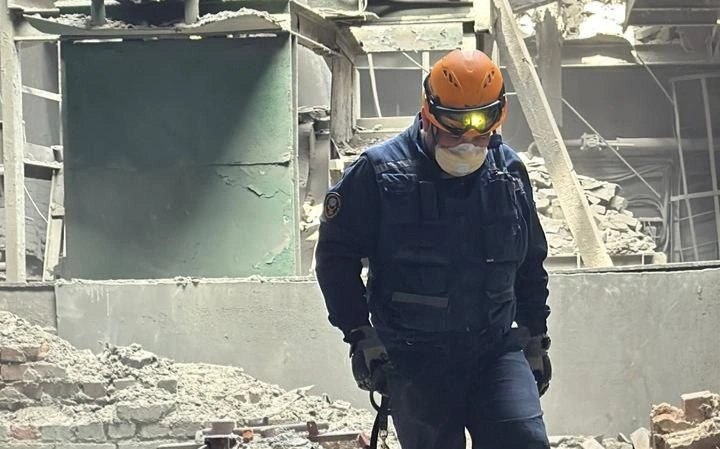
Two people were killed and nine injured in an explosion at a facility operated by Kazzinc in Ust-Kamenogorsk, local authorities and emergency services said.

The incident occurred at around 8 a.m. on May 5. According to preliminary information, a dust-collection unit malfunctioned in one of the workshops, followed by a fire and the partial collapse of building structures.

Emergency crews from the Ministry of Emergency Situations of Kazakhstan were quickly dispatched to the scene, deploying 10 fire units.

“Rescuers are clearing debris and extinguishing remaining fire sources until the situation is fully contained. Search operations for victims are ongoing. According to preliminary information, four people are being transported to medical facilities,” the ministry said.

Local health authorities later reported that the number of injured had risen to nine. Three remain in serious condition: two have been hospitalized, while one received resuscitation at the scene.

“One of the injured was transported to a medical facility by employees of the enterprise,” the Ust-Kamenogorsk health department said.

Following the explosion, thick smoke rose above the plant, prompting specialists from the East Kazakhstan regional Department of Ecology to carry out air quality monitoring at the boundary of the sanitary protection zone.

“We deployed a mobile laboratory to the sanitary protection zone first. Measurements have already been taken at two points, and we are now moving to a third point in the northwestern direction from the plant, following the wind,” said department head Aset Suleimenov.

He added that four to five locations would be tested, primarily along the direction of the smoke plume. Results will be released later.

Authorities subsequently confirmed that two people had died in the incident. Prime Minister Olzhas Bektenov said he had taken the situation under personal control.

“This morning I issued the necessary instructions regarding the explosion in Ust-Kamenogorsk. The Ministry of Emergency Situations, environmental authorities, and regional administrations must take all necessary measures and report back to me. This issue will remain under my personal control,” he said at a government meeting.

The Kazzinc site in Ust-Kamenogorsk is a major metallurgical complex that includes zinc, lead, and copper production, as well as precious metals refining and sulfuric acid production.

Ust-Kamenogorsk is considered one of Kazakhstan’s most environmentally affected cities, where the concentration of metallurgical enterprises frequently leads to air pollution levels exceeding permissible limits.

Glencore, a multinational commodity trading and mining company, is a major shareholder in Kazzinc, which was established in 1997. The company is a major producer of zinc, as well as lead, copper, and precious metals.

UNEP Interview: From Space, Central Asia’s Methane Challenge Comes Into Focus

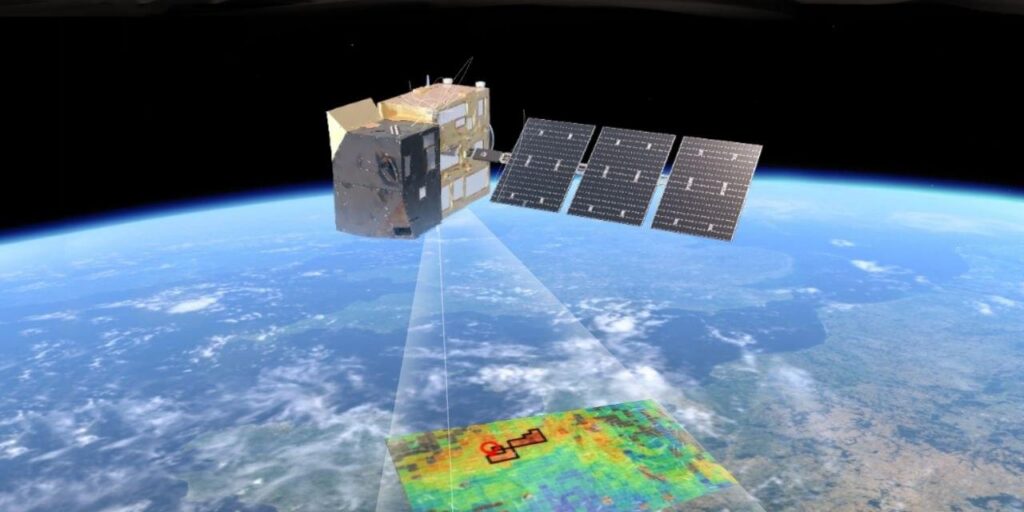
Satellites are changing the way the world sees methane. What was once an invisible leak from a well, flare, pipeline, landfill, or coal mine can now be detected from space, traced to a specific site, and sent to governments and companies for action.

A new analysis by the United Nations Environment Programme’s International Methane Emissions Observatory puts that system to the test. Its Methane Alert and Response System, known as MARS, uses 35 satellite instruments to identify major human-caused methane “super-emitters” and notify those responsible. UNEP says the system has already enabled 41 mitigation cases in 11 countries, covering sources estimated to have released 1.2 million tonnes of methane.

For Central Asia, the findings are especially relevant. UNEP’s new data includes a rolling list of the world’s 50 largest satellite-detected methane sources, covering oil and gas, coal, and waste, and shows where rapid action may be possible. Several of those sources are linked to Turkmenistan’s oil and gas sector, placing the region firmly inside a global debate over methane transparency, climate responsibility, and whether satellite alerts can lead to action on the ground.

Of the 50 sources featured in the latest UNEP/IMEO snapshot, China has the largest number, while Turkmenistan stands out sharply for Central Asia, with the second-largest individual source and four of the top ten.

Methane is shorter-lived than carbon dioxide, but far more powerful in the near term. That makes cutting large leaks one of the fastest ways to slow global warming. The harder question, as UNEP’s latest data makes clear, is no longer only where the leaks are, but who responds when they are found.

On April 30, UNEP/IMEO presented the new MARS findings, highlighting the growing role of satellite-based monitoring in identifying major methane sources and pressing governments and companies to act. The Times of Central Asia spoke with Meghan Demeter, MARS Programme Manager, International Methane Emissions Observatory, UNEP.

TCA: What does the new MARS data reveal about Central Asia specifically that may surprise readers?

Demeter: The latest MARS data products depict the region as one with growing engagement and significant mitigation potential. Responses to MARS notifications are increasing, supported in particular by designated national focal points who play a key role in coordinating follow-up with operators. Based on the published 2025 data alone, the response rate across Central Asia currently stands at 22%.

Managing a high volume of alerts requires more effort to achieve very high response rates compared to countries that receive only a handful of notifications. Encouragingly, the region has already recorded nearly 20 mitigation cases, underscoring the strong potential for emissions reductions when large methane sources are identified and addressed.

TCA: Why does Central Asia matter in the global methane debate, even if it is not the world’s largest methane-emitting region?

Demeter: Across Central Asia, looking at the 2025 data alone, UNEP’s International Methane Emissions Observatory, through the Methane Alert and Response System (MARS), detected and notified 298 emission sources from the oil and gas sector. While satellites detect only a fraction of global methane emissions, satellites are highly effective at identifying so-called “super-emitters,” methane emission events so large they can be detected from space. These represent opportunities where action can deliver the greatest and fastest climate wins, while also catalyzing broader change.

Regarding the “top 50” list of emission events, 11 of these sources are located in Central Asia, all from the oil and gas sector—the sector that also has the most potential for rapid, low-cost mitigation. This means that the region has high mitigation potential.

It is important to note that this is dynamic. We expect the “top 50” list to evolve over the coming months, as satellite detection capabilities vary with observation conditions, including seasonal weather patterns such as cloud cover.

Satellite detection is only one part of the solution. To address the broader methane challenge, we have to work system-wide. That means improving measurement and reporting to tackle smaller, more diffuse emissions in the oil and gas sector, which is what UNEP’s Oil and Gas Methane Partnership 2.0 (OGMP 2.0) is designed to do.

TCA: Beyond the broad oil and gas picture, what types of sites are most visible in the satellite data?

Demeter: In terms of sectors, oil and gas sector sources dominate in most countries, but we also see significant emissions from waste, for example, at a landfill near Tashkent in Uzbekistan, which is most visible during the summer months.

In terms of emission sources within the oil and gas sector, most emissions come from malfunctioning flares, gas disposal facilities, and, frequently, significant emissions from midstream facilities (pipelines), all with very high mitigation potential. Although aging infrastructure in the region remains a significant challenge, with some methane leaks requiring major infrastructure fixes or replacements, documented cases already signal tremendous potential for quick, high-impact action in this region.

TCA: Can you give a simple example of how a satellite detection becomes a confirmed mitigation case?

Demeter: MARS is designed to turn satellite observations into real-world action.

First, IMEO analyses satellite data to detect large methane plumes and attribute them to specific facilities and operators. Once attributed, UNEP notifies the relevant government authorities and, where applicable, the operating company. (We directly notify companies that are members of OGMP 2.0.)

Along with the notification, we ask stakeholders to provide feedback about the detected emission event, including the emission source, an explanation for the cause of emissions, and any mitigation actions taken or status updates on the emissions. That information requires operators to investigate the emissions on the ground.

Finally, IMEO continuously monitors the site to track progress and confirm when emissions are no longer observable by satellites.

recent case in Kazakhstan illustrates how this works in practice. After a satellite detection, the operator located a methane leak using simple Audio‑Visual‑Olfactory (AVO) checks and soap‑foam testing. The team quickly identified a faulty valve, replaced it, and fully stopped the emissions. This case shows that, while some methane reductions require complex, long‑term solutions, others can be achieved rapidly with basic techniques and straightforward repairs, delivering immediate climate benefits.

TCA: What would measurable progress in Central Asia look like over the next year or two: fewer large plumes, faster responses, stronger reporting, or something else?

Demeter: Measurable progress would be reflected across several dimensions.

First, we would hope to see an increase in MARS response rates across all countries, which would signal stronger engagement and more effective follow-through. Responding to a MARS alert requires governments and operators to acknowledge alerts, investigate the source of emissions, and provide timely, substantive feedback on root causes and mitigation actions.

As countries increasingly investigate major emission sources and take action to address them, we would expect to detect fewer large methane plumes over time, reflecting effective mitigation of the biggest sources.

Lastly, but equally important, is progress on improved measurement and reporting to tackle smaller, more diffuse emissions in the oil and gas sector, which is what UNEP’s OGMP 2.0 is designed to do. That means seeing current Central Asian OGMP 2.0 members advance through OGMP 2.0’s reporting framework, as well as OGMP 2.0 membership growing in the region.

Opinion: The Regional Ecological Summit and the Making of a Central Asian Voice

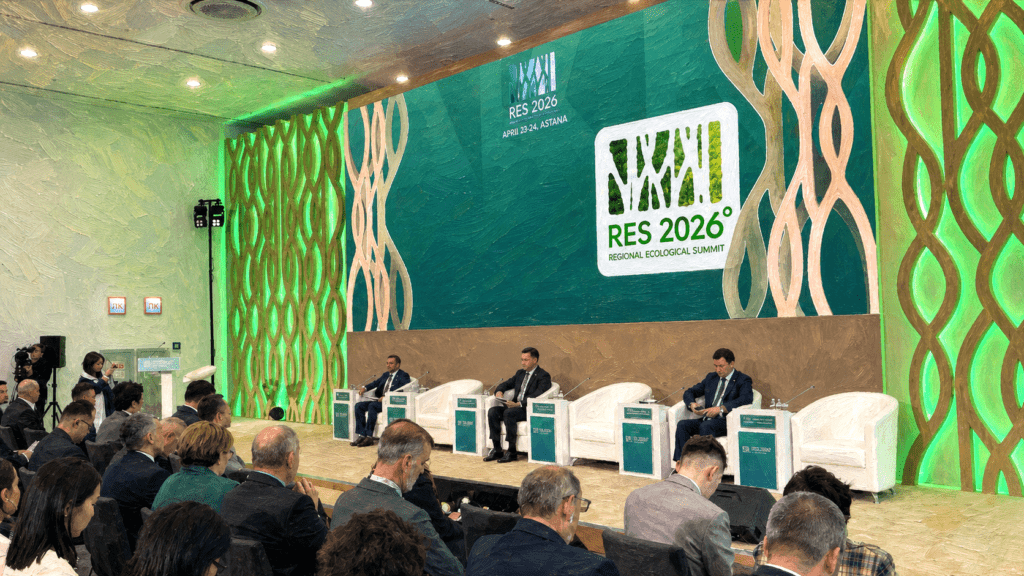
On 22–24 April, Astana hosted the Regional Ecological Summit—a gathering of governments, international organizations, financial institutions, and civil society that marked a new level of ambition in Central Asia’s environmental diplomacy. Fifty-eight sessions were held across three days at a moment when Central Asia’s ecological agenda is becoming inseparable from its political and economic future.

The opening ceremony was attended by the presidents of all five Central Asian states. The summit adopted the Astana Declaration on Ecological Solidarity in Central Asia and brought renewed attention to the need to reform the International Fund for Saving the Aral Sea (IFAS). Taken together, these developments signal more than procedural diplomacy. They point to growing political momentum.

The region has never lacked shared history or channels of communication. Russian remains a practical language of intergovernmental exchange, and borders, economies, rivers, energy systems, and labor markets have tied these countries together long before contemporary climate diplomacy gave this interdependence a new vocabulary.

For decades, much external analysis of Central Asia expected this interdependence to produce confrontation, particularly around water and energy. Those risks remain real. Yet the Astana summit showed a more complex trajectory. Climate change, biodiversity loss, water insecurity, land degradation, and food security are not separate national problems neatly contained within borders. Addressing them is becoming one of the fields through which regional coherence is being built.

The significance of the Summit lies less in ceremonial language than in the consolidation of multiple ecological agendas into a visible diplomatic architecture. Through its panels and high-level discussions, the Summit placed Central Asia’s natural heritage not at the margins of development but at its center. Ecosystems, rivers, glaciers, mountains, and landscapes are not only environmental assets. They are conditions for prosperity, stability, and resilience.

Kazakhstan’s chairmanship of IFAS reopened the question of whether the Fund, long criticized for its limitations, can be reworked rather than left as a symbol of failed regional environmental governance. Kazakhstan’s proposal for an International Water Organization should be read in the same frame: it is not merely a technical proposal about water governance but an attempt to move a Central Asian concern into the language of global institutional reform.

Kyrgyzstan’s mountain agenda and Tajikistan’s glacier diplomacy also belong to this broader pattern. They are not just isolated national branding exercises. Together with Uzbekistan’s increasingly active regional posture, they form a wider mosaic: each country brings a distinct ecological priority, but these priorities are becoming legible as parts of one regional perspective, and its voice carries more weight when presented as such.

This is particularly important in the current geopolitical moment. As larger powers turn inward, compete over corridors, or speak about Central Asia through the old grammar of influence, the region is attempting to define itself not as terrain for another “Great Game” but as a pole of its own. This does not mean distance from external partners. On the contrary, the United Nations was a strategic partner of the Summit, and many formats involved major international organizations, European partners, development institutions, and civil society. The difference is in the direction of agency: external engagement is increasingly being organized around regional priorities, not merely around external agendas.

The limitations, however, are equally clear. The summit exposed the financial asymmetry at the heart of climate politics. Central Asia contributes only a small share of global greenhouse gas emissions, yet it is disproportionately affected by its impacts, warming around twice as fast as the global average. Shrinking glaciers, droughts, floods, and deteriorating water systems are already visible across the region.

Without more accessible and better-targeted climate finance, regional declarations will struggle to translate from diplomatic coherence into concrete implementation.

This is where a common regional voice becomes more than symbolism. Individually, Central Asian states can present national adaptation needs. Collectively, they can argue that the region’s climate vulnerability is systemic, transboundary, and underfinanced. That argument is more difficult to ignore.

Astana did not resolve the contradictions of Central Asian ecological politics. It could not. IFAS reform remains difficult. Climate finance remains insufficient. Water management is politically sensitive. But the Summit made visible something that has been developing for some time: Central Asia is no longer only reacting to ecological risks.

In a fragmented international environment, Central Asia is trying to convert risk into a basis for regional diplomatic weight, and this may become one of the region’s most important political resources.


The views expressed in this article are those of the author and do not necessarily reflect the official policy or position of the publication, its affiliates, or any other organizations mentioned.

Michael Daniel Appointed Head of Kazakhstan’s Aviation Administration

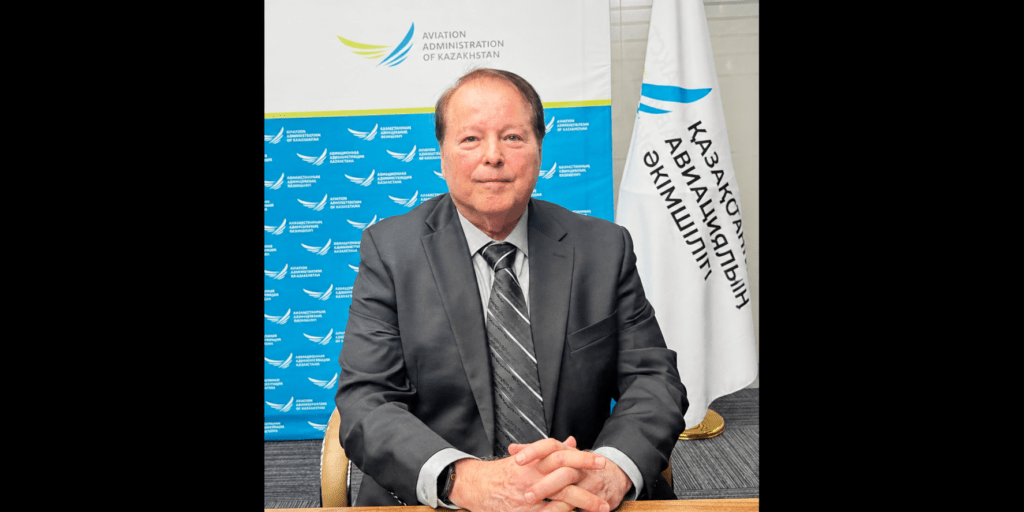
Kazakhstan has appointed U.S. aviation veteran Michael Daniel as chief executive officer of the Aviation Administration of Kazakhstan, a step that officials say is linked to plans for direct flights to the United States.

Daniel took up the post on May 4. He has more than 40 years of experience in civil aviation and holds a degree in aeronautics from Embry-Riddle Aeronautical University.

He began his career at the U.S. Federal Aviation Administration (FAA), where he served as a flight operations inspector, aircraft certification specialist, and head of flight safety. He later worked on international programs and policy and held posts in Frankfurt, New York, and Washington.

From 2006 to 2009, Daniel led the FAA’s international office in Singapore and Beijing, overseeing foreign repair stations and international safety assessments.

During his career, he also took part in international initiatives, including work within Asia-Pacific Economic Cooperation (APEC), and cooperated with the International Civil Aviation Organization on safety oversight and evaluation.

Kazakhstan’s Civil Aviation Committee said one of Daniel’s main priorities will be the launch of direct flights to the U.S. Aviation expert Abul Kekilbayev said the appointment appeared to be tied to that objective.

“The aircraft have already been bought, you need to pass an audit for compliance,” he said.

Before direct flights can begin, airlines from Kazakhstan will need to complete several stages of approval with U.S. regulators. Those steps include obtaining authorization from the U.S. Department of Transportation and then applying to the FAA, which will assess whether Kazakhstan meets international aviation safety standards.