• KGS/USD = 0.01144 0%
  • KZT/USD = 0.00216 0%
  • TJS/USD = 0.10663 0%
  • UZS/USD = 0.00008 0%
  • TMT/USD = 0.28530 0%
  • KGS/USD = 0.01144 0%
  • KZT/USD = 0.00216 0%
  • TJS/USD = 0.10663 0%
  • UZS/USD = 0.00008 0%
  • TMT/USD = 0.28530 0%
  • KGS/USD = 0.01144 0%
  • KZT/USD = 0.00216 0%
  • TJS/USD = 0.10663 0%
  • UZS/USD = 0.00008 0%
  • TMT/USD = 0.28530 0%
  • KGS/USD = 0.01144 0%
  • KZT/USD = 0.00216 0%
  • TJS/USD = 0.10663 0%
  • UZS/USD = 0.00008 0%
  • TMT/USD = 0.28530 0%
  • KGS/USD = 0.01144 0%
  • KZT/USD = 0.00216 0%
  • TJS/USD = 0.10663 0%
  • UZS/USD = 0.00008 0%
  • TMT/USD = 0.28530 0%
  • KGS/USD = 0.01144 0%
  • KZT/USD = 0.00216 0%
  • TJS/USD = 0.10663 0%
  • UZS/USD = 0.00008 0%
  • TMT/USD = 0.28530 0%
  • KGS/USD = 0.01144 0%
  • KZT/USD = 0.00216 0%
  • TJS/USD = 0.10663 0%
  • UZS/USD = 0.00008 0%
  • TMT/USD = 0.28530 0%
  • KGS/USD = 0.01144 0%
  • KZT/USD = 0.00216 0%
  • TJS/USD = 0.10663 0%
  • UZS/USD = 0.00008 0%
  • TMT/USD = 0.28530 0%

Opinion: Expect China to take its 2+2 diplomacy to Central Asia

China does not do military alliances. Its declared posture is one of non-interference in other nations’ internal affairs. Yet Beijing has long understood that commercial ties alone cannot anchor strategic relationships; only security partnerships can.

China’s recent experiments with 2+2 security dialogues – bringing together foreign and defense ministers – signal that it is seeking to move beyond an economics-first approach. The most likely next candidates for this format are Kazakhstan, Kyrgyzstan and Tajikistan, all of which share borders with China.

For Central Asian governments, a 2+2 with China may hold appeal, particularly as they seek to manage instability spilling over from Afghanistan at a time when Russia’s security role is being strained by its war in Ukraine. After years of hoping that engagement could stabilize Afghanistan, Central Asian states have largely shifted to a policy of containment – seeking to insulate themselves from cross-border militant threats, narcotics flows and refugee movements rather than attempting to reshape Afghanistan’s internal trajectory.

For Beijing, the objective would be to consolidate partnerships across the Eurasian heartland – an outcome Washington would prefer to counter. China shares Central Asia’s risk-management approach toward Afghanistan. Like its neighbors, Beijing has little appetite for deep involvement inside the country itself, focusing instead on preventing instability from spilling northward toward Xinjiang or disrupting Belt and Road corridors that run through the region. A 2+2 format offers China a way to institutionalize security coordination without violating its long-standing aversion to formal alliances.

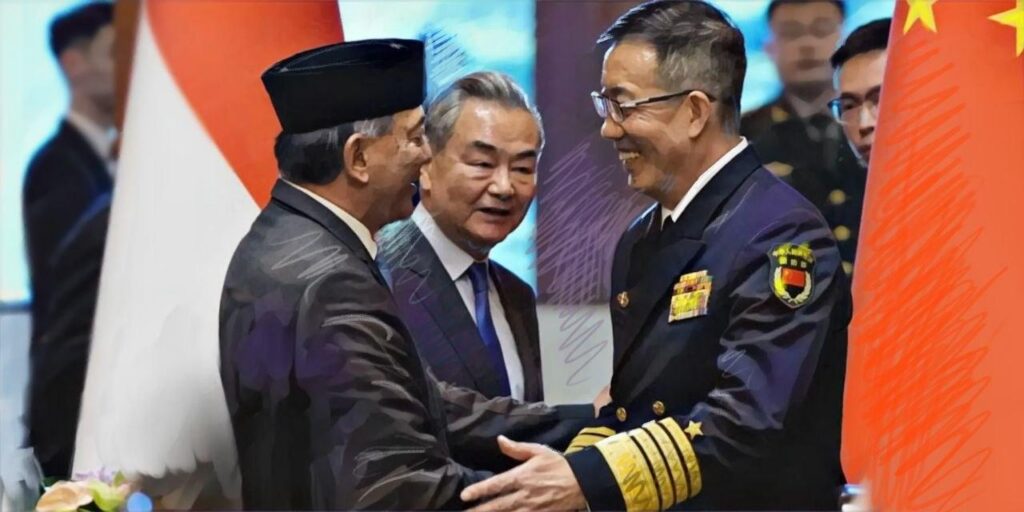
Last week, Chinese Foreign Minister Wang Yi and Defense Minister Dong Jun traveled to Phnom Penh to hold China’s first-ever 2+2 dialogue with Cambodia.

Wang told reporters that China is willing to develop the mechanism into a “strategic platform” for enhancing political and defense security cooperation. He described it as a key instrument for cementing mutual assistance and solidarity, and for advancing the construction of a China-Cambodia “community with a shared future.”

Wang also said China was prepared to work with Cambodia to build an “Asian security model” based on shared security and on seeking common ground while reserving differences.

China’s deepening security engagement with Cambodia comes as the Southeast Asian nation remains locked in a border dispute with Thailand. Although Wang’s itinerary took him next to Bangkok, Beijing chose to hold a 2+2 only with Cambodia – notably the non-U.S. ally in this pairing.

China is new to the 2+2 format. Last April, Beijing hosted its first ever 2+2 with a foreign country – with Indonesia.

The trajectory suggests further 2+2 engagements ahead, including Kazakhstan, Kyrgyzstan and Tajikistan – the three Central Asian states that border China. In several aspects, Central Asia may be a more conducive environment for this diplomacy than Southeast Asia: there are no maritime disputes, and the countries are not embedded in U.S. alliance structures. Instead, there is a convergence around defensive security priorities – particularly border control and crisis management linked to Afghanistan – making the 2+2 format a natural fit.

China under President Xi Jinping has always had an eye on deepening security ties with its western neighbors.

One of the most significant foreign-policy shifts Xi made after becoming top leader in 2012 was to elevate relations with neighboring countries to China’s top diplomatic priority. Previously, “major-country diplomacy” had dominated, under which Beijing focused on learning from advanced powers while biding its time and building national strength.

The first phase of Xi’s neighborhood policy was to build what Beijing calls “a community of shared interests and mutual benefit.” The idea was to link surrounding countries through railroads, pipelines and trade corridors so that China’s economic rise would also lift its neighbors. This was the logic behind the Belt and Road Initiative.

A second, less openly discussed phase was China’s ambition to eventually provide security assurances to neighboring states. Chinese strategists have long argued that economic interdependence alone cannot sustain strategic alignment. Beijing has viewed the roughly 70 treaty and non-treaty alliances the United States enjoyed as one of the main pillars of American power.

China has had only North Korea as a near-equivalent partner. A true great power must have partners that depend on it for protection, the thinking goes.

Scholars have pointed to China’s Central Asian neighbors – Kazakhstan, Kyrgyzstan and Tajikistan – as well as Southeast Asian partners such as Myanmar, Cambodia, Laos, and South Asian countries including Pakistan, Sri Lanka, Bangladesh and Nepal.

China may offer to help Central Asia stabilize its southern frontier – a move that would anchor its influence across Eurasia.

For many years, this security dimension remained largely aspirational. Now, shifting regional realities – including the failure to stabilize Afghanistan and Russia’s reduced capacity to act as Central Asia’s sole security guarantor – are creating space for new external players. And the appearance of the 2+2 format now suggests that Beijing may be moving into the second stage of its Eurasian neighborhood strategy.

The 2+2 dialogue is a format the United States has long used to signal strategic alignment with allies and partners. Washington holds ministerial-level 2+2 meetings with Japan, South Korea, Australia, the Philippines and India, as well as lower-level dialogues with Indonesia and Thailand, among others.

The talks are extensive. The U.S.-Japan 2+2 held in the summer of 2024, during the Biden administration, produced a 10-page joint statement reaffirming both sides’ commitment to uphold a free and open international order based on the rule of law.

Discussions included establishing joint command and control functions, strengthening Japan’s missile capabilities, expanding joint operations in Japan’s Southwest Islands – a stone’s throw from Taiwan – and co-production of defense equipment.


The views expressed in this article are those of the author and do not necessarily reflect the official policy or position of the publication, its affiliates, or any other organizations mentioned.

Silver, Silk, and Forgotten Power: Central Asia’s Islamic Past Comes to London

At Sotheby’s in London, Central Asia comes into view as a world of dazzling craft and taste. The Arts of the Islamic World & India auction on April 29th  gathers rare eastern Islamic works that show how the region turned faith, power, and luxury into art.

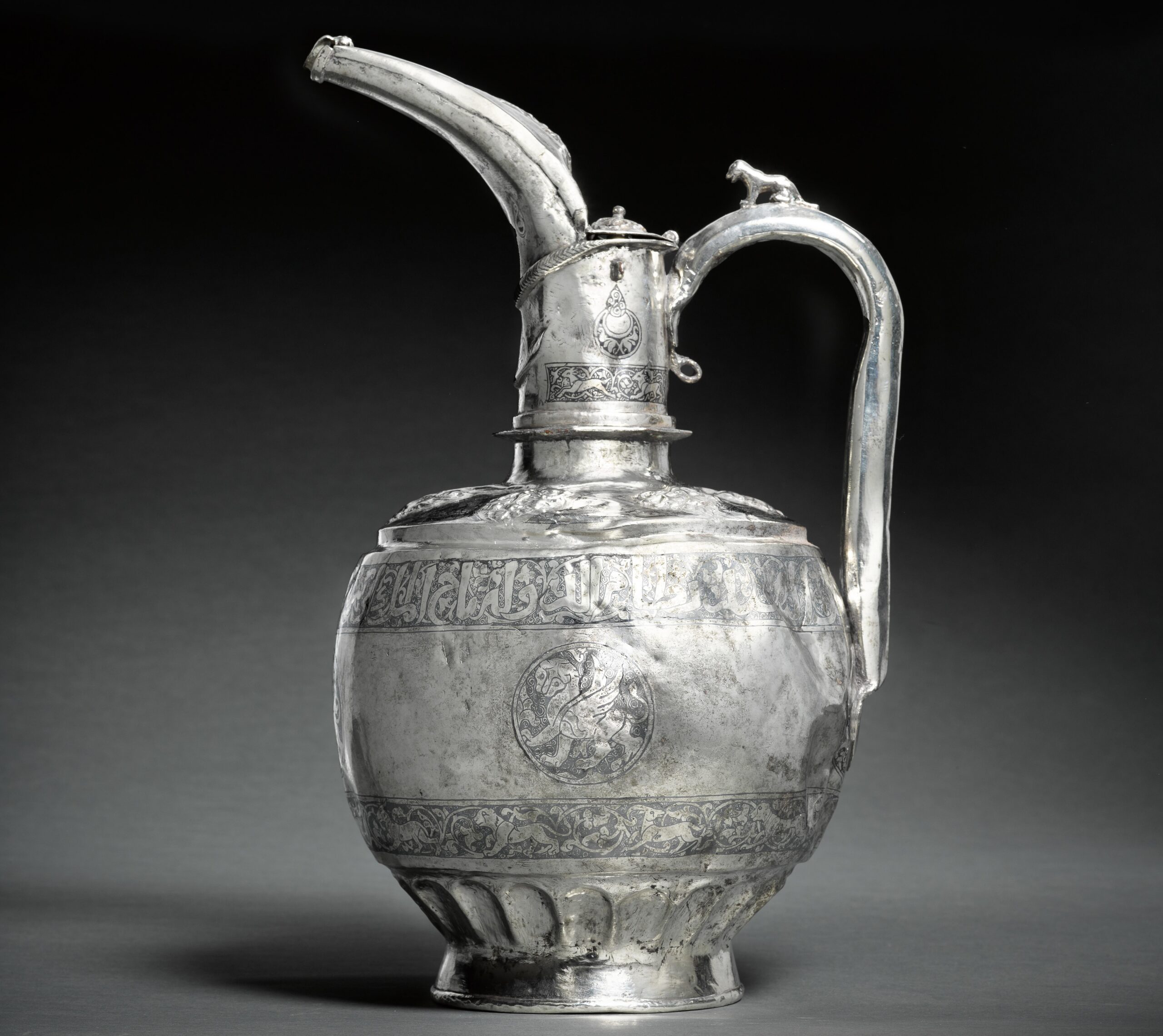
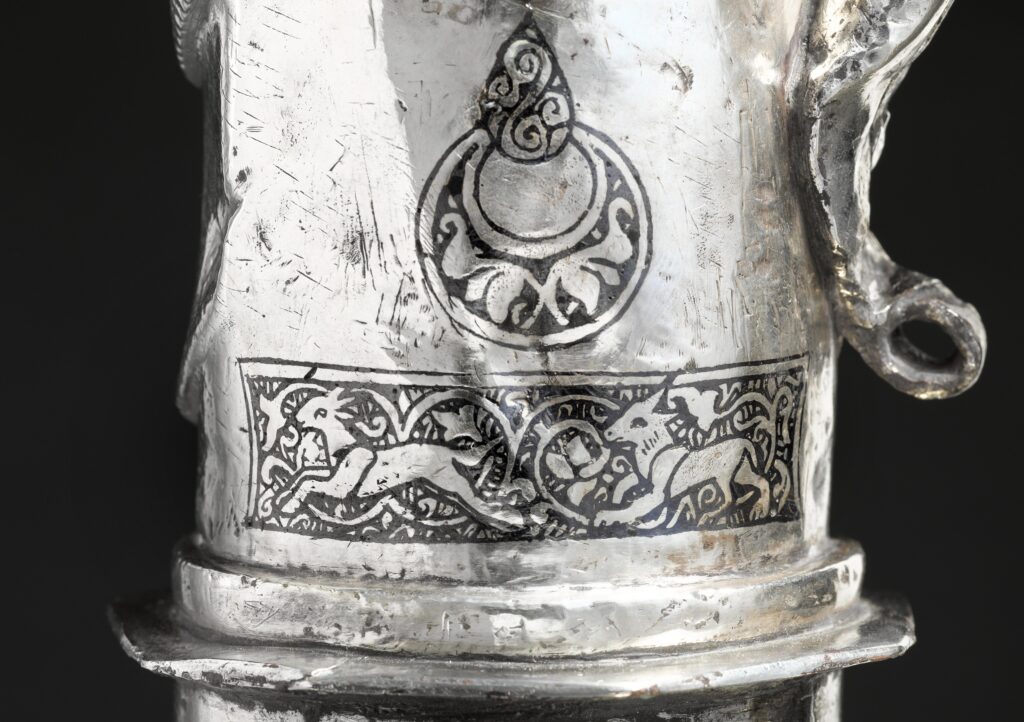
The standout lot is a 12th or 13th-century silver ewer, catalogued as Persian or Central Asian. Most related vessels are brass or bronze. This one is comparable to vessels from the Harari Hoard, a group of 10th and 11th-century silver objects now largely held in the L.A. Mayer Museum for Islamic Art in Jerusalem. The ewer’s presence gives the sale its sharpest point of entry. It is rare, ambitious, and unusually personal.

A pair of Seljuk gold bracelets, Persia, Khurasan, 12th century; image: Sotheby’s

A 10th-century Nishapur calligraphic dish shifts the focus from metal to script, turning a simple object into a work shaped by the visual grace of the written word. Timurid horse trappings, Qur’an pages, Sogdian silks, golden Mongol cloths, an embroidered robe, and a Shakhrisabz suzani broaden the picture from courtly power to sacred text and textile brilliance, ending in a tradition still closely associated with Uzbekistan.

The timing gives the auction added weight. Uzbekistan is building a major new stage for Islamic heritage. The Times of Central Asia reported in April 2026 that its Center of Islamic Civilization has entered the Guinness World Records as the world’s largest museum. TCA asked Frankie Keyworth, a Specialist in Islamic and Indian Art at Sotheby’s, why Central Asia’s artistic legacy is commanding fresh attention now.

A turquoise-set silver and brass belt buckle, Bukhara, Central Asia, 19th century; image: Sotheby’s

TCA: Why are the artifacts in this auction so important for understanding Central Asia as a center of artistic production, rather than just a corridor between other civilizations?

Keyworth: They really reiterate the breadth of artistic production in Central Asia, which is incredibly rich in terms of medium, design and chronology. The works presented here range from the 8th to the 19th century, from textiles to ceramics, metalwork to manuscripts, and they reveal traditions that are distinct to Central Asia, and others that inform and are informed by artistic production in other regions. The impressive silver ewer is a good example of this. Its nielloed decoration on silver is typical of a distinct group of silver vessels produced in Central Asia, but its form would go on to inform examples in other materials, such as bronze or ceramics produced later in Persia.

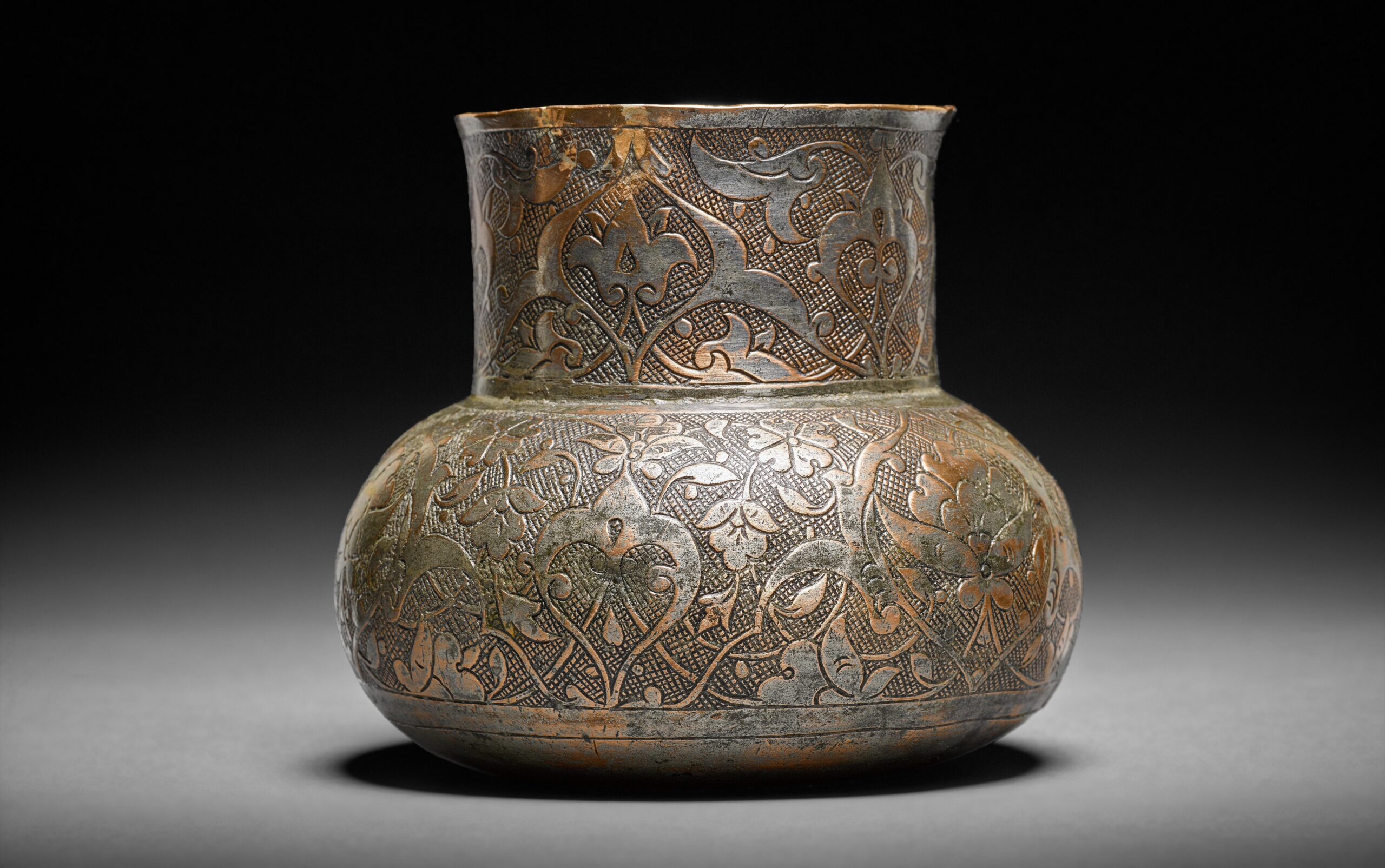
A Timurid or early Ottoman tinned copper goblet (mashrabe), Central Asia or Eastern Anatolia, late 15th century; image: Sotheby’s

TCA: Which object best captures Central Asia’s wider historical importance, and what makes it so revealing?

Keyworth: It’s hard to pinpoint such a vast artistic tradition to one object, but luxurious textile production is synonymous with the arts of Central Asia. In this sale, we can see one of the earliest traditions in weaving, a polychrome silk samite panel with marching bulls. Silks like these bridge Sasanian, Islamic, Byzantine, and Chinese iconography, and are extremely sophisticated in technique and design, requiring a complex and multi-faceted process in dyeing and weaving.

Taken together with the other textiles included in the sale, you begin to understand the extent to which Central Asian weavers mastered the textile arts. Mongol ‘cloths-of-gold’ were used in costume and in opulent tent interiors and embroideries; items such as a 14th-century embroidered robe could be an early precursor to the wonderfully polychrome suzanis that come in the 18th and 19th centuries. It’s unsurprising that similar textiles are well-represented in museum collections globally.

A large nielloed silver ewer, Persia or Central Asia, 12th 13th century; image: Sotheby’s

TCA: The silver ewer appears to preserve the name of a high-ranking patron otherwise lost to history. How rare is that, and what can a piece like this tell us that written sources do not?

Keyworth: The calligraphic inscriptions on luxurious metalworks like this are usually benedictory and examples bearing owners’ names are much rarer. It indicates that the work was a bespoke commission for its patron and therefore builds a picture of the circumstances in which objects like this were produced. What makes this work stand apart is its large size and dramatic profile, not often seen in other nielloed silver works, so we can glean from this that the patron must have been a man of incredible means. It’s possible that he was a nobleman related to the Salghurids.

TCA: Why should readers today care about these objects beyond their auction estimates? What do they tell us about identity and cultural exchange across the Islamic world and Central Asia?

Keyworth: It is important to remember that these works were never intended to be viewed in isolation, and while they are revered as artworks today, they are, at their heart, extremely high-quality functional objects that were made to be lived with. The care in design and technique in their production in both the earliest and latest pieces reflect an environment where there was a clear and evolving aesthetic concern, and where luxurious textiles were layered with important metalworks and ceramics.

A Timurid blue and white pottery dish, Persia, probably Tabriz, 15th century; image: Sotheby’s

TCA: Many of these objects are now dispersed across collections and markets. How much of Central Asia’s artistic heritage is still in the region, and how much now exists elsewhere?

Keyworth: It’s very difficult to measure how much of the original production remains within the region, not least due to the fact that these types of objects were traded, exchanged and gifted for centuries. The artistic production of Central Asia is expansive in its nature, covering many regions and dynasties, and as such works from the region have been treasured and exhibited in museum collections globally. It is exciting that new museum projects like the opening of the Centre for Islamic Civilization in Tashkent, along with other established museums, are bringing even more enthusiasm to this collecting area and creating more opportunities to see similar works proudly displayed together in the regions where they were produced.

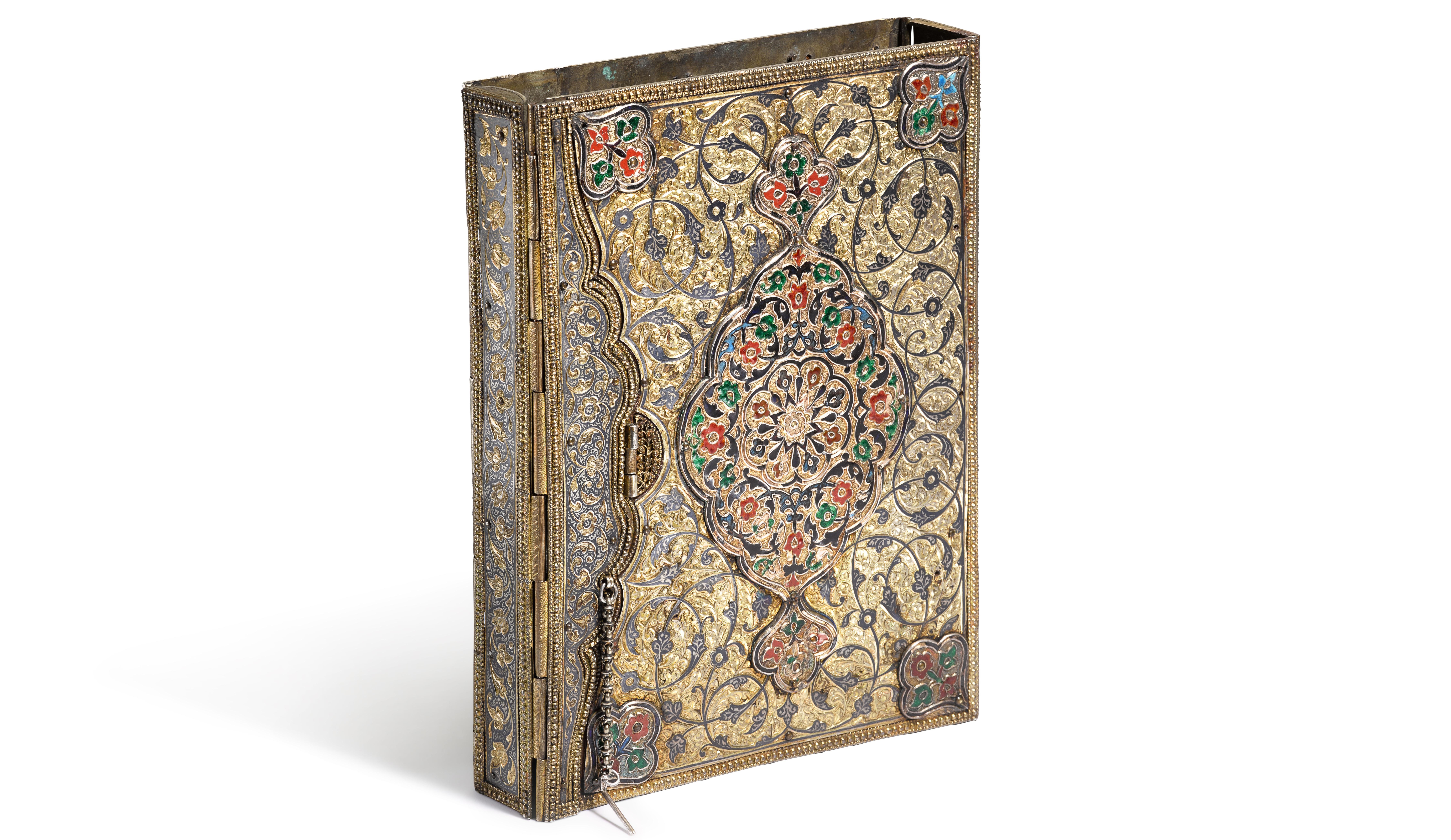
An enameled and nielloed brass and silver-gilt binding, Central Asia, possibly Bukhara, late 19thearly 20th century; image: Sotheby’s

From April 24, visitors to Sotheby’s in London can see these pieces up close. It is a rare chance to encounter centuries of Central Asian artistry gathered in one place, ahead of the April 29 auction.

Swiss Court Opens Long-Running Case Against Gulnara Karimova

A large-scale corruption case involving Gulnara Karimova, the daughter of Uzbekistan’s last president Islam Karimov, is set to go to trial on April 27 at the Federal Criminal Court in Bellinzona, Switzerland, according to a Finews report and official Swiss sources. The proceedings mark a significant step in a case that has spanned nearly two decades.

The case centers on allegations by Switzerland’s Office of the Attorney General (OAG), which claims that Karimova built and operated a network referred to as the “Office.” According to prosecutors, the group extorted bribes from international telecommunications companies seeking access to the Uzbek market. The alleged activities date back to the late 2000s.

The investigation formally began in 2012, when Swiss authorities opened criminal proceedings against Karimova and a business associate. They face accusations including corruption, participation in a criminal organization, and money laundering. In 2015, the probe expanded to include a former banker at Lombard Odier in Geneva, accused of managing accounts linked to the network between 2008 and 2012.

While the bank itself is not charged with direct wrongdoing, the court is examining whether it fulfilled its obligations to prevent financial misconduct. Under Swiss law, this falls under corporate criminal liability. Similar cases have previously led to penalties against institutions such as Credit Suisse and Banque Pictet & Cie.

One of the most notable aspects of the case is its length and complexity. Although the alleged offenses date back more than 15 years, proceedings were only consolidated in May 2025, when the court merged separate investigations that had been handled independently for years.

The case has also involved unusual procedural steps. In early 2026, Swiss judges traveled to Tashkent to question Karimova, who has been imprisoned there since 2014. According to reports, the questioning took place under strict conditions, with questions relayed through Uzbekistan’s Prosecutor General’s Office rather than asked directly. These limitations have raised concerns among legal experts about whether the testimony meets Swiss evidentiary standards.

Further uncertainty surrounds the trial itself. It remains unclear whether the main defendants will appear in court. Karimova is not expected to attend in person due to her imprisonment, and the whereabouts of her co-defendant have not been confirmed.

Swiss authorities note that cases of this kind are often resolved through penal orders without a full trial. However, in this instance, the OAG has opted for court proceedings, indicating that key facts remain contested. The trial is expected to examine both the allegations and the conduct of the investigation, though its outcome remains uncertain.

Central Asia Seeks Solutions to Water Scarcity Amid Climate Risks

Central Asian countries must accelerate the transition from discussing climate goals to implementing them in practice, as water scarcity intensifies and the impacts of climate change deepen, participants at a regional conference said on Friday.

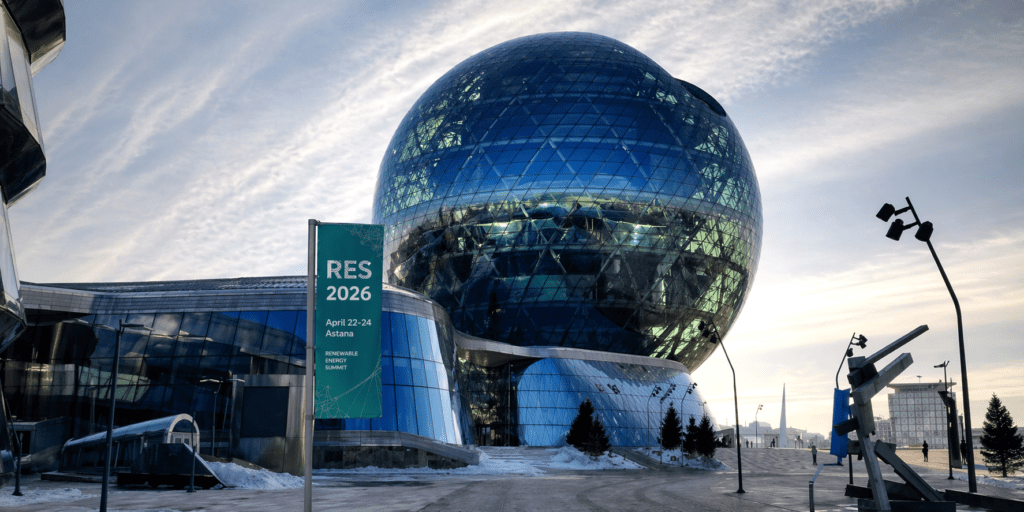
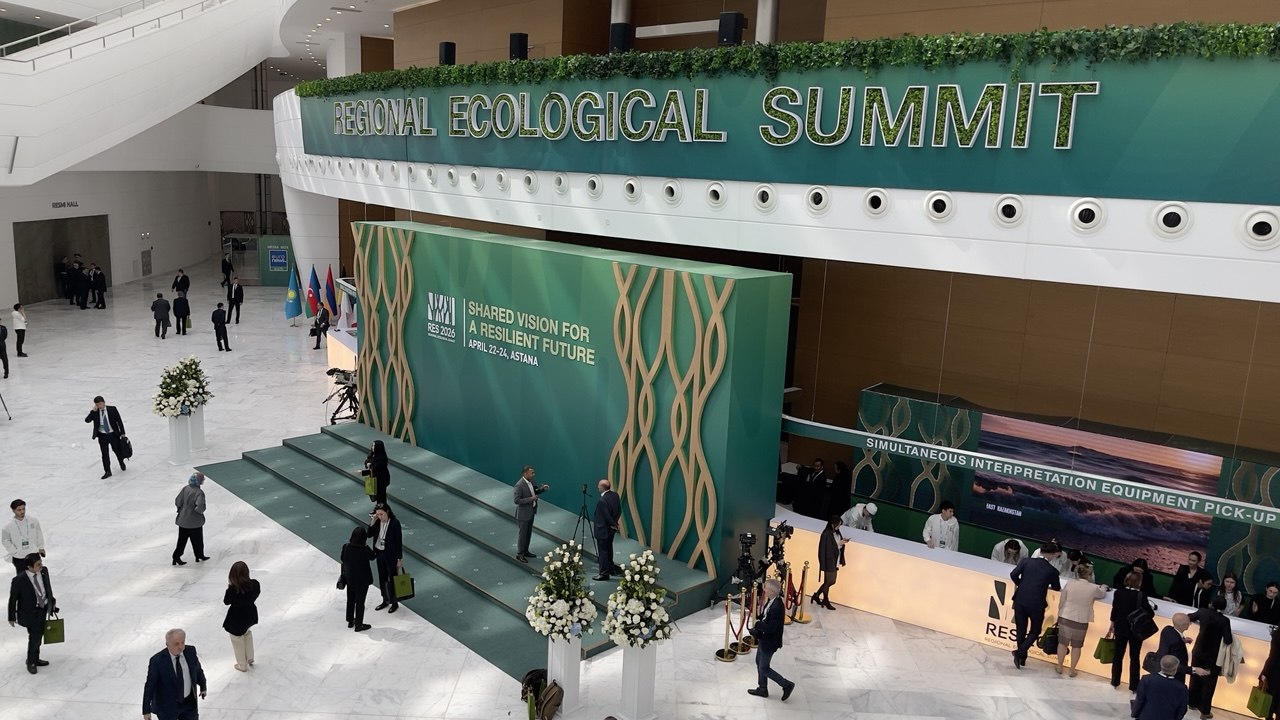
A key event on the final day of the Regional Ecological Summit (RES 2026) in Astana was the Central Asian Climate Change Conference (CACCC), where government officials, international organizations, and experts discussed risks to the region’s water, energy, and food security. Participants noted that declining water availability requires a fundamental shift in resource management approaches.

Image: TCA

“In conditions of reduced water availability, the priority is no longer increasing water intake but improving efficiency in water use. Today, government support for water-saving technologies covers up to 80% of costs. This represents a fundamental shift toward rational and economically sound water management,” said Kazakhstan’s Vice Minister of Water Resources and Irrigation, Talgat Momyshev.

According to him, by 2030, the use of such technologies is expected to expand to more than 1.3 million hectares, potentially reducing agricultural water consumption by approximately 30%.

“This is not just about saving resources, but about forming a new management model where data, forecasting, and cross-sectoral coordination play a central role,” he added.

Kazakhstan is also developing a national water information system that will integrate data on surface and groundwater resources. More than 6,000 canals are expected to be digitized by the end of the year, enabling a shift toward predictive water management.

Participants placed particular emphasis on the transboundary nature of water resources in the region.

Image: TCA

“The development of joint monitoring systems and data exchange, the creation of resilient infrastructure, and the coordination of water and energy policies are becoming increasingly important. We believe that data, trust, and joint planning must form the foundation of effective climate adaptation,” Momyshev said.

International partners confirmed their readiness to expand support for the region.

“Our current efforts in the water sector are reflected in the Swiss Cooperation Programme for Central Asia for 2026-2029,” said Tobias Werder, a representative of the Swiss government. “More than half of its $200 million budget is allocated to water-related projects. Since 2017, we have also actively promoted the Blue Peace Central Asia initiative, which helps strengthen regional coordination and move from dialogue to practical solutions.”

Kazakhstan’s Minister of Ecology and Natural Resources, Yerlan Nyssanbayev, noted that the climate agenda in the region extends far beyond environmental issues.

“For Central Asia, climate change is no longer a distant projection. It is a factor directly affecting water, energy, agriculture, infrastructure, and public health. Under these conditions, the climate agenda becomes a matter of economic resilience, regional security, and the quality of public governance,” he said.

Image: TCA

According to Nyssanbayev, the region must accelerate the implementation of concrete projects.

“It is now clear that we must focus on improving project preparation, expanding access to climate finance, and strengthening coordination. Without this, achieving our stated goals will be difficult,” the minister added.

COP29 President and Azerbaijan’s climate envoy Mukhtar Babayev highlighted the growing importance of regional platforms amid global uncertainty.

“We are seeing climate impacts accelerate across all regions, while geopolitical and economic tensions are increasing. In this context, regional platforms are essential for translating global commitments into concrete actions and developing practical solutions through cooperation,” he said.

He noted that Central Asian countries are already experiencing tangible consequences of climate change.

“Glaciers are retreating, water availability is becoming less predictable, and mountain ecosystems are under increasing stress. These challenges are transboundary in nature and require coordinated policies and joint investment decisions,” Babayev said.

He also called for stronger international support.

“The scale of the challenge requires more robust and predictable support from developed countries, both in terms of financing and technological cooperation,” he added.

Image: TCA

Following the conference, participants prepared coordinated regional recommendations for climate-resilient water resource management.

Overall, 51 documents were planned to be signed during the summit, including 13 memorandums, 16 joint statements, agreements, and declarations, 16 regional and national initiatives, and six investment projects.

Among the key outcomes were the joint declaration of Central Asian heads of state, “Ecological Solidarity of Central Asia”, and a Regional Action Programme with UN agencies for 2026-2030 aimed at coordinating efforts in sustainable development and climate adaptation.

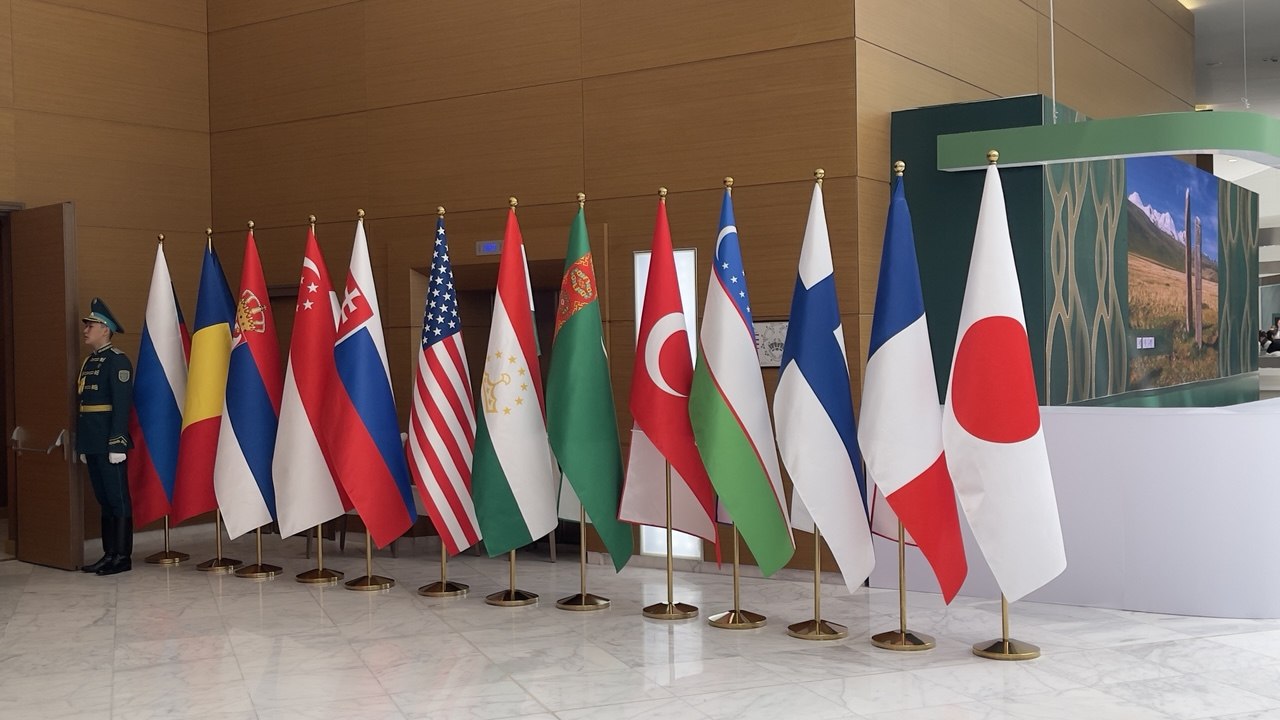
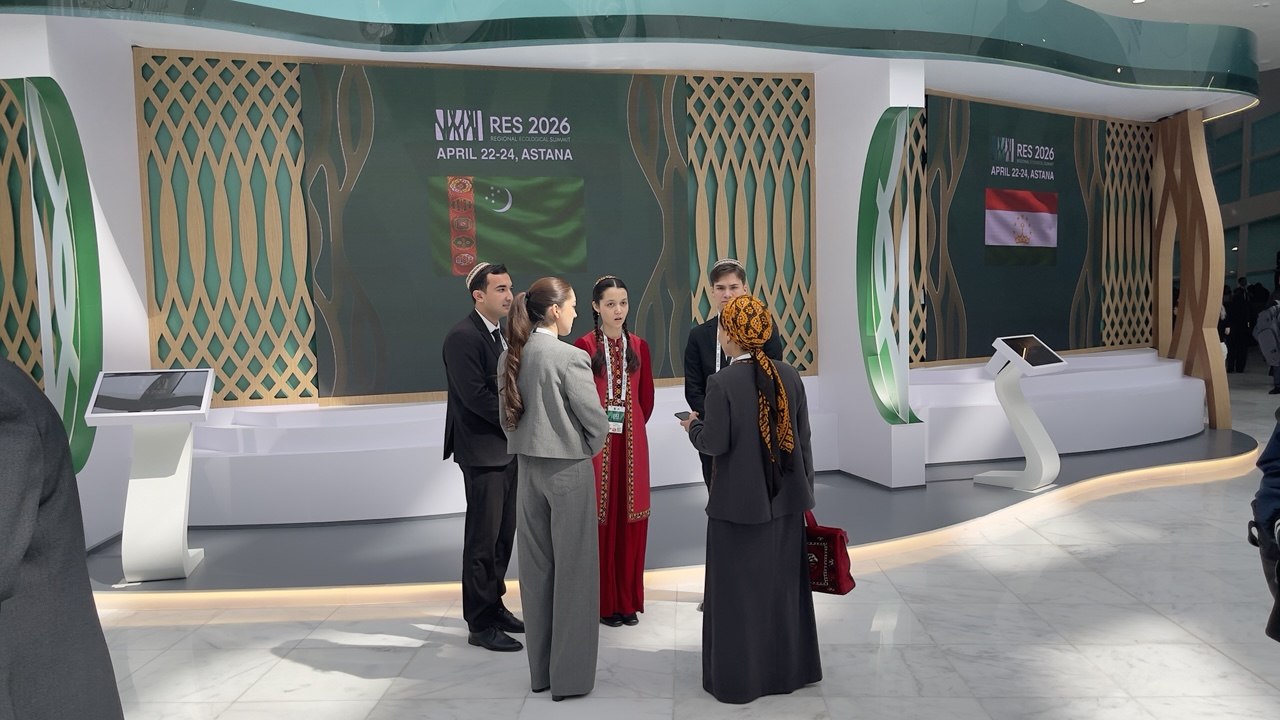
The summit, held from April 22 to 24, was the first high-level platform of its kind focused on developing coordinated regional solutions to environmental challenges, including water resources, biodiversity, and climate adaptation.

Kazakhstan Student and Researcher Gain Global Recognition in Science

Two recent achievements from Kazakhstan have drawn attention from the international scientific community, highlighting advances by young Kazakhstani researchers in water technology and education.

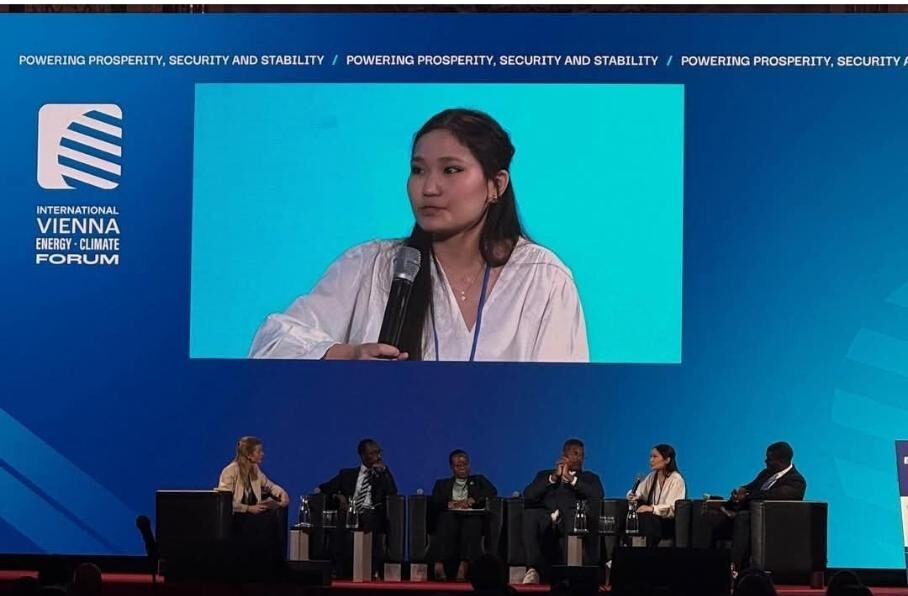
One standout is Dana Kadyrbek, an 11th-grade student at Gymnasium No. 79 in Almaty, who has been named among the world’s top three young inventors. She received this recognition at the Cleantech Days Forum 2026, held with the support of the United Nations Industrial Development Organization (UNIDO) at the United Nations headquarters in Vienna.

Kadyrbek has been working toward this achievement for several years. In 2024 and 2025, she became a prizewinner at the Kazakhstan Smart Space international competitions, later secured second place at the Olympiad USA, and won the YISF competition in Indonesia. However, her project on extracting water from air has drawn the most attention.

Her development, titled “Synthesis of Metal-Organic Framework Structures Based on Aluminum Fumarate for Atmospheric Water Harvesting,” makes it possible to produce drinking water even in arid conditions. In July 2025, the project earned her a gold medal at the World Invention Creativity Olympic (WICO) in Seoul.

Another researcher from Kazakhstan has gained recognition in the academic field. Assel Sharimova, a postdoctoral researcher at the Graduate School of Education at Nazarbayev University, has been awarded the Michael Fullan Emerging Scholar in Professional Capital and Community Award.

According to the organizers, she is the first recipient of the award not only from Kazakhstan but from the entire post-Soviet region. Only two researchers worldwide received the award in 2026.

Sharimova has been conducting research in education for several years. She holds a PhD from the University of Cambridge and previously worked within the Nazarbayev Intellectual Schools system. Her research focuses on the professional development of teachers.

“My research examined how teachers build and mobilize professional capital within virtual professional communities, with a particular focus on Kazakhstan. I explored how social networks facilitate informal learning, especially in the context of reforms where access to professional support is uneven. I also integrate these insights into my teaching and work with educators and researchers to support the development of collaborative professional communities,” Sharimova said.

The Michael Fullan Award is considered a notable recognition in the field of education. It is presented by the Journal of Professional Capital and Community for research with both academic and practical impact. Award recipients receive a monetary prize and international recognition within the academic community.

Central Asian Countries to Jointly Address Cryosphere Threats

As part of the Regional Ecological Summit (RES 2026) in Astana, the UNESCO Regional Office in Almaty organised a session titled “The Cryosphere of Central Asia: From Scientific Assessment to Joint Climate Adaptation Action,” in cooperation with Kazakhstan’s Ministry of Ecology and Natural Resources and Ministry of Science and Higher Education. The event was held under the GEF-UNDP-UNESCO Cryosphere project and in collaboration with Central Asian countries.

The session focused on discussing the Joint Subregional Action Programme (JSAP) on the cryosphere, a framework document developed by Central Asian countries with UNESCO’s support. The programme is aimed at strengthening regional cooperation in monitoring and research on glaciers, snow cover, and permafrost, as well as aligning approaches to climate change adaptation, according to Kazakhstan’s Ministry of Ecology and Natural Resources.

Central Asia is experiencing accelerated glacier melt. Under a high-emissions scenario, the region could lose up to 85% of its glacier volume by 2100 compared to 2020 levels. This would increase pressure on water resources, infrastructure, and communities, while also heightening the risk of natural hazards, including glacial lake outburst floods. As these processes are regional in nature, they require coordinated responses across Central Asian countries.

“UNESCO has been actively supporting Central Asian countries in strengthening the scientific basis and advancing regional cooperation on the cryosphere. Today, the key priority is to move from scientific assessment to concrete action. The Joint Subregional Action Programme provides a practical framework for this transition and enhances coordination of adaptation efforts across the region,” said Amir Piric, Director of the UNESCO Regional Office in Almaty.

As a key outcome of the session, heads of relevant government authorities from Kazakhstan, Tajikistan, Turkmenistan, and Uzbekistan responsible for environmental protection issued a joint statement supporting JSAP implementation, reaffirming their commitment to strengthened regional cooperation.

“Today it is clear that no country can effectively address climate change challenges alone. Regional cooperation is therefore essential. The Joint Statement reflects the readiness of Central Asian countries to join efforts and develop coordinated approaches to climate change adaptation,” said Nurlan Kurmalayev, Deputy Minister of Ecology and Natural Resources of Kazakhstan.

The JSAP provides a foundation for coordinated action among countries and partners, defines cooperation priorities, and supports the advancement of climate adaptation measures in the region. The joint statement also opens opportunities to mobilise funding from various sources, including donors, international financial institutions, and the private sector.