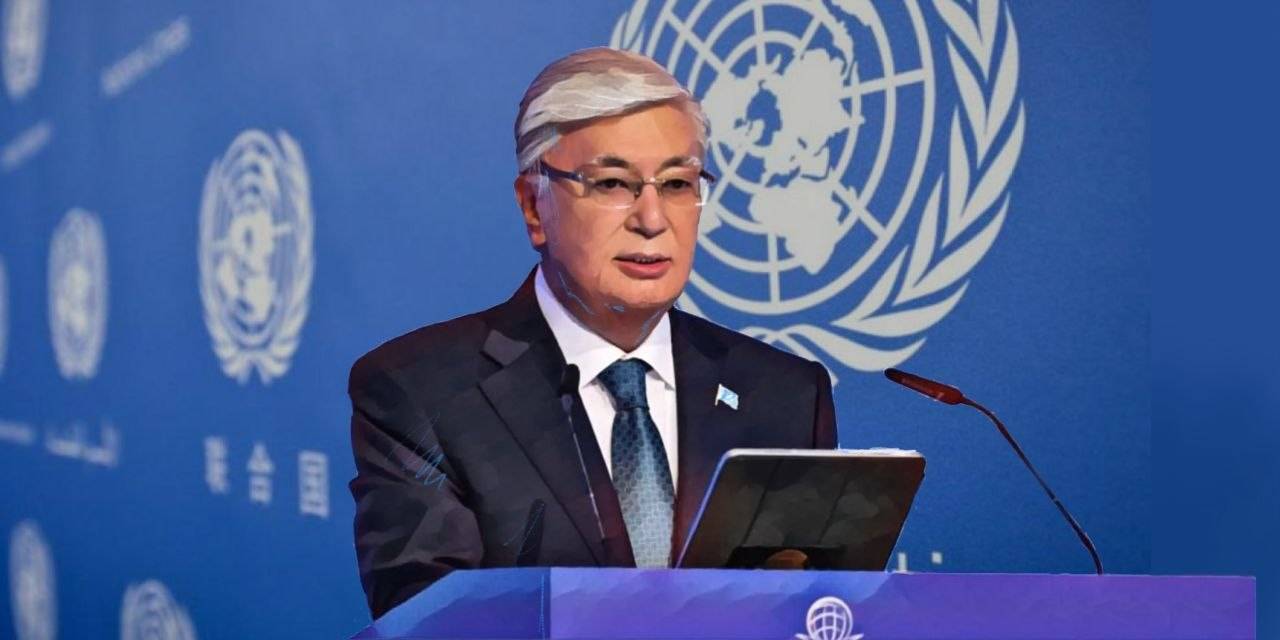
In “What Is the Status of Middle Powers?”, Michel Duclos of the Institut Montaigne presents Kazakhstan as a test case for whether middle powers can still influence outcomes in an era of intensifying great power rivalry. Writing after the Regional Ecological Summit in Astana, which brought together nine heads of state around President Kassym-Jomart Tokayev, Duclos notes that Kazakhstan “plays a leadership role” among states navigating pressures between China and Russia.
He also argues that Tokayev, drawing on his experience as a former senior UN official, is seeking to elevate Kazakhstan into an intermediate power on multilateral issues. That is a useful lens for understanding Tokayev’s foreign policy. Rather than treating Kazakhstan’s position between larger powers as a liability, he has sought to turn geography, energy resources, logistics, diplomatic reliability, and convening power into regional agency. The result is an emerging model of middle power leadership rooted not in confrontation, but in coordination, credibility, and practical cooperation.
That assessment places Tokayev’s foreign policy in a broader category than traditional balancing. Kazakhstan’s importance does not rest only on its raw assets — uranium, oil, minerals, logistics, or its position along Central Asian land routes. It also rests on how Astana uses those assets: as a convening state, a reliable partner, and a practical organizer of regional cooperation. Under Tokayev, multi-vector diplomacy has become less a defensive posture than an operating strategy, aimed at keeping Kazakhstan open to multiple partners while building platforms others have reason to use. In that sense, Kazakhstan is being presented not simply as a state located between great powers, but as one increasingly able to give structure to the space between them.
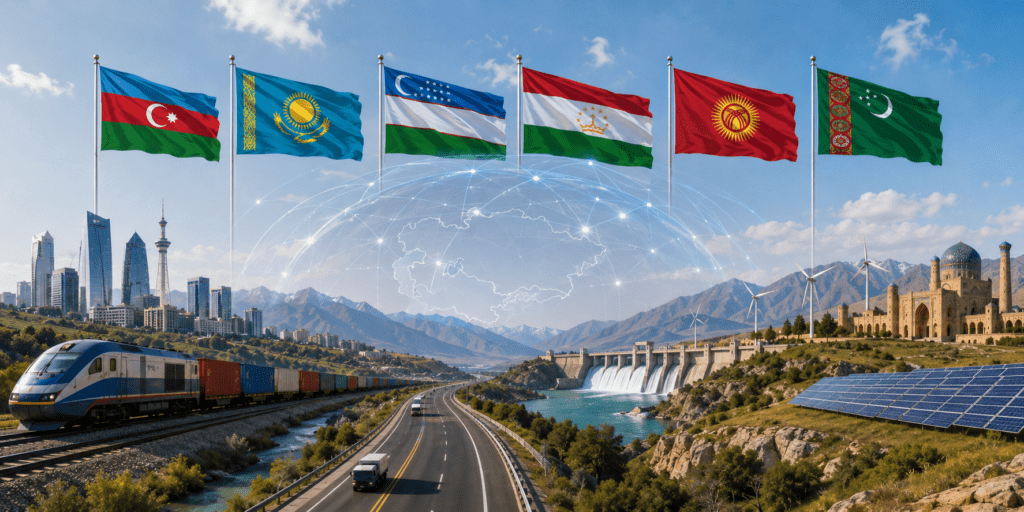
Moving from “balancer” to “regional organizer” is only possible if Kazakhstan turns geography, resources, and diplomacy into practical systems others have reason to use. The clearest operational evidence of this shift is transport. Kazakhstan’s geography has often been described as a constraint. It is landlocked, vast, and positioned between larger powers. But the growth of the Trans-Caspian International Transport Route, or Middle Corridor, allows Astana to recast that geography as a strategic advantage. In the first quarter of 2026, 125 container trains transited Kazakhstan via the Middle Corridor, a 34.4% increase from the same period in 2025. The Times of Central Asia also reported that freight volumes along the route through Kazakhstan have grown more than fivefold over seven years, from 0.8 million tons to 4.5 million tons annually. These figures show that Kazakhstan is not simply selling potential; it is building operational value into the corridor.
This is where the idea of Kazakhstan as a regional organizer becomes concrete. A balancing state tries to avoid overdependence on any single power. An organizing state builds systems that others have a reason to use. If Kazakhstan can make the Middle Corridor faster, more predictable, more digitalized, and more commercially reliable, it is not merely balancing Russia, China, Europe, Türkiye, and the South Caucasus. It is creating connective tissue between them. World Bank analysis suggests that infrastructure investment and efficiency improvements could help reduce Middle Corridor transit times and increase trade flows by 2030. Projects such as the Mointy-Kyzylzhar rail link are part of that broader effort.
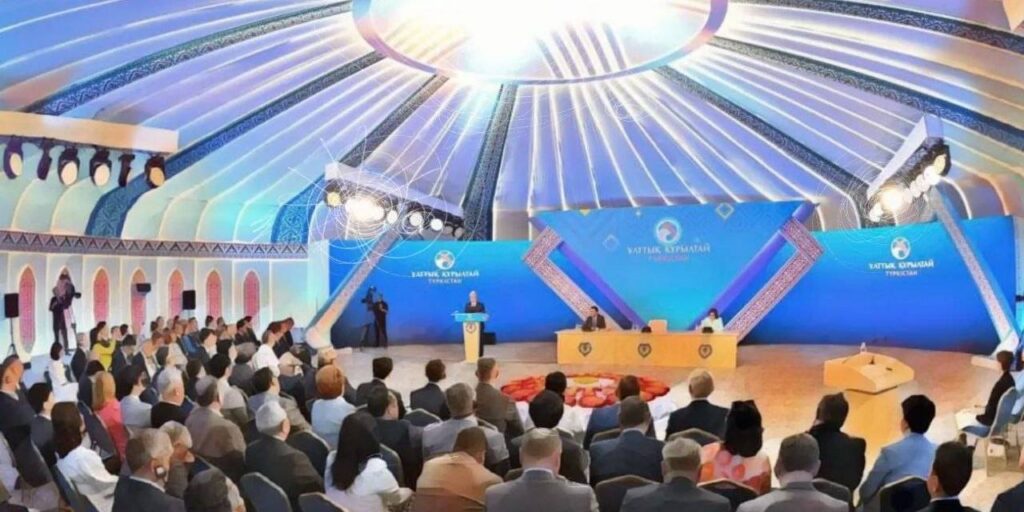
Kazakhstan’s convening role is also visible in areas such as environmental diplomacy. The Regional Ecological Summit in Astana is one recent example of this pattern. Under Tokayev, Kazakhstan is trying to turn shared regional vulnerabilities — water scarcity, climate stress, pollution, and resource management — into platforms for cooperation. The summit is another sign of Astana’s broader method: convene partners, define practical agendas, and position Kazakhstan as useful to regional diplomacy.
The same pattern is visible in Kazakhstan’s broader diplomatic architecture. The Astana International Forum gives the country a platform for convening governments, international organizations, investors, and policy experts around global and regional challenges. CICA’s institutional presence in Astana reinforces Kazakhstan’s role as a host for Asian security dialogue. Kazakhstan has also offered a neutral ground for difficult negotiations, including the Almaty rounds of Iran nuclear diplomacy, the Astana format on Syria, and Armenia-Azerbaijan talks. Its role in hosting the IAEA Low Enriched Uranium Bank adds a further nonproliferation dimension. None of these examples should be overstated, but together they show a consistent method: Kazakhstan uses its neutrality, geography, and diplomatic credibility to create platforms others are willing to use.
Yet the challenges are significant. The first test is implementation. Central Asia has seen many ambitious declarations, but fewer durable institutions. Kazakhstan, however, can point to more than potential: it has concrete transport operations, rising corridor volumes, and major infrastructure investments already underway. Still, Caspian shipping capacity remains a bottleneck. Kazakhstan is moving to build new vessels, yet the corridor’s success depends on synchronized rail, port, maritime, customs, and tariff systems across several countries, not Kazakhstan alone. Astana’s emerging role should therefore be judged by delivery, not only by ambition — and its strongest claim is that it is increasingly able to connect the two.
The second challenge is regional trust. Kazakhstan can convene, but it cannot impose. Water diplomacy illustrates the problem. Upstream states such as Kyrgyzstan and Tajikistan want recognition and financing for the water systems and glaciers that supply the region. Downstream states need predictable flows for agriculture, energy, and social stability. Turning this into a cooperative system requires more than speeches; it requires data-sharing, compensation mechanisms, financing, and rules that all sides see as legitimate. Recent regional water-allocation agreements show that cooperation is possible, but also that it must be constantly maintained.
The third challenge is geopolitical pressure. Kazakhstan’s strength lies not only in multi-vector diplomacy, but also in the assets that give it leverage: it is Central Asia’s economic heavyweight, an important supplier of non-Russian oil to European markets, and the world’s leading uranium producer. It has also become a practical Eurasian business base, offering a Russian-language and bilingual operating environment for companies managing regional operations outside Russia. These assets make Astana more valuable to outside powers, but they also make its choices more contested. As competition between Russia, China, the United States, Europe, Türkiye, and the Gulf states intensifies, critical minerals, sanctions compliance, oil routes, nuclear energy, corporate relocation, and transport corridors are becoming politicized. The task, therefore, is not simply to attract partners, but to keep partnerships plural, practical, and consistent with Kazakhstan’s sovereignty.
Kazakhstan’s regional role will also depend on continued institutional reform at home. International confidence in Astana’s leadership will be stronger if its external reliability is matched by predictable governance, rule-of-law progress, and openness to public scrutiny.
So, is Kazakhstan moving from balancer to regional organizer? Yes, but the transition is incomplete. Duclos’s framework helps explain why Kazakhstan has become one of the more interesting middle power cases: Astana is not only managing pressure from larger powers; it is trying to organize regional responses to problems that no single great power can solve. Its Middle Corridor investments, ecological diplomacy, water proposals, and strategic partnerships all point in that direction. But the measure of success will not be in how many summits Kazakhstan hosts or how often it is praised as a middle power. The real measure will be whether Astana can turn convening power into institutions, infrastructure, financing, and shared regional rules. If it can, Kazakhstan will no longer be seen simply as a state between Russia and China. It will be seen as one of the states helping to shape what lies between them.