
Pannier and Hillard’s Spotlight on Central Asia: New Episode Out Now
As Managing Editor of The Times of Central Asia, I’m delighted that, in partnership with the Oxus Society for Central Asian Affairs, from October 19, we are the home of the Spotlight on Central Asia podcast. Chaired by seasoned broadcasters Bruce Pannier of RFE/RL’s long-running Majlis podcast and Michael Hillard of The Red Line, each fortnightly instalment will take you on a deep dive into the latest news, developments, security issues, and social trends across an increasingly pivotal region. This week, the team examine a series of major developments across Central Asia, from the results of Kazakhstan's constitutional referendum to the announcement of new Chinese-funded border outposts and fortifications along Tajikistan's frontier. We also look at the continuing fallout from the security shake-up in Kyrgyzstan, with further arrests and resignations, as well as the increasingly strange foreign movements of Turkmenistan's senior leadership while war continues to rage just across the border in Iran, alongside Tehran's threats to strike Turkmen infrastructure. The episode then turns to the escalating conflict between Afghanistan and Pakistan, where some of the heaviest fighting in months is raising fresh questions about border stability, regional security, and the risk of wider spillover. Finally, for our main story, we bring on a panel of experts to discuss the growing issues surrounding the Rogun Dam and its resettlement project, and how both are likely to affect the states downstream. On the show this week: - Eugene Simonov (Rivers Without Boundaries Coalition) - Mark Fodor (Coalition for Human Rights in Development)
The History of Nauryz: An Ancient Festival That Continues to Unite Central Asia
Ahead of the Nauryz holiday, The Times of Central Asia looks at the origins and enduring significance of one of the region’s oldest celebrations. More than a seasonal festival, Nauryz reflects a deep connection between people, nature, and cultural identity, a tradition that has evolved over thousands of years and remains central to life across Central Asia. Origins and Meaning
Nauryz, also known as Nowruz, is one of the world’s oldest holidays, marking the arrival of spring and the beginning of a new year. It is celebrated on the day of the spring equinox, when day and night are approximately equal and nature appears to begin a new cycle.
For many communities, the holiday symbolizes renewal, hope for prosperity, and the start of a new stage in life.
The name “Nowruz” derives from ancient Iranian words meaning “new day.” This concept lies at the heart of the celebration: the renewal of life and the symbolic rebirth of nature after winter.
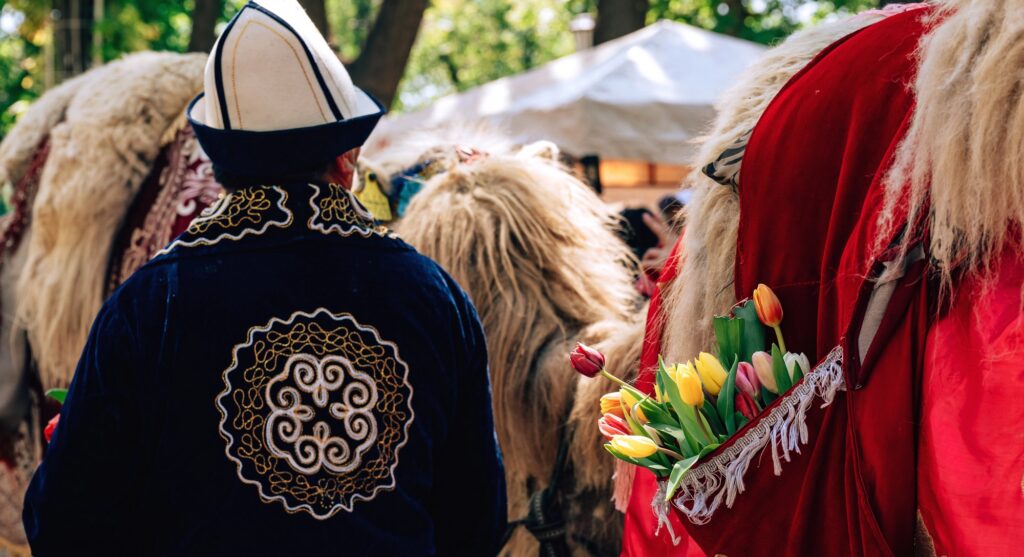
With a history spanning more than 3,000 years, the holiday spread across Eurasia along the Silk Roads and became embedded in the cultural traditions of Central Asia, the Middle East, and the Caucasus. [caption id="attachment_45687" align="alignnone" width="300"] @depositphotos[/caption]
Today, Nowruz is recognized not only as a calendar event but also as a cultural tradition that promotes values such as peace, mutual respect, and harmony with nature.
Connection to the Spring Equinox
Nauryz is traditionally celebrated during the spring equinox, which usually falls on March 20 or 21, when the Sun crosses the celestial equator and daylight and nighttime hours are nearly equal.
Since ancient times, this moment has symbolized the awakening of nature and the beginning of a new agricultural year.
Historical sources indicate that different communities once observed various dates in March, often guided by natural signs. Over time, however, the astronomical equinox, commonly observed on March 21, became the most widely accepted date.
Medieval scholars paid close attention to this phenomenon. In the 11th and 12th centuries, astronomers such as Omar Khayyam refined calendar calculations to align the start of the year more precisely with the equinox.
Alongside scientific knowledge, traditional methods were also used to forecast harvests and weather conditions, including observing seed germination or measuring the length of shadows before the holiday.
Today, Nauryz is officially celebrated on March 21 in countries such as Kazakhstan and Uzbekistan, while UNESCO also recognizes Nowruz as marking the first day of spring.
Rituals and Traditions
For centuries, Nauryz has been marked by rituals symbolizing renewal, fertility, and prosperity. Among both nomadic and settled communities, it has traditionally been celebrated with public festivities, games, and family gatherings.
Common customs include ritual cleansing with water, exchanging gifts, and offering food to neighbors and guests. The altybakan swing is widely regarded as a symbol of spring and joy. In some regions, the ancient practice of jumping over fire has been preserved as a purification ritual.
Food plays a central role in the celebration. Although culinary traditions vary by country, they share a common symbolism of abundance and new life.
In Kazakhstan, the main festive dish is Nauryz kozhe, a soup prepared from seven ingredients representing prosperity and well-being. In Uzbekistan and Tajikistan, sumalak, a sweet dish made from sprouted wheat, is a key symbol of the holiday.
Sumalak is traditionally prepared collectively, often overnight, with participants taking turns stirring the pot and making wishes. It is believed to bring prosperity and fertility.
Festive tables also feature dishes such as plov, herb-filled samsa, and manty dumplings.
Celebrations are typically accompanied by traditional games and competitions, including horse racing, wrestling, equestrian contests, and street performances. People gather around a shared dastarkhan, sing songs, visit relatives, and exchange wishes for health, peace, and prosperity.
[caption id="attachment_45688" align="alignnone" width="300"]
@depositphotos[/caption]
Today, Nowruz is recognized not only as a calendar event but also as a cultural tradition that promotes values such as peace, mutual respect, and harmony with nature.
Connection to the Spring Equinox
Nauryz is traditionally celebrated during the spring equinox, which usually falls on March 20 or 21, when the Sun crosses the celestial equator and daylight and nighttime hours are nearly equal.
Since ancient times, this moment has symbolized the awakening of nature and the beginning of a new agricultural year.
Historical sources indicate that different communities once observed various dates in March, often guided by natural signs. Over time, however, the astronomical equinox, commonly observed on March 21, became the most widely accepted date.
Medieval scholars paid close attention to this phenomenon. In the 11th and 12th centuries, astronomers such as Omar Khayyam refined calendar calculations to align the start of the year more precisely with the equinox.
Alongside scientific knowledge, traditional methods were also used to forecast harvests and weather conditions, including observing seed germination or measuring the length of shadows before the holiday.
Today, Nauryz is officially celebrated on March 21 in countries such as Kazakhstan and Uzbekistan, while UNESCO also recognizes Nowruz as marking the first day of spring.
Rituals and Traditions
For centuries, Nauryz has been marked by rituals symbolizing renewal, fertility, and prosperity. Among both nomadic and settled communities, it has traditionally been celebrated with public festivities, games, and family gatherings.
Common customs include ritual cleansing with water, exchanging gifts, and offering food to neighbors and guests. The altybakan swing is widely regarded as a symbol of spring and joy. In some regions, the ancient practice of jumping over fire has been preserved as a purification ritual.
Food plays a central role in the celebration. Although culinary traditions vary by country, they share a common symbolism of abundance and new life.
In Kazakhstan, the main festive dish is Nauryz kozhe, a soup prepared from seven ingredients representing prosperity and well-being. In Uzbekistan and Tajikistan, sumalak, a sweet dish made from sprouted wheat, is a key symbol of the holiday.
Sumalak is traditionally prepared collectively, often overnight, with participants taking turns stirring the pot and making wishes. It is believed to bring prosperity and fertility.
Festive tables also feature dishes such as plov, herb-filled samsa, and manty dumplings.
Celebrations are typically accompanied by traditional games and competitions, including horse racing, wrestling, equestrian contests, and street performances. People gather around a shared dastarkhan, sing songs, visit relatives, and exchange wishes for health, peace, and prosperity.
[caption id="attachment_45688" align="alignnone" width="300"] @depositphotos[/caption]
From Suppression to Revival
During the Soviet period, large-scale public celebrations of Nauryz were restricted, and many traditions were preserved mainly within families and local communities. From the late 1980s onward, however, the holiday began to experience a revival.
Following the independence of Central Asian states, Nauryz was officially recognized as a public holiday across the region.
Today, it is widely celebrated in Kazakhstan, Uzbekistan, Kyrgyzstan, Turkmenistan, and Tajikistan, with festivals, fairs, and public events held in major cities.
Its international recognition underscores its cultural significance. In 2009, Nowruz was inscribed on UNESCO’s Representative List of the Intangible Cultural Heritage of Humanity, and since 2010 March 21 has been observed as the International Day of Nowruz.
@depositphotos[/caption]
From Suppression to Revival
During the Soviet period, large-scale public celebrations of Nauryz were restricted, and many traditions were preserved mainly within families and local communities. From the late 1980s onward, however, the holiday began to experience a revival.
Following the independence of Central Asian states, Nauryz was officially recognized as a public holiday across the region.
Today, it is widely celebrated in Kazakhstan, Uzbekistan, Kyrgyzstan, Turkmenistan, and Tajikistan, with festivals, fairs, and public events held in major cities.
Its international recognition underscores its cultural significance. In 2009, Nowruz was inscribed on UNESCO’s Representative List of the Intangible Cultural Heritage of Humanity, and since 2010 March 21 has been observed as the International Day of Nowruz.
Nauryz remains one of the most enduring cultural traditions in Central Asia, with its meaning preserved across generations.
Its emphasis on renewal and hospitality continues to bring communities together across borders and remains a familiar part of life across the region.
Tajikistan, Turkmenistan and Uzbekistan Send Humanitarian Aid to Iran
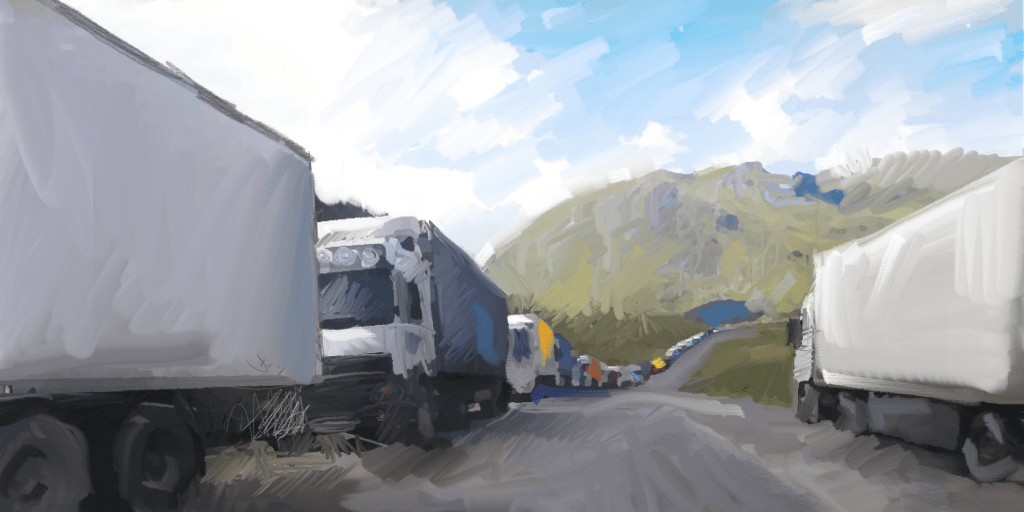
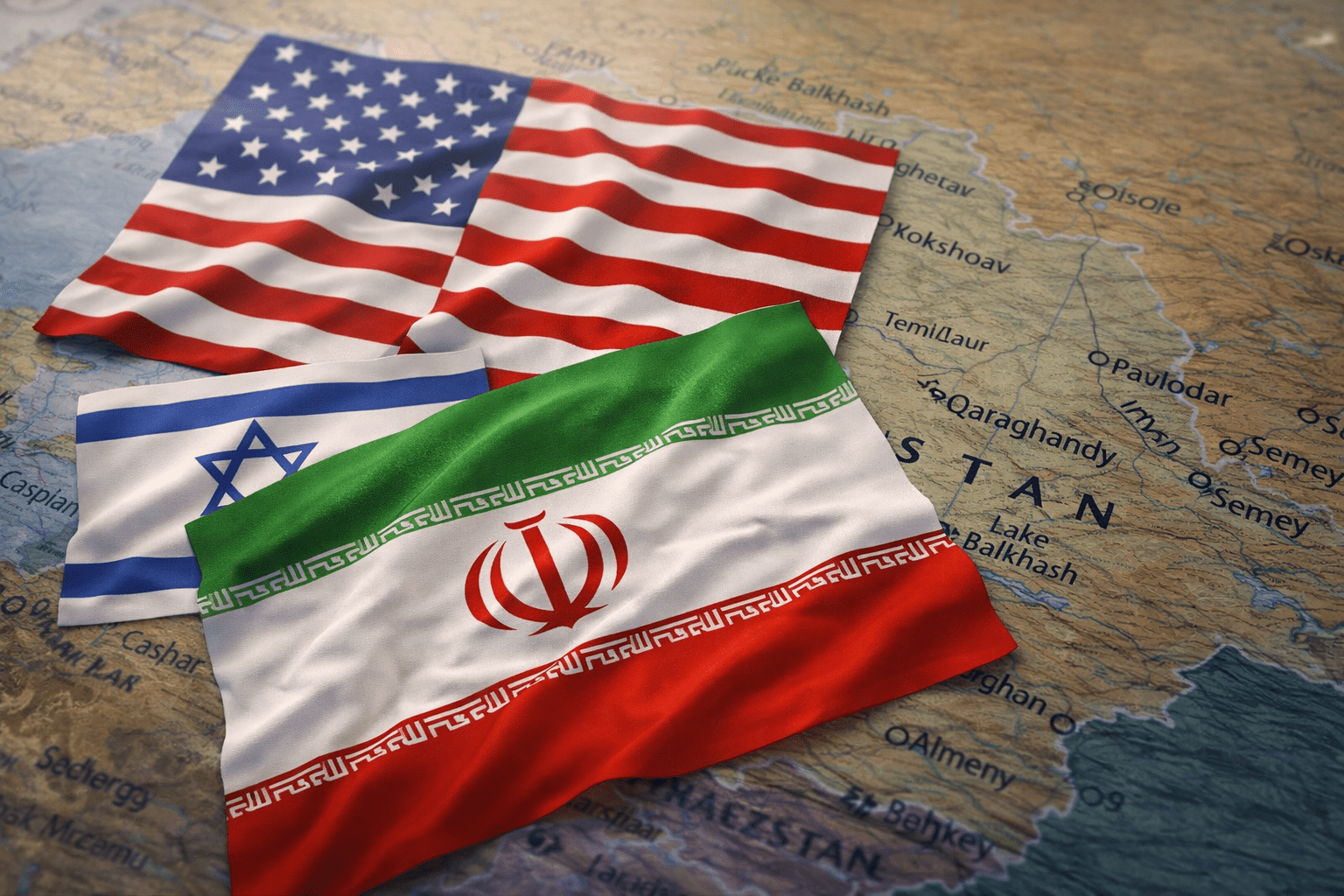
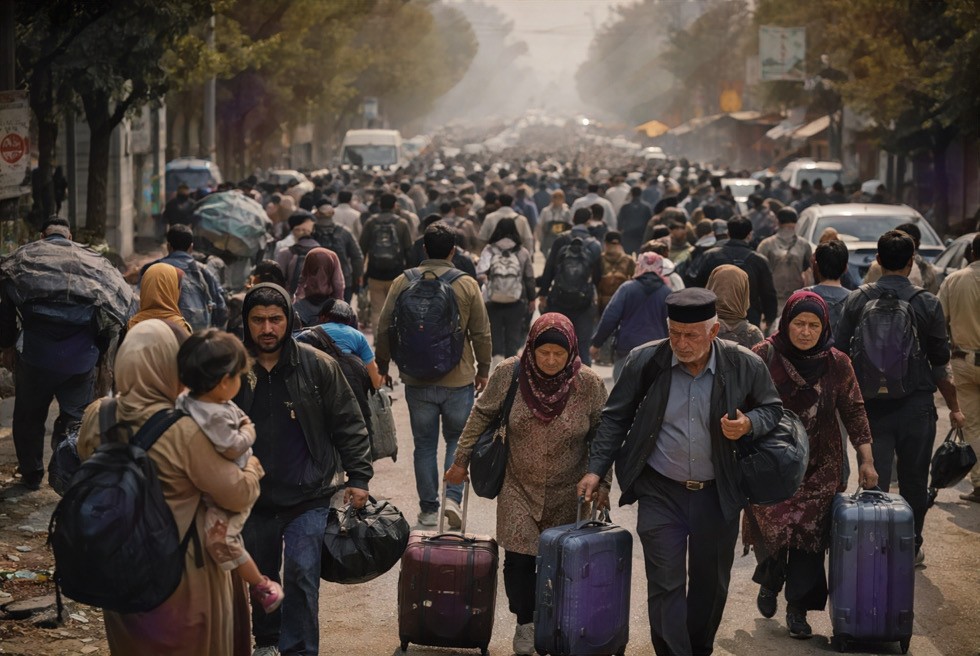
Tajikistan is sending a convoy of 110 trucks carrying humanitarian aid to Iran, which has been targeted by heavy U.S. and Israeli air strikes in a war that started on February 28. The dispatch of aid follows similar deliveries by Turkmenistan, Uzbekistan and Azerbaijan. Central Asian countries are aiming for neutrality in the Mideast war, maintaining ties with the Iranian government even as they profess support for Gulf Arab states that have been targeted by Iranian drones and missiles. Iran’s relationships with countries to the east range from the close cultural affinity that it enjoys with Tajikistan to sometimes tense interactions with Azerbaijan, which has a military partnership with Israel. The trucks from Tajikistan left for Iran on Wednesday and “will soon arrive in the friendly and brotherly country,” Tajikistan’s government said, without providing details about how the aid will be distributed. The convoy would likely travel through Uzbekistan and Turkmenistan to reach the northeastern Iranian border. The aid “comprises 3,610 tons of cargo, including 45 tons of medicines, a large volume of sanitary and hygienic products, children's clothing, various food products, household items, bedding, tents, building materials, and other necessary supplies,” Tajikistan’s Ministry of Foreign Affairs said. Tajik President Emomali Rahmon posted a photo on social media that showed a long line of aid trucks on a highway. Turkmenistan, which shares a border with Iran, has said it sent humanitarian aid, mainly for distribution to children. It appeared to allude to the war, saying that “supporting and assisting close neighbors in difficult times is a noble tradition of the Turkmen people, rooted in ancient times.” Uzbekistan has sent trucks carrying flour, rice, sugar, pasta, sunflower oil, canned goods and medical supplies to Iran. Azerbaijan, which borders northwest Iran, has also dispatched truckloads of humanitarian aid to Iran, according to Ali Alizada, Azerbaijan’s ambassador to Iran. Azerbaijan previously said it was evacuating staff from its embassy in Tehran as well as its consulate in the Iranian city of Tabriz, after accusing Iran of drone attacks on its territory.
Hormuz Crisis: Transit Routes Through Afghanistan, Pakistan Would Be an Opportunity for Central Asia
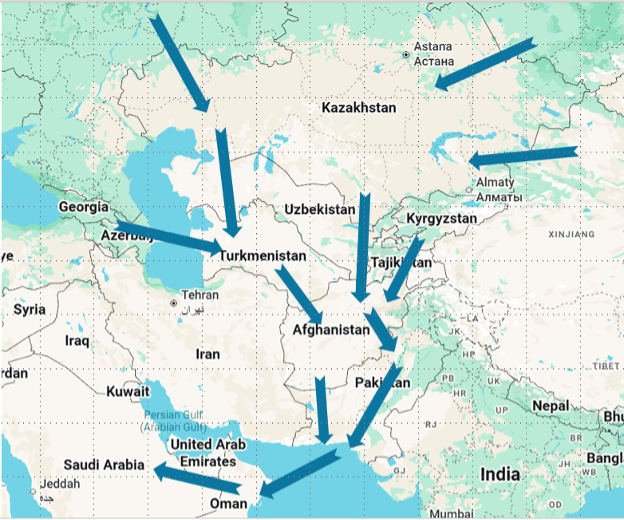
The Strait of Hormuz has long been regarded as a central artery of global energy trade. A substantial share of oil and gas exports moves through this corridor, and regional crises are often framed in terms of energy security. For Central Asia, however, current tensions carry broader implications. They may increase demand for alternative food supply chains and transit routes linking the region to the Arabian Sea and Gulf markets. Recent tensions involving Iran also point to the strait’s growing role in food logistics. For Gulf states, Hormuz remains an energy chokepoint and a vital route for essential goods. For Central Asian policymakers, this shift matters. Any prolonged disruption could raise the region’s importance as both a supplier of agricultural commodities and a transit hub. Member states of the Gulf Cooperation Council (GCC) are among the world’s most import-dependent food markets. According to Reuters, between 80% and 90% of food consumed in GCC countries is imported. This reliance creates external demand that could increasingly draw Central Asia into Gulf food security planning. At the same time, the geography of these supplies remains relatively concentrated. Analysts estimate that more than 70% of the region’s food imports transit the Strait of Hormuz. This pattern could heighten interest in Central Asia as a source of food exports and a transit route. Amid ongoing regional tensions, this dependence has attracted growing attention from experts. Reuters described recent developments as “the greatest test of the Gulf countries’ food strategy since the 2008 global food crisis.” In recent years, regional governments have sought to diversify suppliers and build strategic reserves. Analysts nevertheless warn that stockpiles and diversification measures may provide only limited protection. If disruptions persist, logistical constraints could drive up prices and extend delivery times. This would create both a market shock and new commercial opportunities in Central Asia. Under such conditions, GCC food security depends on access to global markets as well as the resilience of transport routes. This is where Gulf vulnerabilities begin to intersect more directly with Central Asia’s economic geography. The infrastructure of major regional ports plays a central role in this system. One of the key logistics hubs is Jebel Ali Port in Dubai, the largest container port in the Middle East and a major re-export center. A substantial share of food shipments destined for GCC states and neighboring markets passes through this facility. Estimates suggest that disruptions at major logistics hubs such as Jebel Ali could affect supply chains on which tens of millions of people depend. This concentration of logistics flows increases the region’s strategic exposure to maritime instability. For Central Asian economies, this raises the strategic value of diversified overland and multimodal routes. Food security concerns are also linked to agricultural inputs. Industry analyses suggest that roughly 25–30% of global nitrogen fertilizer exports transit the Strait of Hormuz, including about 31% of global urea trade. During the initial weeks of heightened tensions, urea prices in Middle Eastern markets reportedly rose by about $70–80 per ton, from roughly $470 to $550–590 per ton, an increase of 17–20%. These shifts have broader implications. Disruptions in fertilizer supplies affect both the cost of imported food and the future cost of agricultural production worldwide. The crisis therefore impacts food systems through two channels at once: logistical constraints and rising input costs. Central Asia is exposed on both sides of this equation. Against this backdrop, discussion has intensified around alternative transport routes that could reduce dependence on Hormuz. In this context, Central Asia’s relevance reflects its location as well as its agricultural output, existing transport infrastructure, and growing focus on export diversification. One proposed configuration involves a multimodal corridor linking Central Asia, Afghanistan, and Pakistan to ports on the Arabian Sea, with onward connections to Oman and GCC markets. In this setup, Central Asia serves as the northern anchor of an alternative supply corridor rather than a peripheral segment of a broader Eurasian route. Within this structure, the region could supply key agricultural exports, particularly grain, while also serving as a transit link between northern Eurasian markets and the Indian Ocean. For Kazakhstan, and for Uzbekistan’s broader logistics ambitions, this could expand southbound export options and strengthen the region’s bargaining position in Eurasian trade. This potential rests on tangible, though uneven, regional capacities. Kazakhstan already has significant agricultural export potential, especially in grain and flour, while Uzbekistan has increasingly positioned itself as a logistics and manufacturing hub with an interest in expanding southbound connectivity. Across the region, existing rail networks, dry ports, storage facilities, and trade corridors provide a foundation for deeper integration, even if they were not originally designed for a Gulf-oriented food route. In that sense, Central Asia’s role would not start from zero. The region already possesses part of the infrastructure needed to support such a corridor, though substantial improvements in coordination, border management, and transport reliability would still be required. Elements of such a system already exist, including transport links between Central Asia, Afghanistan, and Pakistan, the Pakistani ports of Karachi and Gwadar, and Oman’s logistics infrastructure. The concept therefore centers on expanding and institutionalizing existing connections rather than creating an entirely new route. For Central Asian states, this distinction matters. The challenge is not to create a new route, but to make the southern vector commercially viable. Oman could play a particularly important role. Its deep-water ports at Sohar, Duqm and Salalah provide direct access to the Indian Ocean and are integrated into global shipping networks. They also create additional logistics options that help diversify supply routes alongside existing Persian Gulf infrastructure. For Central Asian exporters, these ports could provide additional maritime access to Gulf and global markets. The principal obstacle to this scenario remains persistent tension between Afghanistan and Pakistan. In recent years, their border has seen periodic clashes, mutual accusations, and temporary closures of trade crossings. For transit projects, such instability poses a significant risk. As long as relations between Kabul and Islamabad remain strained, establishing reliable trade flows will be difficult. From a Central Asian standpoint, any opportunity tied to southbound connectivity remains inseparable from security risk. At the same time, economic incentives could influence political behavior. If transit becomes a meaningful source of revenue, all parties may have a stronger interest in maintaining a minimum level of stability. This does not imply a comprehensive political settlement. Rather, it reflects a pragmatic approach in which economic interests may help limit escalation and sustain functional cooperation. Even a limited degree of predictability could prove significant if it allows cargo flows to continue. For Central Asian states, the implications would be practical: expanded export outlets, increased infrastructure investment, and reduced reliance on existing transport corridors. For GCC states, the priority would remain securing stable food supplies and managing price risks. Infrastructure investment, transit agreements, insurance mechanisms, and financial guarantees could all form part of such a strategy. Diplomatic dynamics also merit attention. Under current conditions, China may be better positioned than GCC countries to play a mediating role between Afghanistan and Pakistan, given its economic influence and regional engagement. In this scenario, GCC states could act as financial and commercial stakeholders in a transit corridor, while China assumes a more active political role. This would present both opportunity and risk for Central Asia. Gulf capital could support corridor development, while Chinese involvement might help manage instability but also deepen external dependence. The development of such a corridor would likely unfold in stages, each involving a different balance between commercial gain and political exposure for Central Asian states. In the short term, initial measures could include guaranteed transit windows for cargo, expanded transport insurance, expedited customs procedures, and priority clearance for food shipments originating in or passing through the region. Over the medium term, a more stable transit regime could emerge, with regular freight services, expanded dry port infrastructure, and the development of specialized cold chain logistics across key Central Asian nodes as well as along the Afghan–Pakistani segment, building on existing but fragmented capacities. In the longer term, broader cooperation could take shape through an international infrastructure consortium involving GCC states, Central Asian countries, Afghanistan, Pakistan, and international financial institutions. Such a framework could support investment in transport corridors, logistics hubs, and storage facilities, while consolidating the region’s role in broader supply chains. If realized, this process could gradually transform parts of the trans-Afghan corridor from zones of instability into components of Eurasian trade networks. This would give Central Asia a more direct and diversified connection to Arabian Sea trade. Ultimately, the key question is whether economic incentives can outweigh political tensions. For Central Asian states, the issue is whether this corridor can become a credible channel for exports, diversification, and regional leverage rather than another unrealized connectivity project. For GCC states, the priority remains supply stability and price pressures, while Afghanistan and Pakistan would weigh transit revenues against the economic costs of recurring border disruptions. Logistics systems evolve slowly, but once established, transport routes and infrastructure can shape regional economic relationships for decades, often outlasting acute political crises. This is why even limited progress along the southern vector could carry implications that extend well beyond the immediate Hormuz crisis.
Why Central Asia Cares About the Middle Corridor–South Caucasus TRIPP Route
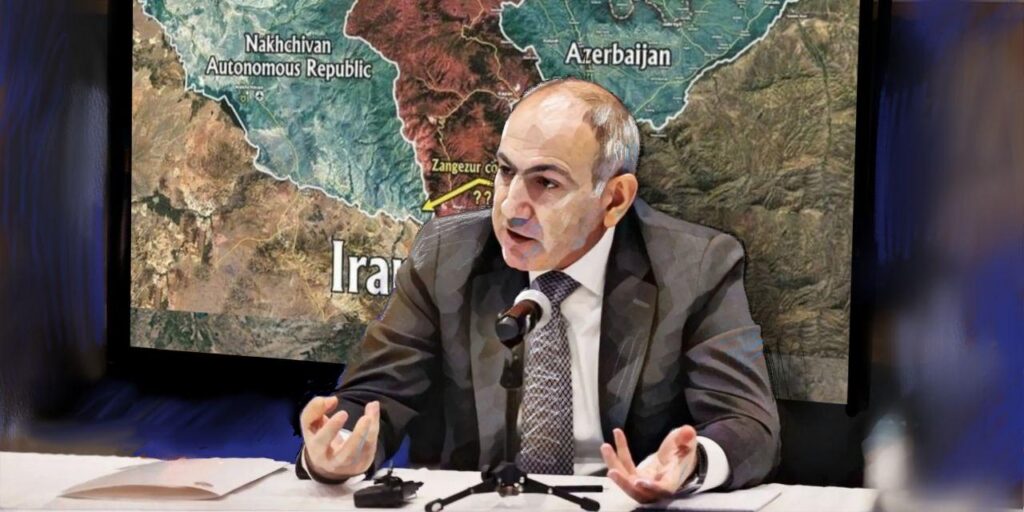
Armenia’s Prime Minister Nikol Pashinyan spoke to the European Parliament in Strasbourg on March 11 and said he has no intention of delaying TRIPP, the newly proposed South Caucasus route through southern Armenia to be integrated into the existing Middle Corridor. He described the project as being “in the crystallization stage,” said that the Armenia–U.S. implementation framework (signed on 13 January) was already in place, and added that the two countries will “[i]n the near future ... sign the relevant agreements, and the practical implementation of the project will begin.” While mentioning that developments in Iran and the wider Middle East could shade an otherwise positive regional picture, Pashinyan explicitly did not connect that to any actual delay in the corridor project. This accords with the view of the EU itself, which treats the Middle Corridor and its South Caucasus segment, as does the World Bank, as an increasingly necessary connection between Central Asia and Europe through the South Caucasus and Turkey. Pashinyan’s statement should thereby reassure not just European governments but also the investors and shippers that want and need the route. From Declaration to Implementation Pashinyan tied TRIPP to the Washington Declaration of August 8, especially to its provisions on reopening communications and establishing a U.S.-supported framework for unimpeded connectivity between mainland Azerbaijan and Nakhchivan through Armenian territory. The Washington meeting produced a joint declaration by Armenia and Azerbaijan and the text of the initialed peace agreement, while also making clear that signing and ratification still lay ahead. In Strasbourg, according to Pashinyan's own words, the Washington Declaration “essentially established peace” between Armenia and Azerbaijan. He also gave pertinent indicators. Pashinyan stated there had been eight months of complete peace on the border and that 2025 was the first full calendar year since independence without casualties or injuries from Armenian–Azerbaijani shooting. He also said that in November 2025, for the first time since independence, a train (carrying wheat from Kazakhstan) reached Armenia through Azerbaijan and Georgia after Azerbaijan lifted restrictions on that rail route. Azerbaijan has since sent fuel and other commodities through Georgia to Armenia. Such transits have now become a regular occurrence. Since 2020, Armenia has turned toward Central Asia as part of its effort to reduce dependence on Russia. Kazakhstan has become the clearest practical partner in that effort as this turn has accentuated in recent months. During Pashinyan’s 21 November 2025 visit to Astana, the two sides upgraded relations to a strategic partnership and signed 15 intergovernmental and interagency documents, including a trade and economic roadmap for 2026–2030 that projects cooperation in agriculture, digitalization, healthcare, industry, science and education, and peaceful uses of atomic energy. While the cooperation with Kazakhstan is a continuation of previous trends, the sharpest diplomatic change is with Uzbekistan. After Pashinyan’s 12 July 2023 telephone call with President Shavkat Mirziyoyev, stressing the need to convene the first intergovernmental commission to move practical projects forward, that commission met in Tashkent on 3–4 August 2023, with a modest but real result in foreign trade growth. Armenia's outreach to Central Asia exemplifies how the country's broader diplomatic profile under Pashinyan complements the country's eventual participation in the Middle Corridor through TRIPP. Why Central Asia Cares The Middle Corridor is correctly seen as a source of resilience and route diversification for trade between Asia and Europe. The World Bank describes it this way, while EU materials frame the South Caucasus and Turkey as the bridge through which Europe’s links with Central Asia are to be strengthened. This is all the more the case now that Iran-crossing options from Central Asia to Turkey, for example through Turkmenistan, have receded from feasibility for the foreseeable future. The same is true of the route agreed between Azerbaijan and Iran in October 2023 for access to Nakhchivan through northern Iran, which was never completed. Kazakhstan, Uzbekistan, and other Central Asian states thus have an interest in maintaining the perception that the South Caucasus continuation of the Middle Corridor is viable enough to deserve policy attention, commercial planning, and further investment. In pursuit of cooperation from all interested parties, Kazakhstan has recently engaged in outreach to Gulf partners that point the same way, as Central Asian governments manage corridor risk diplomatically as well as commercially. Azerbaijan began its own programmatic connectivity outreach to the Gulf countries several years ago. At issue is not just transit efficiency but strategic optionality. The westbound corridor through the Caspian and the South Caucasus has become perhaps the main instrument through which Central Asian countries widen their room for geoeconomic maneuver without pretending that older routes will simply disappear. An EU study released last month places this logic squarely in a Europe–Central Asia framework. The World Bank report makes a related point in more economic language, arguing that the Turkey–South Caucasus corridor can increase resilience and help reorient supply chains. In Strasbourg, Pashinyan reflected this logic, saying that Armenia was ready at once to provide road transit between Azerbaijan and Turkey, and between western Azerbaijan and Nakhchivan, using existing Armenian infrastructure. The problem here is that such a route through Armenia would currently be extremely circuitous and does not necessarily have guaranteed security. But at the same time, Pashinyan stressed that this expressed readiness was not meant to delay, disrupt, or replace the Washington understandings that undergird the future TRIPP. His purpose here appears to be to show that continuing momentum does not depend on a final diplomatic architecture and is indeed integrated within that larger framework. Wider Strategic Consequences The question for Central Asia is whether Iran’s shadow over the South Caucasus is strong enough to damage confidence in the westbound TRIPP route that major IFIs and other state actors now regard as strategically necessary. By the evidence Pashinyan offered on 11 March, the answer is no. When Pashinyan insisted that Armenia had no reason to delay implementation, he was defending the investment logic of the TRIPP segment at a time when external observers might begin to wonder whether the Iran crisis could freeze momentum. Even after current hostilities end, it is unlikely that Iran-crossing routes will function at full commercial scale due to insurance and payments constraints. The political momentum behind TRIPP has thus not been overturned, not least because Central Asian states need supply-chain redundancy. The same goes for the broader Armenia–Azerbaijan normalization process that makes this segment of the Middle Corridor possible. This assessment emerges from Pashinyan's first-person testimony, recent practical movement in Armenia–Azerbaijan normalization, and the fact that Europe and international financial actors now treat the South Caucasus bridge as part of a serious Europe-Central Asia connectivity project. In addition to Armenia and Azerbaijan themselves, almost all external actors will benefit from TRIPP, although their strategic benefits differ. For the European Union, enhanced South Caucasus transit reinforces a connection to Central Asia that does not depend on Russia. For the United States, it moves forward the American diplomatic initiative to shape the region's post-conflict order after the Washington breakthrough on the basis of mutual benefit. For China, any stable westbound connection across the Caspian and Caucasus adds redundancy to Eurasian transit without displacing Beijing’s other routes. Even Russia has come to support the TRIPP route, because it increases connectivity with Armenia, Turkey and Europe through existing Azerbaijani rail infrastructure. This configuration of interests represents the gradual consolidation of the route's forward movement. Iran is objectively the only state or nonstate actor opposing the consolidation of this peace and prosperity in the South Caucasus, with benefits stretching from Central Asia to Europe. However, Tehran’s capacity for influence here is eroding as quickly as its military infrastructure.

Opening the Islamic Civilization Center in Tashkent: A New Landmark of Memory, Scholarship, and National Identity
With its public opening scheduled for March 17, 2026, the Islamic Civilization Center in Tashkent is emerging as one of the most consequential cultural projects in contemporary Uzbekistan. Conceived under President Shavkat Mirziyoyev’s initiative first announced in 2017, the Center presents itself not simply as a museum but as a national statement about memory, scholarship, and identity. The Center’s own mission describes it as a bridge between the Golden Age and New Uzbekistan, linking a rich spiritual and scientific inheritance with the country’s modern aspirations. In that sense, the opening is not only an institutional debut; it is a carefully staged declaration of civilizational confidence. The setting reinforces that message. The complex rises in Tashkent’s historic Hast-Imam area, at Karasaray 47 in the Almazar district, where architecture itself is part of the narrative. The official site says the building’s 65-meter dome and four portals symbolize the unity of Uzbekistan’s regions, turning the Center into a monument as much as a museum. From the outside, the structure is meant to signal national scale; from the inside, it is designed to draw visitors into a journey through faith, science, and statehood. The opening therefore introduces not just a new institution, but a new symbolic landmark for the capital. What makes the Center distinctive is the scope of its ambition. Official descriptions emphasize that it is more than an exhibition venue: alongside museum halls, it includes a library, restoration and digitization laboratories, research departments, and archival storage. That institutional mix matters. Rather than treating Islamic civilization as a fixed inheritance locked behind glass, the Center is built to keep knowledge active through conservation, scholarship, and public interpretation. It is a museum-research hybrid with an international educational focus, drawing inspiration from historical centers of learning such as Baghdad’s House of Wisdom, the Khorezm Ma’mun Academy, and Ulugh Beg’s madrasah in Samarkand. At the spiritual and architectural core of the complex is the Qur’an Hall. The official website describes it as the largest and most majestic section of the building, as well as the conceptual heart of the entire project. At its center stands the 7th-century Mushaf of Uthman, preserved beneath the great dome and recognized by UNESCO’s Memory of the World Register. The hall also features a gallery of 114 Qur’ans tracing the evolution of Islamic calligraphy, and the Center says the space is designed not only for display but also for contemplation, with continuous Qur’an recitation planned inside. The result is an opening centered on reverence as much as spectacle. Beyond the Qur’an Hall, the Center organizes Uzbekistan’s civilizational story along a long historical arc. Its exhibition program moves from pre-Islamic heritage through the First and Second Renaissances and into New Uzbekistan, combining rare objects with replicas, models, 3D technologies, audiovisual tools, and other modern display formats. The Hall of Honor, one of the site’s highlighted spaces, contains 14 arches depicting key events in Central Asian history and interactive panels linked to a digital platform with avatars of more than one hundred thinkers and scholars. In this way, the opening signals a curatorial philosophy that prefers immersion and dialogue over static display. The Center’s collections are meant to match that ambition. According to official materials, nearly two thousand rare manuscripts and artifacts have been repatriated through international cooperation, while more than 1,500 specialists—including architects, historians, artisans, conservators, and technologists from Uzbekistan and abroad—have contributed to the project. The preparation of the exhibitions has also been unusually systematic: the website reports that roughly 100 contracts were signed with scholars to enrich the content of the megaproject. These details matter because they show that the opening is not the product of a single ceremony or construction deadline. It is the culmination of years of research, acquisition, design, and scholarly collaboration. That long preparation has also been visibly international. The Center’s site documents roundtables and design meetings involving Uzbek scholars and foreign partners such as Italy’s Magister Art and the French firm Wilmotte & Associés, all aimed at organizing the exhibitions to international standards. Another official report says the working groups combined scientific-methodological requirements with contemporary museum tools such as replicas, models, 3D technologies, and audiovisual equipment. Plans for an international forum linked to the official opening were discussed as part of the same process, underscoring that the event is intended not only for domestic audiences but for the wider academic and cultural world as well. In that broader context, the opening of the Islamic Civilization Center in Tashkent carries meaning well beyond Uzbekistan. The Center’s public narrative repeatedly frames the project as a way to present the humanistic essence of Islam and the intellectual contributions of the region to world civilization. Official materials describe it as an internationally oriented platform for research, education, and intercultural dialogue, and note that in December 2025 the Center signed a memorandum of understanding with the United Nations Alliance of Civilizations. That combination of national memory and global outreach may prove to be the Center’s most important achievement. As its doors open, Tashkent is not simply unveiling a new museum; it is asserting its place, once again, as a crossroads of knowledge.
From Electricity to Fuel, Central Asia is Doing More Business with Afghanistan
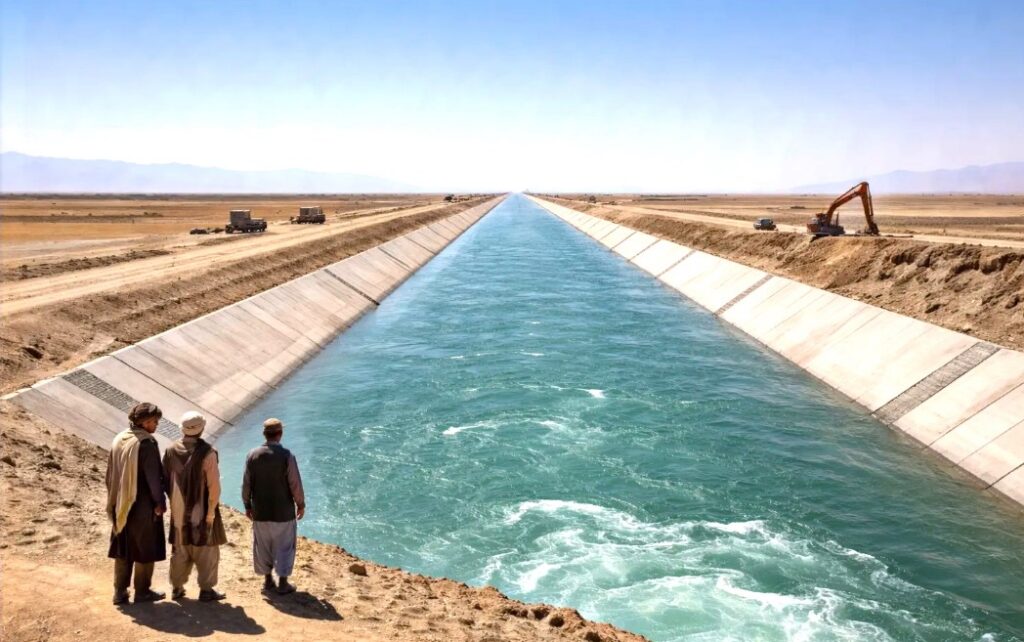
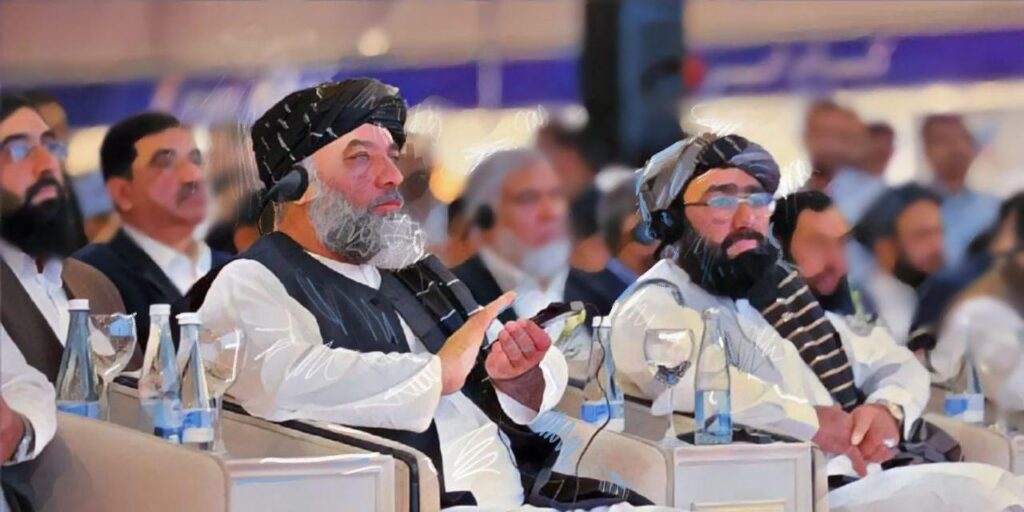
Central Asia is becoming even more important to Afghanistan. After the Taliban returned to power in August 2021, most of the countries of Central Asia established a dialogue with its leadership that focused on business potential, backed up by security promises. This understanding is more important than ever to the Taliban government, as events along Afghanistan’s eastern and western borders have left Central Asia as the only reliable import-export route for Afghanistan at the moment. Booming Trade At the start of March, Afghanistan’s Ministry of Industry and Commerce released figures for 2025 that showed trade with Central Asia increased from $1.79 billion in 2024 to $2.4 billion in 2025. While most of the trade is exports from Central Asia to Afghanistan, reports mentioned that Afghan exports to Central Asia -- mostly to Kazakhstan and Uzbekistan -- increased by 77 percent, from $122 million in 2024 to $216 million in 2025. A closer look shows that Uzbekistan-Afghanistan trade in 2025 totaled some $1.6 billion. A full figure for Kazakh-Afghan trade in 2025 is not yet available. However, trade between Kazakhstan and Afghanistan amounted to some $525.2 million in 2024. Kazakhstan's Deputy Prime Minister Serik Zhamangarin said at a Kazakh-Afghan business forum in Kazakhstan’s southern city of Shymkent in October 2025 that bilateral trade in the first eight months of 2025 had reached some $335.9 million. These figures are certain to have grown. Fresh agreements worth more than $360 million were signed on the sidelines of the Kazakh-Afghan business forum. On March 6, Uzbekistan’s President Shavkat Mirziyoyev signed a decree ratifying the Preferential Trade Agreement between Uzbekistan and Afghanistan. Trade totals for Kyrgyzstan, Turkmenistan, and Tajikistan with Afghanistan are more modest, but, as in the cases of Kazakhstan and Uzbekistan, are set to grow. Kyrgyz-Afghan trade for the 12 months to March 2025 came to some $66 million, but, during a Kyrgyz-Afghan business conference in Kabul commercial contracts worth some $157 million were signed. There are no figures for Turkmen-Afghan trade in 2025, but Turkmen electricity exports to Afghanistan are increasing. Turkmenistan is also preparing to export natural gas to Afghanistan. A natural gas pipeline is slowly being constructed from the Turkmen border to the western Afghan city of Herat, which could start operation as soon as 2027. Tajikistan was the lone Central Asian country to shun contact with the Taliban after they returned to power. Representatives of the previous government of Ashraf Ghani continue to occupy the Afghan embassy in Dushanbe. Tajik and Taliban authorities finally established contacts only in late 2024 but even to this day the two sides rarely meet face-to-face. However, Tajik-Afghan trade in 2025 still totaled some $120 million. Afghanistan’s Ministry of Industry and Commerce noted that most of Central Asia’s exports to Afghanistan are electricity, fuel products, and natural gas. Uzbekistan, Tajikistan, and Turkmenistan export electricity to Afghanistan via transmission lines that were built during the 20 years the Taliban were out of power. Some 80 percent of Afghanistan’s electricity is imported, and most of that (75-80 percent) comes from the three Central Asian countries. Iran supplies the remainder. There are projects under construction that would further boost Central Asian electricity exports to Afghanistan, most notably the Central Asia-South Asia (CASA-1000) project that will bring an additional 300 megawatts (MW) of electricity annually from Kyrgyzstan and Tajikistan to Afghanistan (and 1000 MW to Pakistan). The Kyrgyz and Tajikistan powerlines are already built, and the Afghan section of the project is tentatively due to be completed in 2027. Also worth mentioning is that Kazakhstan is the major supplier of grain and flour to Afghanistan. Good Timing Central Asia has become Afghanistan’s most reliable trade partner. Pakistan was the main gateway for Afghan trade, but fighting between Afghanistan and Pakistan since late 2024 has lowered trade from $2.46 billion in 2024 to $1.77 billion in 2025 and it continues to drop. Trade with Iran was increasing after the 225-kilometer Khaf-Herat railway started operating in 2023. The line was due to become completely operational in 2026. The railway already carried nearly 750,000 tons of goods in the 12 months to March 2026, but the military campaign the United States and Israel are waging against Iran is likely to reduce trade volumes along the new railway in at least the short term. With the exception of Turkmenistan, the Central Asian governments were hostile to the Taliban when they were in power in Afghanistan in the late 1990s. The Taliban leadership reciprocated the animosity. There were security problems along the Central Asia-Afghan border during most of these years. After August 2021, the Central Asian governments pursued a business relationship with the Taliban government, hoping it would help the Taliban keep their promise not to allow any militant groups inside Afghanistan to attack neighboring countries. Nevertheless, there have been times when the Taliban has seemed unable to guarantee security along the Central Asian border. The terrorist group Islamic State of Khorasan Province fired rockets at the Uzbek border city of Termez in April and July 2022, and also into Tajikistan in May 2022. The Taliban quickly arrested suspects in those attacks, but more recently there have been attacks along the Tajik-Afghan border. In November 2024, and in November and December 2025, there were three attacks on Chinese projects in Tajikistan that killed several workers, mainly Chinese nationals. There were also two clashes between Tajik border guards and Taliban fighters, one in August 2025, the other in October that year. So far this year there have not been any incidents targeting Central Asia from the Afghan side of the border. With Central Asia now being the Taliban’s biggest trade partner, as well as being the surest route for imports and exports for Afghanistan, the Central Asian strategy of developing a business relationship with the Taliban has now made Central Asia indispensable for Afghanistan. It also makes ensuring security for Central Asia a priority for the Taliban.
Iran War Quietly Raises the Strategic Value of Central Asian Airspace
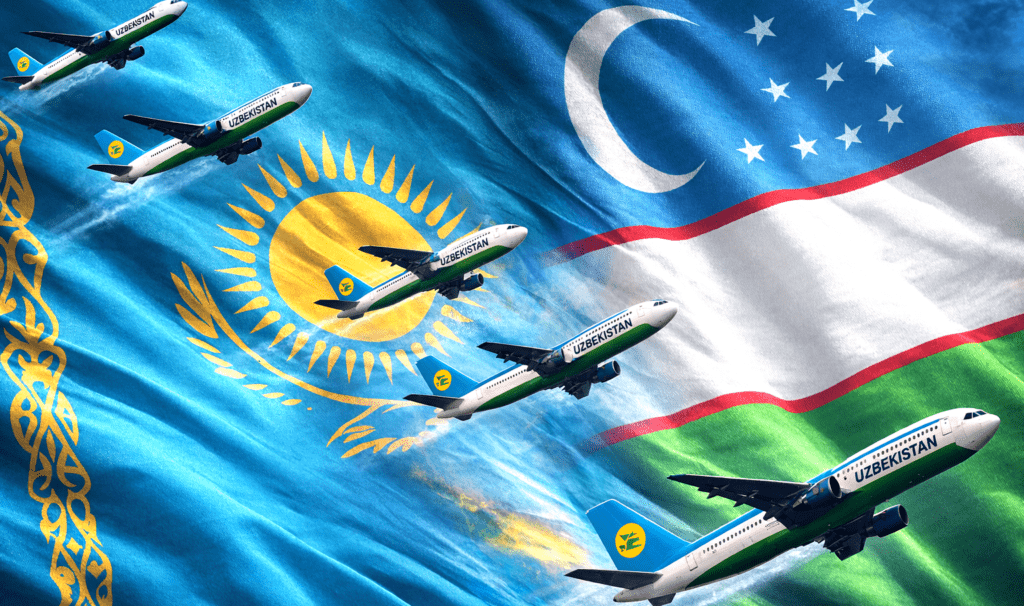
The war in Iran has disrupted one of the main aviation corridors linking Europe and Asia. The European Union Aviation Safety Agency (EASA) has issued safety bulletins warning of high risk to civilian aircraft in Iranian airspace and surrounding regions affected by military activity, missile launches, interceptions, and air defense operations. A separate EASA bulletin covering Iran, valid through March 31, describes a high risk to civil flights at all altitudes within the Tehran flight information region.
The consequences reach far beyond the Middle East. Since Russia’s full-scale invasion of Ukraine in 2022, most Western airlines have been unable to use Russian airspace. With Iranian airspace now considered unsafe for normal commercial transit, the map for long-haul traffic between Europe and Asia has become extremely tight. Reuters mapping of global flight paths shows airlines diverting north via the Caucasus or taking longer southern routes through the eastern Mediterranean and the Arabian Peninsula. Many passengers traveling between Europe and Asia still transit through Gulf hubs. However, airports across the region, including Dubai, Abu Dhabi, Doha, Kuwait, and Bahrain, have faced disruption and unstable schedules during the conflict.
Central Asia sits just beyond that northern bypass. It is not replacing the Gulf as a passenger hub, and is not suddenly becoming the main bridge between Europe and Asia, but the region’s airspace is increasingly strategically valuable as the number of efficient alternatives shrinks. The war has made Central Asia more important as part of a wider arc stretching from Turkey and the Caucasus across the Caspian basin and onward toward South and East Asia.
[caption id="attachment_45218" align="aligncenter" width="1290"]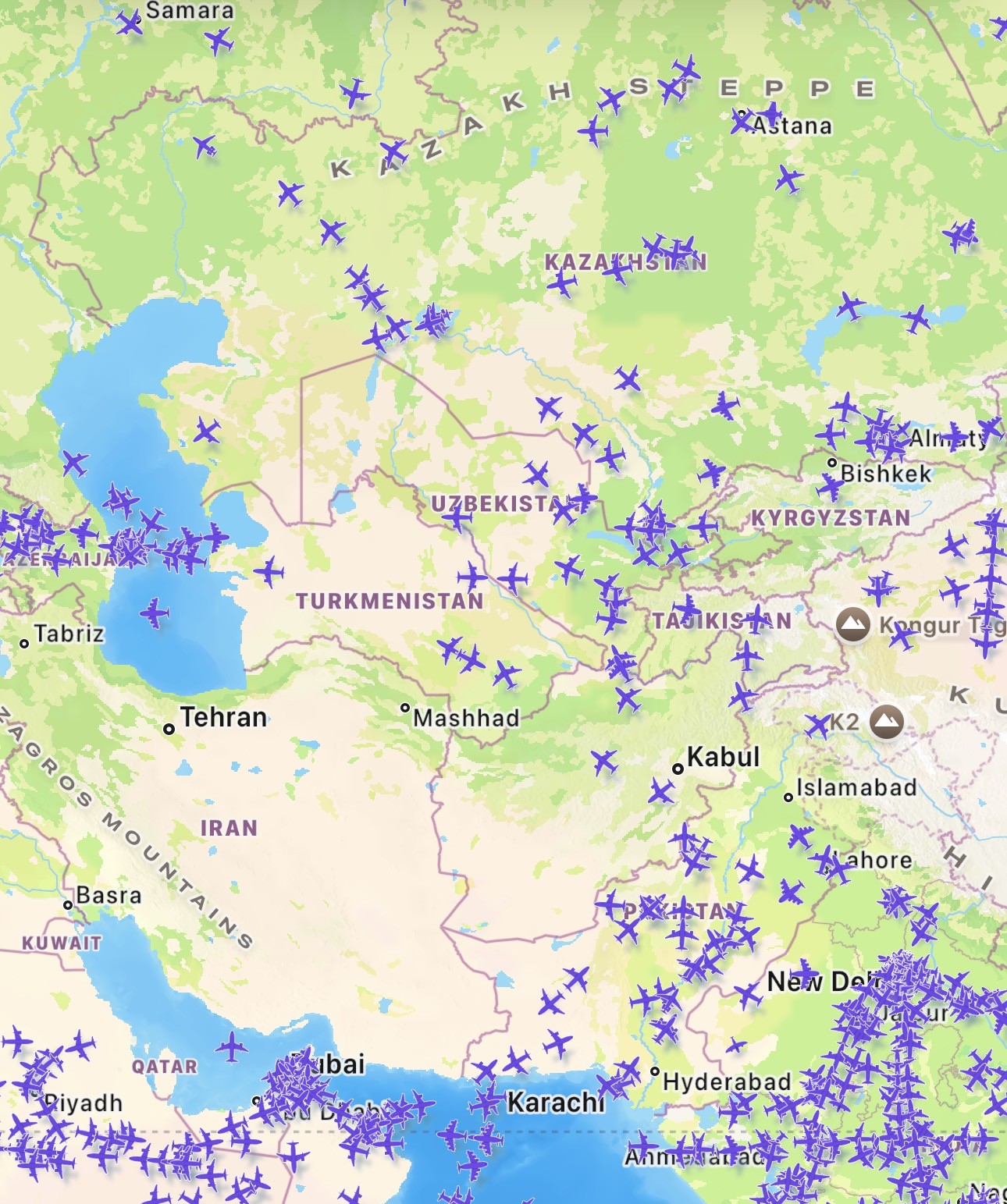 Live flight-tracking map (image taken at 840am EST) showing aircraft routes avoiding Iranian airspace during the crisis. Many flights between Europe, the Middle East, and South Asia are being diverted north over the Caspian Sea and across Central Asia instead of flying over Iran; source: Planes Live[/caption]
Kazakhstan is the clearest example. Local airlines had already begun to adjust before the current escalation reached its present level. In January, The Times of Central Asia reported that Air Astana had rerouted flights to Sharm el-Sheikh, Dubai, Doha, and Medina to avoid Iranian airspace. After the conflict widened, Air Astana canceled flights to several Middle Eastern destinations following the closure of Iranian airspace and rising regional tensions. Kazakhstan also imposed a temporary ban on flights over or near the airspace of Iran, Israel, Syria, Iraq, Jordan, and Lebanon.
Uzbekistan also moved quickly. As early as October 2024, Kun.uz reported that Uzbekistan Airways was avoiding Iraqi airspace and western Iranian airspace on safety grounds. After the latest escalation, on March 4, Uzbekistan suspended flights to six Middle Eastern countries. The pattern is clear: Central Asian carriers are not immune to the crisis; they are already adjusting networks, schedules, and commercial risk, with the broader economic consequences of the conflict emerging across regional supply chains.
However, the region’s aviation systems clearly now carry far greater strategic and economic importance than they did only a few years ago. On its official site, Kazakhstan’s air navigation provider Kazaeronavigatsiya states that in the first half of 2025, it served 216,616 flights, including 161,029 operated by foreign airlines and described as transit and landing traffic. Kazakhstan’s aviation sector is also growing fast. In 2025, the country’s airports handled 31.8 million passengers, while Kazakh airlines carried 20.7 million. These figures point to an aviation system with real regional significance rather than a marginal market.
Uzbekistan is moving in the same direction. The government has made aviation expansion part of a broader transport strategy, with plans for a new major airport in the Tashkent region reflecting ambitions that go far beyond domestic demand. Tashkent is not Dubai, but it is steadily emerging as an important regional hub at a time when established corridors to the south are under growing strain.
None of this means Central Asia will see a sudden windfall. Longer detours increase fuel burn, crew expenses, insurance premiums, and schedule risk. Much of the region’s added strategic value may first be felt in overflight planning, air traffic management, and route resilience rather than headline passenger numbers. Nor does it mean airlines will quickly shift large volumes of passengers through Central Asian hubs. Gulf airports still possess far larger networks, deeper fleets, and more developed connecting systems.
Live flight-tracking map (image taken at 840am EST) showing aircraft routes avoiding Iranian airspace during the crisis. Many flights between Europe, the Middle East, and South Asia are being diverted north over the Caspian Sea and across Central Asia instead of flying over Iran; source: Planes Live[/caption]
Kazakhstan is the clearest example. Local airlines had already begun to adjust before the current escalation reached its present level. In January, The Times of Central Asia reported that Air Astana had rerouted flights to Sharm el-Sheikh, Dubai, Doha, and Medina to avoid Iranian airspace. After the conflict widened, Air Astana canceled flights to several Middle Eastern destinations following the closure of Iranian airspace and rising regional tensions. Kazakhstan also imposed a temporary ban on flights over or near the airspace of Iran, Israel, Syria, Iraq, Jordan, and Lebanon.
Uzbekistan also moved quickly. As early as October 2024, Kun.uz reported that Uzbekistan Airways was avoiding Iraqi airspace and western Iranian airspace on safety grounds. After the latest escalation, on March 4, Uzbekistan suspended flights to six Middle Eastern countries. The pattern is clear: Central Asian carriers are not immune to the crisis; they are already adjusting networks, schedules, and commercial risk, with the broader economic consequences of the conflict emerging across regional supply chains.
However, the region’s aviation systems clearly now carry far greater strategic and economic importance than they did only a few years ago. On its official site, Kazakhstan’s air navigation provider Kazaeronavigatsiya states that in the first half of 2025, it served 216,616 flights, including 161,029 operated by foreign airlines and described as transit and landing traffic. Kazakhstan’s aviation sector is also growing fast. In 2025, the country’s airports handled 31.8 million passengers, while Kazakh airlines carried 20.7 million. These figures point to an aviation system with real regional significance rather than a marginal market.
Uzbekistan is moving in the same direction. The government has made aviation expansion part of a broader transport strategy, with plans for a new major airport in the Tashkent region reflecting ambitions that go far beyond domestic demand. Tashkent is not Dubai, but it is steadily emerging as an important regional hub at a time when established corridors to the south are under growing strain.
None of this means Central Asia will see a sudden windfall. Longer detours increase fuel burn, crew expenses, insurance premiums, and schedule risk. Much of the region’s added strategic value may first be felt in overflight planning, air traffic management, and route resilience rather than headline passenger numbers. Nor does it mean airlines will quickly shift large volumes of passengers through Central Asian hubs. Gulf airports still possess far larger networks, deeper fleets, and more developed connecting systems.
But geography has become harsher and more political. Iranian airspace is unsafe, and parts of the Gulf corridor have been disrupted. In that environment, countries able to offer stable airspace, competent air traffic control, and reliable infrastructure gain importance.
That is where Central Asia now finds itself. For years, the region’s governments have spoken about the strategic value of their territory for rail, road, and trade corridors. The war in Iran has quietly added aviation to that argument. In a world where established east-west routes are narrowing, the skies over Central Asia matter more than they did before.
Sunkar Podcast
Central Asia and the Troubled Southern Route